The most important bird training tip is also the simplest: slow down and let the bird lead. Build trust first, add cues second. Almost every problem people run into with biting, screaming, panic flapping, or refusal to step up traces back to moving too fast and asking too much before the bird felt safe. Once you get that sequence right, the actual mechanics of teaching target training, step-up, or calm carrier behavior become straightforward and genuinely enjoyable for both of you.
Bird Training Tips: Humane Step-by-Step, From Target to Trust

Maya Harris
19 May 2026
Start with welfare and consent, not obedience
Before you teach a single cue, commit to one rule: never force contact. Grabbing, chasing, or trapping a bird into your hand doesn't build a relationship, it builds fear, and fearful birds bite, scream, feather-pick, and shut down. Veterinary welfare guidance is clear on this: minimize restraint, move slowly, use a quiet voice, and always observe the bird's body language before reaching in or picking up. Those same principles apply at home, every single day.
Consent-based handling means watching for stress signals before, during, and after every interaction. If the bird is showing any of the following, stop and give it space:
- Feathers slicked tightly against the body
- Rapid or labored breathing (small birds breathe roughly 30–60 times per minute at rest; larger birds roughly 15–30; anything faster at rest is a warning sign)
- Wide, fixed eyes or constant head-turning to track your hand
- Repeated lunging or biting attempts
- Tail pumping or open-mouth breathing
- Fluffed feathers combined with lethargy (different from relaxed fluffing)
A calm bird that is curious, foraging, or vocalizing normally is in the right headspace for a short session. A tense, watchful, or cornered bird is not. Respect that boundary every time, and your bird will start actively choosing to engage with you rather than tolerating you.
What differs by species: social needs, learning speed, and stress triggers
Birds are not one animal. A budgie, a cockatoo, a crow, and a rescued raptor have almost nothing in common in terms of what motivates them, how quickly they generalize new behaviors, and what triggers stress. Matching your approach to the species in front of you matters enormously.
| Bird Type | Social Needs | Training Speed | Common Stress Triggers | Best Reward |
|---|---|---|---|---|
| Budgerigars / parakeets | Flock-oriented; often calmer with a companion bird visible | Fast learners; short sessions work well | Sudden movements, loud noises, unfamiliar hands | Millet spray, praise |
| Cockatiels | Moderate; tolerate solo living if well bonded to owner | Moderate; respond well to repetition | Forced handling, isolation, overstimulation | Seed treats, head scratches once trusted |
| Parrots (African grey, Amazon, cockatoo, macaw) | High; need daily interaction and mental challenge | High intelligence; can develop problem behaviors quickly if bored | Routine disruptions, hand aggression, boredom | High-value food (nut pieces, fruit), verbal praise |
| Corvids (crows, jays — typically wildlife rehab) | Complex social animals; need enrichment constantly | Very fast; remember individual humans | Restraint, direct eye contact, isolation | Food variety, puzzle feeders |
| Raptors (falconry, rehabilitation) | Low social bonding to other raptors; bond to handler | Slow, methodical desensitization needed | Fast movement, unfamiliar objects, noise | Fresh meat rewards at weighing time |
Regardless of species, the learning principles stay consistent. What changes is the pace, the reward type, and how much desensitization work you need to do before the bird is ready to learn anything. Highly social parrots can progress quickly when they feel safe; a wild-caught or poorly socialized bird of any species may need weeks of just calm presence before formal training begins.
A daily bonding and handling routine that actually works
Consistency is the entire secret to bonding. Birds are creatures of routine, and daily predictable interactions build far more trust than longer, irregular sessions. Aim for two to three short sessions per day of five to ten minutes each rather than one long thirty-minute block. Here is a beginner routine you can start today:
- Approach the cage or training space calmly and at the bird's eye level. Avoid looming from above, which mimics predator behavior.
- Talk quietly for thirty seconds before doing anything. Let the bird register you as a non-threat. If it moves toward you, great. If it moves away, stay still and keep talking.
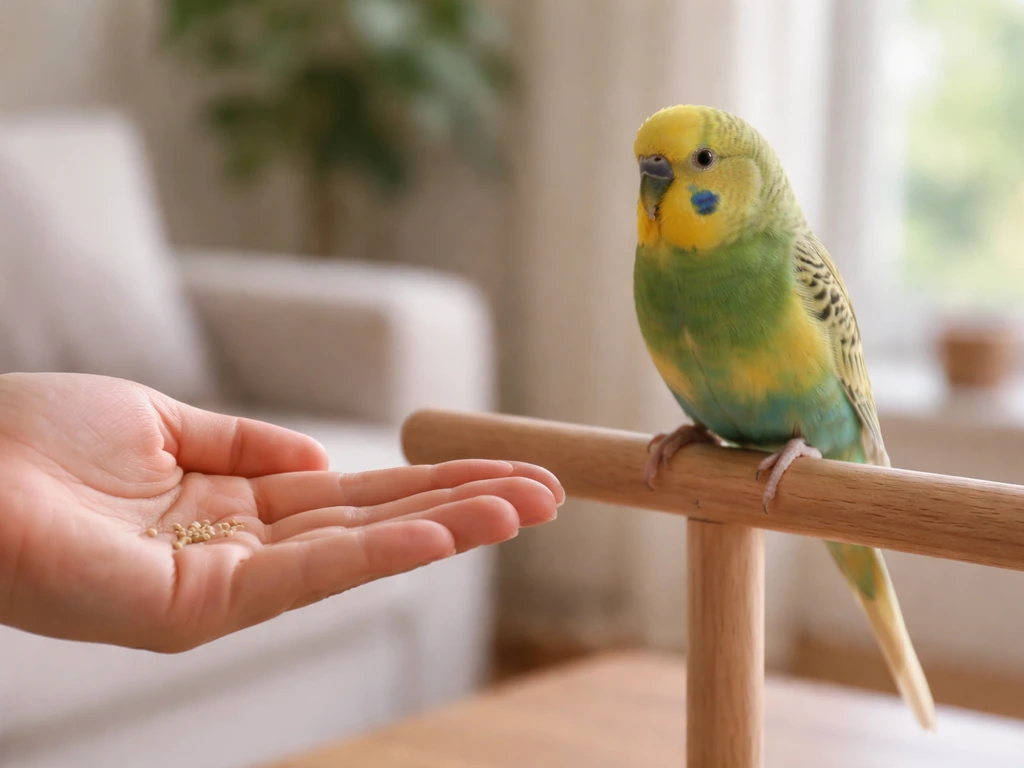
- Offer a high-value food treat through or near the cage bars without asking for anything in return. Repeat this for several days until the bird takes treats reliably and shows no stress signals.
- Once treat-taking is easy, introduce your hand at a distance and let the bird decide to approach it. Never push the hand toward the bird.
- Gradually reduce the distance over multiple sessions using systematic desensitization: get close enough that the bird notices but doesn't retreat, then hold that distance until relaxed, then slowly move closer over days or weeks.
- Only begin step-up or contact training once the bird is regularly moving toward your hand voluntarily for treats.
The key principle here is retreating before the bird hits its stress threshold. Avian behavior science describes this precisely: pull back the intensity before you see fear responses, not after. Once a bird panics, you've set back the session and slightly reinforced the idea that your hand is dangerous. End every session on a small success, even if that success is just the bird taking a treat calmly from two feet away.
Training fundamentals: target training, marker cues, and positive reinforcement
How marker training works with birds
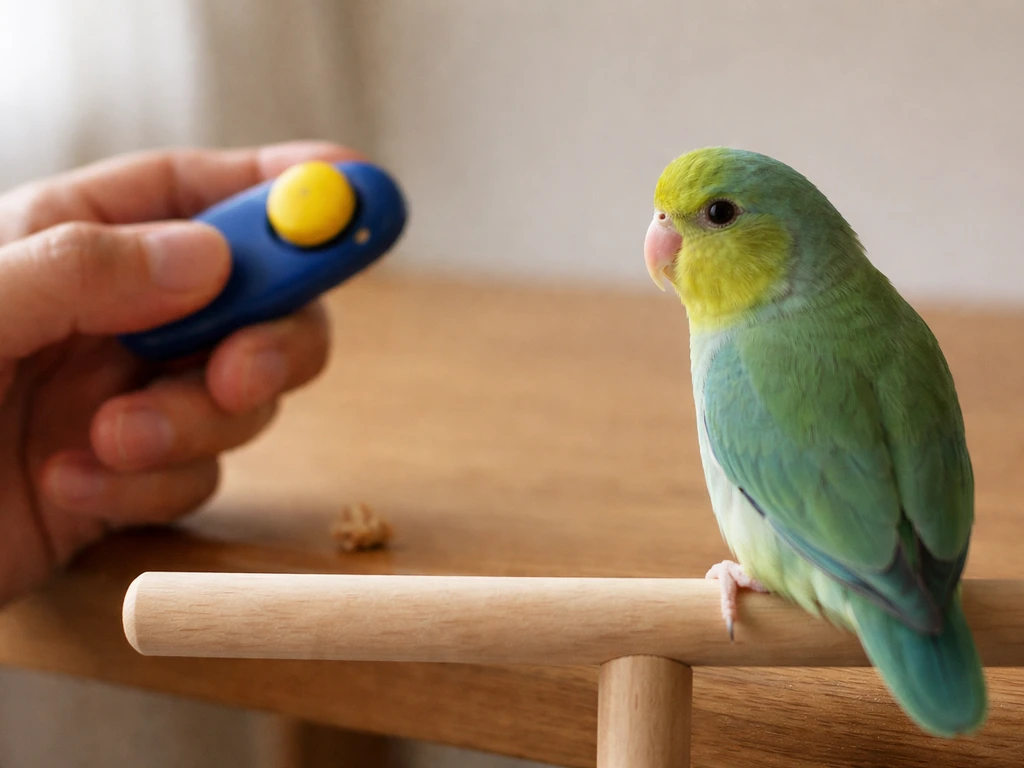
Marker training (often called clicker training) is the single most effective tool for bird training at any skill level. The marker, whether a click from a clicker device or a short verbal cue like "yes" or "good," tells the bird the exact moment it did the right thing. Birds have fast reaction times and sharp attention, so the precision of a marker is especially valuable. The three-step process is: observe the behavior you want, mark it the instant it happens, then deliver the reward within a few seconds.
Start by charging the marker: click (or say your cue word) and immediately give a treat, about ten times in a row over one or two sessions. The bird doesn't need to do anything yet. You are just teaching it that the sound predicts food. You'll know it worked when the bird perks up or looks for the treat the moment it hears the marker. After that, the marker becomes a precise communication tool.
Target training: the foundation of everything
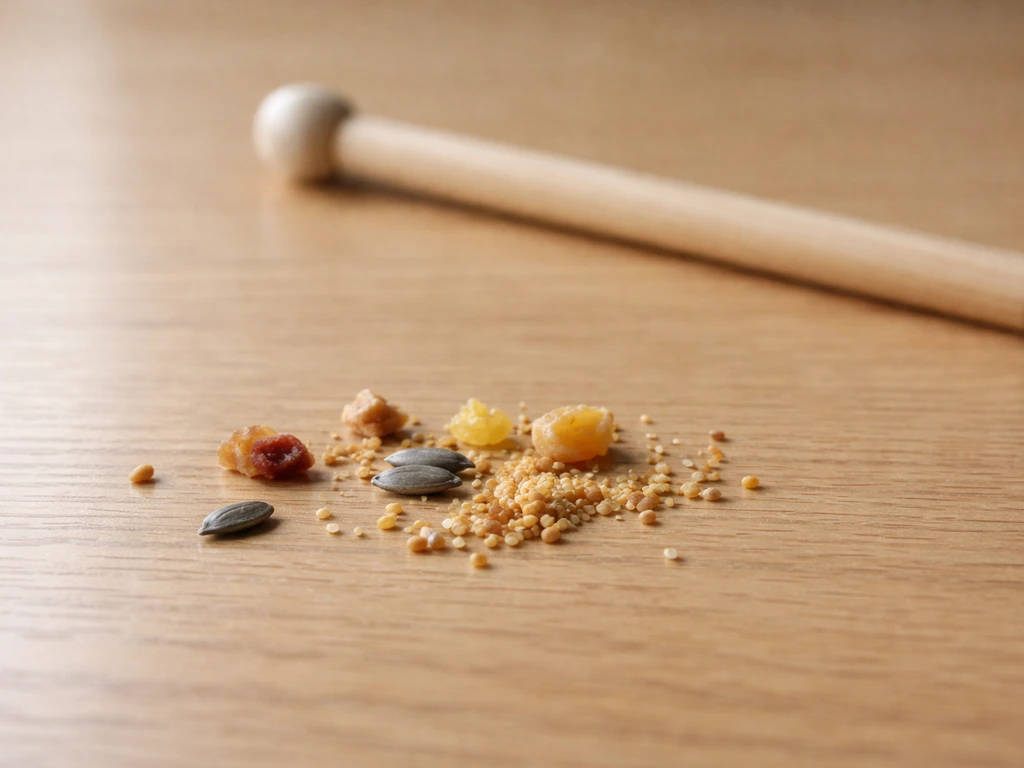
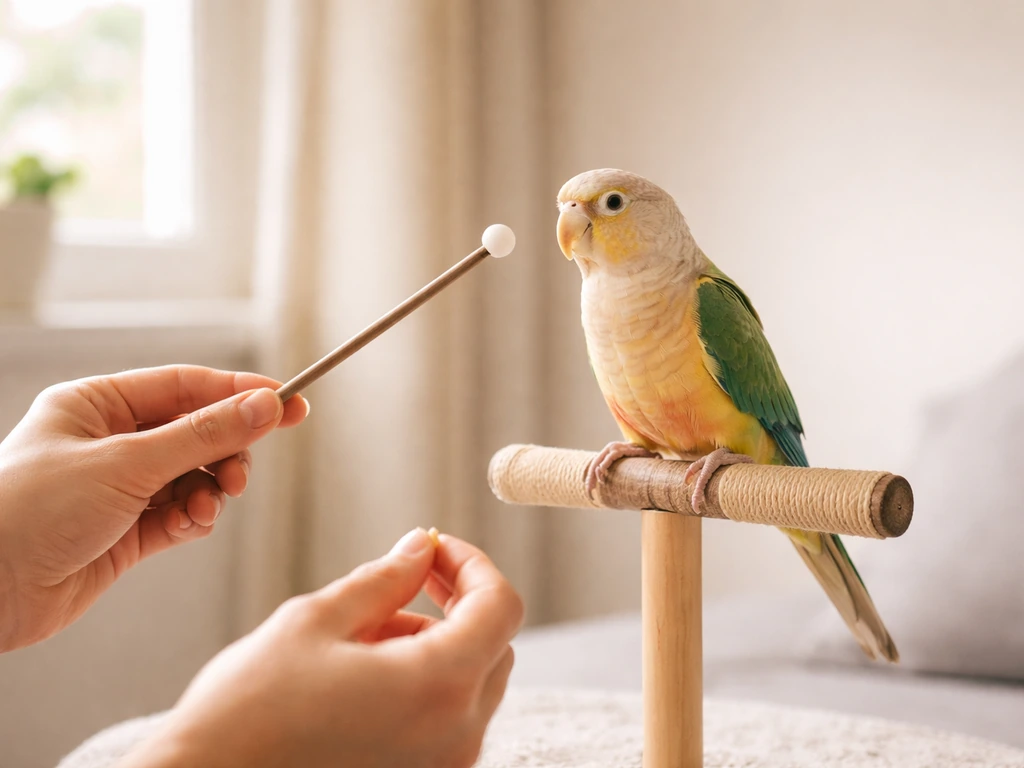
Target training means teaching your bird to touch its beak to a specific object, usually a chopstick, a wooden dowel, or even a pen cap. It sounds simple, and it is. But target training unlocks almost every other behavior because it gives you a way to guide the bird to any position or location without physically moving it. Once a bird targets reliably, you can use it to teach step-up, go-to-perch, enter-carrier, and turn-around. Here is how to start:
- Hold the target stick a few inches from the bird's face. Most curious birds will lean in to investigate it. The moment their beak touches it, mark and reward.
- If the bird won't approach, try rubbing a small amount of food on the tip of the stick to encourage first contact.
- Repeat until the bird is consistently touching the target on presentation (usually five to fifteen repetitions per session).
- Once reliable at close range, begin moving the target slightly to different positions: to the left, higher, lower. Mark and reward every touch.
- Gradually use the target to guide the bird toward your hand, a perch, or a carrier entrance.
Teaching step-up
Step-up is the most important practical cue a pet bird can know. It keeps both of you safe, makes vet visits easier, and gives the bird a clear way to interact with you without confusion. Once your bird tolerates your hand close without stress, present the back of your hand or your index finger just at the bird's lower chest or belly level. Gentle upward pressure at this spot creates a slight off-balance feeling that naturally encourages the bird to step forward onto your hand. The moment one foot touches, mark and reward. Never grab the bird's feet or push from behind. Keep the first few reps very short and reward immediately. Say "step up" the moment the behavior begins, and soon the verbal cue will predict and prompt the movement on its own.
Positive reinforcement: what counts and what doesn't
Use the highest-value treat your bird will work for. For many parrots that is a small piece of almond, walnut, or a bite of fruit. For budgies and cockatiels, millet or sunflower seed works well. Verbal praise matters too, especially once the bird is bonded to you, but food is the clearest and fastest reward during new-behavior learning. Keep treat portions tiny so the bird stays motivated and doesn't fill up. And critically: never use punishment. Yelling, swatting, or even a sharp negative reaction can actually reinforce unwanted behavior by giving the bird the attention it was seeking, or it can worsen fear and make biting more likely, not less.
Common behavior problems and how to fix them humanely
Biting
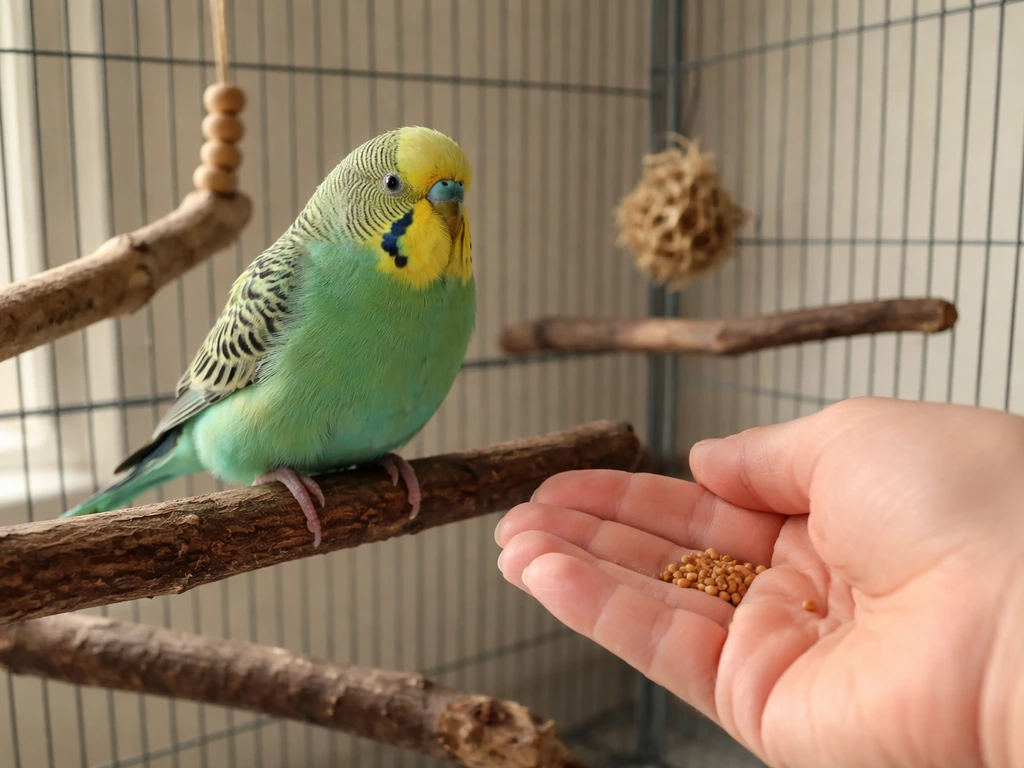
Biting almost always communicates something: fear, overstimulation, pain, territorial behavior around the cage, or wanting to be left alone. The fix starts with identifying which one applies. A bird biting because it's afraid of your hand needs more desensitization work, not more exposure. A bird biting because it's overstimulated during petting needs shorter, calmer sessions with clear stopping points. When a bite happens, stay calm, set the bird down gently without fanfare, and end the session. Do not yell, jerk your hand back dramatically, or react in a way that gives the bird a big emotional payoff. If biting is new or sudden, rule out a medical cause first with a vet visit before assuming it is a training problem.
Screaming and excessive vocalization
Some calling is completely normal and species-typical, especially around dawn and dusk for most parrots. Problem screaming is usually learned: the bird screamed, someone came, and the bird learned that screaming works. The fix is to not reinforce screaming with attention. Wait for even two or three seconds of quiet, then immediately go to the bird and reward that quiet with presence or treats. Over time, extend the quiet period required before you respond. If screaming is sudden and new in a bird that was previously quiet, that warrants a vet check before any training intervention, because pain or illness can drive vocalization changes.
Panic flapping and overstimulation
A bird that flaps, thrashes, or bolts off your hand when startled is telling you training moved too fast. Go back two steps: reduce the challenge level, shorten sessions, and remove environmental triggers (mirrors at awkward angles, fast movement in the room, unfamiliar visitors). For birds that regularly panic during handling, systematic desensitization to hands, perches, and movement is the correct approach. Work at sub-threshold intensity, meaning close enough to trigger mild awareness but not enough to trigger flight or fear, and build duration at each level before moving forward.
Refusal to step up or come out of the cage
If a bird refuses to step up or leave its cage, forcing the issue is the worst thing you can do. The cage is its safe zone and any forced removal erodes that sense of safety fast. Instead, bring the training into the cage. Offer treats just inside the open door, then at the door threshold, then with your hand at the door. Use the target stick to guide movement toward and through the door voluntarily. Make coming out of the cage the bird's idea, and it will become a routine it chooses rather than something it endures.
Fear of hands or new objects
Slow, repeated, low-intensity exposure paired with good things happening is the answer here. Place a new object (a perch, a carrier, a toy) near the cage for a few days before expecting the bird to interact with it. Pair your hand with food delivery consistently before asking it to do anything. This counterconditioning approach changes the emotional response to a trigger, not just the behavior, which makes the change much more durable.
Setting up your bird's environment for training success
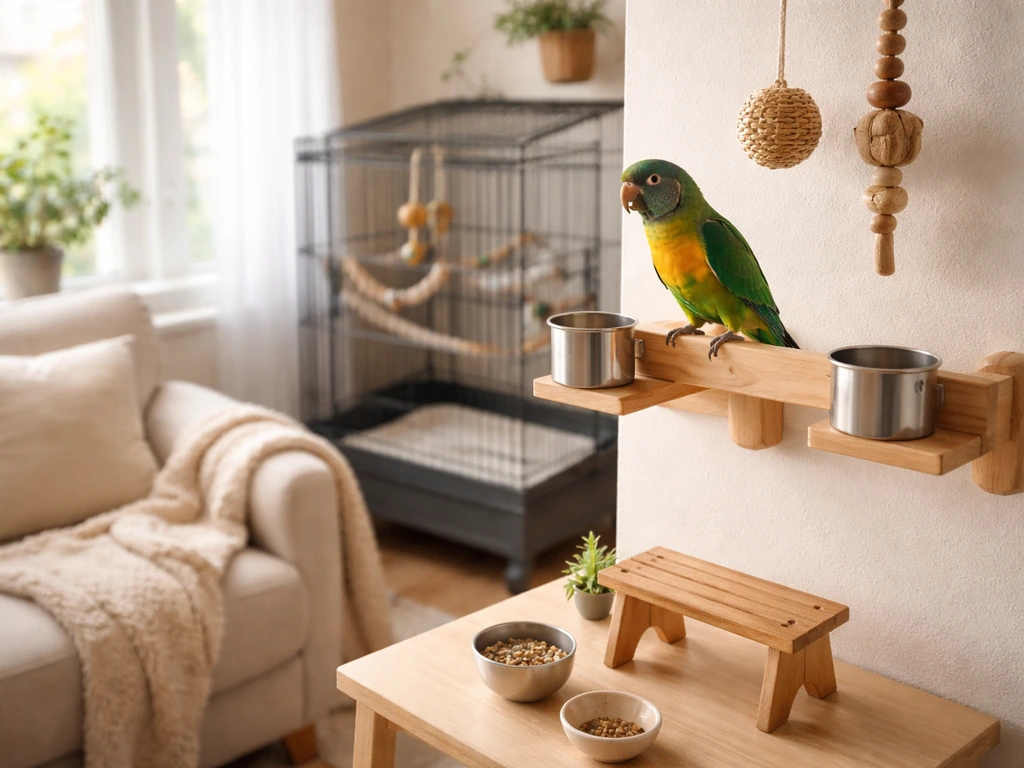
The environment does a huge amount of the training work before you even start a session. A stressed bird in a chaotic space cannot learn well. A calm, enriched bird in a predictable routine is already halfway to being trainable.
- Place the cage or training perch in a social area of the home (living room or kitchen) where the bird can observe household activity without being directly in traffic or noise
- Avoid placing the cage against a wall with no back coverage, as birds feel exposed and stressed without at least one covered side
- Keep the training space consistent: use the same perch or stand, the same time of day, the same treats when possible
- Control lighting during sessions: dim, calm lighting reduces arousal; bright or rapidly changing light can increase stress
- Minimize competing stimuli: turn off loud TVs or music, ask others in the home not to interrupt sessions
- Provide foraging enrichment between sessions (food hidden in paper, puzzle feeders, shreddable toys) so the bird is mentally occupied and not building frustration behaviors
- Keep the carrier or transport container in the living space permanently, with treats inside, so it never becomes a scary novelty when travel is actually needed
Feather picking and destructive behaviors often develop when birds are bored, understimulated, or under chronic low-grade stress. Enrichment is not a luxury, it is active welfare management. A bird that is mentally busy is dramatically less likely to develop the problem behaviors that derail training in the first place.
Tracking progress, adjusting difficulty, and knowing when to get help
How to track training progress simply
You don't need a spreadsheet, but a simple training log helps. After each session, note the date, what you worked on, how the bird responded (calm, mild stress, stepped up willingly, refused twice then succeeded, etc.), and anything unusual in body language or behavior. Patterns emerge quickly: maybe the bird is consistently better in morning sessions, or consistently resistant when a certain person is in the room. That information is training gold.
How to adjust when progress stalls
If a bird has been performing a behavior reliably and suddenly starts refusing or regressing, go back to the last step it did confidently and rebuild from there. This is called dropping criteria, and it is not failure, it is good training practice. Regression often signals that something changed: a new person in the home, a diet change, a health issue, seasonal hormonal shifts, or simply that the training progressed too quickly. Identify the variable and address it rather than pushing harder.
When to pause training and get professional help
Some situations genuinely require expert support. Pause training and book a vet appointment if you notice: sudden changes in biting, screaming, or personality; any feather destruction, self-mutilation, or unusual plucking; labored breathing, tail pumping, or fluffed feathers at rest; significant weight loss or change in droppings. These can be medical issues that training cannot fix and that will make training impossible until they are addressed.
For behavioral issues that persist despite consistent, humane effort over four to six weeks, an avian behaviorist or certified animal training consultant with bird experience is worth finding. A good avian vet can refer you to one, or look for trainers with credentials in applied behavior analysis who have specific bird experience. The goal is always a bird that is healthy, relaxed, and engaged, not just one that performs on cue.
Your next steps starting today
Pick one thing from this guide and do it in your next interaction with your bird. If you're at square one, that thing is just sitting near the cage, talking quietly, and offering a treat without asking anything in return. If you're further along, charge your clicker marker or introduce a target stick. The entire framework of welfare-first bird training builds from those small, repeated, trust-depositing moments. Get those right consistently, and the cues follow naturally. If you want more targeted ideas, these bird taming tips focus on consent-based handling, calm session pacing, and gradual progress. If you're also working with a bird dog or training other species alongside your bird, the core consent and positive reinforcement principles here translate well across contexts, but the specific species needs differ significantly enough that species-specific guides for each animal are worth keeping separate. If you are also working on a bird dog, use the same calm, consent-first approach when teaching commands like whoa to keep training safe and effective how to whoa break a bird dog. If you are also working on training a bird dog, look for an obedience plan that uses positive reinforcement and clear step-by-step cues rather than pushing the dog past its comfort level. For upland bird dog work, the same training ideas of building trust and using positive reinforcement apply, but the cues and exercises are species-specific.
FAQ
How long should bird training tips sessions last if my bird gets stressed quickly?
Use shorter “micro-sessions” (1 to 3 minutes) as long as you can still end on a calm success. If the bird shows mild stress before you reach a full goal, stop there, mark and reward only what already happened calmly, then end early. The goal is learning without repeatedly overshooting the bird’s threshold.
What should I do if my bird stops responding to the clicker or verbal marker?
First, make sure the marker still predicts food by recharging it (click or say “yes,” then treat, 10 times). If the bird is still uninterested, reduce distractions and check treat value, since fatigue, hunger timing, and low-value treats can break motivation even when timing is perfect.
Can I use my bird’s favorite toy instead of treats for target training?
Sometimes, yes, but toys work best as a reward only if the bird reliably engages with them immediately after the cue. For precision training, many birds learn faster with food first, then you can later “transfer” reinforcement by alternating food and toy rewards (not using the toy alone from the start).
How do I know I am “retreating before” the bird’s stress threshold?
Track subtle cues, not only big ones. If you see increased alertness, staring at your hand, pinning eyes, turning away, tucked posture, tail flicking, or quick head-bobbing escalation, you are probably too close or asking too much. Back off to the last spot where the bird could stay relaxed and treat that calm state.
My bird targets the stick but still refuses step-up, what does that mean?
It usually means the step-up is a different, higher-meaning behavior (hand proximity plus body position). Go back and reduce the difficulty to “target to a position” first, then build toward the step-up mechanics in smaller increments (for example, target close to the hand, then target to the hand, then one foot onto the hand).
Should I require a “perfect” response every time before increasing difficulty?
No. Use shaping with relaxed criteria. If your bird is giving partial progress, mark and reward the closest safe approximation. Tightening criteria too soon is a common reason birds regress, even when the training method is humane.
What if my bird bites only when I try to step them up near the same location (like the same perch)?
The spot can become a trigger. Try step-up from multiple neutral perches, adjust the distance and height, and remove environmental factors (slippery surfaces, drafts, loud background sounds). You can also use a two-step routine, target onto a stable perch first, then step-up from there.
Does it ever make sense to use punishment for screaming or biting?
In most cases, no. Even when the goal is to stop a behavior quickly, punishment can increase fear and make the bird more reactive or more secretive. A safer alternative is reinforcing quiet, shortening sessions, and addressing the underlying driver (overstimulation, fear, pain, or learning history).
My bird screams when I enter the room, how should I respond?
Avoid rewarding the scream with immediate interaction. Wait for a brief quiet window, then deliver the positive consequence right away (treats, calm presence, or a preferred activity). Over time, increase the quiet requirement by seconds so the bird learns that calm controls access to you.
If my bird is flapping and trying to bolt, should I remove the bird’s fear by doing more exposure?
Not in the moment. Bolting indicates you overshot the threshold. Reduce intensity, change the environment to lower triggers, and practice desensitization at a level where the bird can remain on the perch with only mild awareness. “More exposure” should wait until the bird can stay calm at the smaller steps.
How should I handle the “end of session” so it doesn’t become a stressful interruption?
End immediately after a small success and then create a clear decompression period (quiet voice, no reaching, let the bird move away). If you repeatedly end with a difficult demand or a sudden withdrawal, the bird may associate sessions with conflict, not learning.
Is it normal for some birds to take weeks before they start training at all?
Yes, especially for wild-caught or previously traumatized birds. In early stages, “training” can simply mean calm co-presence, hand-associated food delivery, and allowing the bird to choose distance. The first real cues should only start once the bird consistently accepts proximity without heightened stress.
What should I put in a training log to spot problems faster?
Include session timing (morning versus evening), who was present, light level or background noise, what reward was used, and one-line body language notes before and after. If a specific person or room condition coincides with refusal, you will usually see the pattern within a few entries.
When should I stop bird training and contact a vet or behavior professional?
Stop and seek help if you see sudden changes in biting, major vocal shifts, new feather destruction, labored breathing or unusual posture at rest, or rapid weight or droppings changes. For persistent issues that do not improve with consistent humane training over about a month, consider an avian behavior specialist or a trainer with bird experience and credentials.