Training a messenger bird is very achievable for a beginner, but it works best with a homing pigeon or a ringneck dove, trained through a patient, incremental process of bonding, short controlled releases, and consistent reward routines. The bird learns to return home reliably, not because of magic or instinct alone, but because you build that behavior step by step over several weeks. If your goal is true point-to-point message delivery (bird flies from location A to location B on command), know upfront that only homing pigeons do this reliably, and even then, they only fly back to their home loft, not to a moving or unfamiliar target. That distinction matters a lot before you invest time and gear.
How to Train a Messenger Bird: Step-by-Step Guide

Maya Harris
21 May 2026
Pick the right species and get clear on your goal
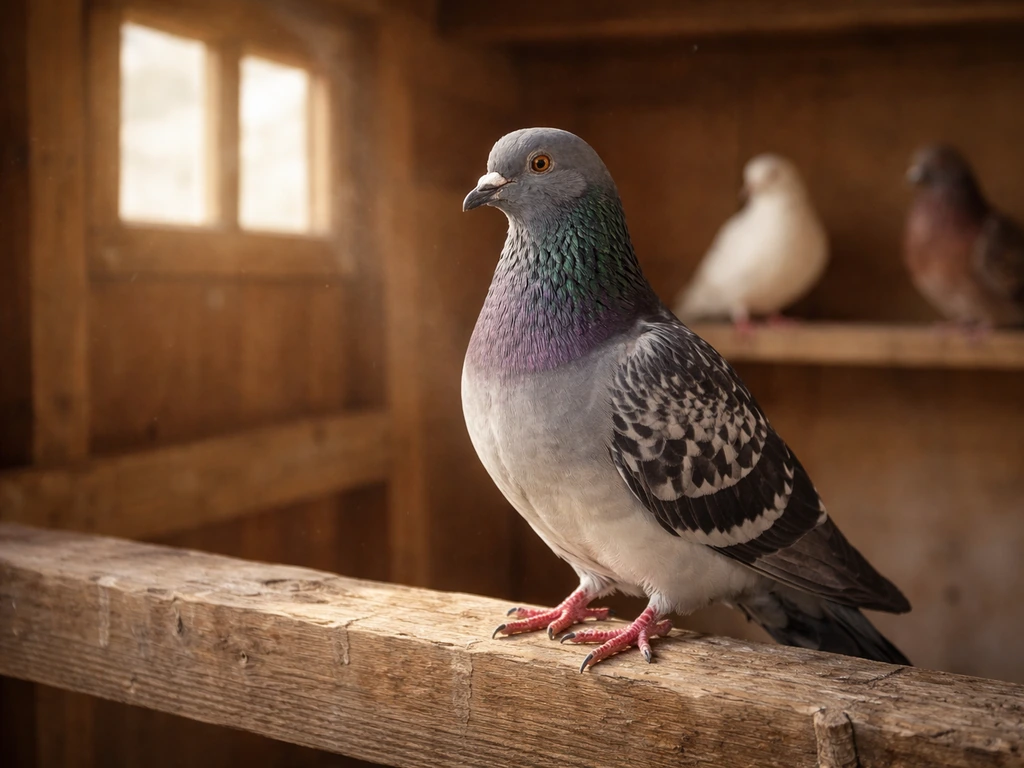
The most practical messenger bird for a beginner is the domestic homing pigeon (Columba livia domestica). These birds are bred specifically for orientation and long-distance return flights, they're legal to own in most regions without special permits, they're hardy, and they respond well to consistent handling. Ringneck doves are a gentler, lower-stakes option if your goal is short-distance 'fly to me' training rather than true homing across miles.
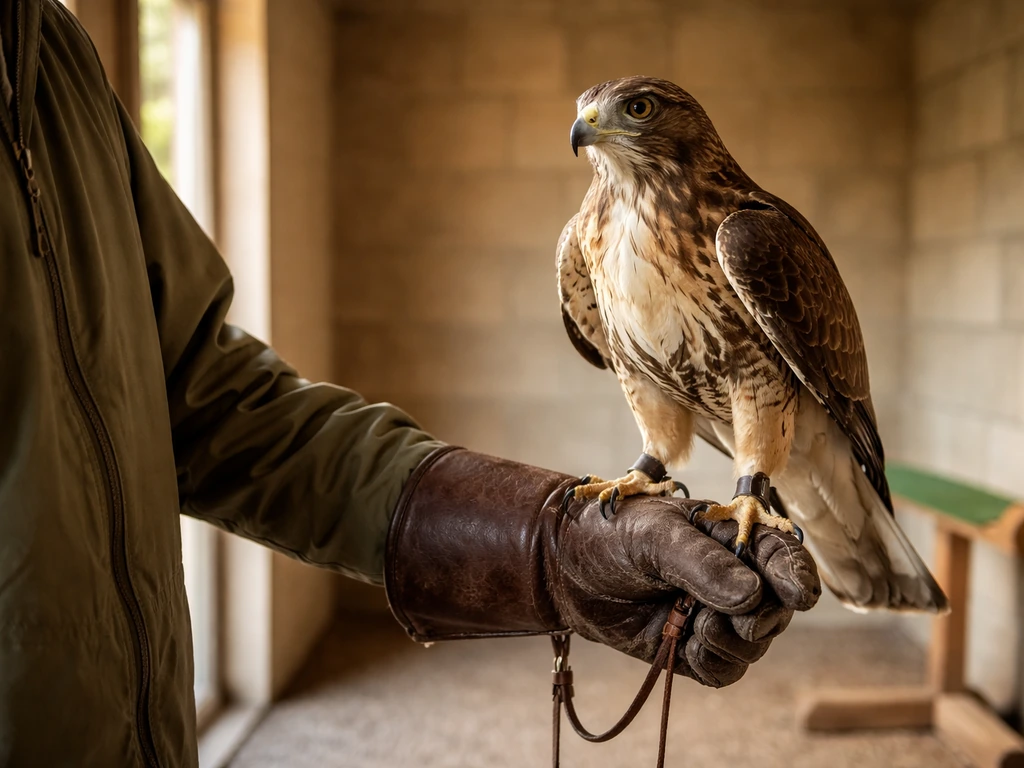
If you're thinking about a bird of prey or a robin-style wild bird, those require completely different approaches and, in most cases, wildlife rehabilitation permits. Birds of prey require a completely different training approach, so you should treat their methods as a separate topic from pigeon homing bird of prey. If you're aiming to learn how to train a robin bird, it helps to understand that wild robin training follows very different, wildlife-safe methods than domestic messenger training.
Before you start training, clarify your actual goal. There are two very different things people mean when they say 'messenger bird training.' Homing training means the bird returns reliably to its home loft after being released at a distance. This is traditional pigeon post and what most people have in mind. Recall or 'fly-to-me' training means the bird flies to you specifically when you call it, which is more of a bonding and target-training skill suited to doves or tame pigeons in a backyard setting. You need to pick one goal because the training progressions are different.
| Species | Best For | Skill Level | Permit Usually Needed? |
|---|---|---|---|
| Homing Pigeon | True long-distance message delivery and homing | Beginner to intermediate | No (domestic bird) |
| Ringneck Dove | Short-distance recall and 'fly to me' bonding | Beginner | No (domestic bird) |
| Wild Pigeon (feral) | Not recommended for training | Not suitable | Varies by region |
| Bird of Prey (raptor) | Falconry-style work only, not message delivery | Advanced | Yes, in most countries |
If you already have a bird and you're not sure whether it's a true homing pigeon, look for a leg band. Most racing or homing pigeons are banded at birth with a club or breeder ID. If yours isn't banded and you found it as a stray, it may still have homing ability, but you'll need to treat it as an unproven bird and test at very short distances first. Avoid the temptation to start with a rescued wild bird. Beyond the significant welfare concerns, wild pigeons and doves often lack the imprinting needed to make homing training reliable, and in many places releasing them is regulated.
Safety, legality, and a welfare-first setup
In most countries, keeping and training domestic homing pigeons doesn't require a permit. However, if you plan to participate in official pigeon racing, you'll need to register with a national club such as the American Racing Pigeon Union (ARPU) or the Royal Pigeon Racing Association (RPRA) in the UK. If your bird is a dove or any other species, check local ordinances because some areas restrict keeping even domestic doves. Wild birds of any species are protected in virtually every jurisdiction, so don't attempt to train a bird you found unless you are a licensed rehabilitator.
Your loft or home setup comes before any training begins. A homing pigeon needs a secure, weatherproof loft with a trap door (a one-way entry that lets the bird land and enter but not exit freely). The loft should be placed away from direct window exposure and air conditioning drafts because temperature extremes cause significant stress and can affect a bird's health and navigation performance. Ventilation is essential, but avoid placing the loft in a spot that gets blasting afternoon sun with no shade. A basic starter loft can be a converted wooden shed or a purpose-built kit loft, and it doesn't need to be expensive to be functional.
When handling your bird, especially early on, keep three principles in mind at all times: move slowly, speak quietly, and minimize how long you're physically restraining the bird. Veterinary guidance is consistent on this point: unnecessary restraint increases fear and stress, which directly undermines training progress. Always allow the bird's sternum to move freely when you hold it, as restricting chest movement can cause breathing difficulty. Watch for heat stress signs like wings held away from the body, and if you see those, end the session immediately and move the bird somewhere cooler.
- Use a quiet, calm voice every time you approach the loft or handle the bird
- Move your hands slowly and predictably, never grabbing or swiping
- Limit each handling session to 5 to 10 minutes, especially in the first few weeks
- Keep the loft temperature stable: pigeons do best between 50°F and 80°F (10°C to 27°C)
- Never handle a bird that is visibly panicking; pause and try again later
- Transport birds in a ventilated, dark carrier to reduce visual stress during early releases
Build the bond before you train the behavior
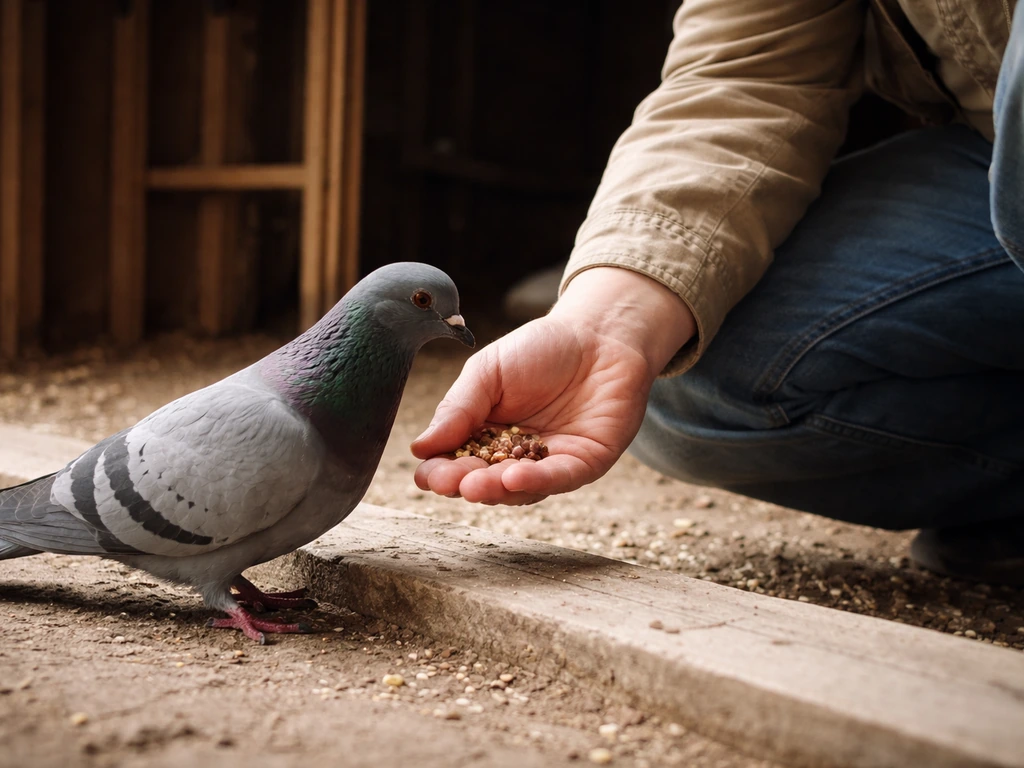
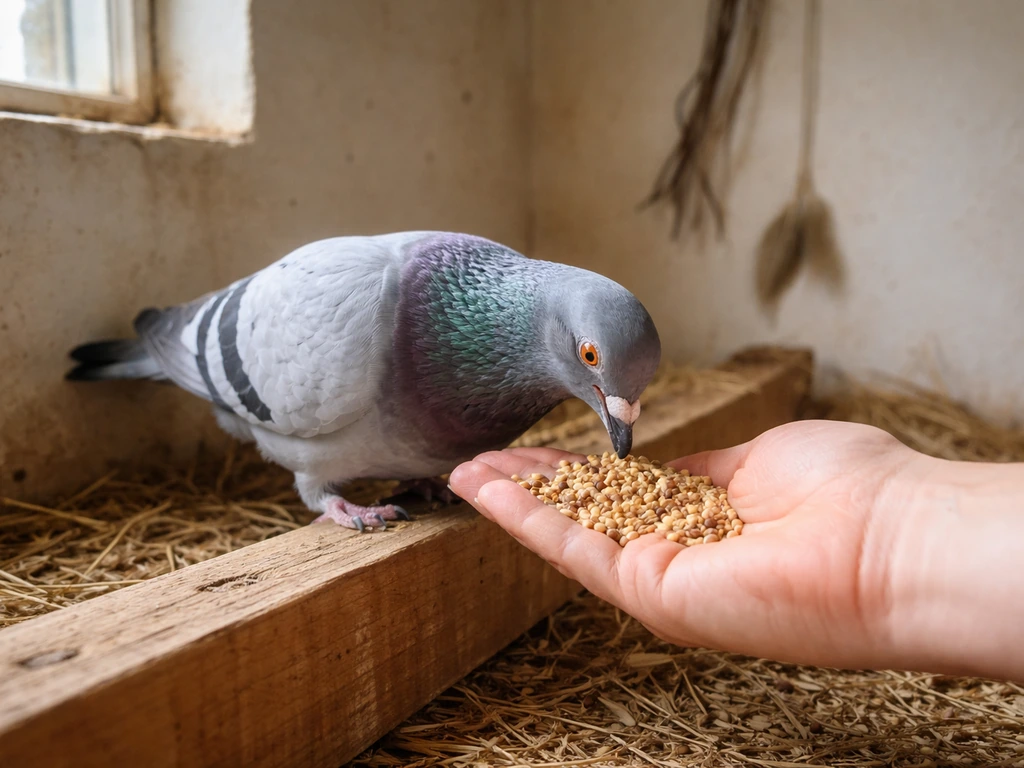
Bonding is the foundation everything else sits on. A bird that doesn't trust you won't fly back to you willingly. Spend the first one to two weeks simply being present near the loft at the same times each day, talking softly, and offering food from your hand. Don't chase the bird around the loft or force contact. Let the bird approach you. This passive bonding phase feels slow, but it dramatically speeds up everything that comes later.
Once the bird is comfortable eating from your hand, introduce a simple target-and-reward routine. Hold a small target (a colored stick or even a finger) near the bird and reward any movement toward it with a small amount of its favorite grain, typically millet, safflower, or a peanut piece. Keep reward portions tiny so the bird stays slightly motivated. The 'step up' behavior, where the bird voluntarily steps onto your hand or arm, is worth training early because it reduces handling stress for both of you and makes loft management much easier. Guide the bird's feet gently onto your hand, reward immediately, and repeat. Within a week most pigeons and doves pick this up reliably.
A consistent feeding schedule is your most powerful bonding and motivation tool. Feed once or twice daily at set times, and always be the one delivering the food. The bird will begin to associate your presence with something good. Don't free-feed (leaving food out all day) during training, because a bird that's never hungry has no reason to return to you or the loft.
The incremental flight and homing training plan
This is the heart of messenger bird training. The goal is to build the bird's confidence and orientation ability through a series of progressively longer releases, always starting closer than you think you need to and only extending distance once the bird is returning fast and consistently. Rushing this phase is the most common beginner mistake, and it leads to lost birds.
Phase 1: Loft training and trap familiarization (weeks 1 to 2)
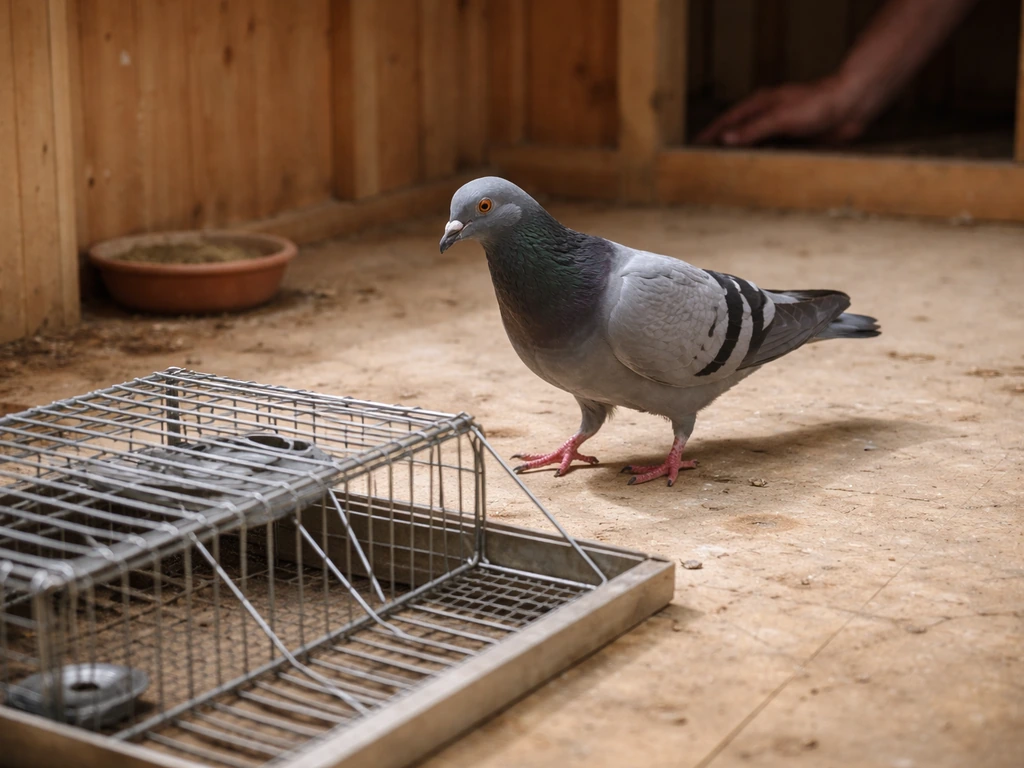
Before the bird ever flies away from the loft, it needs to know how to get back in. Spend the first two weeks working only inside and immediately around the loft. Allow the bird to fly out into an aviary or small enclosed outdoor pen attached to the loft, and practice calling it back through the trap door with a food reward. Use a consistent cue every single time, either a specific whistle, a clap pattern, or a word said at the same volume. The cue doesn't matter, but consistency does. By the end of week two, the bird should enter the loft on cue reliably.
Phase 2: Short local releases (weeks 3 to 5)
Start your first outdoor releases at roughly 1 mile (1.5 km) from the loft. Drive the bird in a ventilated carrier, wait five to ten minutes for it to settle after the drive, then open the carrier. Don't toss or throw the bird. Just open the door and let it orient and depart on its own. Go directly home, open the loft, and have food ready. Most healthy homing pigeons with solid loft bonding will return within 20 to 40 minutes from 1 mile. If the bird doesn't return within two hours, go back to loft-only work for another week before trying again.
Phase 3: Building distance (weeks 6 to 12 and beyond)
Once the bird is returning confidently from 1 mile, increase to 5 miles, then 10, then 25, then 50. At each distance, complete at least three to five successful returns before moving further out. Always release in fair weather. Birds can navigate through light overcast, but heavy rain, strong winds, or fog significantly compromise orientation ability and increase the risk of losing the bird. Never release a bird that has any sign of illness, injury, or unusual lethargy.
| Phase | Distance | Goal | Move On When... |
|---|---|---|---|
| Loft familiarity | 0 miles (in-loft only) | Bird enters trap on cue | 3 consecutive reliable entries |
| Short local | 1 mile (1.5 km) | Bird returns within 2 hours | 5 successful returns |
| Near distance | 5 miles (8 km) | Bird returns within 1 hour | 5 successful returns |
| Mid distance | 10 to 25 miles (16 to 40 km) | Bird returns same day | 3 to 5 successful returns |
| Long distance | 50+ miles (80+ km) | Reliable same-day return | Established pattern over multiple sessions |
Gear, feeding routines, and keeping things consistent
You don't need expensive gear to get started, but a few key items make a real difference. A good ventilated carrying basket or release box (the kind used in pigeon racing is ideal) keeps birds calm during transport and gives them a dark, secure space to settle before release. A leg band or small GPS tracker designed for pigeons is worth having if you're releasing beyond 10 miles, so a lost bird can be identified and returned to you. Many pigeon clubs offer free or low-cost banding services.
Keep a simple training log. Write down the release date, location, distance, weather conditions, time of release, and time of return for every session. This sounds tedious but it's genuinely useful: patterns emerge quickly (maybe your bird always takes longer to return from the northwest, which might indicate a wind or landmark issue), and if something goes wrong you have data to troubleshoot with. A basic notebook works fine, or use a free spreadsheet.
Feeding schedule discipline is non-negotiable throughout training. A typical working pigeon should be fed a quality grain mix (around 30g to 35g per bird per day for a standard-sized pigeon) in one or two scheduled meals. Slightly reduce the morning meal on release days so the bird has more motivation to return to the loft for its afternoon feeding. Don't starve the bird. The goal is a bird that's motivated, not desperate.
- Ventilated transport carrier or pigeon racing basket
- Loft with a one-way trap door entry
- Leg band (ID) and optionally a lightweight pigeon GPS tracker
- Grain mix appropriate for pigeons (corn, peas, safflower, wheat)
- Training log (notebook or digital spreadsheet)
- Consistent release-day routine: same time of morning, same weather standards, same pre-release waiting period
When things go wrong: troubleshooting common problems
Bird refuses to return
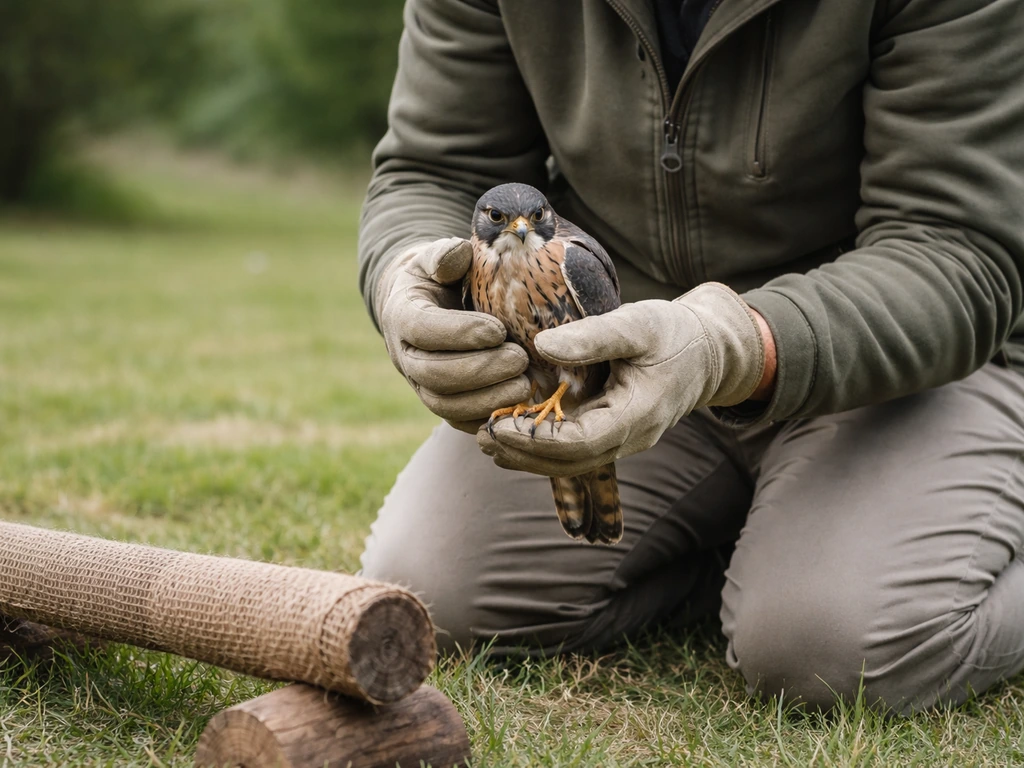
If your bird stops returning reliably, the most common causes are: loft bonding wasn't solid before distance releases started, the bird isn't hungry enough at return time, or there's a predator (hawk, cat, or dog) lurking near the loft that's making the bird reluctant to land. Go back to shorter distances and reinforce the trap-and-reward routine. Check the area around your loft for signs of predator activity. Make sure the trap door is functioning correctly and not jamming.
Bird flies off-course or gets lost
An off-course bird is usually caused by jumping distance too fast, releasing in poor weather, or releasing in an unfamiliar direction without enough gradual exposure to that corridor. Homing pigeons navigate partly by landmarks, sun position, and magnetic sensitivity, but these systems take time to develop and calibrate. Stick to a single direction for your first several distance sessions before varying the release compass point. If a bird doesn't return within 24 hours, post on local pigeon club forums and check pigeon-finding registries since banded birds are often found and reported.
Fear and aggression during handling
A bird that bites, wing-slaps, or panics during handling hasn't built enough trust yet. Don't power through this. Back up to the passive bonding phase and spend more time at the loft without picking the bird up. Pair every approach with food. If the bird is new to you (rehomed or recently purchased), expect at least two to three weeks before it's relaxed enough for regular handling. Avoid grabbing from above, which mimics a predator strike. Approach from the side and below.
Bird seems uninterested in food rewards
This usually means the bird is being fed too much, is unwell, or the reward isn't desirable enough. Try a different treat: most pigeons go wild for safflower seeds or small pieces of peanut even when they're indifferent to standard grain. If the disinterest persists across multiple sessions with different foods, rule out illness before continuing training. A healthy, active pigeon should always show some food interest at the right point in its feeding schedule.
Know when to stop and get expert help
Some situations are beyond what self-guided training can fix, and recognizing them early saves the bird and saves your time. If your bird shows any of these signs, pause all training and consult an avian vet or experienced pigeon trainer before continuing.
- Persistent lethargy, fluffed feathers, or weight loss
- Discharge from eyes or nostrils
- Labored breathing or tail-bobbing at rest
- Repeated failure to return after previously reliable performance (can indicate injury or illness)
- Sudden change in behavior, appetite, or droppings
- Wing droop or visible asymmetry in flight
- Ongoing severe fear response that doesn't improve with two to three weeks of patient bonding work
For health issues, find an avian vet who has experience with pigeons, not just parrots. Pigeon health (including common issues like respiratory infections, canker, and paramyxovirus) is a specialized area and general small-animal vets often lack familiarity with it. Your local pigeon racing club is often the best first call: experienced fanciers have seen almost every health and training problem and can refer you to both vets and mentors in your area.
If training simply isn't progressing despite consistent effort over six to eight weeks, consider reaching out to a pigeon racing club or a bird trainer who works with columbiforms. Many clubs welcome beginners and offer mentorship programs. The learning curve shortens dramatically when you can watch an experienced fancier work with their birds. That hands-on observation is something no written guide, including this one, can fully replace.
One final note on scope: if your interest is in training a dove for recall-style bonding rather than long-distance homing, the approach is similar in structure but compressed in scale. To get a love bird started on training, you can use similar principles like trust-building, short sessions, and consistent rewards how to train a love bird. Doves and training birds of prey involve their own distinct methods worth exploring separately. Whatever species you're working with, the core principle stays the same: trust first, distance second, and the bird's welfare before any training goal.
FAQ
Can I train a messenger bird if it was found unbanded, and how do I tell if it has real homing ability?
Yes, but treat it as unproven. Start with very short, repeated returns (inside the loft, then to the attached pen, then 0.25 to 0.5 mile) and only extend distance after consistent, fast returns. If it shows no return interest even when hungry, assume it is not reliable for homing rather than pushing distance too soon.
How long should training sessions be, and how do I know when to stop for the day?
Keep sessions short, especially early on, typically 10 to 20 minutes of active handling and cueing, then finish on a win. Stop immediately if you see heat stress (wings away from the body), heavy panting, sudden lethargy, or escalating fear during handling, even if the cueing step was going well.
What if my pigeon returns, but it lands far from the loft or hesitates before entering?
That usually means the entry cue and trap-door behavior are not fully reinforced. Return to trap-and-reward inside the loft area (and the attached pen) until the bird consistently enters on cue. Also check that the trap door is clean, unobstructed, and easy to access, and ensure the path into the loft is predictable from the bird’s typical landing spot.
Can I train in windy weather, and what wind conditions are considered too risky?
Light, stable wind is usually manageable, but strong winds, gust fronts, and anything that creates swirling conditions raise the odds of drift off course. If you notice the carrier ride is causing extra agitation or the bird repeatedly lands and reorients multiple times after release, skip that day and wait for calmer conditions.
Should I use a GPS tracker on every training release or only for long-distance flights?
Use trackers strategically. For under about 10 miles, the bird is likely to return quickly if bonding is solid, so a tracker is optional. For beyond that range, a pigeon-specific GPS with a tight, safe fit helps you recover an off-course bird faster and reduces stress because you can confirm whether it is simply delayed or truly lost.
What do I do if my bird returns slowly even though it still comes back?
If the bird returns eventually, treat it as a sign to tighten the training before increasing distance. Stay at the current distance one extra week, ensure release day hunger is appropriate (not starving), and double-check release timing, weather, and your cue routine so the bird does not have to relearn anything. Increase distance only after multiple sessions show consistently faster returns.
How do I choose the right treat, and can changing rewards disrupt training?
A change is fine, but swap intentionally and consistently for a short window. If millet or safflower loses interest, test one preferred option at a time (for example, safflower seeds or small peanut pieces) and use the treat only as the reward for the target, step-up, and return cue. Sudden random treat changes can reduce focus, especially during early recall and entry training.
Is it okay to release the bird from a different direction than usual to build flexibility?
Don’t start that early. Build reliability first by releasing along the same general corridor for the first several distance sessions, then only vary one factor at a time (direction after reliability, distance after consistent timing). If you change direction too soon, the bird may not have enough opportunity to calibrate landmarks, sun angles, and familiar approach routes.
How can I reduce the risk of predators around the loft during training?
Predator pressure is a major “no landing” cause. Remove attractants near the loft, secure access to feed so nothing is left out between meals, and consider using safe deterrents appropriate to your area (for example, night-secure enclosure). Also inspect the landing approach area daily for signs like feathers, droppings, or repeated cat activity.
What should my feeding schedule look like on release days?
Keep scheduled meals at the same times, and slightly reduce the morning portion on release days so motivation remains high by return time. Do not fast the bird beyond what you normally feed, and avoid overfeeding, because an overly full bird has less incentive to return promptly.
My bird is aggressive or panics during handling. Should I keep trying the same steps?
Back up. If biting, wing-slapping, or panic appears, it is usually a trust and restraint issue. Pause distance work, focus on hand-feeding from a calm position, and rebuild step-up gradually using side and below approach. Resume handling only when the bird accepts touch without escalating fear for multiple short sessions.
What if training stalls for several weeks, but the bird seems healthy?
If health is truly good and sessions are consistent, revisit the fundamentals: ensure the loft bonding phase was long enough, confirm the bird can enter on cue reliably, and verify your release workflow (time since carrier opening, immediate access to the loft trap door, and consistent reward). Also check environmental variables like new nearby construction, tree growth blocking sightlines, or changes in weather patterns.
Next Article
How to Train a Bird of Prey: Humane Step-by-Step Guide
Humane step-by-step training for hawks, falcons, or eagles: permits, setup, bonding, positive reinforcement, recall, and