Training a robin is possible, but it looks very different depending on whether you have a wild bird temporarily in your care or a captive-adapted robin that has already been around people. For a wild robin, the goal is never pet-like tameness, it is building just enough tolerance to reduce stress during handling, support recovery, and get the bird back outside where it belongs. For a captive-adapted bird, you can go further: targeting, step-up, and simple recall are all realistic goals with patience and positive reinforcement. Either way, welfare comes first, and this guide walks you through every step. Training a bird of prey has similar welfare-first principles, but the behaviors and handling should be approached differently.
How to Train a Robin Bird Safely and Humanely
Maya Harris
21 May 2026
Robin behavior basics and what to realistically expect
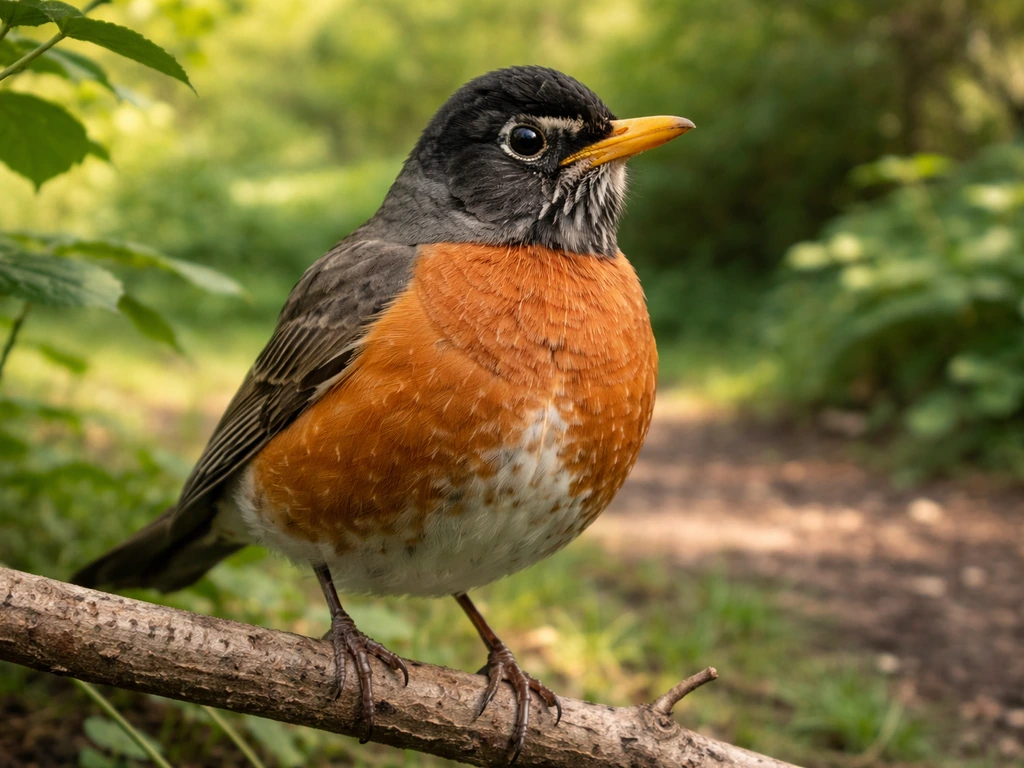
American robins (Turdus migratorius) are wild songbirds, not domesticated animals. A healthy adult robin's default response to a close human approach is to flee, that is completely normal and a sign the bird is doing well. American robins typically show an escape response to close human approach when they are healthy, fleeing as humans get too close. If a robin lets you walk right up and pick it up without any attempt to escape, that is usually a red flag for illness or injury, not a sign the bird likes you.
Understanding this shapes every training decision you make. You are not starting from a blank slate the way you might with a hand-raised parrot or even a dove. Robins are built to be wary of large animals, and that instinct runs deep. What you can realistically achieve depends on the individual bird's history, age, and how long it has been around humans. A fledgling raised in captivity from a very young age is much more tractable than a wild-caught adult. An adult that came in injured will likely always be somewhat flighty, and that is fine, it means release is still on the table.
Watch for these stress and illness signals any time you work with a robin, because they tell you when to stop immediately:
- Feathers puffed up in warm conditions — not normal preening, but sustained fluffing
- Crouching low and appearing ruffled even when not sleeping
- Sudden total stillness or unresponsiveness ("playing dead")
- Labored or open-mouth breathing
- Refusing food for more than a few hours when previously eating
- Repeated escape attempts that don't calm down after a few minutes in a quiet space
If you see any of these during a training or handling session, stop, return the bird to its enclosure, reduce light and noise, and reassess before trying again. Never push through stress signals.
Legal and ethical lines you need to know before you start
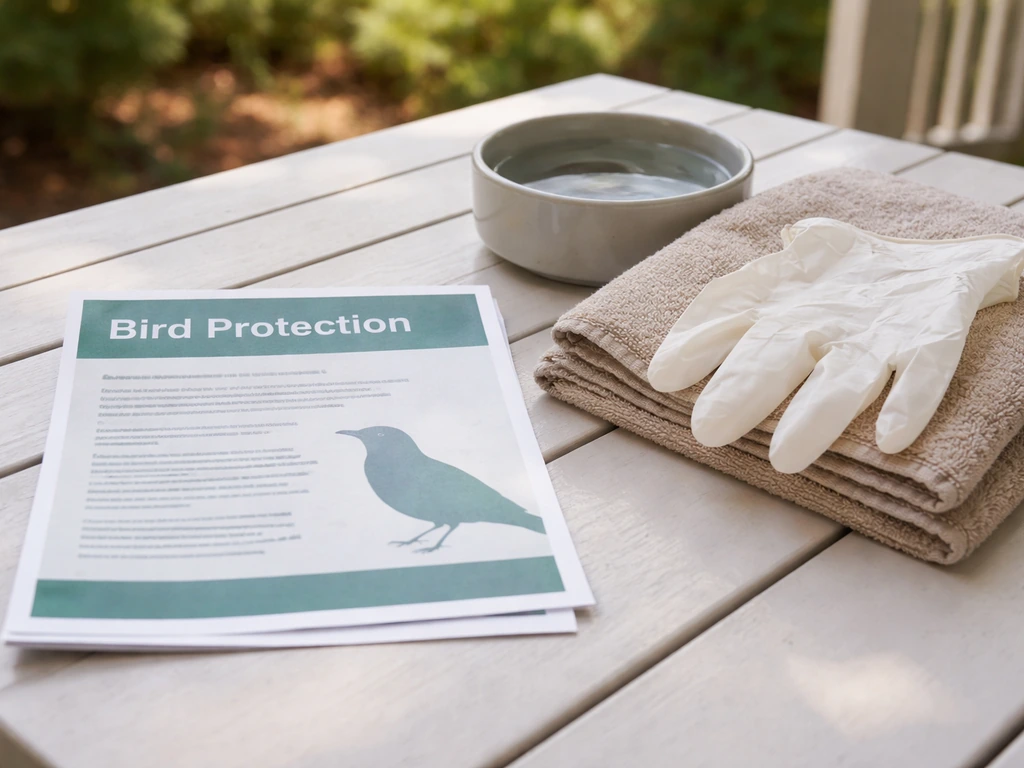
This is not a formality, it is the most important section in this guide. American robins are migratory birds protected under the federal Migratory Bird Treaty Act. That means keeping one without a permit is illegal, even if your intentions are completely good. Most states also require a separate state-level wildlife rehabilitation permit to possess, transport, house, or treat any native wild bird. Michigan, for example, requires a DNR wildlife rehabilitation permit to do any of those things legally. The U.S. Fish and Wildlife Service additionally oversees federal migratory bird rehabilitation permits and expects all releasable birds to be returned to the wild. In its rehabilitation FAQ, the U.S. Fish & Wildlife Service explains that rehabilitators are expected to return all releasable recuperated migratory birds to the wild.
In practical terms, if you found an injured or grounded robin, your first call should be to a licensed wildlife rehabilitator in your area, not a pet store. You can provide basic first aid and safe containment while you arrange the handoff, and this guide covers how to do that safely, but long-term holding and training without the correct permits is not a legal option for most people.
The ethical piece is just as important as the legal one. Wildlife rehabilitation standards are clear that the goal is to restore wild behavioral responses, not create a tame or pet-like animal. An over-habituated robin that no longer fears humans or predators is a robin that probably won't survive after release. Training that crosses into dependency or imprinting is genuinely harmful to the bird. So keep asking yourself throughout this process: is what I'm doing moving this bird toward healthy wild behavior, or away from it?
There is one scenario where longer-term training is ethically appropriate: a captive-adapted robin that has been deemed non-releasable by a licensed professional, or a bird that has been legally obtained and raised in captivity (for example, as an education ambassador through a permitted facility). In that context, the full training toolkit in this guide applies. For a wild bird in temporary care, stick to the minimal-handling, stress-reduction approach described in the taming and trust-building sections.
Safe handling, environment setup, and minimizing stress
Your setup before you ever touch the bird matters more than any training technique. Get this right and every subsequent step is easier.
Temporary containment for a wild bird
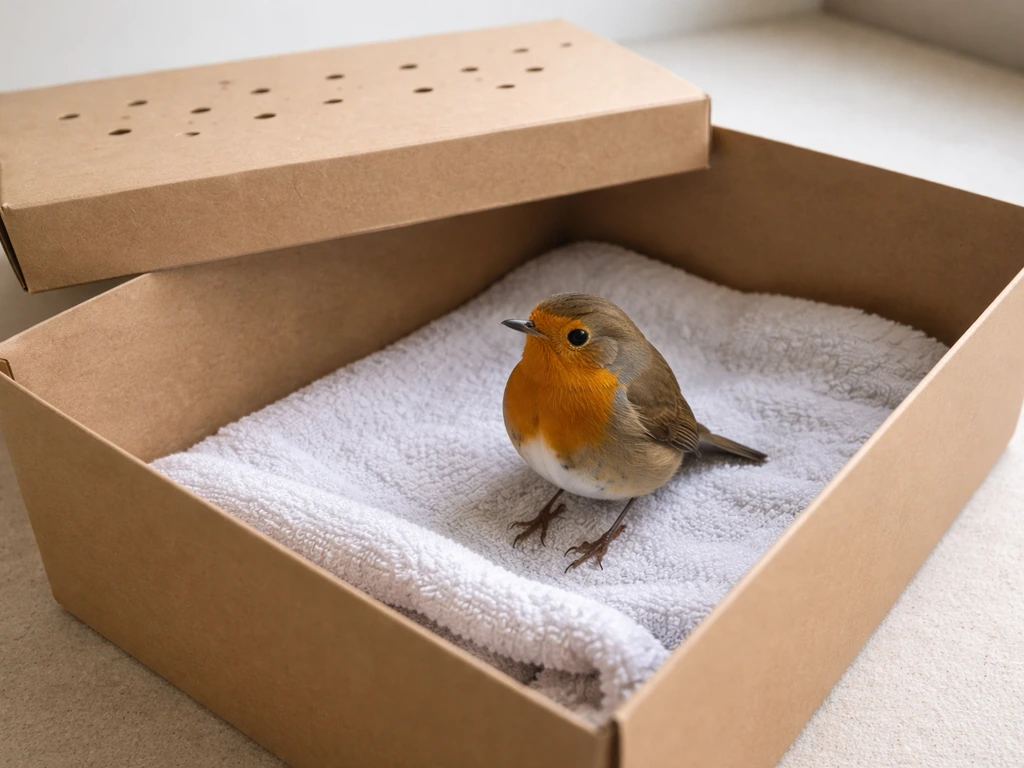
If you are doing initial first aid or temporary containment, a shoebox with air holes punched in the lid works well for a robin. Line the bottom with a folded towel or soft cloth for grip and cushioning. Keep the box in a warm, quiet indoor space, around 85°F is a good target temperature for an injured songbird. Keep it away from household noise, pets, and children. Do not offer food or water until you have spoken with a wildlife rehabilitator; incorrect diet is a real injury and death risk for songbirds, and robins have specific nutritional needs (primarily earthworms, insects, and berries, not bread, seeds, or most common bird foods).
Handling technique: the towel wrap
When you need to pick up or examine a robin, use a light towel or cloth. Gently drape it over the bird, then scoop the bird up so the wings are held against the body. This prevents wing flapping, which is the most common cause of self-injury during handling. Hold the bird firmly but without squeezing, you want it secure, not compressed. Keep sessions short. If you notice rapid open-mouth breathing or the bird feels unusually hot, release it back into the box immediately and wait at least 30 minutes before trying again.
Long-term enclosure for a captive-adapted bird
If you are working with a captive-adapted robin in a permitted or legal context, the enclosure needs to give the bird enough space to move and make choices. A flight cage or large aviary-style enclosure is better than a small pet cage. Include natural perches at varying heights, a shallow water dish for bathing, and visual barriers (like leafy branches or cloth panels) so the bird can retreat from view when it wants to. The ability to choose distance from you is critical for voluntary trust-building, it is not optional.
Taming and trust-building: how to do it step by step
This is where patience pays off. Trust with a robin is built in very small increments, and the core principle is always voluntary interaction. You are creating conditions where the bird chooses to approach or stay calm near you, rather than forcing contact. Rushed trust-building backfires every time.
- Start with presence, not contact. Sit quietly near the enclosure for 5 to 10 minutes, once or twice a day. Do not stare directly at the bird — that reads as a threat. Look slightly to the side and stay still. Let the bird observe you without anything happening.
- Associate your presence with food. After a few days of calm sitting, begin placing food (appropriate items like mealworms or earthworms for robins) just inside the enclosure while the bird watches. Leave immediately after placing food. You want the bird to eat while you are in the room, then while you are closer, then with you stationary nearby.
- Move the food delivery point closer over multiple sessions. Work toward placing food at the end of a long stick or tool, then closer to your hand, over many sessions — not one session. Never rush this phase.
- Introduce your hand as a neutral object. Once the bird is eating reliably while you are nearby, begin resting your open hand (palm up, flat) near the food without moving it. Let the bird decide when, if ever, to step onto it.
- Keep sessions short: 10 to 15 minutes maximum. End each session on a calm, neutral moment — not on a stress signal or a flight attempt. Short positive sessions build confidence faster than long stressful ones.
For a wild bird in temporary rehab care, stop at step two or three. You want it comfortable enough to eat in your presence and tolerate brief handling, not so comfortable that it stops being wary of humans entirely. For a captive-adapted bird, you can progress through all five steps and continue into formal training. If your goal is training a love bird instead, the same patience and positive reinforcement ideas apply, but the bird-specific steps differ, so switch to a lovebird-focused training plan.
Basic training goals: targeting, step-up, and come-to-hand
These three behaviors form the practical foundation for any work you do with a captive-adapted robin. They are realistic goals, unlike complex tricks, and each one builds on the last. The training mechanics here use positive reinforcement with a marker (a click from a small clicker, or a consistent short word like "yes"). Accurate timing matters: you mark the exact moment the bird does the right thing, then immediately deliver the food reward. Even a half-second delay muddies the communication.
Targeting
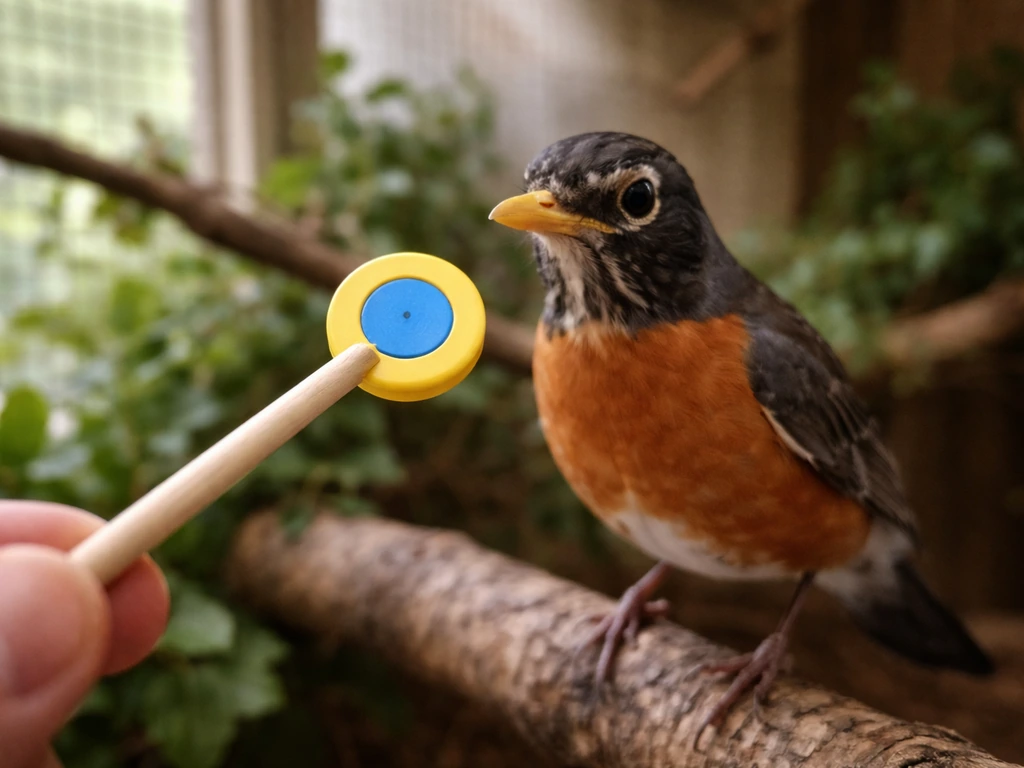
A target is just a small object the bird learns to touch with its beak, the end of a chopstick, a cork on a pencil, or a small colored disc work well. Present the target near the bird. The moment it looks at or moves toward the target, mark and reward. Gradually hold out for an actual touch before marking. Once the robin reliably touches the target, you can use it to guide movement: hold the target where you want the bird to go, and reward when it follows. This becomes the foundation for perch and step-up training.
Step-up (perch training)
Use the target to guide the bird toward a handheld perch or your hand. Position the target just above the perch so the bird has to step onto the perch to reach it. Mark and reward the moment weight shifts onto the perch. Once the bird is stepping onto a handheld stick or dowel reliably, you can gradually transition to your finger or hand, using the same target-guided approach. Never force the foot onto the perch, if the bird pulls away, move the target slightly back and try a smaller step.
Come-to-hand (controlled recall)
This is a short-distance recall inside the enclosure, not a free-flight recall outdoors. Once the robin is stepping up reliably, you can add a cue word or hand gesture paired with holding out the target. Call the cue, present the target at a short distance (start with just a foot away), and mark and reward when the bird flies or hops to you. Gradually increase the distance over many sessions. This behavior is most useful in a care context for moving the bird between spaces safely. Keep it in a controlled environment only, a small songbird practicing recall outdoors is not a safe scenario.
If you have worked with other small birds before, such as doves or lovebirds, you will recognize a lot of these mechanics. If you are also learning how to train a dove bird, the same idea applies: use small, voluntary steps and positive reinforcement doves or lovebirds. The main difference with robins is that their wild instincts are much closer to the surface, so progress typically takes longer and requires more patience at each step.
Feeding, conditioning, and building a daily routine
Feeding is your most powerful bonding tool with a robin, but it has to be done right. American robins eat a mix of invertebrates (earthworms and insects are staples) and fruit and berries. In a captive or rehabilitation context, live or freeze-dried mealworms are a practical and accepted staple, supplemented with soft fruit like blueberries or chopped apple. Do not feed bread, processed foods, seeds, or anything from your own plate, robins are not seed eaters and their digestive systems are not built for it. A poor diet creates health problems that derail any training progress.
Structure feeding around your training sessions. Offer the main daily meal during your training window so food motivation is at its highest. Do not starve the bird to increase motivation, just time the training session to happen before the main meal, not after it. Consistent timing matters: a bird that has learned to expect interaction at roughly the same time each day is calmer and more responsive than one that is approached unpredictably.
Keep a simple log of what the bird ate, what behaviors you worked on, and how the bird responded. Patterns become visible quickly, you will notice which rewards the bird values most, which times of day it is most responsive, and when to push forward versus give more time at a step.
When things go wrong: troubleshooting fear, aggression, and stalled progress
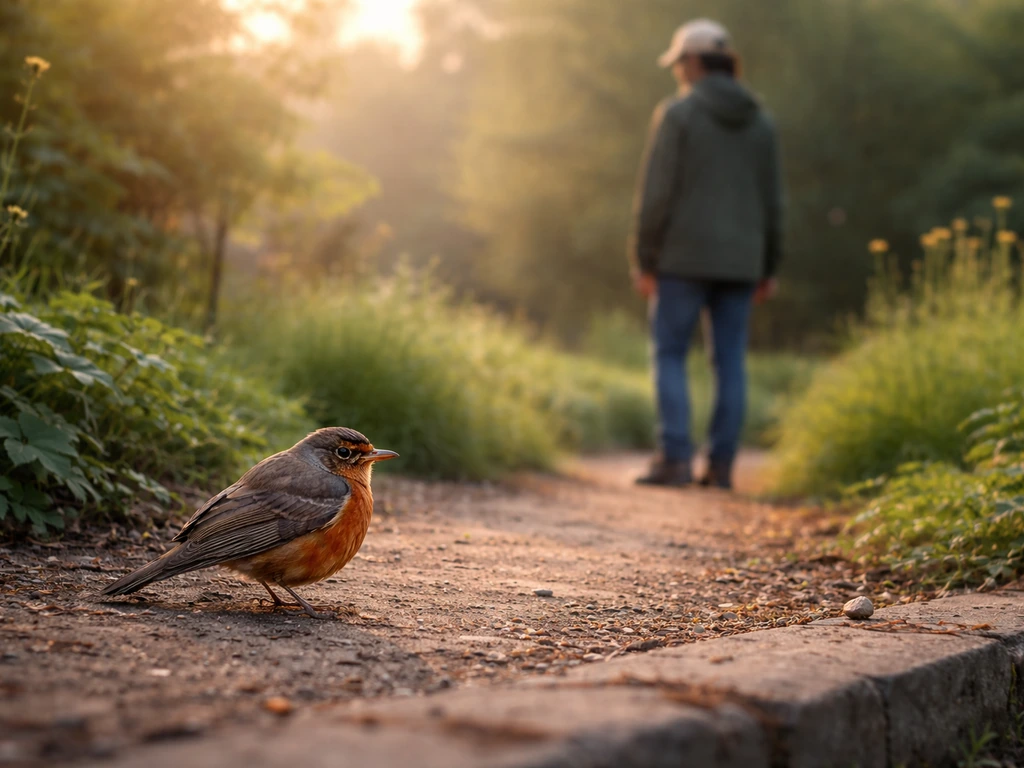
Every training relationship with a wild-origin bird hits rough patches. Here is how to handle the most common ones:
| Problem | Likely cause | What to do |
|---|---|---|
| Bird flees every time you approach | Too much too soon; enclosure too small to feel safe | Back up to presence-only sessions; add visual cover to enclosure; reduce session length to 5 minutes |
| Bird refuses to eat during sessions | Stress overriding hunger; food not appealing enough | End session and try again later; try live mealworms instead of freeze-dried; check enclosure temperature |
| Sudden aggression (lunging, biting) | Fear response mislabeled as confidence; too close too fast | Treat it as a stress signal, not boldness; increase distance; never punish biting |
| Progress stalls for several days | Plateau is normal; may also be health issue | Give 2 to 3 days off with minimal contact; if stall persists beyond a week, rule out illness |
| Bird injures itself trying to escape | Enclosure too small or wire too fine; handling too frequent | Move to larger space; reduce handling frequency; add padding to corners and walls |
| Bird seems tamer than expected suddenly | Possible illness making it lethargic, not trust | Do not interpret sudden tameness as progress; check for illness signs immediately |
One rule that overrides all troubleshooting: if the bird stops eating entirely for more than 12 hours, or shows any signs of labored breathing, injury, or sudden lethargy, contact a licensed wildlife rehabilitator or avian vet right away. A sick robin declines fast, and no training consideration is worth delaying that call.
Release readiness: knowing when to stop training and hand off
For any wild robin in your care, release back to the wild is always the goal. The training you have done, minimal handling tolerance, reduced stress response, eating well, is in service of getting the bird healthy enough to go. It is not in service of keeping the bird around longer. Knowing when to stop is as important as knowing how to start.
Release readiness has two components: physical and behavioral. Physically, the bird should be at a healthy weight, free of injury, and able to fly strongly. Behaviorally, it should be showing normal robin behaviors: appropriate wariness of humans and other animals, interest in foraging, and normal vocalizations. A robin that walks calmly onto your hand, shows no fear of you, and makes no attempt to fly away when given the opportunity is not release-ready, it is over-habituated, and that is a problem.
A soft release, where you open the enclosure in a safe outdoor space and let the bird choose when to leave over a period of days (with food still available nearby), is generally better than a hard release (taking the bird outside and letting it go immediately). A soft release gives the bird time to reorient, test its flight, and recalibrate its wild instincts without being suddenly overwhelmed. Nebraska wildlife rehabilitation guidance supports this approach specifically because it reduces the behavioral impact of captivity.
If the bird you have been working with cannot safely be released, because it is non-releasable due to injury, improper imprinting, or another permanent condition confirmed by a licensed professional, then the path forward is coordination with a permitted wildlife facility or education program, not continued solo home training. That is not a failure; it is the right welfare outcome for that individual bird.
Throughout this process, keep checking in with a licensed wildlife rehabilitator. They are the right resource for release timing decisions, diet questions, and anything that falls outside your experience level. Training a robin well means knowing exactly where your role ends and theirs begins. If you are specifically wondering how to train a messenger bird, the same welfare-first, positive-reinforcement foundations apply, but you will need to follow the bird's handler and local regulations.
FAQ
Can I train a robin if I found one on the ground and it seems fine?
No. If you have a robin that is grounded, injured, or acting abnormally, your job is short-term containment and getting expert help, not building a training routine. Robins have species-specific diet and care needs, and pushing interaction can worsen shock, overheating, or wing injury. If it is not obviously safe to release quickly, call a licensed wildlife rehabilitator first.
What if my robin gets stressed during clicker or “yes” training?
Use a marker only if the bird is staying engaged and calm enough for learning. If you see increased flapping, open-mouth breathing, or refusal to take preferred food, pause training, return the bird to the quiet enclosure, and reassess later. Marker-based training relies on consistent, low-stress conditions, otherwise the bird may associate you with discomfort instead of the reward.
How do I know when training is making a wild robin too comfortable with humans?
In the wild, “almost tame” behavior can be a welfare problem. A release-ready robin should still show normal caution and should forage and respond like a wild bird. If the bird consistently allows close contact, does not attempt to escape when the exit is available, or loses normal fear of movement, stop training and have the rehabilitator evaluate habituation risk.
My robin ate a little bread or seed, what should I do before continuing training?
Do not use bread, seeds, pet bird mix, or food from your plate. Even small amounts can cause digestive problems that reduce survival after release. In a rehab or permitted context, rely on the diet your rehabilitator specifies (commonly live or freeze-dried mealworms plus appropriate soft fruit in controlled amounts). If you already fed something unsafe, tell the rehabilitator immediately.
What should I do if target training suddenly stops working?
If a session consistently fails, treat it as a signal that the step is too hard or timing is off. Scale back to an easier behavior (for example, marker for looking at the target rather than touching it), reduce session length, and make sure you mark at the exact correct moment. Also check whether the reward you are using is actually motivating the bird.
Can I practice robin recall outdoors after it steps up reliably?
Yes for captive-adapted, permitted, or non-releasable birds, but not as an “outdoor recall practice” for a wild bird. Outdoors adds escape risk and predation exposure, and a robin can switch from learning mode to flight immediately. Keep recall training short distance and inside the secure enclosure, then only move to new environments with guidance from a licensed professional for that bird’s status.
When is a robin actually ready to be released after training?
If the bird is fully feathered and physically able to fly, it may be ready for release sooner than you expect, but only a rehabilitator can confirm. Watch for normal wariness and foraging interest, plus strong flight capability. Don’t wait for “perfect” behavior, but also don’t release if the bird cannot fly well or fails behavioral criteria, because that is not survivable.
If I can legally keep the robin for now, can I do the whole training myself long-term?
Not usually. Migratory songbirds and protected wildlife are not pets, so your plan should be coordinated with licensed care. Even if you can handle the bird, you generally should not attempt long-term housing or ongoing behavioral work without the correct federal and state permissions. If you tell me your state, I can help you identify which type of licensed rehabilitator to contact first.
What health signs mean I should stop immediately and not continue training?
Stop and seek help if the bird stops eating for more than 12 hours, shows labored breathing, sudden lethargy, or signs of injury. Also stop handling if it feels unusually hot or shows rapid open-mouth breathing, then wait at least 30 minutes in a warm, quiet containment area before reassessing. Training should never be prioritized over red-flag health symptoms.
My robin seems friendly now, could it still be a release problem?
Sometimes. A robin that is over-habituated may appear easy to handle, but that can predict poor post-release survival. Indicators include low fear of humans, minimal escape attempts when given the opportunity, and losing normal wild foraging and predator responses. The correct response is to pause training, keep handling minimal, and ask the rehabilitator to evaluate release readiness.
Next Articles
How to Train a Messenger Bird: Step-by-Step Guide
Humane step-by-step guide to train a homing or messenger bird: bonding, rewards, safe releases, troubleshooting, and rea
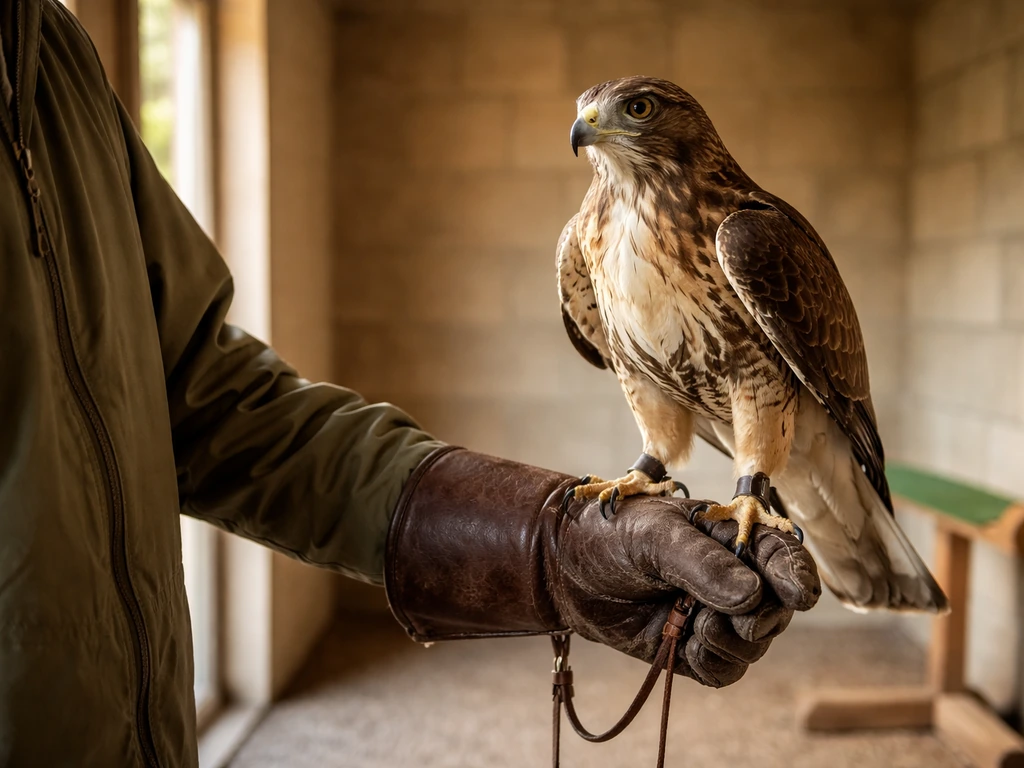
How to Train a Bird of Prey: Humane Step-by-Step Guide
Humane step-by-step training for hawks, falcons, or eagles: permits, setup, bonding, positive reinforcement, recall, and
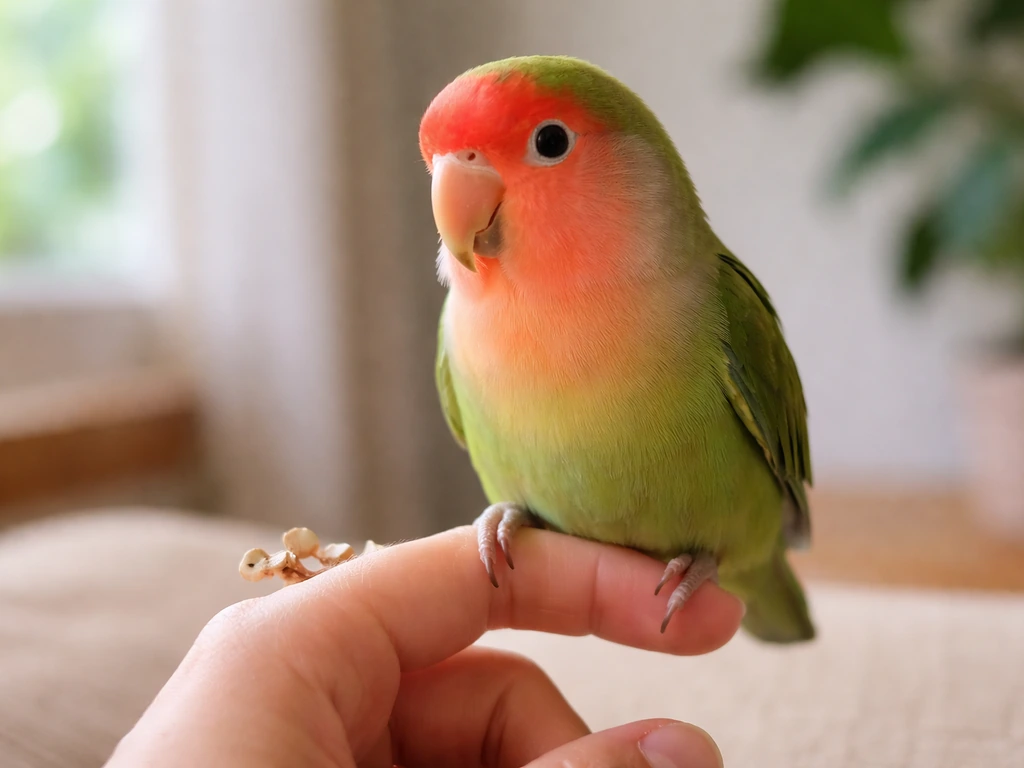
How to Train a Lovebird: Step-by-Step Bonding Guide
Humane, step-by-step lovebird bonding and training for calm step-up, reduced biting, safe handling, and trust building.