Training a towa towa bird comes down to patience, consistency, and positive reinforcement built on a foundation of trust. If you’re wondering how do you train a bird in general, start with the same basics: a safe, low-stress setup and lots of short, positive practice sessions. These small seed-finches respond well to gentle, reward-based handling once they feel safe in their environment. Start by confirming exactly which species you have, set up a calm and appropriate space, then work through trust-building in small daily sessions before moving on to step-up, targeting, and recall-style cues. If the bird bites, panics, or refuses food, that is almost always a pacing problem, not a personality problem, and this guide walks you through fixing it.
How to Train a Towa Towa Bird: Humane Step-by-Step Guide

First, confirm you have the right species
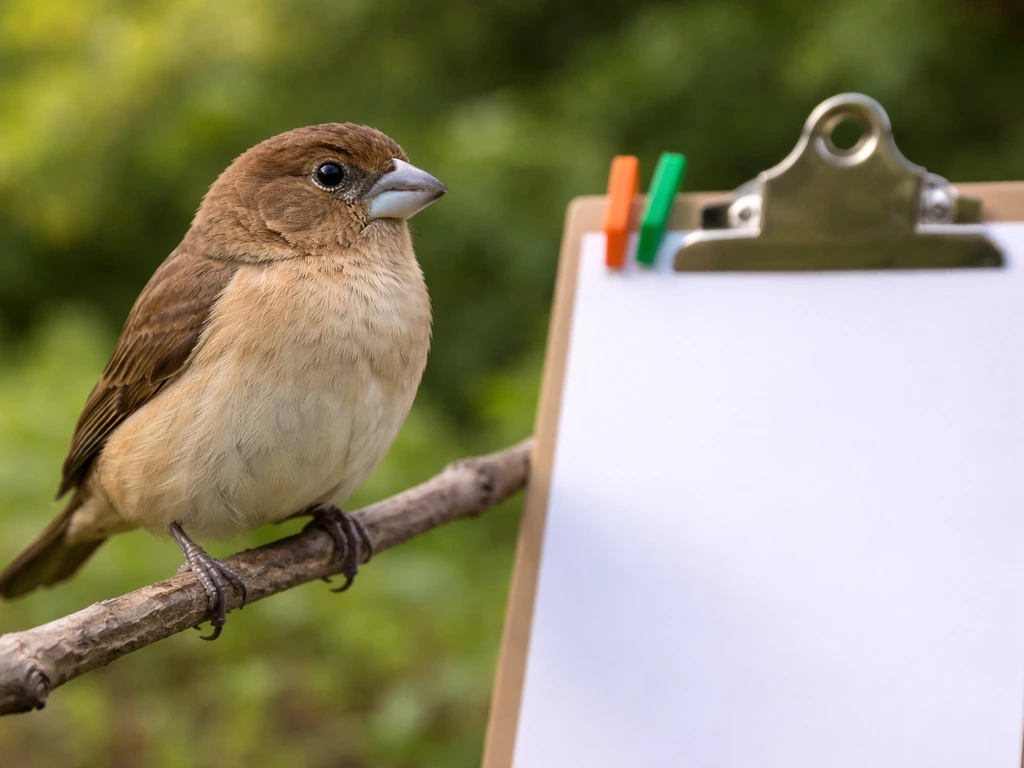
"Towa towa" is a local common name used primarily in Guyana and Surinam for a group of small seed-finches, most often referring to the chestnut-bellied seed-finch, known scientifically as Oryzoborus angolensis (also listed under the older name Sporophila angolensis). These birds are prized cagebirds in Guyanese and Surinamese aviculture, traditionally kept and even competed in regional singing contests. They are compact, finch-sized birds with rich chestnut underparts, a heavy seed-cracking bill, and a strong, musical voice.
Before you do anything else, confirm that your bird matches that description. If you are outside Guyana or Surinam, someone may have applied the name loosely to a different finch or even an unrelated species. Getting species identification right matters because it shapes everything from diet to legal status to realistic training expectations. A photo shared with a local bird club, an aviculture forum, or an avian vet can confirm your identification quickly.
You also need to be clear about whether your bird is a captive-bred pet or a wild-caught bird in your care. The training approach is broadly similar, but the timeline, legal standing, and welfare considerations are different. A captive-bred bird socialized to humans will move through the early trust stages faster. A wild or semi-wild bird needs a longer decompression period before any formal training begins. If you are not sure of the bird's origin, treat it as wild-caught until it demonstrates otherwise.
Get the environment, diet, and handling setup right before you start
Nothing undermines bird training faster than a stressed bird. Towa towas are small and sensitive, and they need a stable, low-stress environment before they can learn anything useful. Getting this foundation right is not optional, and skipping it is the single most common reason training stalls.
Housing and perches
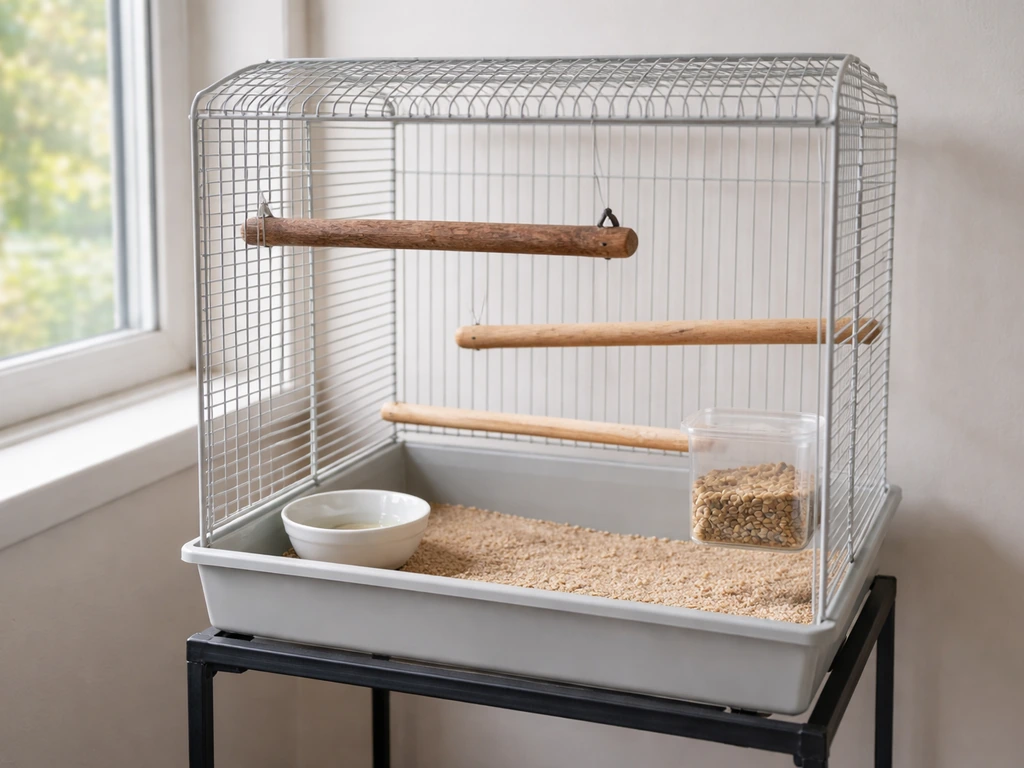
Use a cage that gives the bird room to move horizontally, since finches fly side-to-side more than they climb. Perches should be varied in diameter to exercise the feet, and placed at different heights. Avoid placing the cage near drafts, air conditioning vents, or in a high-traffic area of the home. A partially covered cage gives the bird a sense of security. Keep the cage in a room where it can hear and see household activity without being overwhelmed by it.
Diet
Seed-finches like the towa towa are strong seed eaters by nature, but a seed-only diet is nutritionally incomplete for captive birds. The best approach is to base the diet on a quality pelleted finch food, then supplement with a smaller portion of fresh leafy greens, sprouted seed (especially useful during breeding or high-activity periods), and occasional egg food for extra protein. Offer only a small amount of grit. A bird that is well-nourished is calmer, more engaged, and faster to learn. Diet also gives you your most powerful training tool: a bird that is motivated by food will work for high-value treats.
Safe handling setup
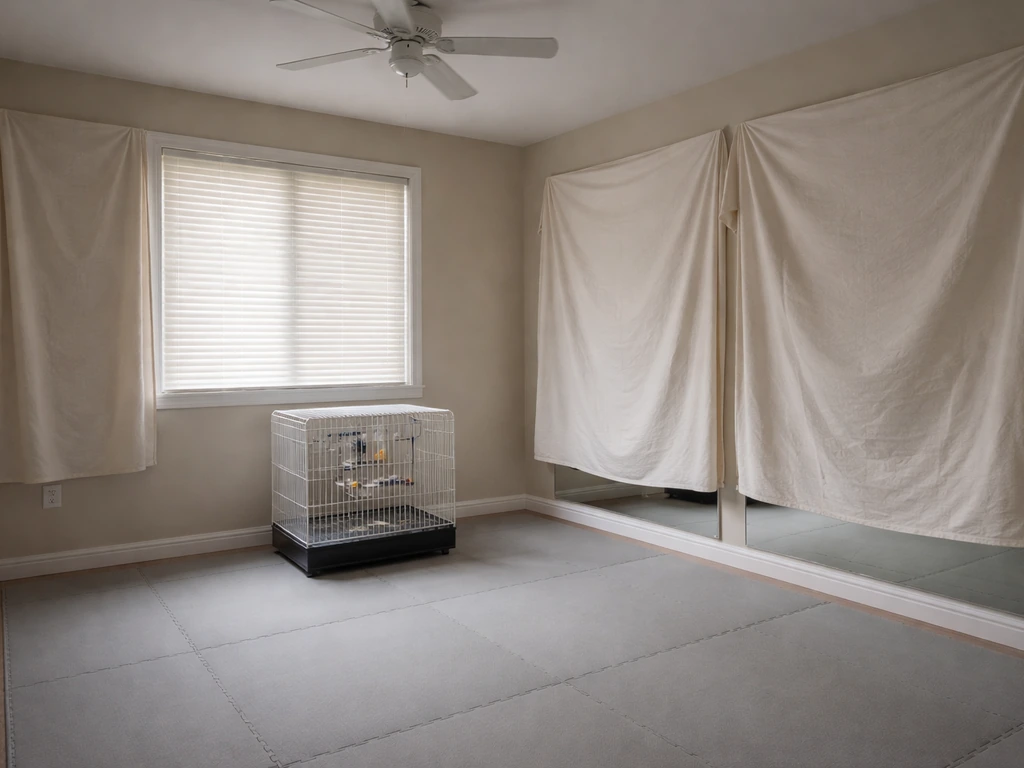
Choose a small, quiet, bird-proofed room for your training sessions. Close windows, cover mirrors, switch off ceiling fans, and remove other pets. This keeps the bird from panicking and flying into walls if it escapes your hand, and it keeps you both calm. Keep sessions short, ideally 5 to 10 minutes once or twice a day. Always wash your hands before handling. Never restrain the bird by squeezing its chest, since that restricts breathing and causes immediate distress. If force is required to handle the bird, you are moving too fast.
Building trust before anything else
Trust is not a personality trait your bird either has or does not have. It is a learned response that builds through repeated positive experiences with you. This phase takes days to weeks depending on the individual bird, and rushing it will cost you more time in the long run.
The approach routine
Start by simply sitting near the cage for short periods each day without trying to interact. Read, work quietly, or just be present. The bird needs to learn that your presence predicts nothing threatening. Once the bird is feeding, preening, or moving around normally while you are nearby, you are ready to move closer. Approach the cage slowly and from the front so the bird can always see you coming. Avoid sudden movements and keep your voice low and calm.
Hand-feeding to build a positive association
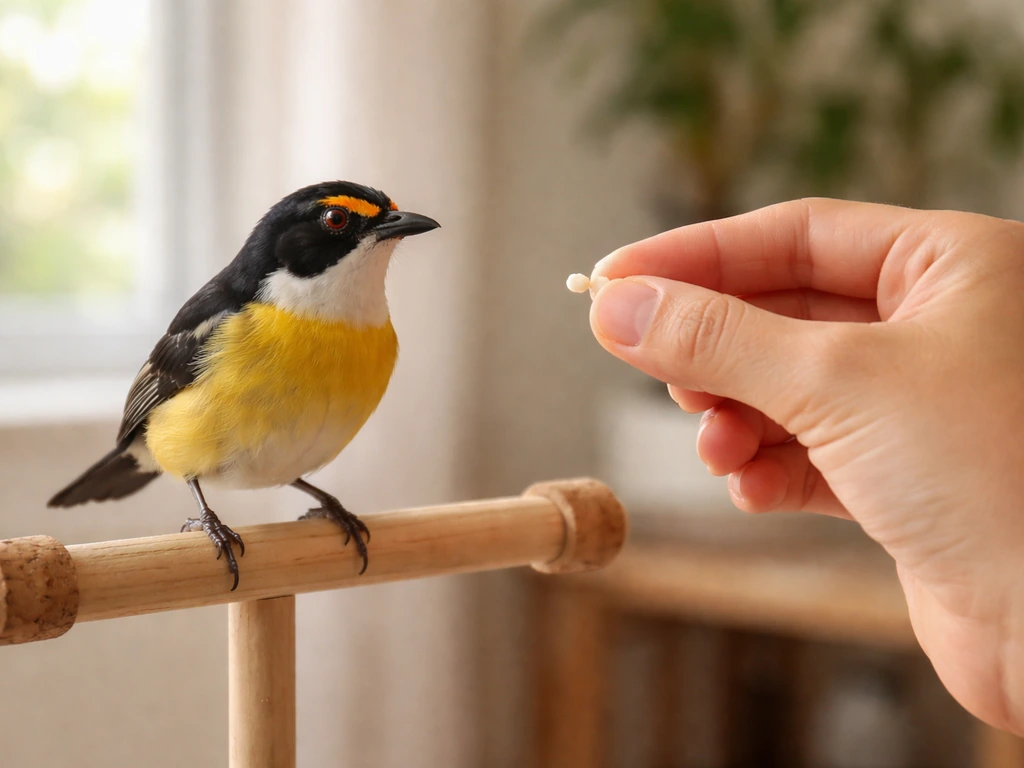
Once the bird is comfortable with your presence at the cage, start offering small treats through the cage bars by hand. Good options for towa towas include small millet sprays, tiny pieces of sprouted seed, or a favourite green. Hold the treat still and wait for the bird to approach you rather than reaching toward it. When it takes food from your hand consistently, you can move on to opening the cage door and offering food just inside, then eventually with your hand resting on the cage floor or a low perch. Each step should be repeated until the bird is relaxed before advancing.
Reading the bird's comfort level
Watch body language carefully throughout. A relaxed bird holds its feathers smooth, moves at a normal pace, and will chirp or sing. Stress signs to watch for include tail flaring, leaning or turning away from you, feathers slicked tight to the body, open-mouth breathing, or the bird making itself look larger by puffing up. If you see any of these, stop what you are doing, give the bird space, and drop back a step in the training sequence. These signals are the bird telling you it is not ready yet.
Step-by-step training foundations
Once the bird willingly eats from your hand, you have the foundation for real training. The four behaviors below build on each other in sequence, so work through them in order. Each session should always start with something the bird already knows well so it begins in a confident, rewarded state.
Target training
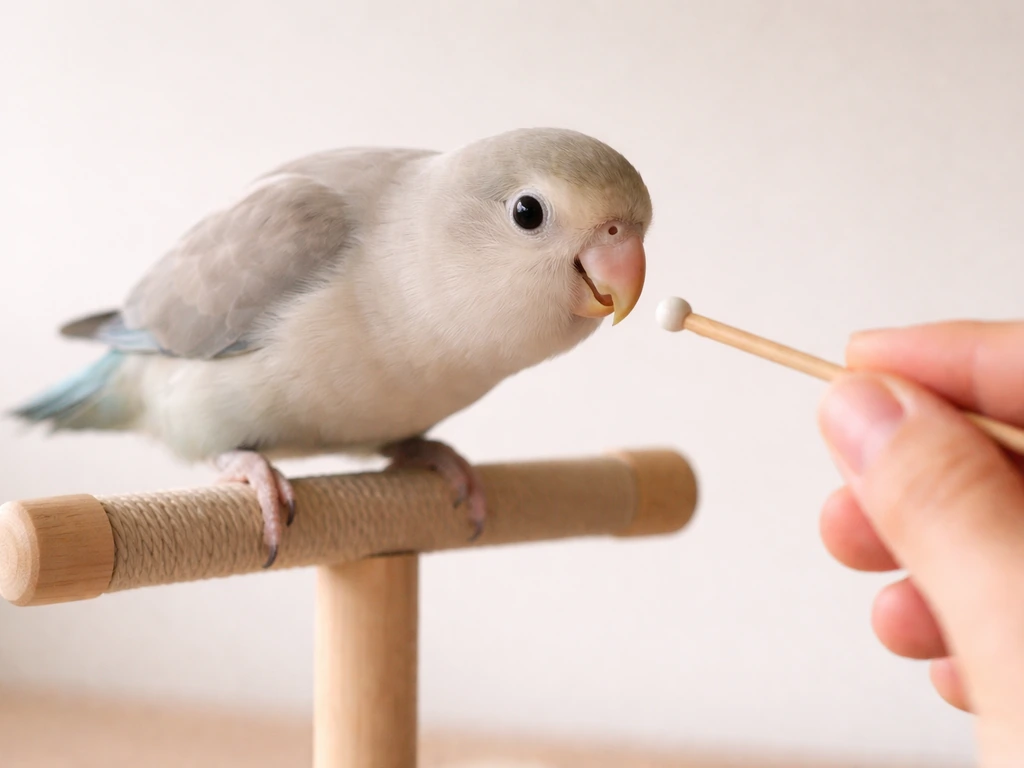
Target training is the simplest way to start because it uses the bird's natural curiosity. AAV defines target training as positive reinforcement where the animal is asked to touch a target item to receive a reinforcer, with a sound marker used as soon as the target behavior occurs target training is the simplest way to start because it uses the bird's natural curiosity.. Hold a small, distinct object (a chopstick tip, the end of a pencil, or a purpose-made target stick) near the bird and wait for it to look at or lean toward it. The instant it does, reward with a treat. Gradually shape the behavior so the bird has to touch the target with its beak to get the treat. Once that is reliable, you can use the target stick to guide the bird to move in different directions, step onto a perch, or relocate within its cage. Use a short, consistent verbal cue like "touch" each time.
Stationing
Stationing means teaching the bird to go to and stay on a specific perch or spot on cue. Place a distinctive perch or platform in the cage and use the target stick to guide the bird onto it. Reward immediately when it lands there. Build duration gradually by waiting a second or two longer before rewarding. Give the behavior a cue word like "perch" or "spot." This is useful for management, for keeping the bird calm during cage cleaning, and as a foundation for more complex behaviors.
Step-up
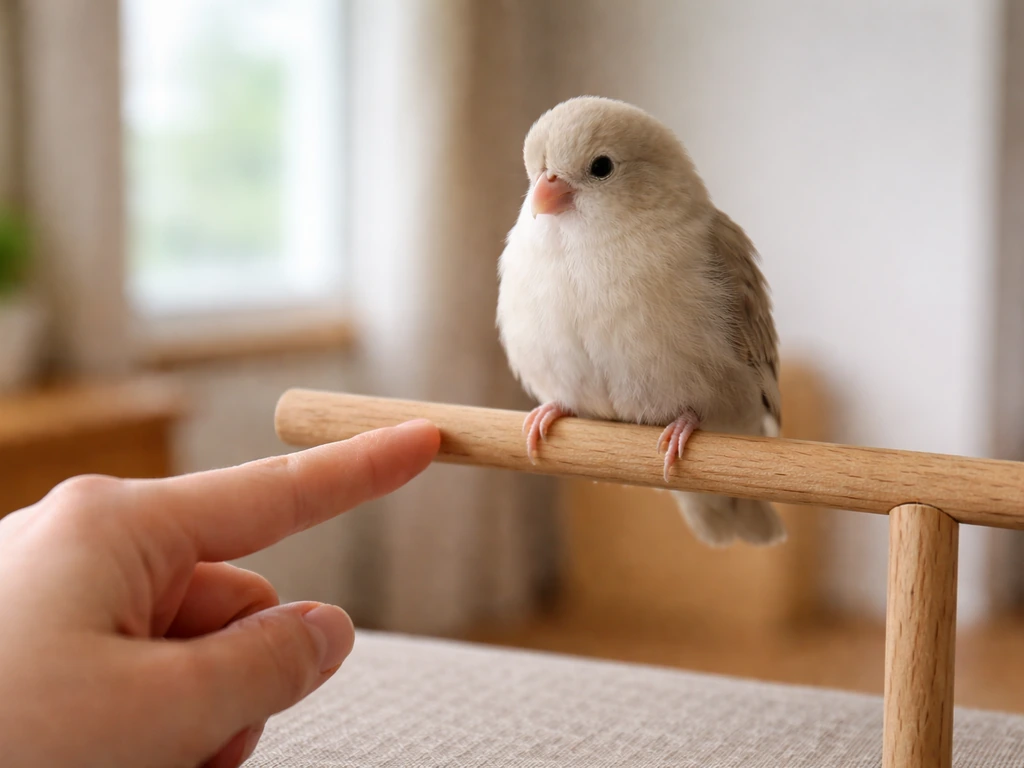
Step-up is the core handling behavior. Work in a quiet, enclosed room with the bird on a low, familiar perch. Hold your finger or a hand-held perch horizontally just below the bird's feet and slightly in front of it, pressing gently against the lower chest just above the feet to encourage it to shift its weight forward. The moment it steps onto your hand, reward immediately with a high-value treat and verbal praise. Keep the first sessions very brief: one or two successful step-ups and done. SpectrumCare recommends building step-up behavior with short, predictable training sessions and consistent cues and reward patterns keep the first sessions very brief. If the bird is reluctant, go back to more hand-feeding sessions and try again the next day. Never force the step. If the bird has any foot or leg discomfort, step-up will be harder, so check for any physical issues if a bird that was progressing suddenly refuses.
Recall-like cues
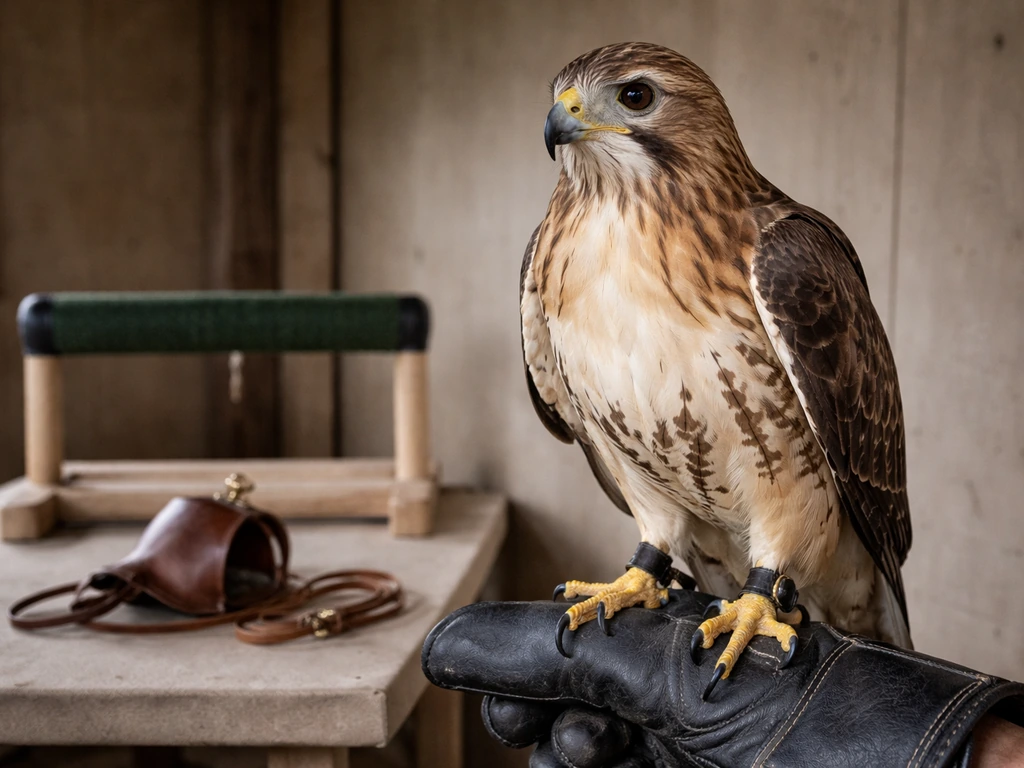
A full free-flight recall is not a realistic goal for most towa towa owners, especially with a bird that has outdoor access or is in an aviary. But you can teach a reliable short-distance recall within a safe indoor space. If you’re also learning how to train a falcon bird, use the same welfare-first mindset and work up gradually within a safe indoor space. If your goal is to work with a bird of prey, keep focusing on calm, consistent, positive handling while prioritizing safety and welfare from day one. Start by calling the bird's name or using a distinct whistle while showing a treat, rewarding every time it moves toward you. Build distance gradually over many sessions. This behavior is useful for getting the bird to come to your hand from a nearby perch. Always keep recall training indoors in a controlled space, and never attempt it outside.
Bonding and enrichment training
Formal training is only part of building a relationship with your towa towa. Enrichment and routine are equally important and often produce better results faster than structured drills. Towa towas are intelligent, active birds that need mental engagement every day.
Foraging-style feeding is one of the best enrichment tools available. Instead of placing all food in a bowl, hide millet sprays in different parts of the cage, wrap seeds in paper, or place greens in a clip at a varying location. This engages the bird's natural foraging instinct and builds confidence. A confident bird is easier to train.
Consistent daily routines matter more than most people realize. Feed, interact, and train at roughly the same times each day. Predictability reduces background stress and makes the bird more receptive when training time comes. Talking to the bird softly and regularly during non-training time, such as when you are nearby doing other things, also builds a positive association with your voice and presence.
For towa towas specifically, their natural tendency toward song means that playing recordings of their species' song or providing audio enrichment can reduce stress and stimulate natural vocalizations. This is not a training behavior exactly, but a happy, singing bird is a bird that is bonding well with its environment and with you.
Gentle play with items like small swings, bells, or paper-based toys engages the bird and lets you be the source of good things. Introduce new items slowly, placing them outside the cage first so the bird can investigate at its own pace before they go inside.
When things go wrong: troubleshooting common problems
Almost every training problem has a root cause you can identify and fix. Here are the most common ones and what to do about each.
| Problem | Likely Cause | What to Do |
|---|---|---|
| Biting | Fear, moving too fast, or the bird is testing its limits | Back up in the training sequence, reduce session length, reward calm behavior around your hand before contact |
| Panic or flightiness | Environment too stimulating, or trust phase not complete | Return to quiet presence near the cage, extend the trust-building phase by several days |
| Refusing food/treats | Wrong treat choice, bird is not hungry enough, or stressed | Try different high-value options (fresh millet, sprouted seed), reduce portion at last feeding before session, check for stress signs |
| Refusing to step up | Moving too fast, physical discomfort, or fear of hands | Return to hand-feeding, check feet for injury, reduce the height of your offered hand |
| Stress signs during session | Session too long, too many new things at once, or illness | End the session, give the bird recovery time, check for illness if signs persist |
Biting is the problem that most people find most discouraging. The key thing to understand is that birds bite out of fear far more often than out of aggression. If your towa towa bites your hand when you reach toward it, that is not a bad bird. It is a bird that has learned that biting makes the scary thing go away. The fix is to make your hand predict good things consistently, and to never push past the point where the bird feels it needs to defend itself. Keep your movements slow, approach from the front, and stop before the bite happens.
If a bird that was progressing well suddenly refuses food, avoids interaction, sits fluffed, or shows open-mouth breathing at rest, stop training immediately. These can be signs of illness, and a sick bird should never be trained. Get it to an avian vet promptly.
Legal and ethical responsibilities, and when to get professional help
Seed-finches like the towa towa fall under wildlife protection and trade regulations in many countries, and the legal landscape matters regardless of how long someone has kept these birds locally.
Know the law where you are
In the United States, the Migratory Bird Treaty Act restricts possession, sale, and use of many bird species, and documentation requirements apply in various contexts. In the UK, the Wildlife and Countryside Act 1981 protects wild birds, and you may need a licence to keep certain species legally. Across the EU, captive bird establishments must be registered under animal health law, and CITES-related trade rules apply to wildlife imports and movement. If your towa towa was imported, wild-caught, or obtained without documentation, you should check with your national wildlife authority before proceeding with any training or handling. Keeping a protected bird illegally is a serious offense, and the bird's welfare is also at risk in unregulated situations.
Wild birds need a different approach
If you have found or are caring for a wild towa towa that is injured or grounded, the ethical and practical approach is different from training a pet bird. Minimizing human contact is usually the right goal so the bird can be returned to the wild. Handle it as little as possible, keep it in a quiet, dark space to reduce stress, provide appropriate food and water, and contact a licensed wildlife rehabilitator as soon as possible. Do not attempt to tame or train a wild bird unless you are a licensed rehabilitator with that specific goal as part of an approved program. If you want to learn how to train a wild bird safely, focus on welfare first and consider professional guidance early. The goal for wild birds is recovery and release, not bonding.
When to call an avian vet
Contact an avian vet without delay if you observe any of the following:
- Open-mouth breathing at rest
- Wings held away from the body or drooping
- Feathers persistently slicked tight or bird looks visibly smaller than usual
- The bird has lost noticeable weight (a 10 percent drop in body weight is clinically significant)
- Discharge from eyes, nostrils, or beak
- The bird has been unresponsive to food for more than 24 hours
- Any injury, suspected broken bone, or suspected ingestion of a toxic substance
These are not wait-and-see situations. Small birds decline quickly, and early intervention makes a significant difference to outcomes. A good avian vet can also advise on whether your specific bird is a good candidate for the kind of handling and training described in this guide, which is especially useful if you are unsure about the bird's age, origin, or health history.
Training a towa towa well is genuinely rewarding. These are smart, musical birds with distinct personalities, and a bird that has learned to step up and engage with you is a pleasure to keep. The process is slower than most people expect, but every step you take carefully stays in the bank. If you are interested in applying these same principles to other species or more advanced work, the approach used here, which is rooted in positive reinforcement and welfare-first handling, scales well across different bird types and training goals.
FAQ
How long should each training session be for a towa towa bird?
Use short, high-value sessions (about 5 to 10 minutes) and end while the bird is still relaxed. If the bird starts flinching, puffing, or refusing food during a session, stop immediately and resume the next day at the last step it completed comfortably.
What treats are best, and can I use their regular seed as rewards?
Select treats that the bird naturally works for, but avoid anything that causes diarrhea or is hard to digest. Examples mentioned in this guide include small millet sprays, tiny sprouted-seed pieces, and favourite greens, and you should keep treat portions small so nutrition stays complete.
My bird panics when I get near the cage. What should I do?
If it panics when you approach, pause and go back to “you sit near the cage” for a few days. Also check setup stressors like drafts, mirror reflections, loud rooms, ceiling fans, and other pets. Rushing the next step is the most common reason panic keeps returning.
What if my bird used to step up but suddenly refuses now?
Do not troubleshoot by forcing step-up, touching the bird’s chest, or increasing pressure. Instead, return to hand-feeding and check for foot or leg discomfort, such as sore toes or uneven perch surfaces. If refusal persists or you see any physical signs, contact an avian vet.
If my bird bites during training, should I keep going to correct the behavior?
A “no” is typically a sign to slow down. Stop the interaction, give space, and drop back one training level (for example, from target to hand-feeding through the bars). Consistently rewarding calm approach teaches the bird that your hand is safe, which reduces future biting.
Can I train recall so my towa towa will come when called outside?
Avoid free-flight recall outdoors. For short recall, work only in a controlled indoor space and build it gradually from very small distances, using a consistent cue like the bird’s name or a distinct whistle plus a visible treat.
How should I handle the bird if I need to move it for cage cleaning or vet visits?
Because finches are easy to spook, you usually should not pick up a towa towa unless it is necessary and the bird is already comfortable with handling. If handling is required, use minimal restraint, keep sessions gentle, and prioritize getting the bird to step willingly rather than being grabbed.
What if I cannot provide sprouted seed or fresh greens every day?
If you cannot offer fresh foods daily, keep the base diet on a quality pelleted finch food and use smaller measured supplements (greens, sprouts, and occasional egg food) rather than increasing seed alone. A well-nourished bird learns faster and is less reactive.
Is it okay to keep training when the bird seems tired or fluffed up?
Train on a consistent schedule, but also keep timing flexible around illness or stress. If the bird is unwell, training should stop entirely, since small birds decline quickly and pushing sessions can worsen stress.
Can I play recordings of their song to help training or bonding?
Yes, audio can be useful for bonding and reducing stress, but keep it at a low, non-overwhelming volume and avoid constant loud sound. Use it as enrichment, not as a replacement for the in-person trust-building steps.
What if I am not sure my bird is actually a chestnut-bellied seed-finch (towa towa)?
If identification is uncertain, treat the bird as if it may not be the exact species described, and get confirmation from an avian vet or a local bird club. Species confusion can affect diet suitability, welfare expectations, and legal compliance.
Do I need a different training timeline if my towa towa might be wild-caught?
If the bird was wild-caught or origin is unknown, start with an extended decompression period before any formal training. Handle it less, build trust slowly, and watch for stress signs longer than you would with a captive-bred bird.
How do I set up foraging enrichment without disrupting training progress?
Foraging enrichment should be consistent and safe, avoid placing items where they can tangle around feet, and remove any spoiled or wet items promptly. Keep training treats separate from enrichment so you can accurately track what motivates the bird.
How to Keep a Bird of Prey: Legal Care and Training Steps
Disambiguates legal contexts and gives humane steps to house, feed, train, and handle raptors safely from day one.