You can teach most pet parrots and some other bird species to push a small ball toward a target (the basketball trick) using target training and positive reinforcement, typically in 2 to 4 weeks of short daily sessions. The training works by breaking the full behavior into tiny steps: first your bird learns to touch the ball, then push it, then push it toward a specific goal. No forcing, no punishment, no chasing. Every step is the bird's choice, and you reward the right ones.
How to Teach Your Bird to Play Basketball: A Humane Guide
Maya Harris
11 May 2026
Before you start: bonding, trust, and basic cues
Basketball is a multi-step behavior, and it will fall apart if the foundation isn't there. Before you introduce a ball and a goal, your bird needs three things in place: a comfortable relationship with you, the ability to station calmly on a perch or training stand, and at least a basic understanding of target training.
If your bird still backs away from your hand, lunges when you reach into the cage, or won't take treats from your fingers, those are signs to pause on basketball and spend more time on trust first. Let your bird get used to your presence at its own pace. Sit near the cage, offer treats through the bars, and let your bird control the distance. Only move to step-up and stationing once it's eating from your hand calmly.
Target training is the real prerequisite here. The Teach-Your-Parrot-to-Target guide frames parrot target training as a foundational cooperative skill that you teach stepwise before using it to build other behaviors blank" rel="noopener noreferrer">Target training is the real prerequisite here.. If your bird already knows how to touch a stick or chopstick with its beak on cue, you're ready to build on that foundation directly. If it doesn't, spend a week or two teaching it before you ever bring out a ball. Target training teaches the core contingency: 'I touch this thing, I hear a marker (click or verbal cue), and I get a treat.' That's exactly the same logic you'll apply to touching and pushing the ball. Teaching your bird to spin, play dead, or roll over follows the same foundation, so any of those skills you've already built will transfer here.
- Bird accepts treats calmly from your hand or from a spoon near the training area
- Bird will step up or station on a training perch/stand without being forced
- Bird touches a target stick reliably 8 or more times out of 10 when presented
- Bird is eating well, appears healthy, and is alert and engaged during interactions
Setting up safely: equipment, space, and the right ball
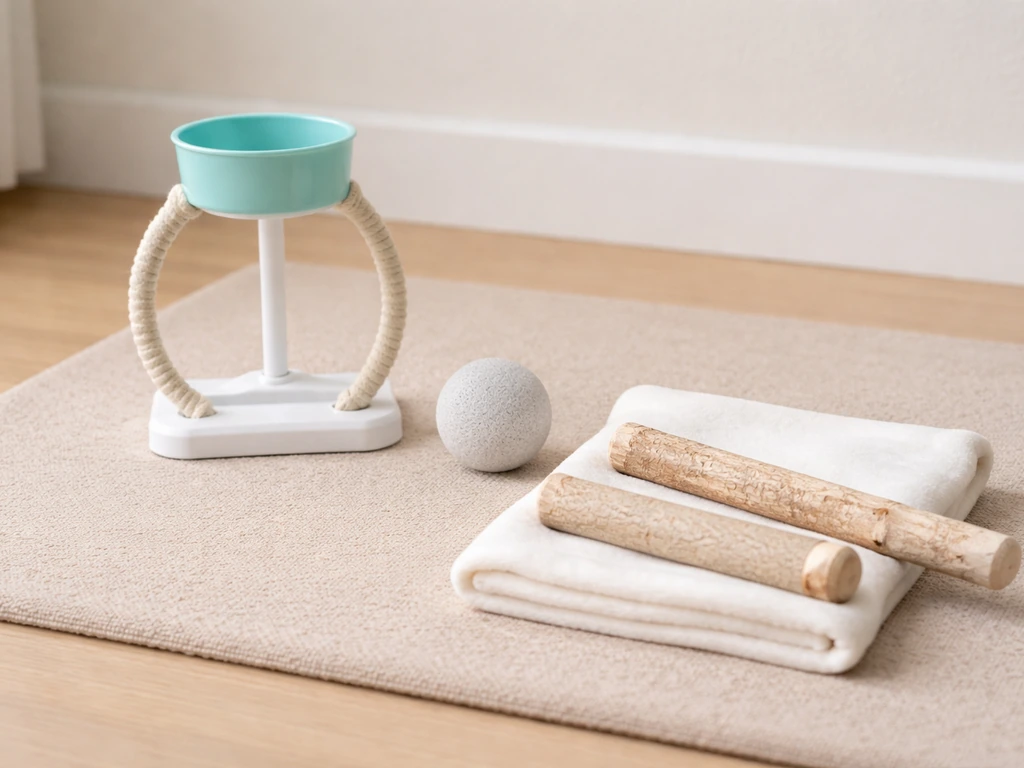
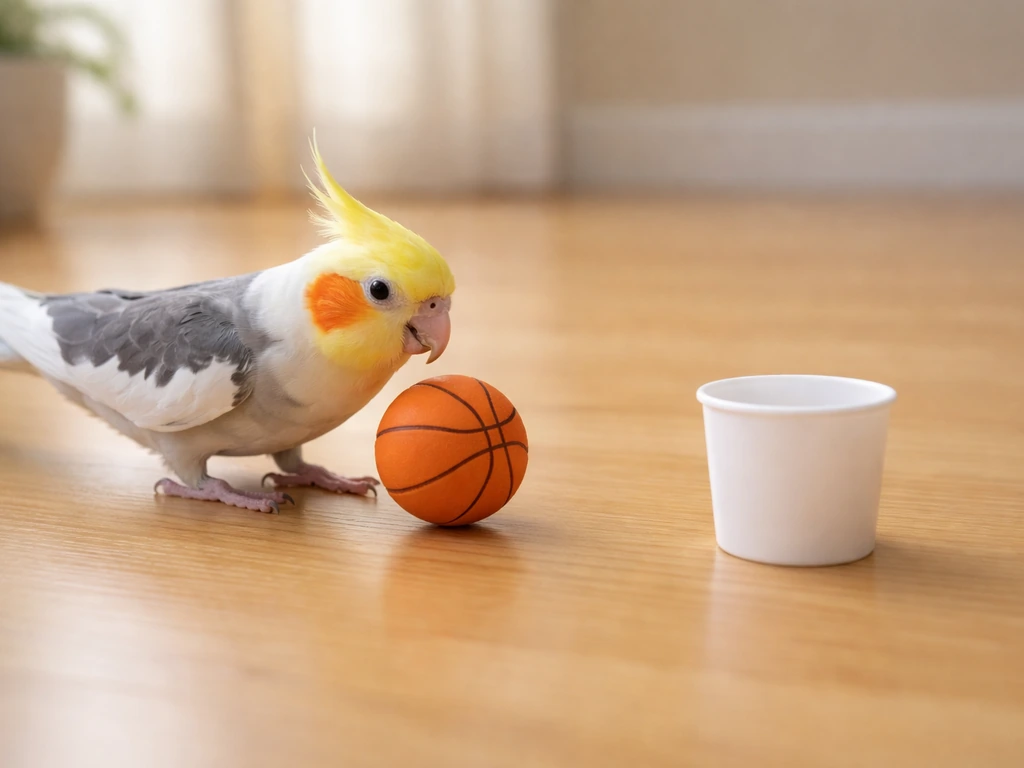
The most important thing to get right before you ever train is choosing a ball that won't hurt your bird. The ball needs to be appropriate for your bird's size: roughly the size of a large grape for small birds like budgies and cockatiels, and up to ping-pong ball size for medium parrots like conures and caiques. For larger parrots like African greys or macaws, a golf-ball-sized smooth rubber or hard plastic ball works well.
Avoid anything that can break into sharp or swallowable pieces. No hollow plastic balls with seams that can crack, no foam balls that your bird can tear apart and ingest, and nothing with small attachments like bells inside that could fall out. Solid rubber balls, smooth wooden balls, and purpose-made bird toy balls are usually safest. Treat the ball as a supervised training prop, not something left in the cage. If your bird starts chewing chunks off it, replace it immediately.
For the 'hoop' or goal, a simple plastic cup, a small ring, or a commercially made bird basketball set all work. The goal just needs to be stable enough not to fall over and startle your bird when the ball goes in. Avoid anything with gaps or openings large enough to trap a foot or a beak. Set it on a flat surface at roughly the same level as where the bird will be standing.
Your training space should be quiet and free of distractions. A tabletop training perch or flat surface works better than the cage environment because the bird has room to move and you can control what's in the space. Close windows and doors, turn off ceiling fans, and remove other pets. Keep sessions to one spot until the behavior is solid, then gradually move to new locations.
Step-by-step training: from first touch to playing basketball
This is a shaping process. You're building the final behavior one tiny piece at a time, only moving forward when the current step is reliable. Don't rush past any step just because your bird seemed to get it once. A behavior is ready to build on when your bird performs it correctly 8 or more times out of 10 attempts.
Step 1: approach and look at the ball
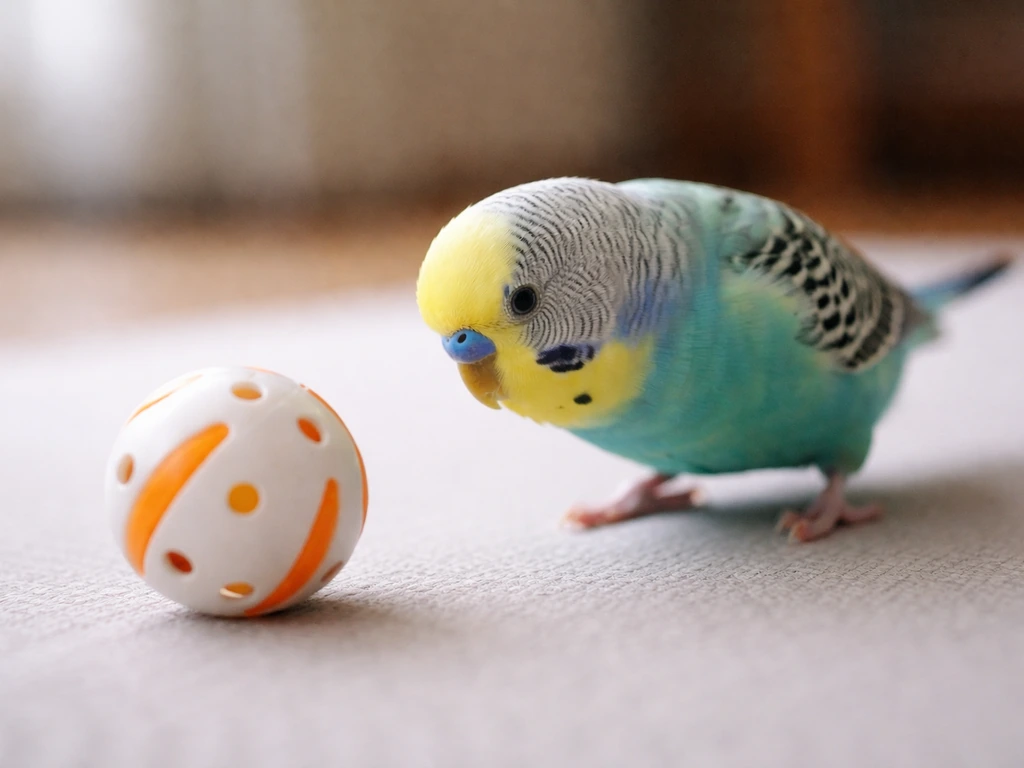
Place the ball on the training surface and let your bird investigate it without pressure. Some birds will walk right up to it; others will back away. Don't push or move the bird toward the ball. Mark and reward any movement toward it, even just a head-turn in its direction. This step can take one session or three days depending on your bird's temperament. You're just teaching 'the ball is not scary and being near it pays off.'
Step 2: beak touch
Once your bird is comfortable approaching the ball, use your target stick to guide it toward the ball. Gradually shorten the target stick over several sessions until the ball itself is the thing being touched. The moment the beak makes contact with the ball, click (or use your verbal marker) and deliver the treat within about one second. That timing window matters a lot: rewarding even two or three seconds late can accidentally teach your bird that something else it did in that gap was the right behavior.
Step 3: push (not just touch)
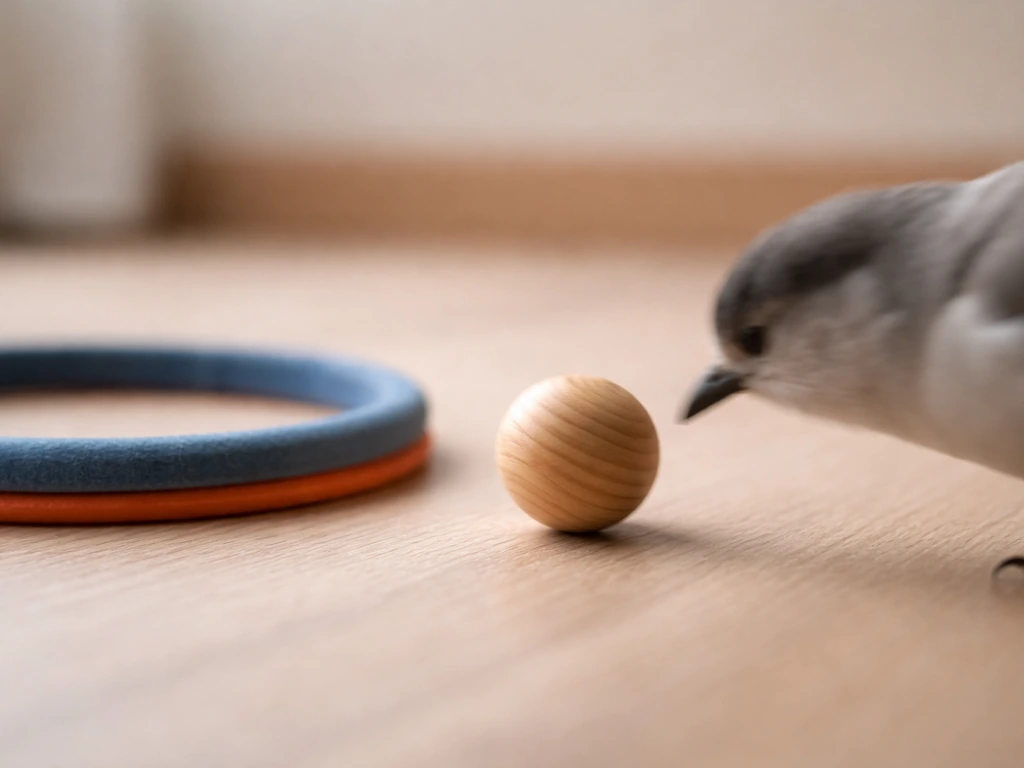
Now you raise the criteria slightly. Instead of marking any beak contact, wait for the ball to actually move. Only click when the bird's beak touch causes the ball to roll or shift. Most birds will start doing this naturally as they get more confident with the ball. If your bird is just tapping the ball gently, try positioning it right at the edge of the training surface where even a light push makes it visibly roll. Mark that movement.
Step 4: push toward the goal
Place the goal (cup or hoop) about 5 to 10 centimeters away from where the bird is pushing the ball. Position the ball between your bird and the goal so the natural push direction is toward it. Mark and reward any push that moves the ball in the goal's direction, even if it doesn't go in yet. Gradually require more accuracy: first reward any push toward the goal, then reward only pushes that hit the goal, then reward only pushes that go in.
Step 5: add the cue and put it on command
Once your bird is pushing the ball into the goal reliably, add a verbal cue or a hand signal right before the behavior happens. Say 'basketball' or 'shoot' the moment before you see the bird move toward the ball. After several repetitions, the cue will predict the behavior. Eventually you can use the cue to prompt the behavior without setting up as elaborately. Practice in short reps, always keeping success rate high.
Rewarding well: treats, timing, and session structure
The marker (clicker or verbal word like 'yes') is what does the teaching work, but it's only meaningful if it consistently predicts a reward. Do your 'charge the marker' phase first if you haven't: click and immediately give a treat 10 to 15 times in a row until your bird clearly anticipates the treat at the sound of the click. After that, the click becomes a precise communication tool.
Use your bird's highest-value treat for basketball training, especially in early stages. Small pieces of a favorite seed, a sliver of fruit, or a tiny piece of nutrient-dense pellet work well. The treat should be small enough to eat in a second or two so your bird stays engaged rather than stopping to crunch something for 30 seconds. Save the jackpot treats (a bigger or more exciting reward) for breakthrough moments like the first successful shot.
Keep sessions short: 3 to 5 minutes maximum for most birds, especially at the start. End on a success. If your bird gets something right in the first two minutes, finish on that high point rather than pushing for more reps. Twice-daily short sessions outperform one long session every time. Signs that a session should end early include the bird looking away repeatedly, flying off the training perch, ignoring treats, feather-sleeking, or yawning.
Species and temperament: not every bird trains the same way
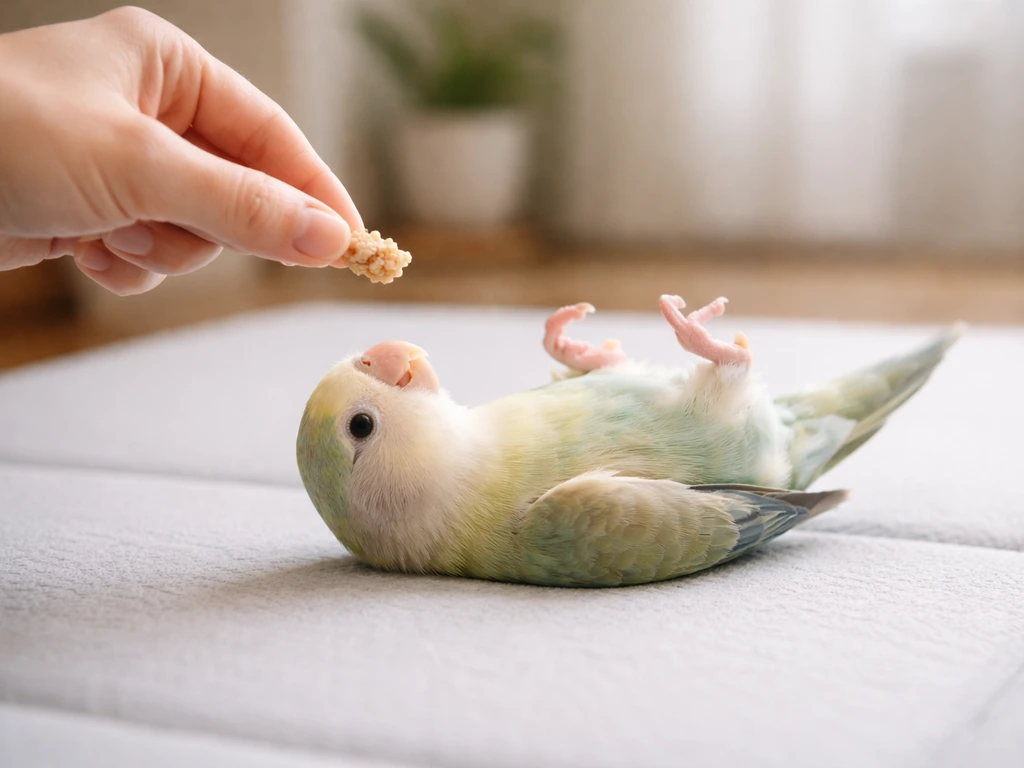
This trick is most practical for medium to large parrots: cockatiels, conures, caiques, African greys, amazons, cockatoos, and macaws are all capable of it. You can use the same kind of patient shaping and reinforcement to teach your bird to lay on its back as a separate, step-by-step trick. Budgerigars (budgies) can learn a simplified version with a very small ball, though their smaller beak means pushes will be gentler and the goal needs to be proportionally smaller. Finches and canaries are generally not strong candidates for this type of object manipulation due to their smaller beaks, flightier nature, and lack of the same object-interaction drive.
| Species | Ball size | Notes |
|---|---|---|
| Budgerigar | Marble or small grape-size | Simplified version; needs patient shaping; very short sessions |
| Cockatiel | Large grape to olive-size | Often curious and motivated; good beginner species for this trick |
| Conure / Caique | Olive to golf ball-size | High energy and playful; usually picks this up quickly |
| African Grey / Amazon | Ping-pong to golf ball-size | Can overthink new objects; benefit from extra desensitization time |
| Cockatoo | Golf ball-size | High motivation but can get overexcited; watch for frustration |
| Macaw | Golf ball to racquetball-size | Strong beak; ensure the ball is very durable; supervise closely |
Temperament matters as much as species. A bold, toy-motivated bird will often pick up the touch phase in one session. A cautious bird, or one that was previously housed in an unstimulating environment, may need a week just to feel comfortable with the ball nearby. IAATE position statements emphasize that avian training and educational choices should be tailored to each bird’s individual behavioral and physiological needs. Don't force the pace. A nervous bird that gets pushed too fast will start avoiding the training area entirely, and that's much harder to fix than just going slowly from the start.
If you're working with a bird that is being rehabbed or conditioned back to socialization after neglect or stress, use target training as the primary bridge. Object manipulation like basketball should come only after the bird has demonstrated reliable, relaxed engagement with basic targeting. There's no rush.
When things go wrong: troubleshooting common problems
The bird shows no interest in the ball
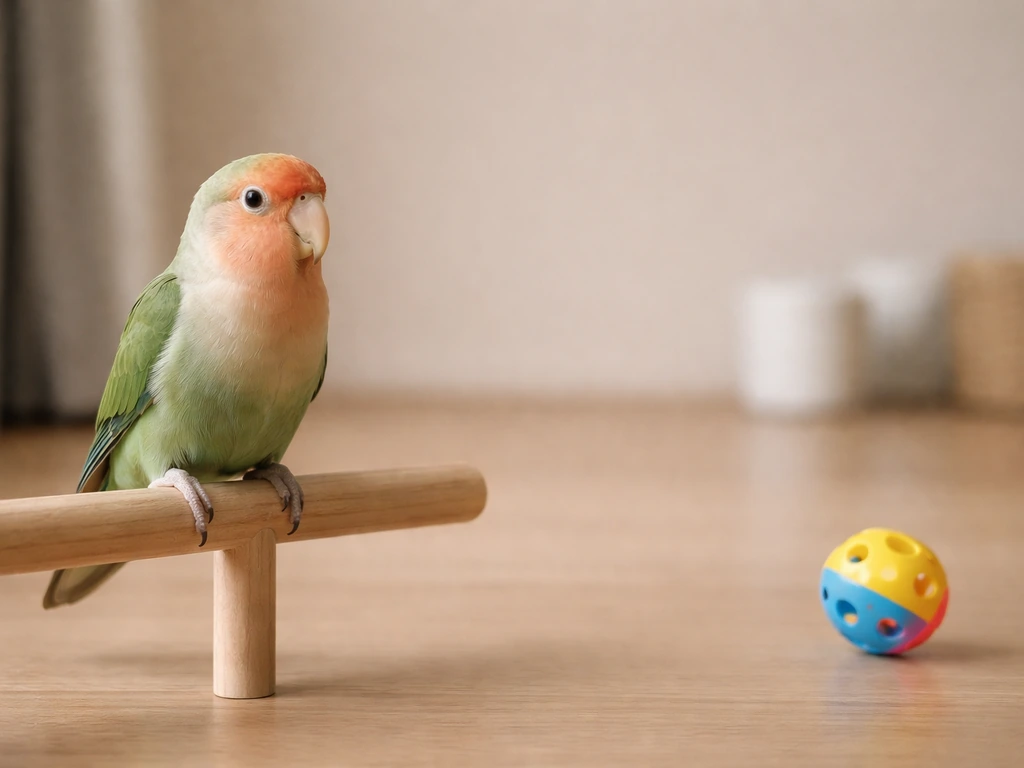
This is the most common early issue. Start by making sure you're training when the bird is hungry, not right after a full meal. Try a different ball texture or color. Some birds respond better to a ball that rattles slightly or has a familiar smell from being handled by you. You can also smear a tiny amount of a favorite food on the ball's surface to encourage initial investigation. Go back to rewarding any orientation toward the ball at all.
The bird is afraid of the ball
Back way up. Place the ball on the far side of the room and reward calm behavior near it. Over many short sessions, gradually move it closer. Never push a scared bird toward a novel object. Fear doesn't train away by flooding; it trains away by slowly pairing the scary thing with good outcomes from a safe distance. This process can take days or longer for a bird that's naturally cautious.
The bird bites during the session
Biting is almost always communication, not 'being bad.' It usually means the task is too hard, the bird is over-threshold with stress, or it's been pushed past what it was comfortable with. When a bite happens, stay calm, end the session without a fuss, and reassess. Ask yourself: was the criterion too high for where the bird is? Was the session too long? Were there stress signals you missed (feather-sleeking, eye-pinning, stiff posture, open-mouth warning) before the bite? Back up to an easier step next session.
The bird pushes the ball in the wrong direction
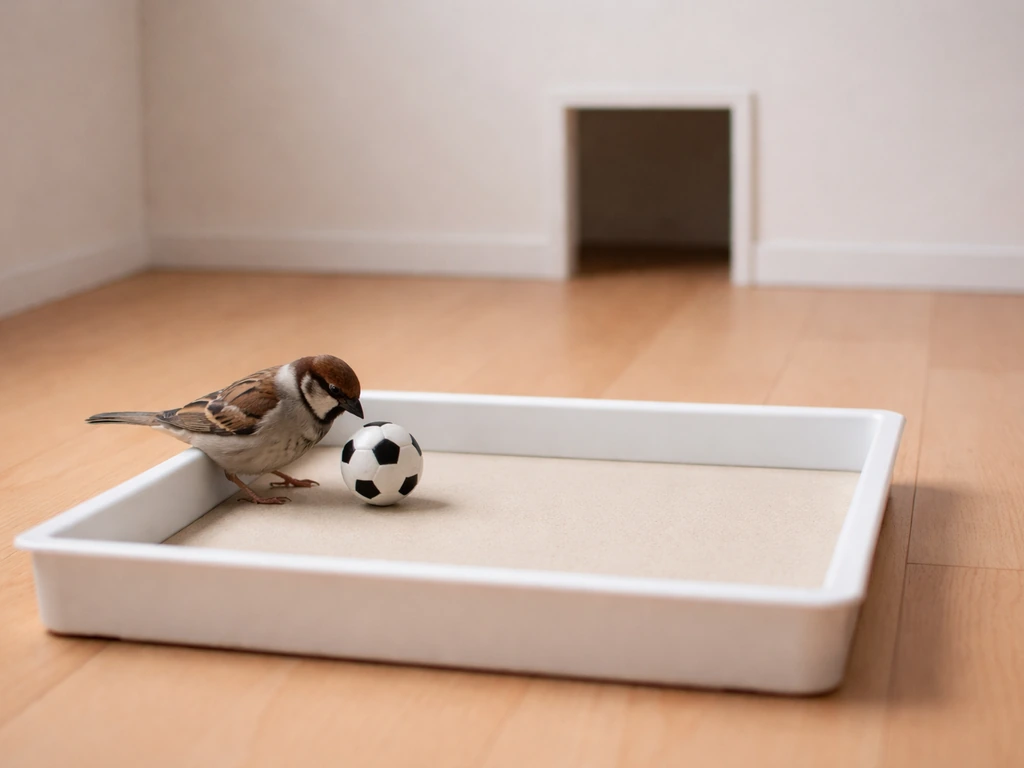
This is a setup issue more than a training issue. Make sure the ball is positioned so the most natural push direction points at the goal. Use a small raised edge or a shallow tray to create a channel that guides the ball toward the hoop. You can also use your body position to block other directions temporarily, then fade that out as accuracy improves.
The bird gets distracted and flies off
Reduce environmental stimulation. Close curtains if the window is busy, remove mirrors from the training area, and make sure no other pets are visible. Also check whether your session is just too long or whether the treat value is high enough to compete with the distraction. If the bird keeps leaving, the reinforcement isn't strong enough to hold its attention, or it's mentally fatigued.
The bird seems frustrated or starts refusing treats
End the session. Frustration usually means the current criterion jumped too far from the last step. Next session, go back one step to where the bird was succeeding easily. Rebuild confidence with a handful of easy reps, then increase criteria more gradually. Refusing treats mid-session is a clear signal the bird is done.
When to stop and consult a professional
If your bird is open-mouth breathing, tail-bobbing while breathing, or lethargic during or after sessions, stop training and contact an avian vet. Those are medical red flags, not training problems. If aggression is escalating across sessions despite your best efforts to reduce challenge and stress, a certified parrot behavior consultant can help you assess what's happening and adjust your approach.
Building a reliable behavior: practice, proofing, and what to expect
Once your bird is shooting the ball into the goal reliably in your usual training spot, start introducing small changes one at a time. Move the training to a different room. Change the color of the ball. Change the distance between the ball and the goal. Change the goal itself. Each new variable needs to be introduced gradually, and you may need to temporarily lower your criteria when you introduce a change (for example, reward any push toward the new goal before requiring it to go in).
Proofing a behavior means practicing it across enough contexts that your bird can perform it reliably wherever and whenever you ask. This takes time. A bird that shoots a basketball perfectly at your kitchen table may look completely confused the first time you try it at a friend's house. That's normal. Keep generalizing slowly, and the behavior becomes genuinely robust.
Realistically, a motivated cockatiel or conure with good target training foundations can have a working version of this trick in two to three weeks of daily 5-minute sessions. A cautious African grey might take six to eight weeks. A bird that needs trust-building first might take longer before training even begins. None of those timelines are failures; they're just different starting points.
Keep sessions fun and varied. Once basketball is solid, you can chain it with other behaviors like spinning or dancing to build a small sequence. You can teach similar “spin” behavior by shaping foot placement and turning responses with the same clicker and rewards spinning. Once your bird is comfortable with the ball, you can use the same cue, shaping, and rewarding approach to help it learn how to make your bird dance spinning or dancing. That same shaping and positive-reinforcement approach can also help you teach your bird to roll over Once basketball is solid, you can chain it with other behaviors like spinning or dancing. Those skills reinforce each other, keep your bird mentally engaged, and deepen your bond in the process. The goal isn't just the trick. It's a bird that looks forward to working with you.
FAQ
What if my bird won’t take treats from my fingers during basketball training?
Treat refusal usually means the bird is not ready for the next step. Go back to bar feeding or offering treats through the bars, then reward calm eye contact or proximity first. Only reintroduce finger delivery when your bird is willingly reaching for the treat, and keep sessions very short (1 to 2 minutes) until finger trust returns.
How do I know I should use a clicker versus a verbal marker?
Use whichever you can deliver with perfect timing. A clicker is often easier because the sound is consistent, and you can keep your voice free for the basketball cue later. Whatever you choose, do a charge-the-marker routine until the bird clearly expects a treat after the marker alone, then do not change marker wording mid-training.
My bird taps the ball but doesn’t push it far enough. What should I change?
First, reduce the requirement for movement and reward any visible roll, then improve mechanics by placing the ball at a location where a light push naturally causes movement (for example, right at a platform edge or on a shallow tray). If the bird taps but never rolls, lower the step difficulty for a day or two and rebuild confidence with easier criteria.
What if the hoop keeps moving and my bird gets startled?
Stability matters. Use a heavy, non-slip cup or a ring mounted on the training surface, and test it with a gentle push before training. If the bird still startles, move the hoop farther away for a few sessions, then gradually bring it to the 5 to 10 cm setup once shots become calm.
Can I leave the ball and hoop in the cage to “get used to it”?
Not during early training. Leaving the ball in-cage can turn it into a chew or play object, and it also removes your control over timing and reinforcement. Keep the ball as a supervised prop for sessions, and reintroduce it to the bird only when you are actively rewarding calm investigation.
How should I handle accidents where the bird picks up or chews the ball?
Treat it as data, not misbehavior. If the bird mouths the ball, immediately pause and remove it for safety, then restart from a simpler step (ball orientation or touch) with a safer ball type. When the bird is chewing chunks, replace the ball and ensure it cannot break into swallowable pieces.
What if my bird is too distracted and keeps leaving the training area?
Increase treat value temporarily and shorten the session. Also check whether the training environment is competing with attention, for example mirrors, other pets, or busy windows. If leaving persists, do not repeat failed reps, move the hoop and ball closer to the perch start point, and rebuild success with easier criteria.
How do I decide when to increase difficulty, not too fast or too slow?
Use a measurable rule: only raise criteria when the bird is accurate 8 or more times out of 10 at the current step. If accuracy drops, go back one step rather than trying to force the next behavior. This prevents “over-threshold” frustration that can create avoidance or bites.
My bird bites when I introduce the ball. Should I stop training permanently?
Stop the session and reassess rather than forcing. Biting often indicates fear or the task being too difficult right now. Back up to distance-based comfort, reward calm near the ball from far away, and re-enter training gradually. If biting escalates across sessions or comes with medical red flags, involve an avian vet or a behavior professional.
Is it okay to train right after a full meal?
Usually not. Train when the bird is mildly motivated, because food drive supports steady engagement and reduces stress. If your bird is not interested in treats after a few minutes, try a different treat format or wait until a later time rather than extending the session.
Can I teach the basketball trick to multiple birds in the same household?
Yes, but train one bird at a time to prevent competition or guarding. Even if both birds understand targeting, the training cues and rewards should be individualized, and the hoop and ball should not be shared during sessions because one bird may steal the prop or increase stress for the other.
How long should “proofing” take before I can expect it anywhere?
Generalization often takes longer than the first successful shots. Plan for many short practice sessions across changing variables (different rooms, slightly different ball positions) introduced one at a time, and be ready to lower criteria temporarily during each change until accuracy returns.
What should I do if my bird is successful in one room but freezes in another?
That is normal early generalization. Return to easier criteria in the new setting, for example reward ball orientation or gentle pushes toward the goal, then gradually rebuild the full “make it in the hoop” requirement. Keep the first reps in the new location very easy to rebuild confidence.
Next Article
How to Teach Your Bird to Roll Over: Step-by-Step Guide
Step-by-step, welfare-first training to teach your bird roll over using cues, shaping, timing, and troubleshooting.