
If you want to 'get' a kiwi bird, the honest answer is: in almost every situation, you call New Zealand's Department of Conservation (DOC) first and let trained, permitted professionals take the lead. Kiwi (genus Apteryx) are absolutely protected wildlife under New Zealand's Wildlife Act 1953, which means handling, catching, transporting, or keeping one without a DOC permit is a legal offence.
How to Get a Kiwi Bird: Legal, Humane Steps

Maya Harris
15 May 2026
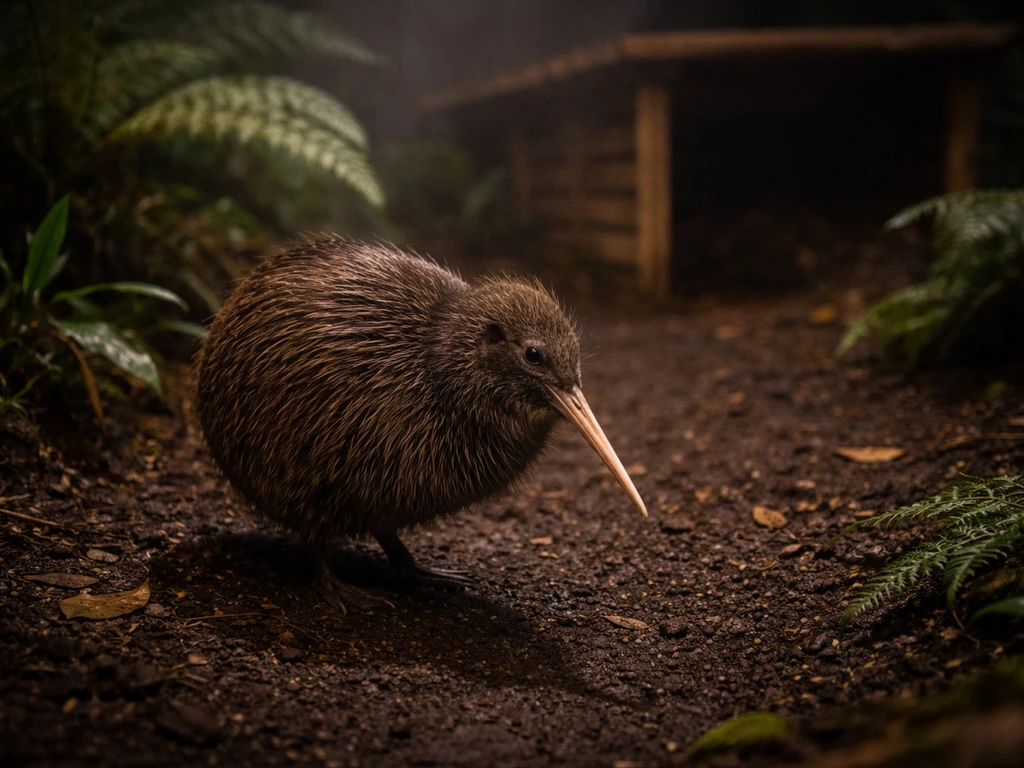
[If you've found an injured kiwi, the fastest and safest move is to call DOC's 24-hour emergency hotline: 0800 DOC HOT (0800 362 468). ](https://www. taranakikiwi. org.
nz/if-you-see-a-kiwi/) If you're a zookeeper, researcher, or licensed rehabilitator already working within a sanctioned program, this guide covers the handling, care, and trust-building steps you need. If your goal is to start a bird-related project ethically, the same principle applies: work only through a permitted, authorized pathway.
What exactly is a kiwi bird?

Kiwi are flightless, nocturnal birds native exclusively to New Zealand, belonging to the family Apterygidae. The most commonly encountered species in conservation work is the North Island brown kiwi (Apteryx mantelli), though there are several other species including the great spotted, little spotted, rowi, and tokoeka kiwi. They look unlike almost any other bird: roughly the size of a domestic chicken, covered in hair-like brown feathers, with a long sensitive bill they use to probe soil for invertebrates. They have no tail, tiny vestigial wings that are invisible under their feathers, and no functional keel or sternum, which makes their chest fragile. That anatomy matters enormously when it comes to handling.
Kiwi are not a pet bird, a trainable companion species, or something available to private owners. They are not related to the kiwi fruit and are not found in the wild anywhere outside New Zealand. If someone is selling or offering a 'kiwi bird' as a pet online, that should raise immediate red flags. If someone is selling or offering a 'kiwi bird' as a pet online, that should raise immediate red flags pet bird. The only legitimate path to working with a kiwi is through a DOC-authorized program, a licensed wildlife sanctuary, or a zoo/captive management institution operating under a formal permit.
Legal and safety reality: what you can and cannot do
New Zealand's Wildlife Act 1953 classifies kiwi as 'absolutely protected' wildlife. That means no catching, handling, transferring, or holding a kiwi without written authorization from DOC. Violating this carries real legal penalties. Even well-intentioned rescuers can unintentionally cause injury or stress that makes a bird's situation worse, so the law exists for good reason. Kiwi first aid and rehabilitation requires a DOC Wildlife Act authorisation (permit) specifically for that purpose, and handlers must be trained before touching a bird for the first time.
There is one narrow exception in practice: if a kiwi is in immediate danger (say, a dog attack is ongoing) and there is no time to wait, DOC guidance allows you to safely contain the bird in a darkened box while you call for help. But 'contain while calling DOC' is the extent of what an unpermitted person should do. Attempting to treat injuries, carry a kiwi long distances, or keep it overnight without professional guidance can cause crushing injuries to its fragile chest, dangerous stress levels, or further trauma to its sensitive bill.
| Scenario | What you should do | What you should NOT do |
|---|---|---|
| Wild kiwi found injured or sick | Call 0800 362 468 (DOC 24hr hotline) immediately; contain safely if in danger | Handle, treat, or transport without DOC instruction |
| Wild kiwi found dead | Report to DOC; don't move the carcass unless instructed | Remove or bury without notifying DOC |
| Kiwi being attacked by a dog | Separate dog, place bird in a darkened ventilated box, call DOC immediately | Attempt field surgery, keep the bird warm with direct heat sources, delay calling |
| You hold a DOC permit / zoo role | Follow DOC's Kiwi Best Practice Manual (2020) and your specific authorization | Improvise outside your permitted scope |
| You want to own/keep a kiwi | Contact DOC to understand licensing; explore volunteer roles with sanctuaries | Purchase or accept a kiwi from any private seller |
Understanding why the bird seems 'unavailable' or won't connect with you
If you're already working in an authorized captive or rehabilitation setting and you're finding the kiwi won't settle or bond with handlers, it helps to understand the species' baseline behavior. Kiwi are solitary, nocturnal, and highly territorial. They didn't evolve with mammalian predators until humans arrived in New Zealand, but they are now acutely sensitive to disturbance. Research on captive brown kiwi shows they are especially vulnerable to stress from relatively low levels of noise and unnatural lighting.
A peer-reviewed study on captive brown kiwi reports that disturbance factors like unnatural nocturnal lighting and noise can cause stress, with brown kiwi especially vulnerable even at relatively low noise levels [relatively low levels of noise and unnatural lighting](https://www. tandfonline. com/doi/abs/10. 1080/03014223.
2021. 1905007). A kiwi that seems fearful, defensive, or disconnected isn't being difficult: it's responding exactly as its biology tells it to.
In a rehabilitation context, a kiwi 'won't bond' with you because it isn't supposed to. The goal for wild-caught or rescued kiwi is always return to the wild, which means minimizing human imprinting and keeping handling to the absolute minimum needed for treatment and monitoring. If you're working in a legitimate captive management or educational ambassador program, the 'bonding' you're working toward is habituation to handler presence, not the kind of companionship you'd build with a parrot or a duck.
Safe containment and retrieval: step-by-step for authorized situations
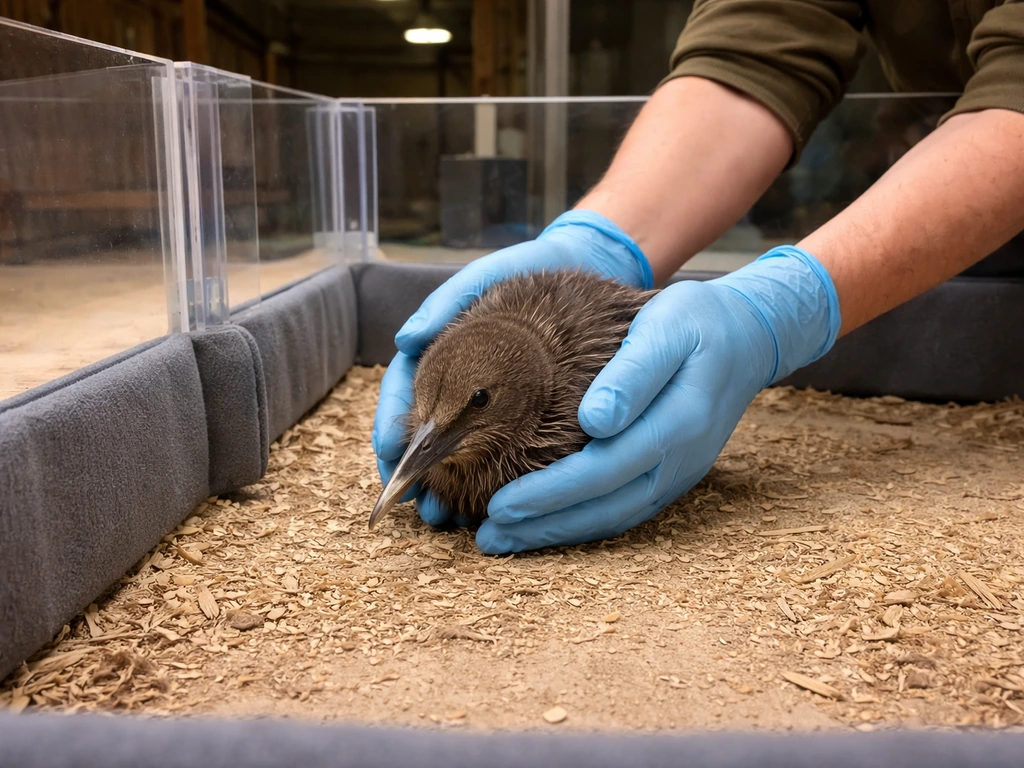
These steps are written for someone acting under DOC guidance (such as a community group volunteer or sanctioned rehabilitator) or in an emergency containment situation while waiting for DOC to arrive. If you are not in one of those roles, stop at step 1.
- Call 0800 DOC HOT (0800 362 468) first. Give your location, describe what you're seeing, and follow their verbal instructions. Everything else flows from this call.
- Prepare a darkened, well-ventilated box before approaching the bird. A cardboard carton with small air holes works. Line the bottom with a folded towel or newspaper to cushion the bird's feet and reduce sliding.
- Reduce sensory input before you approach. Turn off bright lights, keep noise to an absolute minimum, and move slowly. Kiwi stress rapidly under bright light, which is why a dim red-light environment is recommended in DOC's Best Practice Manual for any necessary nighttime handling.
- If physically handling is authorized and you have been trained: support the bird's body fully, never grip the chest. Kiwi lack a sternum and their pectoral area is fragile. An untrained grip across the chest can cause fatal crushing injuries. Hold the bird upright, supporting the abdomen and lower body.
- Place the bird in the box beak-first, close the flaps, and keep the box in a quiet, cool, dark space. Do not add a heat lamp unless a DOC vet or rehabilitator specifically instructs you to (overheating is a risk).
- Do not offer food or water unless instructed. A debilitated kiwi's feeding needs depend entirely on its condition, and forcing food on a stressed or injured bird causes more harm.
- Keep handling to zero until the DOC officer or licensed rehabilitator arrives. Every additional interaction adds stress.
Building trust with a kiwi in a captive or sanctuary setting
If you are a keeper or authorized handler working with kiwi in a captive management or ambassador program, habituation is your primary goal. If you are trying to foster a bird’s trust, focus first on minimizing stress and creating predictable routines rather than trying to “train” it Building trust with a kiwi in a captive or sanctuary setting. This is not parrot-style training with treats and recall cues. Kiwi respond to consistency, predictability, and the slow reduction of novelty. The foundation is always the same: low stimulation, routine, and patience measured in weeks, not days.
Phase 1: Presence without pressure
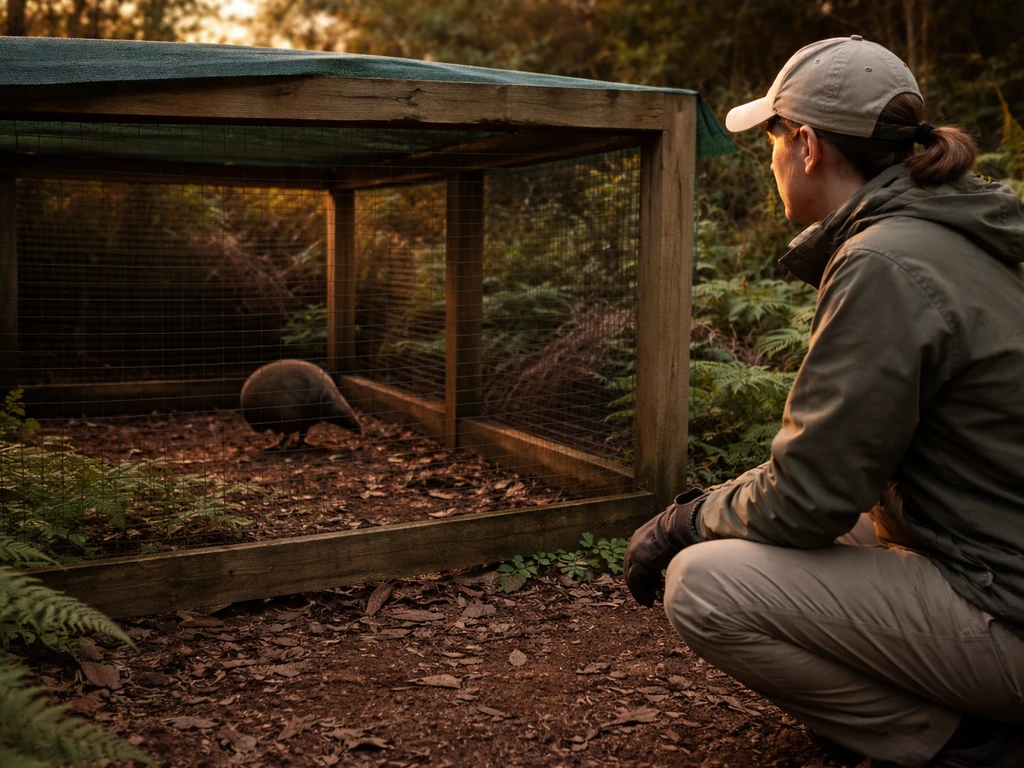
For the first several days in a new environment, your only job is to exist near the bird without triggering a stress response. Sit quietly outside or near the enclosure during the bird's active hours (dusk and through the night). Avoid direct eye contact. Keep your body low and movements slow and predictable. The goal is for the kiwi to register your presence as neutral, not threatening. This phase can take one to three weeks depending on the individual bird.
Phase 2: Positive associations with your presence
Once the bird is moving around normally during your observation periods (not freezing, not calling alarm, not pressing into a corner), you can begin associating your presence with food delivery. Place food into the enclosure while the bird watches, then step back. You're not hand-feeding yet. You're building the association: handler appears, good thing happens, handler leaves. Repeat this consistently at the same time each session.
Phase 3: Minimal necessary handling
For birds in rehabilitation, handling beyond what's medically necessary is not a goal. For long-term captive birds that require routine health checks or transport, work with a colleague: one person positions calmly while the other completes the task quickly. Use a dim red light. Keep the entire handling event under two minutes when possible. After handling, give the bird quiet time and a food reward placed in the enclosure. Never rush this process.
Housing, diet, enrichment, and daily routines
Kiwi in captivity require specialized environments. This section is aimed at licensed keepers and sanctuary staff, not private owners.
Housing
Kiwi enclosures must replicate nocturnal conditions. Captive facilities typically use reversed lighting cycles so keepers can observe birds during institution hours. Ambient temperature for a sick or debilitated kiwi should be maintained at around 29 to 30 degrees Celsius with approximately 70% humidity, per DOC's kiwi first aid guidance. Healthy captive birds tolerate wider ranges, but sudden temperature swings cause stress. The enclosure floor should allow for digging and probing behaviors. Substrate like soil, leaf litter, and bark mulch is appropriate. Hiding areas and covered burrow-style shelters are essential: kiwi need to feel enclosed and secure during their rest periods.
Diet
Wild kiwi are invertebrate foragers: earthworms, beetles, larvae, and other soil invertebrates make up the bulk of their diet. In captivity, earthworms are a core dietary component, supplemented with commercial insectivore diets, minced meat-based preparations, and appropriate invertebrate prey. Feeding at least twice daily is recommended in captive husbandry practice, ideally in a way that encourages natural foraging behavior (burying food in substrate rather than placing it in a bowl). Debilitated birds require individualized feeding plans from a wildlife vet; don't apply healthy-bird diet protocols to a bird in recovery without professional input.
Enrichment and routine
Enrichment for kiwi is about foraging opportunity, not puzzle feeders or colorful toys. Rotate where food is buried in the enclosure. Vary substrate depth and composition periodically. Introduce new scent sources (clean leaf litter from appropriate vegetation) cautiously. Routine is more important than variety: kiwi are creatures of habit, and disruption to their feeding schedule, enclosure layout, or keeper schedule can trigger stress behaviors. If you need to change something, do it gradually over multiple days.
Troubleshooting common problems
Fear and defensive behavior
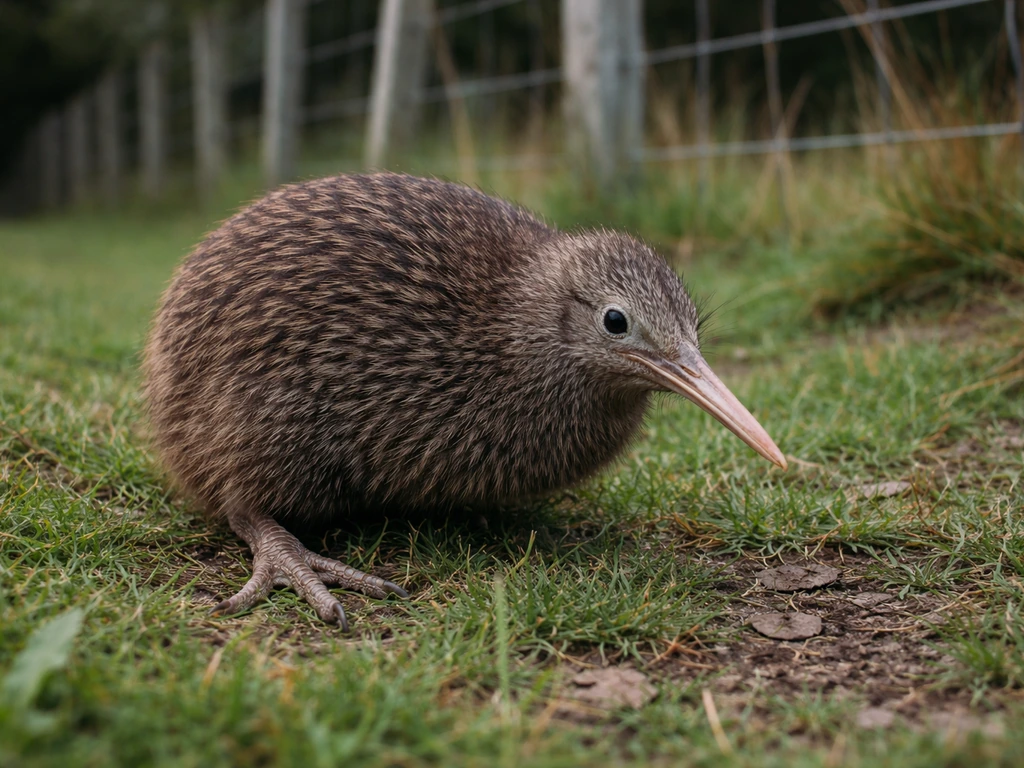
A kiwi that freezes, vocalizes loudly, or tries to run at your approach is telling you clearly that you're moving too fast. Go back to Phase 1. Reduce session frequency and duration. Check for environmental stressors: noise from outside the enclosure, lighting leaks during rest periods, or other animals nearby. Fear biting in kiwi is usually bill-jabbing, which can be surprisingly forceful given the bill's length and the bird's strength. Don't punish or correct this. It's a stress signal, not a behavior problem. Address the source of the fear.
Refusal to eat
A kiwi that stops eating in a new environment is almost always stressed by the transition. Give the bird 48 to 72 hours to settle before escalating concern, provided it is otherwise alert and moving normally. If the bird has not eaten after 72 hours, contact a wildlife vet. For a bird that was eating and then stops, check for changes in the environment first (new noise, lighting changes, enclosure modifications). If environmental explanations don't fit, a vet check is the next step. Do not attempt force-feeding without veterinary guidance.
Stress signals to watch for
- Repeated pacing or circling the enclosure perimeter
- Pressing into corners or hiding and refusing to emerge even at feeding time
- Loud, repeated vocalizations outside of normal territory calls
- Rapid, shallow breathing during or after handling
- Significant weight loss over a short period (requires a scale check and vet involvement)
- Bill rubbing or head-shaking after handling (can indicate bill sensitivity or mild injury)
When to call a professional
If you are an authorized handler or sanctuary worker and any of the following apply, contact a licensed wildlife vet or DOC immediately: the bird has visible wounds, is unable to stand or walk normally, has labored breathing, shows neurological signs like head tilting or circling, has not eaten for more than 72 hours, or has had any entrapment or crush injury. Kiwi are fragile and decline quickly when ill. Early intervention is almost always better than a wait-and-see approach. DOC's network of kiwi care community groups and licensed rehabilitators exists precisely for these situations, and using them is not a failure. It's the right call.
If you're newer to bird ownership or care and landed here while exploring what kind of bird might be right for you, kiwi are genuinely not an option for private keeping. Exploring species that are legal, available, and genuinely suited to home environments is a much better starting point, and thinking carefully about which bird fits your lifestyle is where that process should begin.
Once you understand your options, you can narrow down the right bird by matching the species' legal status, care needs, and your ability to provide a compliant setup how to find the right bird for you. If you are trying to figure out how to pick a pet bird, start by choosing a species that is legal, compatible with your home, and realistic to care for day to day.
If you mean learning how to start a bird-keeping journey in a way that is legal and safe, begin by choosing species you can properly source and care for what kind of bird might be right for you. These ideas can also help you get buy-in for caring for a bird in a legal, responsible way. These ideas can also help you get buy-in from your parents by showing you understand the legal, safety, and care responsibilities involved get buy-in for caring for a bird.
FAQ
What should I do if I hear a kiwi but can’t find where it is right away?
Don’t go searching on foot or use torches directly in likely burrow areas. Instead, keep people and pets back, note the approximate location and behavior you observed, and contact DOC so they can advise the safest way to locate it. Time and disturbance often matter more than “solving it” yourself.
Can I drive a found kiwi to a wildlife rehab center, even if it’s only a short distance?
Only if you are operating under the specific DOC authorization that covers transport and handling. Unpermitted transport is still an offence, and even short trips can worsen injury through pressure on the fragile chest and repeated stress from noise and light.
If the kiwi seems calm, is it still illegal to pick it up?
Yes. Kiwi are absolutely protected wildlife, so “it doesn’t look scared” does not change the legal requirement for written DOC authorization. Calm behavior can be a stress response, and handling can still cause crush injury or bill trauma.
Is it okay to post online that I found a kiwi and ask for someone to come get it?
Ask for DOC guidance first. Public posts often lead to well-meaning people attempting capture, which can increase risk to the bird and create legal exposure. Share location details privately with DOC or a sanctioned rescue channel.
What’s the safest way for bystanders to help if a kiwi is in immediate danger (for example, near a road)?
Keep distance, stop traffic if needed, and prevent dogs or cats from approaching. If DOC guidance allows emergency containment, use a darkened box, keep the bird still, and contact DOC immediately. Don’t try to move it by hand out of fear, and don’t attempt relocation to a different area.
If I’m authorized, how do I reduce stress during routine checks when the bird resists?
Plan for speed and consistency. Use dim red light, have one trained person handle positioning, keep the event as brief as possible (often under two minutes when feasible), and avoid multiple starts and stops. If the bird shows freezing or alarm, adjust the plan and return to low-stimulation observation.
Can I hand-feed a rehab or captive kiwi to build trust faster?
Usually no. The “trust” goal in this context is habituation to handler presence, not direct human feeding. The recommended approach is placing food into the enclosure while you step back, reducing novelty and handling to what is medically necessary.
What are the signs of a problem during acclimation that mean I shouldn’t wait the full 48 to 72 hours?
If you see visible wounds, labored breathing, neurological signs (such as head tilting or circling), inability to stand or walk normally, or entrapment or crush injury, contact a wildlife vet or DOC right away. “Stopped eating” alone is important, but these additional red flags require immediate action.
Is force-feeding ever appropriate if a kiwi refuses food after transport?
No, not without veterinary guidance. Stress during transitions can affect appetite, but incorrect force-feeding can worsen aspiration risk or create additional harm. Wait the advised settling window when the bird is otherwise alert and moving normally, then escalate to a vet if criteria are met.
How quickly should I escalate if the kiwi vocalizes loudly or tries to run at me?
Escalate immediately in the sense of backing off and slowing down, then reassess environment and routine. Go back to the earliest habituation phase, reduce session frequency and duration, check for lighting leaks, noise, and nearby animals, and only proceed when the bird is moving normally during observation periods.
What do I do if I’m offered a “kiwi bird” for sale online?
Do not engage or attempt to verify it by buying, picking up, or transferring any animal. Treat it as a major red flag and report it through the appropriate local authority or DOC channel. Kiwi are not pet birds, and legitimate access requires sanctioned programs and permits.
If I volunteer with a community group, how can I confirm I’m actually covered to handle kiwi?
Ask the coordinator to specify the exact DOC authorization or permit scope that covers your role, including whether it includes first-hand handling and transport. Don’t assume general volunteer permission is enough, and don’t start touching the bird until training and authorization are explicitly in place.