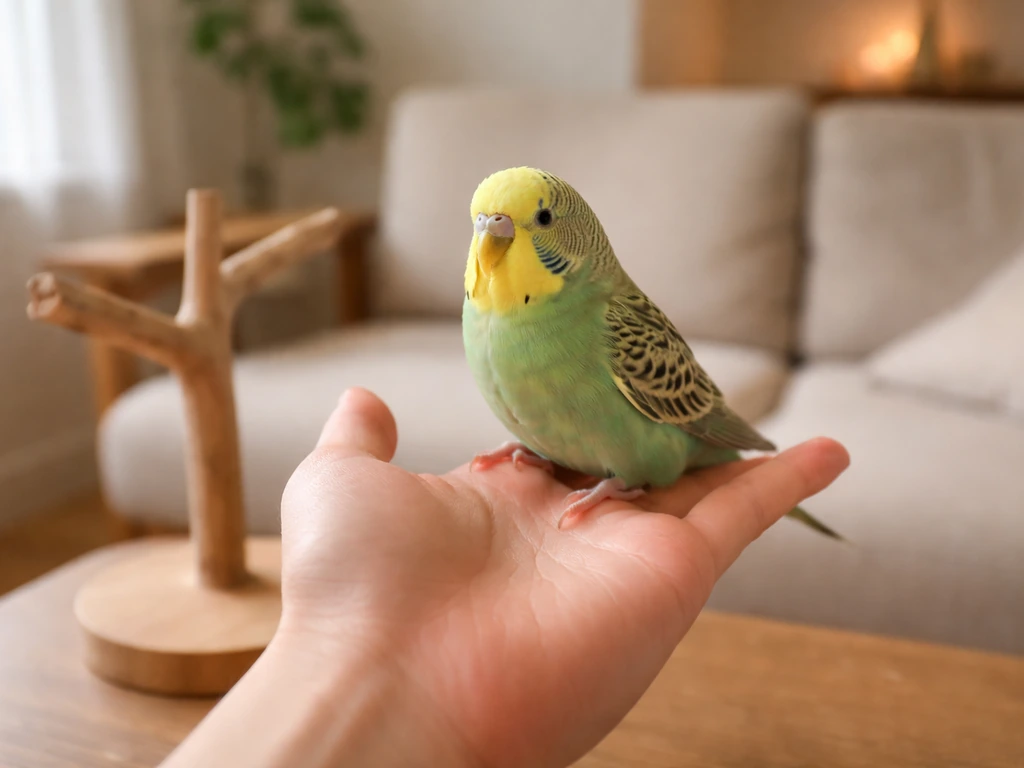
To become a bird sitter, you need basic avian handling knowledge, a welfare-first mindset, the right supplies on hand before your first booking, and a clear service agreement that spells out exactly what you will and won't do. You don't need a formal license to sit pet birds, but you do need enough hands-on experience to recognize a healthy bird, follow species-specific feeding routines, and know when to call an avian vet. Get those foundations in place and you can start taking bookings confidently.
How to Become a Bird Sitter: Step-by-Step Guide
Maya Harris
30 Apr 2026
What a bird sitter actually does (and what's out of scope)
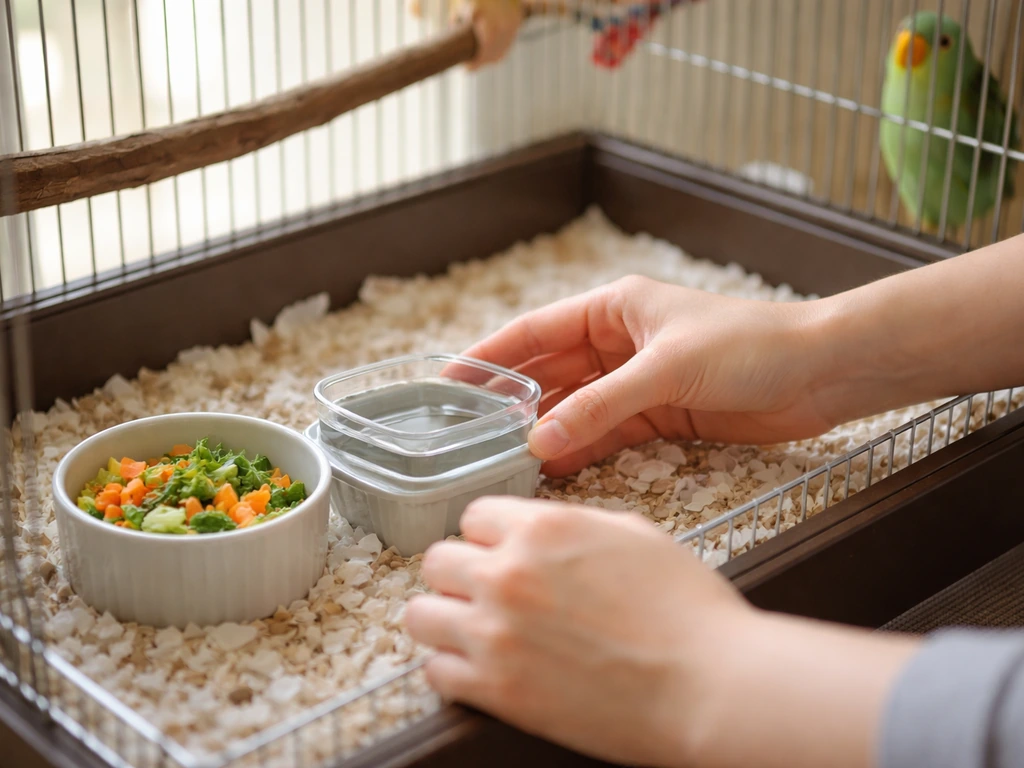
A bird sitter's core job is daily husbandry: fresh food and water, cage cleaning, enrichment, and health monitoring. That's it at the baseline. Whether you also handle the bird, train it, or administer medication is a separate conversation that you define before taking the booking.
Most pet bird sitting falls into two tiers. The first is a check-in service: you visit once or twice a day, refresh food and water, spot-clean the cage floor, swap out enrichment toys, and observe the bird for any warning signs. The second tier adds out-of-cage time, basic interaction, and possibly hand-feeding. You choose which tiers you offer based on your skill level and comfort.
What bird sitting is NOT: it's not wildlife rehabilitation, taming an untrained bird, providing veterinary care, or working with injured wild birds. If a client asks you to take in a wild bird or care for a bird on post-surgical recovery, that's a different skill set entirely. Rehab work requires permits, specialized training, and a whole separate knowledge base. Bird sitting means caring for owned pet birds in a stable, familiar routine while the owner is away.
- Feeding (placing food/treats in the bird's usual bowl, or hand-feeding if you've confirmed the bird accepts it)
- Fresh water daily, plus monitoring water clarity and consumption
- Cage floor cleaning and liner changes
- Enrichment: rotating toys, foraging setups, and perch variety as directed by the owner
- Health monitoring: watching droppings, posture, feather condition, and activity level
- Brief social interaction at whatever level the bird is comfortable with
- Communicating any concerns to the owner promptly
Qualifications, skills, and training you need before you start
There's no single certification that makes someone a qualified bird sitter, but there are concrete skills and experiences that make you a safe and trustworthy one. A bird of prey handler typically requires specialized training, permits where applicable, and hands-on experience with raptors under supervision how to become a bird of prey handler. Here's what actually matters.
Hands-on experience with live birds
The most important qualification is time spent around birds. If you've owned parakeets, volunteered at a shelter with an avian ward, or helped at a bird rescue, you already have a head start. Organizations like Avian Behavior International have general avian care volunteer programs specifically structured around feeding, cleaning, enrichment, and health monitoring under supervision. That kind of role is an ideal starting point because you get real workflow experience without the pressure of being the sole responsible caregiver.
Core knowledge areas
- Species-appropriate diets: seed vs. pellet vs. fresh food ratios for the birds you'll sit
- Safe and unsafe foods: foods like avocado, chocolate, onion, caffeine, and xylitol are toxic to birds
- Household toxin awareness: Teflon (PTFE) cookware fumes, aerosol sprays, scented candles, and air fresheners can kill birds quickly
- Basic body language reading: recognizing stress postures, feather fluffing, labored breathing, and abnormal droppings
- Gentle handling and toweling technique (for emergencies only, not routine restraint)
- How to follow a bird's established routine rather than trying to change it
Training resources worth your time
Look for avian husbandry courses through professional pet sitter associations, online avian keeper certificate programs, and workshops run by avian vets or parrot behavior consultants. First aid training for small animals is useful but bird-specific first aid courses are even better. If you're eventually interested in handling more complex species or moving toward bird training, look into positive reinforcement-based handling courses. If your longer-term goal is bird training, make sure the courses and practice you choose are focused on positive reinforcement and consistency. That knowledge directly improves your bird sitting work because you'll be better at reading body language and building calm, trust-based interaction with unfamiliar birds.
Your bird sitting setup and supplies checklist
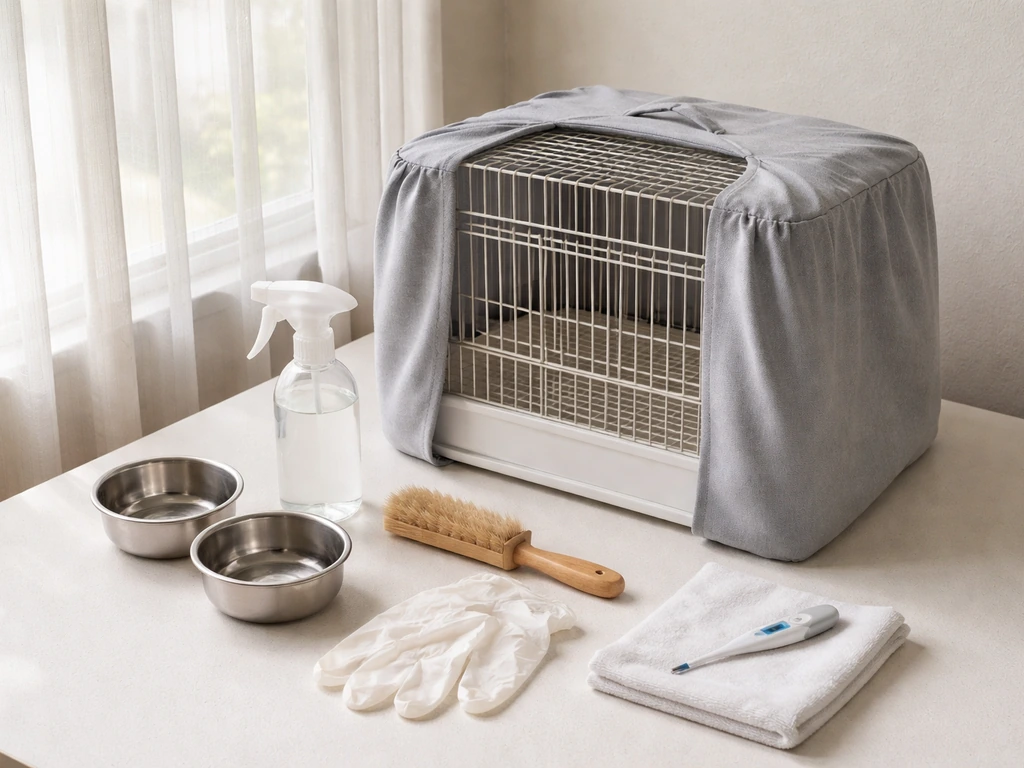
Before your first booking, confirm that you have or have access to everything on this list. Some items stay at your home if you're hosting a bird. Others are things you confirm the owner has in place if you're doing in-home visits.
If you're doing in-home visits at the owner's house
- Key or access code to the home, confirmed and tested before the owner leaves
- Written daily routine from the owner: exact feeding times, quantities, food types, and enrichment schedule
- Location of all food, treats, supplements, and feeding tools
- Emergency contact list: owner's phone, a backup contact, and an avian vet's number
- Health baseline notes from the owner: normal droppings appearance, typical activity level, any known quirks or fears
- Your own bird-safe cleaning supplies: unscented dish soap and warm water for spot cleaning, paper towels
- A small notebook or your phone to log each visit (what you observed, what you fed, any concerns)
If you're hosting the bird at your home
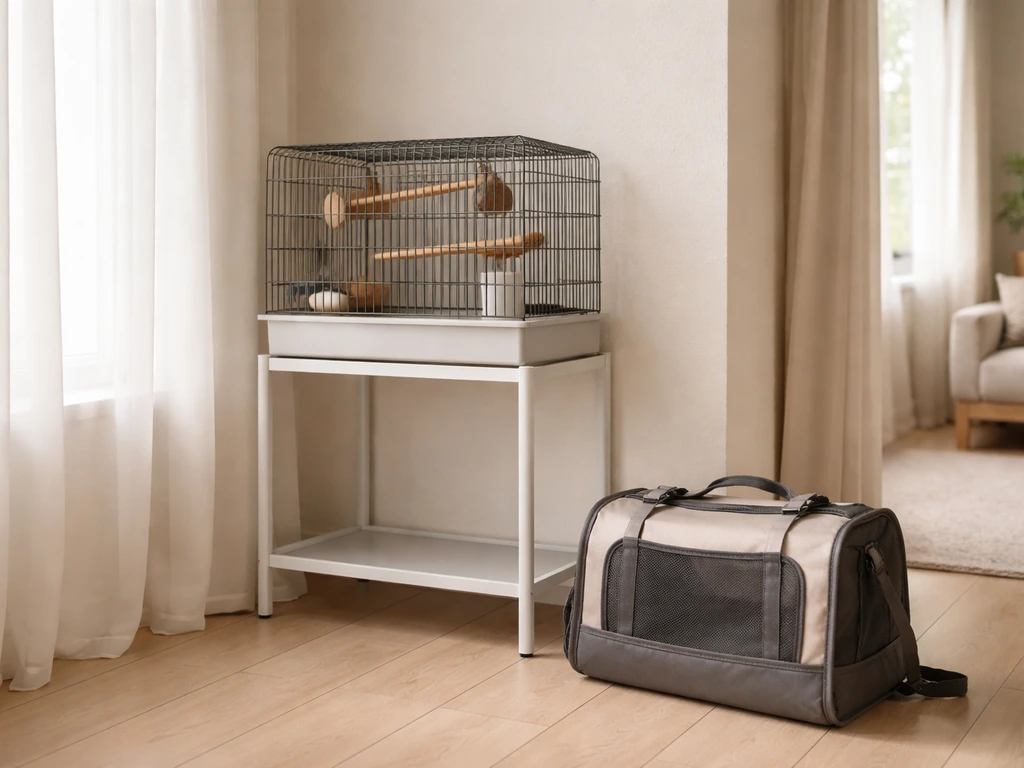
- A quiet, bird-safe room with stable temperature between 65 and 80°F (18 to 27°C) and no cold drafts
- The bird's own cage, travel carrier, and familiar perches (familiarity reduces stress enormously)
- Covered transport to protect from wind, temperature changes, and visual stressors during transit
- Bird-safe cleaning products only: no aerosol sprays, scented plug-ins, or Teflon cookware anywhere in the area
- Separation from any other pets, especially cats and dogs
- Adequate lighting: 10 to 12 hours of natural or full-spectrum light, then covered darkness for sleep
- The owner's own food supply for the bird, enough for the full stay plus a few days extra
Safe handling, feeding, and daily care routines
A consistent, predictable routine is the single most important thing you can give a bird while its owner is away. Birds thrive on schedule. Disruption is stressful, and stress in birds can escalate quickly into health problems. Your job is to replicate the owner's routine as closely as possible.
A practical daily workflow
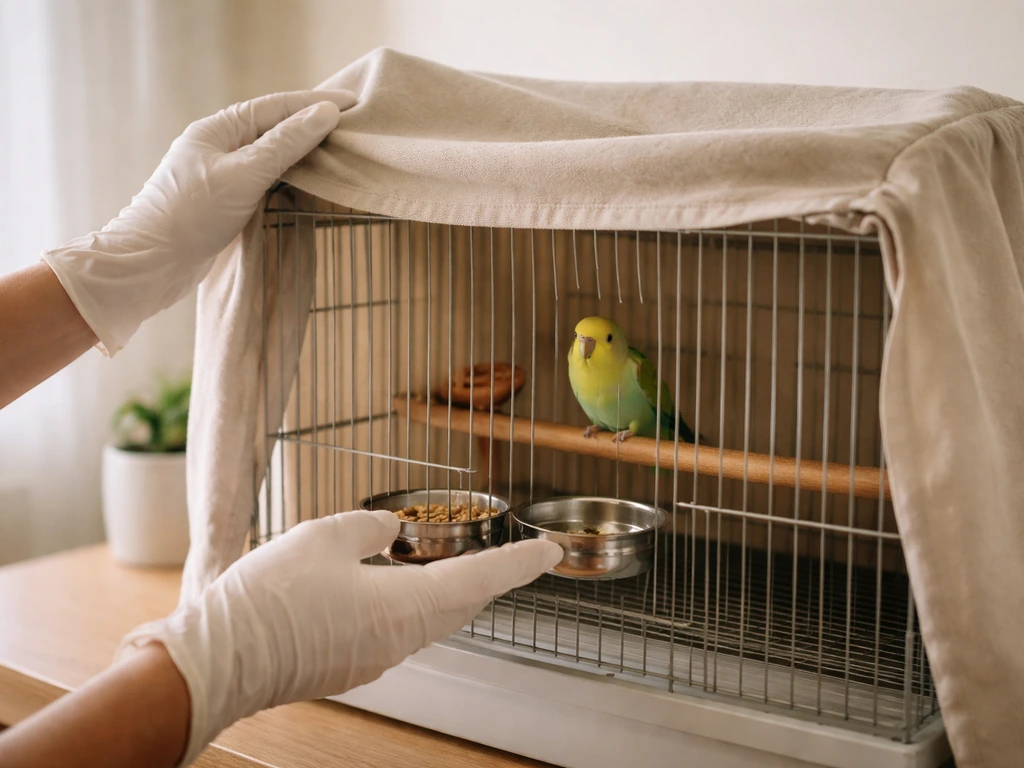
- Arrive or start your morning check at the same time each day. Remove the cage cover quietly and calmly.
- Observe the bird before you do anything else: posture, eyes, droppings on the cage floor, activity level. If something looks off, note it immediately.
- Remove overnight droppings and soiled cage liner. Bird droppings should be firm with a white urate portion and a small liquid section. Watery, discolored, or absent droppings are warning signs.
- Wash food bowls with warm water and unscented dish soap, rinse thoroughly, and refill with fresh food as directed by the owner. Do not just top off yesterday's food.
- Change water completely. Bowls should be clean and refilled, not just topped up. If the bird uses a water bottle, clean the tip and confirm it's flowing.
- If the bird is out-of-cage time certified (confirmed by the owner), open the door at the usual time and let the bird choose whether to come out. Never force it.
- Provide enrichment as directed: foraging toys, fresh branches, or puzzle feeders.
- Do an evening check if scheduled: refresh water, cover the cage at the owner's usual time, confirm the bird is settled.
- Log every visit: what you saw, what you fed, any behavioral changes.
Handling safely and knowing when not to
If a bird isn't comfortable being handled by you, don't push it. Place food and treats directly in the bird's bowl rather than trying to hand-feed. A bird sitting experience shouldn't become a taming project. If you want to move beyond sitting into more direct handling development, see the guide on how to become a bird handler. If the owner says the bird steps up, test that calmly and only proceed if the bird offers to step up without stress signals. If you need to handle a bird for a genuine emergency, use a light towel to gently restrain, support the body, and keep restraint time as short as possible. Towel restraint is a safety measure, not a routine care tool.
Cleaning safely around birds
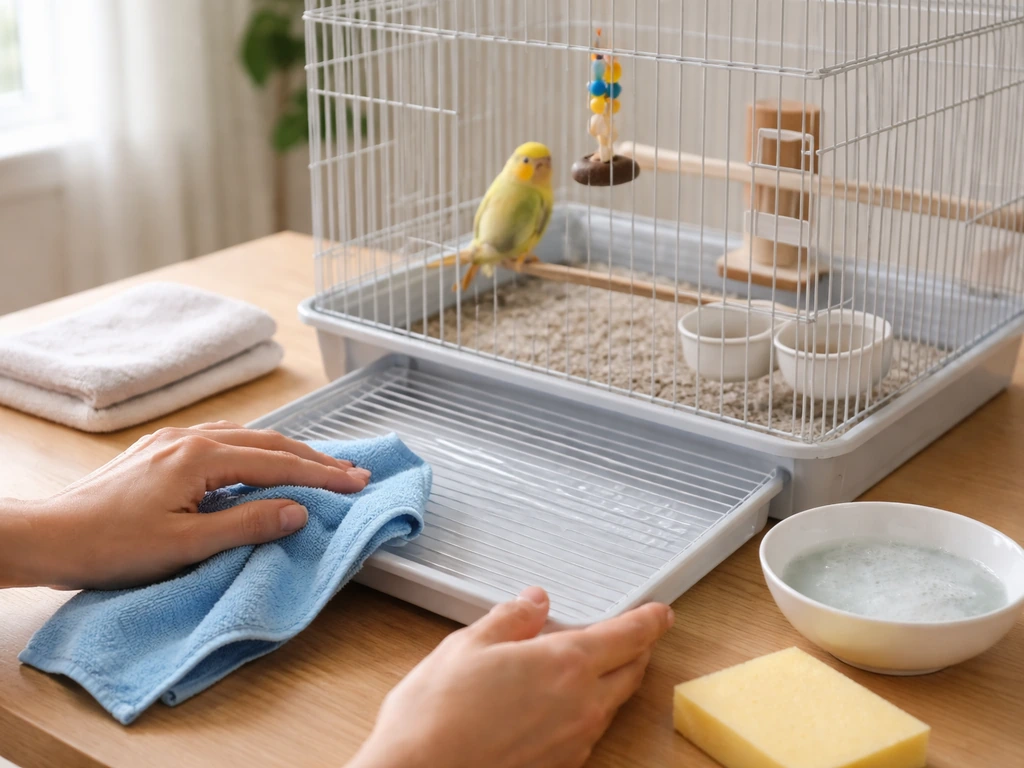
This is one of the most important safety rules: blank" rel="noopener noreferrer">never use aerosol sprays, scented candles, air fresheners, or chemical disinfectants near a bird. Birds have extremely sensitive respiratory systems. If you need to do a deeper cage clean, move the bird to a separate room with the door closed, clean with warm water and unscented dish soap, rinse thoroughly, and let everything dry completely before the bird returns. Disinfectant alone is not enough because residue matters. Rinse, rinse, rinse.
Warning signs that need action
- Fluffed feathers combined with lethargy or closed eyes (not just napping)
- Labored or open-mouth breathing, tail bobbing with each breath
- Droppings that are watery, discolored (green, black, or red), or absent
- Not eating or drinking over a 24-hour period
- Bleeding, visible injury, or obvious inability to use a wing or leg
- Seizure-like movement or complete collapse
- Unusual head tilting or loss of balance
If you see any of these, contact the owner immediately. If you cannot reach them within 15 to 20 minutes and the bird appears in distress, take the bird to the avian vet on the emergency contact list. A Reddit discussion of a blank" rel="noopener noreferrer">pet sitter handoff checklist shares practical escalation details like vet and after-hours emergency information, similar to what bird sitters need. Time matters with sick birds. Don't wait and hope it improves.
Species-specific care considerations
Different birds have genuinely different care requirements. Treating a finch like a cockatoo, or a cockatiel like a macaw, is a fast way to stress the bird and undermine the owner's trust. Here's a practical breakdown by species group.
| Species Group | Diet Basics | Social Needs | Handling Level | Key Risks to Watch |
|---|---|---|---|---|
| Finches and canaries | Seed mix plus fresh greens; no pellets needed typically | Low: these are hands-off birds; watch from outside the cage | Minimal: rarely handled; don't stress them by reaching in unnecessarily | Drafts, temperature drops, stress from nearby loud pets |
| Budgerigars (parakeets) | Seed mix or pellet base plus fresh veg; water daily | Moderate: enjoy talking to you but don't require holding | Low to moderate: many step up but don't force it | Overgrown nails, respiratory issues, soft droppings |
| Cockatiels | Pellets plus seed plus fresh food; calcium important | High: they bond strongly and can show separation stress | Moderate: most cockatiels step up; watch for hissing or lunging as stress signals | Feather picking under stress, night frights, respiratory sensitivity |
| Lovebirds | Pellets and fresh food; more active foragers | High: often nippy with strangers; don't push contact | Low for new sitters: let the bird set the pace | Biting when stressed; vitamin A deficiency if seed-only diet |
| Conures | Pellets plus fresh fruit and veg; variety matters | Very high: screaming is normal, especially at dawn/dusk | Moderate to high: many are confident but can bite hard | Screaming escalation from loneliness, exposure to toxins |
| Cockatoos | Pellets plus fresh food; high enrichment needs | Very high: destructive when under-stimulated or lonely | Advanced: not appropriate for beginner sitters; requires confident calm handling | Severe stress, feather destructive behavior, loud screaming |
| African greys and larger parrots | Pellet-based diet plus fresh variety; no seed-heavy diet | Very high: extremely sensitive to routine disruption | Advanced: highly intelligent, will test new people; read body language carefully | Feather destruction from anxiety, biting, nutritional deficiencies |
As a beginner bird sitter, start with finches, canaries, budgies, and cockatiels. These species tolerate routine care from a calm, respectful stranger reasonably well as long as you follow their schedule. Build experience before offering to sit large parrots, cockatoos, or any species described by the owner as 'challenging.' Know your level and be honest about it in your intake process.
Bonding and keeping the bird calm while the owner is away
You're not trying to become the bird's new favorite person. You're trying to be a calm, predictable, non-threatening presence that the bird learns to tolerate comfortably. If you are looking for an emotional support bird, the process starts with the right species and a plan for calm, consistent care and routines. That's a realistic and achievable goal even within a short stay.
Techniques that actually work
Move slowly and speak quietly near the cage, especially on the first visit. Avoid direct eye contact with nervous birds as it can feel predatory. Sit near the cage and talk softly without approaching. Let the bird investigate you at its own pace. If the owner has told you the bird knows any trained behaviors (step up, target touching, station), use those cues with the same words the owner uses. Consistent cues from a calm, positive person feel familiar even when you're a stranger.
Use high-value treats the owner has recommended to associate your presence with something good. Offer the treat by placing it in the bowl if the bird won't take from your hand yet. Over two or three visits, most birds will begin to relax. Don't rush the timeline. A bird that's mildly wary of you but eating well, moving normally, and interacting with enrichment is a bird that's coping fine.
Keep background noise and household activity near the bird's space low and predictable. Some birds do well with soft music or a nature sounds recording at low volume, especially species that are prone to loneliness. Ask the owner if the bird has any sound preferences or things it specifically reacts to (including TV, other pets, or loud voices).
What not to do
- Don't try to tame or train a bird during a sitting stay unless the owner has specifically asked and you have the skills for it
- Don't force physical contact: a stressed bird is more likely to bite, get injured, or develop lasting fear responses
- Don't introduce new people, pets, or loud visitors to the bird's space
- Don't rearrange the cage or remove familiar perches and toys
- Don't skip visits because the bird 'seems fine' from a distance the day before
Pricing, contracts, scheduling, and managing risk
Getting the business side right protects you, your clients, and most importantly the bird. A simple, clear agreement prevents misunderstandings and makes you look professional before you've even taken a single booking.
How to price your services
Bird sitting rates in 2026 typically run from $20 to $35 per visit for in-home check-ins (one or two visits per day), or $40 to $75 per night for in-home overnight stays. Hosting at your home may be lower or higher depending on your local market and the complexity of care. Charge more for: multiple birds, species that require advanced handling (large parrots, cockatoos), birds on medication, and any bird the owner describes as aggressive or medically complex. Start at the mid-range for your area, build reviews, and adjust from there.
Your intake checklist and service agreement
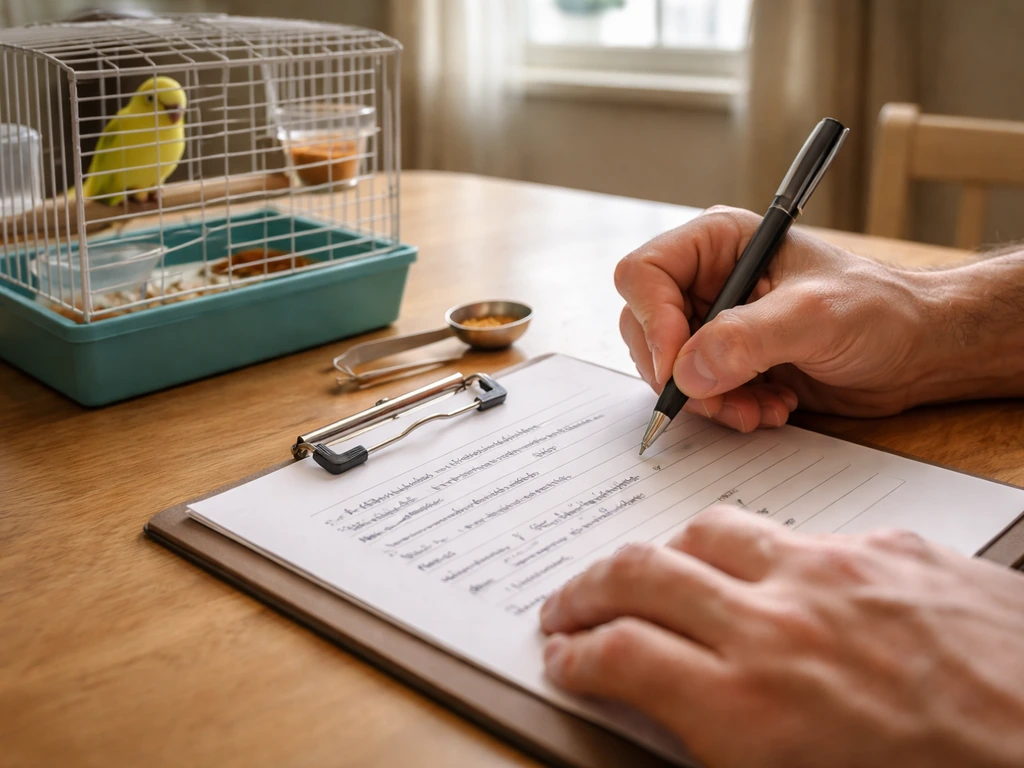
Before every booking, complete a written intake process. This doesn't have to be a formal contract from a lawyer, but it does need to be a signed document that both parties keep. Cover these points:
- Bird's name, species, age, and health history (including any current medications or recent illness)
- Feeding schedule: exact times, food types, quantities, and any supplements
- Normal behavior baseline: what 'healthy and happy' looks like for this specific bird
- Handling level agreement: clearly state what you will and won't do (step-up, hand-feeding, out-of-cage time)
- Emergency authorization: written permission to seek veterinary care if you can't reach the owner, and who pays
- Emergency contacts: owner's primary and backup phone, avian vet name and number
- Your liability scope: you are responsible for following care instructions carefully, but not for pre-existing conditions or health events outside your control
- Cancellation policy: your time is worth protecting too
- Dates, times, and number of visits or nights, confirmed in writing
A meet-and-greet before every new booking
Always schedule a free 20 to 30 minute meet-and-greet before the owner leaves. Visit the bird in its home, observe how it responds to you, watch the owner demonstrate the feeding and handling routine, and confirm you can find everything you need. This one step prevents the majority of first-booking problems and builds immediate client trust. If the bird is clearly aggressive toward you or the care complexity is beyond your current skill level, it's better to decline the booking than to take it and struggle.
Managing emergencies and liability
Have a clear escalation plan written down before every stay: first you call the owner, then the backup contact, then you take the bird to the listed avian vet if the bird needs urgent care and you still can't reach anyone. If you are trying to make a bird a service animal, include clear training and access rules in your plan so everyone understands what the bird needs during your absence escalation plan. Keep a photo of your service agreement on your phone. If you're working toward a more serious pet sitting practice, look into pet sitter liability insurance: it's relatively inexpensive and covers you if a bird is injured during your care through no direct fault of yours.
Building references and your first bookings
Start with birds you personally know: friends, family, or neighbors with pet birds. If you're wondering how to get a job as a bird sitter, start by building hands-on experience with birds you personally know or can work with through local rescues. Offer one or two initial sits at a reduced rate in exchange for a written review. Volunteer with a local bird rescue or humane society to build documented experience. Post in local community groups and on pet care platforms, and list your specific species experience clearly. Clients with cockatiels want to know you've cared for cockatiels before, not just 'birds' in general. As you build experience across species, your range and your rates can both grow.
If you're interested in expanding beyond pet sitting into more hands-on work, the skills you build here connect directly to becoming a bird handler, bird trainer, or even a bird rehabilitator down the road. Each of those paths has its own requirements, but solid husbandry experience and a welfare-first approach are the foundation for all of them.
FAQ
Can I take a bird sitting booking if I have only general pet experience (like dogs or cats)?
No, you should not. Even if you have general animal experience, bird care is schedule and species-specific, and birds can deteriorate quickly. The safe approach is to start with the same species the owner has, follow their feeding and husbandry routine exactly, and use a meet-and-greet to confirm you can access food, supplements, and cage setup without surprises.
What should I do if the bird needs medication while the owner is away?
You can, but you should only sit for medication birds if you can follow written instructions precisely and confirm everything needed is available (actual medication name, dosage, timing, and what to do if a dose is missed). Ask the owner for backup medication or an emergency dosing plan, and include it in your intake and escalation steps.
How do I prevent mistakes with feeding and daily routines for a specific bird?
Ask for a written, photo-based care sheet that includes exact quantities and brands (food, pellets, chop, supplements), schedule (times and frequency), and the daily “normal behavior” for that bird. Also confirm what “stop and call me” signs look like for that specific species and bird (examples: reduced eating, tail bobbing, abnormal droppings).
What if the owner asks for more than I feel comfortable doing, like hand-feeding or out-of-cage time?
Yes. Decline the booking if you cannot meet the care tier you’re expected to provide, especially out-of-cage time, hand-feeding, or any bird the owner describes as aggressive. If you’re unsure, offer the safer check-in tier first, then expand only after a successful meet-and-greet and the bird demonstrates tolerance.
Who should I call in an emergency if I cannot reach the owner right away?
You should require an agreed emergency contact workflow, then clarify what counts as “urgent” before the stay. If the owner is unreachable within 15 to 20 minutes and the bird shows distress, follow the vet escalation plan you wrote down. Keep the avian vet contact details accessible offline as well.
How long should I wait before escalating if the bird isn’t eating when the owner is gone?
Do not treat a bird’s “not eating” as normal during the first 12 to 24 hours. Birds can go downhill quickly, especially with cold stress, diet changes, or illness. If you notice reduced intake, abnormal droppings, or unusual breathing, follow the escalation plan immediately rather than waiting to see if it improves.
What’s the biggest mistake new sitters make with cleaning or products?
A common mistake is relying on your own cleaning products or guessing what “unscented” means. Only use the items approved by the owner, avoid scented or aerosol products, and ensure rinsing is complete after any deep clean. If you are missing an item the owner normally uses, ask rather than improvising.
How should I set my rates when I’m just starting but the bird care seems complex?
Base it on risk and complexity, not just time. Charge more when there are multiple birds, advanced species, medication, or owner-described aggression, and also consider whether you must do overnight stays or extended visits. If you’re starting out, you can offer reduced rates for your first one or two sits, but only after confirming you’re truly capable for that species and setup.
How do I handle it if the bird seems friendly at home but won’t tolerate me during the first visit?
Yes, but do it carefully. You should not assume the bird will tolerate contact, and you should use the owner’s cues and the bird’s comfort signals. If the bird refuses to step up or shows stress, switch to non-contact feeding (place treats in the bowl) and maintain calm exposure rather than trying to “push through.”
What details should I document during a bird sitting stay?
If a bird is stressed or acting differently, document what you observe immediately (what you fed, what time, droppings, breathing, alertness, cage environment). This helps the owner make decisions quickly and helps a vet see a timeline if escalation is needed. Keep notes during the stay, not just at the end.
Can I take wildlife or rehab-type bird cases under my bird sitting service?
In most cases, you should only provide sitting for owned pet birds in stable routines, not wildlife or rehab. If someone asks you to take in a wild bird or a post-surgical recovery case, refer them to the appropriate rehabilitation or veterinary services, because that requires permits, specialized training, and different responsibilities.
What quick checklist should I run before every visit to reduce risk and mistakes?
Yes. Before each visit, do a quick “are we ready” check: food and water levels, cage access points, enrichment availability, and any medication schedule. Confirm you have the contact numbers and the vet info you will use if needed, then begin with minimal disturbance and quiet presence to reduce stress.
Next Article
How to Get an Emotional Support Bird: Bonding and Training Steps
Learn how to get an emotional support bird with humane bonding, training, welfare steps, and troubleshooting for comfort