The easiest way to handle, tame, or train a bird is to slow down, lower the pressure, and let the bird make the first move. Whether you have a new budgie, a rescue cockatiel, or a wild bird you found in your yard, the core approach is the same: build trust in small steps, use food as your bridge, and read the bird's body language constantly. There is no shortcut that skips trust-building, but if you follow a consistent routine, most birds will warm up faster than you expect.
How to a Bird Easy: Gentle Handling, Bonding, Training Steps
Maya Harris
17 May 2026
First, let's clarify what "easy" actually means for your situation
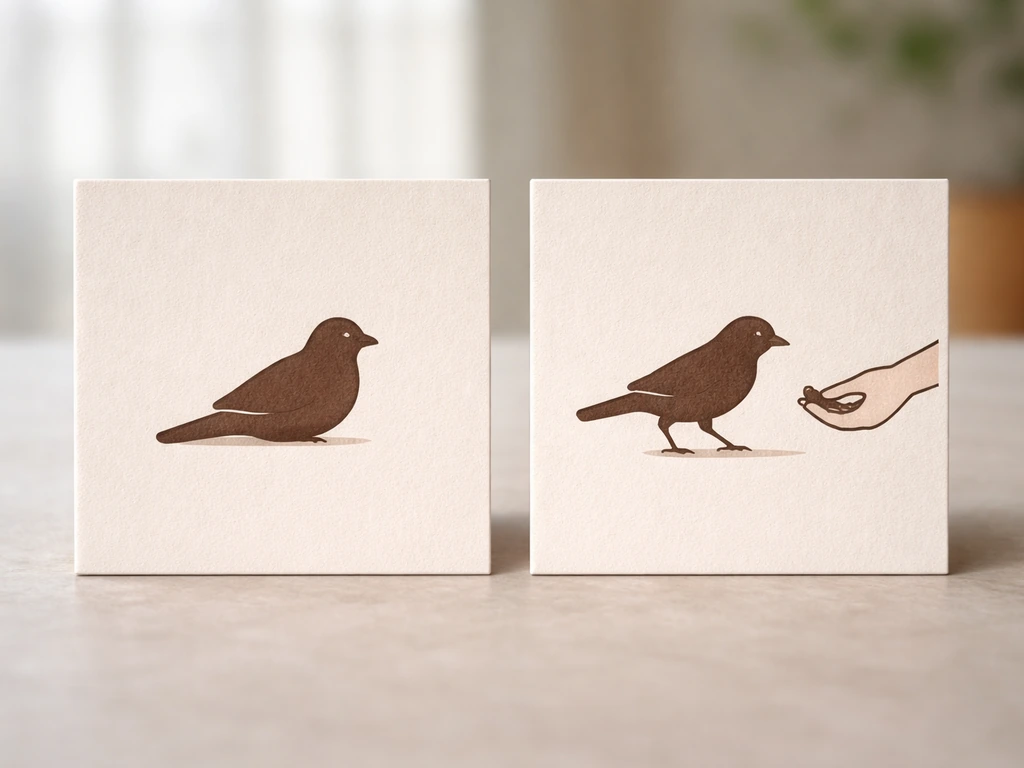
"Easy" means something different depending on what you are trying to do. Before you start, pin down your actual goal, because the method changes significantly based on it.
| Your goal | What "easy" looks like | Best starting section |
|---|---|---|
| Easy handling (picking up, moving the bird) | Bird steps onto your hand without panic | Humane setup + step-by-step approach |
| Easy bonding/taming (gaining trust) | Bird chooses to be near you voluntarily | Gentle approach + training basics |
| Easy training (teaching a specific behavior) | Bird reliably performs a cued action for a reward | Positive reinforcement section |
| Wild bird temporary care | Bird is calm enough for safe transport or first aid | Wild bird handling + legal notes |
If you are working with a pet bird, your goal is usually bonding and stepping up. If you found an injured wild bird, your goal is calm, safe containment until you can hand it off to a licensed wildlife rehabilitator. Those two paths are very different, and mixing them up leads to frustration and stress for both you and the bird.
Set up the environment before you touch anything
A stressed bird will not cooperate, and a chaotic environment creates stress immediately. Getting the setup right is the single highest-leverage thing you can do before any hands-on work begins.
For pet birds
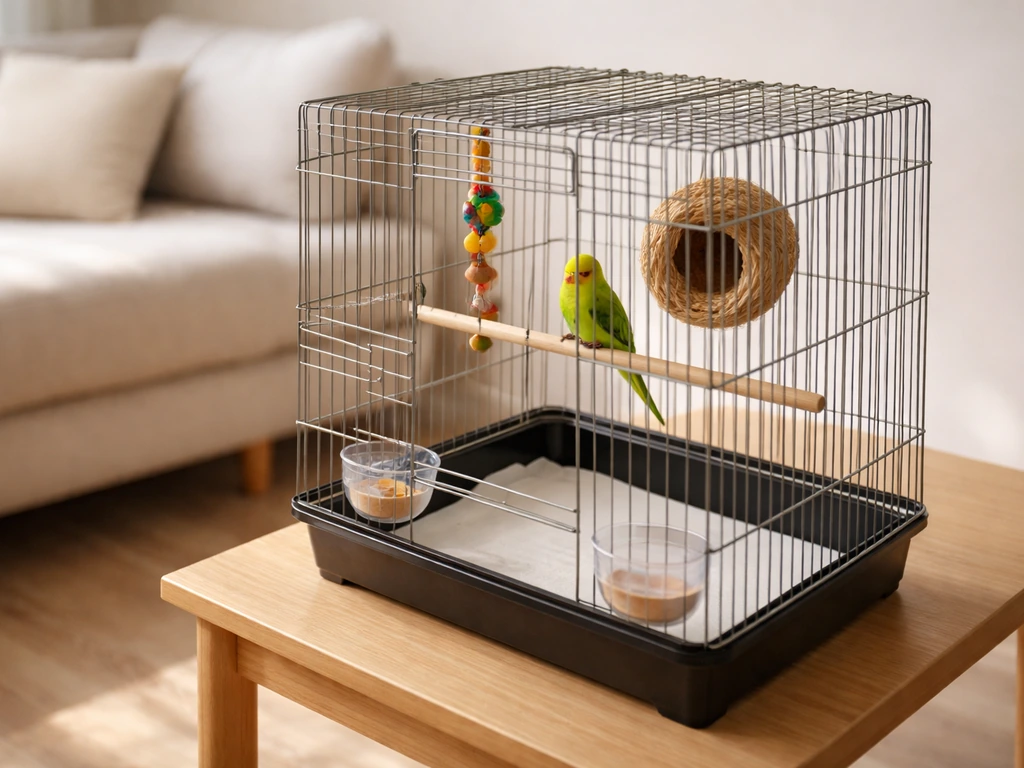
- Place the cage in a room where people move through naturally but not frantically. A living room corner, not a hallway or a loud kitchen, usually works well.
- Keep the cage at chest height or slightly below. Eye level or above can feel threatening to birds that are still adjusting.
- Provide at least two perch heights so the bird can choose its comfort zone.
- Avoid mirrors in the early bonding phase. Mirrors create confusion and can stall social bonding with you.
- Keep temperature stable between about 65 and 80 degrees Fahrenheit and away from direct drafts or AC vents.
- Use a consistent daily routine for feeding, talking near the cage, and interaction. Predictability lowers anxiety.
- Do not cover the cage at night unless your specific bird is calmer with a cover. Some birds are actually stressed by cage covering, so watch the individual bird's behavior rather than following a blanket rule.
For wild birds in temporary care
- Use a cardboard box or small animal carrier with ventilation holes, lined with a non-fluffy towel or paper towels.
- Keep the container in a quiet, warm, dark room. Darkness reduces panic significantly.
- Do not offer water by dropper or try to force-feed. Most wild birds die from stress and incorrect feeding, not from going without food for a few hours.
- Contact a licensed wildlife rehabilitator immediately. In most countries, holding a wild bird without a permit is illegal even if your intentions are good.
Step-by-step: the gentle approach and first contact
This progression works for most pet birds. Go at the bird's pace. If the bird is showing stress signals (screaming, hissing, panting, fanning its tail, holding wings away from its body, or breathing with an open mouth), you have moved too fast. Back up one step and stay there longer.
- Sit near the cage daily without trying to interact. Just be present. Read a book, talk softly on the phone, let the bird watch you. Do this for a few days minimum with a very shy or new bird.
- Start talking to the bird in a calm, low voice. Use the same phrases each time so the bird begins to recognize your voice as familiar and safe.
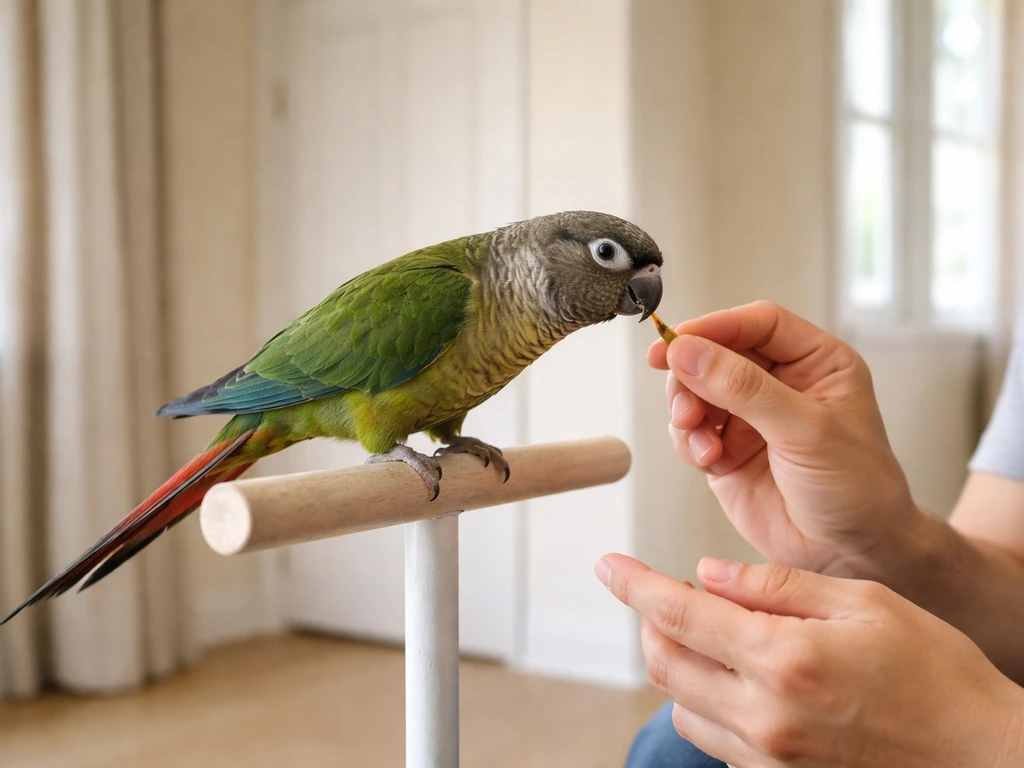
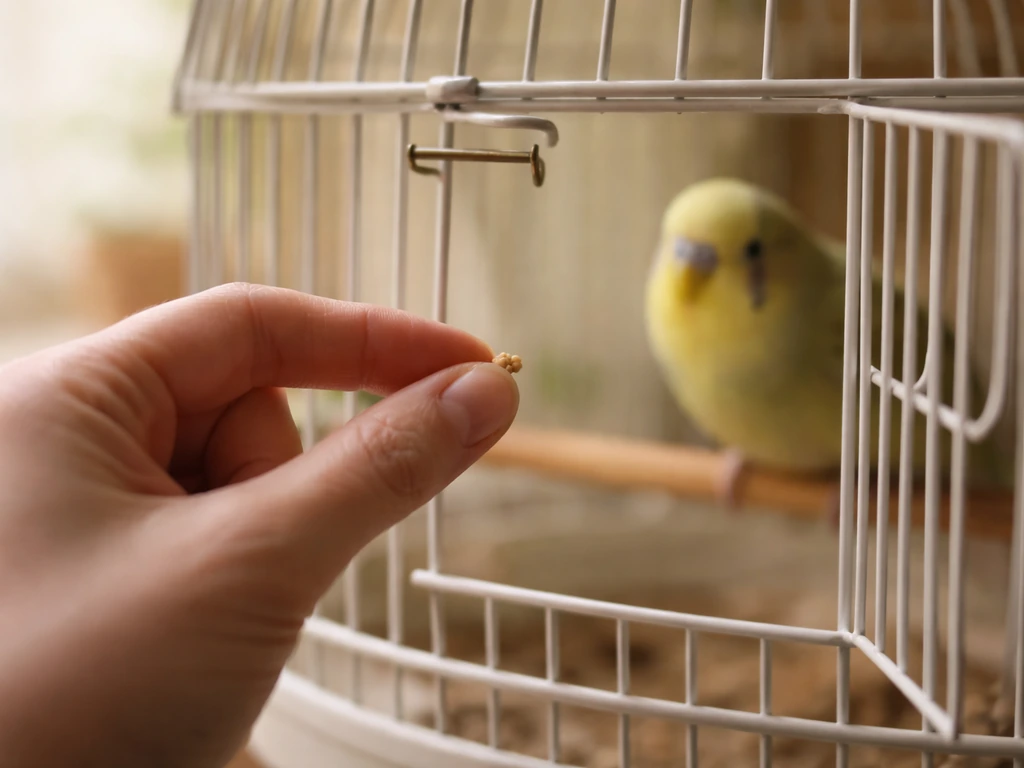
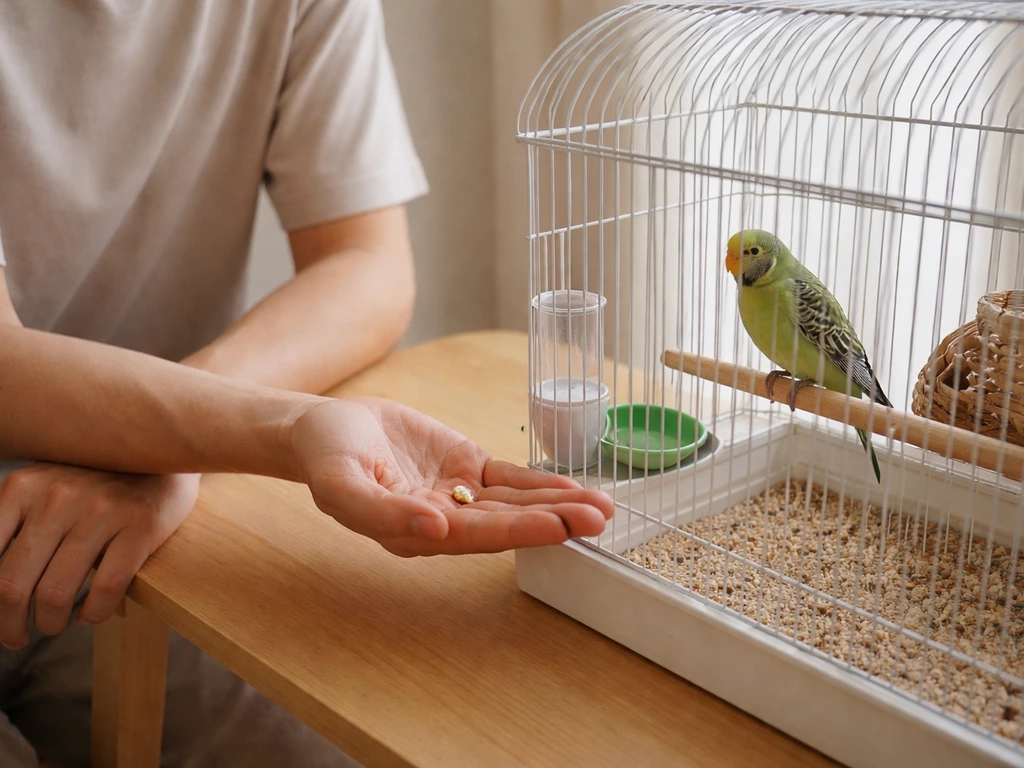
- Offer a high-value treat (millet spray for budgies and finches, a small piece of fruit or nut for parrots) through the cage bars. Do not push the treat toward the bird. Hold it still and wait.
- Once the bird takes treats through the bars consistently, open the cage door and hold the treat just inside the door. Let the bird come to you.
- Move the treat to the back of your open hand so the bird has to step partially onto your hand to reach it. Keep your hand flat and completely still.
- Over multiple short sessions (five to ten minutes maximum), work toward the bird stepping fully onto your hand for the treat. Say a simple cue word like "step up" each time.
- Once the bird steps up reliably inside the cage, practice just outside the cage, then in a small bird-proofed room with windows covered or closed.
During any manual handling that is necessary (for example, moving a bird to a vet carrier), Merck recommends observing the bird first, minimizing how long you hold it, and using a quiet voice with slow movements throughout. Merck Veterinary Manual also notes that most birds shouldn’t have their cages covered at night because covering can increase stress, so “reduced stress” should be evaluated based on the individual bird’s behavior rather than using a one-size-fits-all practice. Use a small towel for parrots if needed, but only as a last resort for safety, not as a routine handling method. The goal is always to make the bird feel it has some control.
Training basics: bonding, routines, and positive reinforcement
Positive reinforcement is the fastest, most effective, and most ethical way to train any bird. The idea is simple: the bird does something you want, you immediately deliver a reward, and the bird learns to repeat that behavior. Timing is everything. The reward needs to arrive within about two seconds of the behavior, or the bird will not connect the two.
How to build a basic training routine
- Choose a marker: a clicker, a specific word like "yes," or even a tongue click. Use the same marker every single time. The marker tells the bird the exact moment it did the right thing.
- Find the bird's highest-value treat. This is the one the bird will work hardest for. Common options: millet for small birds, pine nuts or sunflower seeds (used sparingly) for parrots, mealworms for corvids.
- Keep sessions short: two to five minutes for small birds, up to ten minutes for larger parrots. End every session before the bird loses interest.
- Train one behavior at a time. Start with "step up" before moving to anything else.
- Mark and reward every successful attempt at first, then gradually reward only the cleaner, faster versions of the behavior as the bird improves.
- Build in a predictable start and end signal so the bird knows when training is happening. A specific perch, a specific word, or bringing out the treat pouch works well.
Recall (training a bird to fly back to you on cue) follows the same framework but adds distance. Start with the bird on a perch just an arm's length away, say your recall word, hold out your hand, and reward the bird for flying or stepping to you. Gradually increase the distance. This is also covered in depth when looking at free-flight training, which is a natural next step once your bird is reliably stepping up and bonded to you.
What works for your specific type of bird
Not every method works for every bird. Here is a practical breakdown by the bird types people most commonly work with.
Parrots (including cockatiels, budgies, conures, African greys, macaws)
Parrots are highly social and food-motivated, which makes positive reinforcement very effective. Cockatiels and budgies are generally the easiest beginner birds for bonding. Start with the step-by-step approach above. Parrots respond well to daily interaction, mimicry of their own sounds (whistle back at them), and foraging-based enrichment that makes them work slightly for their food. Avoid grabbing or chasing, which breaks trust quickly and can take weeks to repair.
Finches and canaries
These birds are not typically handleable in the same way as parrots, and trying to force hands-on taming causes significant stress. The "easy" goal with finches is usually creating a calm, enriched environment where they are comfortable in your presence, not perching on your finger. Sit near the cage regularly, talk softly, and offer millet through the bars. A truly hand-tamed finch is possible but takes months and works best with birds raised from very young ages.
Birds of prey (falconry and rehab contexts)
Handling raptors (hawks, falcons, owls) without a falconry or wildlife rehabilitation permit is illegal in most countries, including the United States. If you are a licensed falconer or apprentice, the taming process (called "manning") involves carrying the bird on a gloved fist for extended quiet periods, introducing new environments gradually, and building up to the lure and recall. This is not a beginner process and requires in-person mentorship. Protective leather gloves are essential, not optional.
Wild birds (songbirds, pigeons, waterfowl, injured birds)
Wild birds should not be tamed into pets. The goal when handling a wild bird is minimal stress, safe containment, and rapid transfer to a licensed wildlife rehabilitator. Use a towel to gently scoop the bird (covering the head reduces panic), place it in a ventilated box, keep it warm and dark, and make the call to a rehabilitator right away. Do not offer food or water unless a rehabilitator specifically instructs you to, and do not handle the bird more than necessary.
When things go wrong: troubleshooting common problems
The bird bites or lunges
Biting is communication. The bird is telling you it is not comfortable. Do not pull away sharply (that rewards the bite by making the scary thing retreat) and do not punish the bird. Instead, move more slowly and back up one step in the trust-building progression. Watch for pre-bite warning signals: pinned pupils, raised feathers, a low crouch, or a quick lean toward your hand. If you catch and respect those signals, bites become rare quickly.
The bird is too fearful to approach
Fear responses (screaming alarm calls, panting, hissing, fanned tail, wings held away from the body, raised head feathers) mean you are asking for too much too soon. Stress signs like open-mouth breathing, especially when accompanied by a tail flick with each breath, can also indicate illness rather than simple fear, so rule out a health problem with an avian vet if the bird is not improving after a week of calm, low-pressure exposure. For behavioral fear, simply reduce your proximity and pace until the bird is consistently calm before moving forward.
The bird refuses to step up
This usually means one of two things: the bird does not yet trust the hand enough, or the reward is not motivating enough. Try a better treat. If the bird takes treats from your hand readily but still will not step up, it may need more time on the "treat near the hand" phase. Once the bird will take treats but still will not step up, review how to get bird up for more specific step-up tips and pacing. Some birds also respond better to a perch or a wooden dowel as a stepping target before graduating to a bare hand.
The bird screams constantly
Screaming for attention is common in parrots. The worst thing you can do is rush in to quiet the bird, because that teaches the bird that screaming works. Instead, only enter the room or give attention when the bird has been quiet for at least a few seconds. Reward quiet calm with your presence. Make sure the bird also has adequate enrichment (foraging toys, variety of foods, out-of-cage time) so screaming is not the only interesting thing available.
The bird keeps flying away or escaping
Flight is the bird's first defense, and an untrained bird will always use it if it feels unsafe. Until the bird is fully bonded and recall-trained, all out-of-cage time should happen in a closed, window-covered room. To help a bird fly safely, focus on getting trust built, using positive reinforcement, and training reliable recall before free-flight train reliable recall.
Wing clipping is an option some owners use to slow the progression to full free flight while training is underway, but it is controversial and should be discussed with an avian vet. Training a reliable recall before allowing unsupervised free flight is the safer long-term solution.
Free-flight should only be attempted after you have a reliable recall and the bird is comfortable stepping up and staying calm on cue Training a reliable recall before allowing unsupervised free flight is the safer long-term solution. . If your bird keeps flying away, use the same recall and trust-building steps consistently, and you can learn exactly how to make your bird not fly away safely.
Safety, welfare, and the legal side of bird keeping
Working with birds comes with real responsibilities, and a few of them are legal requirements, not just recommendations.
- Wild birds: In the United States, the Migratory Bird Treaty Act makes it illegal to keep, possess, or attempt to tame most wild bird species without a federal permit. This includes common birds like robins, sparrows, and crows. Contact the US Fish and Wildlife Service or your state wildlife agency if you are unsure about a specific species.
- Exotic and endangered species: Many parrots and other exotic birds are protected under CITES. Make sure any bird you purchase or adopt comes with legal documentation of captive breeding.
- Avian veterinary care: New pet birds should see an avian-certified vet within the first few weeks. Birds hide illness well, and a baseline health check can catch problems early. If a bird shows open-mouth breathing, tail-flicking with each breath, or extreme lethargy, treat it as a medical emergency, not a behavior problem.
- Harmful techniques to avoid: Never use punishment (spraying with water, shaking the cage, yelling). Never use the "earthquake" technique (rapidly shaking the bird off your hand). Never force a bird into contact it is actively fleeing from. These methods damage trust and can cause lasting psychological stress.
- Containment and flight safety: Before any out-of-cage session, check for ceiling fans, open toilets, toxic houseplants (philodendrons, poinsettias, and many others are toxic to birds), and non-stick cookware fumes (PTFE/Teflon fumes are rapidly fatal to birds even in small amounts).
- Gloves: Use only when absolutely necessary for safety with a genuinely dangerous bird. For most pet birds, gloves reduce your dexterity and muffle tactile feedback, making handling less safe and more stressful for the bird.
Your next steps, based on your goal
Start today with whichever of these matches your situation most closely. Pick one and do it for the next three days before adding anything else.
| Your situation | Do this today | Add this after 3-5 days of success |
|---|---|---|
| New pet bird, very shy | Sit quietly near the cage for 10-15 minutes twice a day, no interaction | Begin talking softly; offer a treat through the bars |
| Pet bird that won't step up | Identify a higher-value treat and offer it from an open, flat hand inside the cage | Practice step-up cue inside the cage before moving outside it |
| Bird that bites | Back up in the trust progression; spend a week on treat-through-bars only | Watch for pre-bite signals and reward calm body language |
| Injured wild bird found outside | Place in a ventilated dark box, call a licensed wildlife rehabilitator immediately | Follow the rehabilitator's instructions exactly; do not attempt to tame or feed independently |
| Bird that keeps flying away | Close all windows and doors before any out-of-cage time; begin recall training at close range | Gradually increase recall distance as the behavior becomes reliable |
The common thread across all of these is patience measured in days and weeks, not minutes. Birds are highly perceptive and they will notice the difference between someone who is calm and predictable versus someone who is frustrated or rushing. The more relaxed your approach, the faster the bird will come around. That is the real shortcut.
FAQ
Can I use the same “easy” method for every kind of bird?
Yes, but only for the exact “easy” goal you set first. If you want a pet to step up, focus on hand-reward timing and a stepping target. If the bird is wild or possibly injured, the easy goal is containment and transfer, not taming, feeding, or long handling sessions.
How strict does the reward timing need to be?
“Two seconds” is a strict guideline for connecting behavior to reward, if you want fast learning. If you miss the timing, the bird may still take the treat but will not build the correct association, so the step-up or recall progress slows.
My bird takes treats but still will not step up, what should I change first?
If treats work but stepping up does not, add a separate target step. Use a perch or a dowel as the step target (reward stepping onto the target). Once the bird consistently steps onto that, you can gradually move the target closer to your hand before using bare fingers.
What should I do if my bird seems more stressed after I start training?
If the bird is consistently showing stress, the most common mistake is moving forward too quickly, even if you think you are being gentle. Back up one phase (treat near the hand, then shorter hand time, then brief step-up) and hold that step until stress signals disappear for multiple short sessions.
How should I respond when the bird bites during training?
Do not treat biting as a reason to end the interaction immediately in a chaotic way. Instead, stop the trigger, reduce pace, and return to the previous trust step. That keeps the bird from learning that you will make sudden movements, and it also gives you a chance to correct the trigger that caused the bite.
My parrot screams whenever I walk in, how do I stop rewarding the screaming?
For many birds, “screaming” is reinforced by your attention. Use a pause-before-response rule: only interact when the bird is quiet for a few seconds, then reward calm and offer enrichment so there is a competing, positive activity to do.
How do I tell the difference between fear and a health issue?
If you are not seeing improvement after about a week of calm, low-pressure exposure, the bird may be dealing with illness or discomfort. In that case, switch from “more training” to an avian vet check, because fear-like behaviors can overlap with medical problems.
How long should a beginner session be, and when should I stop?
Use short sessions with predictable timing, and end before the bird reaches a stress threshold. Long sessions increase the chance the bird hits fear signs, especially with new birds, even if you are using treats and slow movements.
Can I let my bird out of the cage while it is still learning?
Keep the bird in a secure, closed room until bonding and recall are reliable. Window-covered, closed spaces prevent panic flights that can undo trust-building, and they reduce the risk of injury while you are still training step-up and recall.
What should I do if my bird keeps flying away during recall practice?
If the bird flies away during out-of-cage time, go back to the recall ladder rather than chasing. Return to the same cues, same distance start point, and reward the approach immediately, then only increase distance after the bird is consistently responding.
Is it okay to “tame” raptors if I found one?
Not if it risks legality or safety. Raptors require a permit and mentorship in many places, and they are not beginner pets. If you suspect you have a wild raptor or any raptor-like bird, prioritize contacting the appropriate licensed handler or wildlife authority instead.
What should I do immediately if I found a wild bird in my yard?
If it is a wild bird, do not offer food or water unless a licensed rehabilitator specifically tells you to. Handling too long or feeding the wrong thing can reduce survival chances, so keep contact minimal, keep the bird warm and dark, and transfer quickly.
Why do finches usually resist stepping onto a hand?
For finches, the “easy” approach is usually making your presence safe and predictable, not finger taming right away. Sit near the cage, talk softly, and use millet through the bars, then only attempt closer steps once the finch shows calm curiosity around you.
Next Article
How to Make Your Bird Not Fly Away Safely
Humane training and safety routine to stop your bird flying away, with routines, troubleshooting, and realistic results.