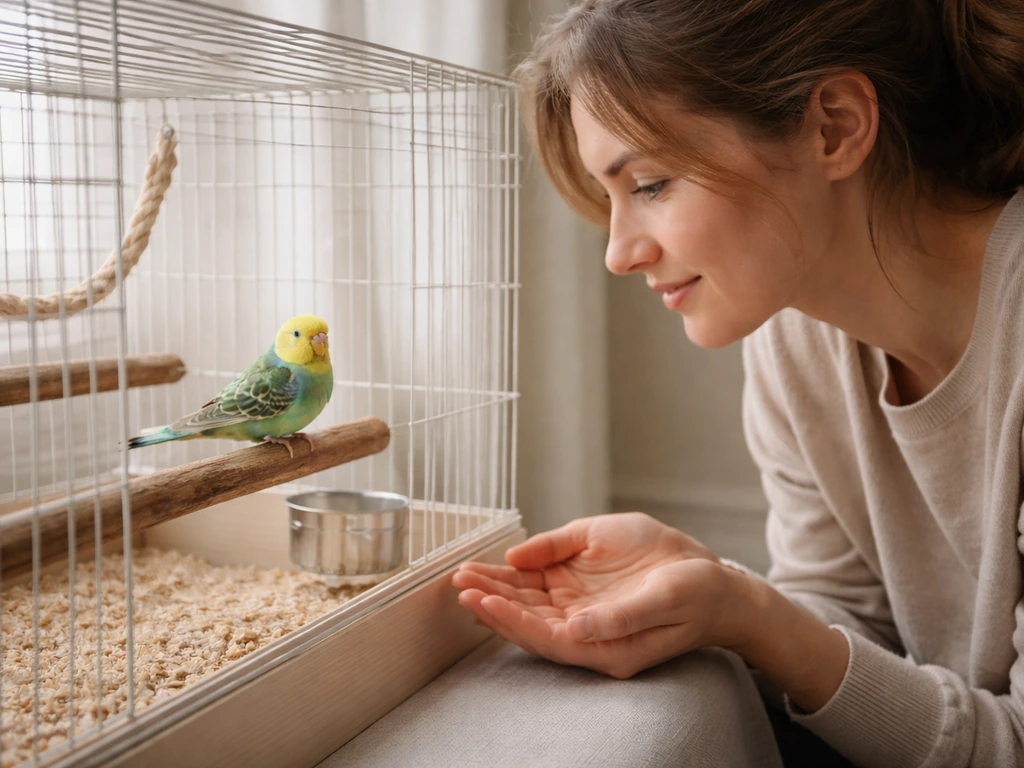
The easiest bird to train for most beginners is the budgerigar (budgie). They're social, food-motivated, resilient to minor handling mistakes, and can learn step-up, recall, and simple tricks within a few weeks of consistent work. Cockatiels come in a very close second, especially for bonding and handling goals. If you want a larger bird with strong trick-training potential, a hand-raised cockatoo or African Grey will outperform both, but those birds demand significantly more experience and daily time commitment. This guide walks you through exactly why these species rise to the top, what steps to take on day one, and how to match your training plan to your actual goal.
What Is the Easiest Bird to Train? Beginner Guide

Maya Harris
11 Apr 2026
What 'easiest' actually means depends on your goal
Before picking a species, be honest about what you're trying to achieve. 'Easy to train' means very different things depending on whether you want a bird that sits calmly on your hand, one that flies back to you on cue, or one that performs a string of party tricks. These three goal categories have different species requirements, different timelines, and different failure points for beginners.
- Bonding and handling: You want the bird to tolerate or enjoy your presence, step onto your hand willingly, and stay calm during interaction. Budgies, cockatiels, and lovebirds excel here. Timeline: 1 to 4 weeks for a hand-raised bird; 2 to 3 months for a wild-caught or aviary-raised bird.
- Trick training: You want the bird to respond to cues for specific behaviors like waving, spinning, or picking up objects. African Greys, cockatoos, and Amazon parrots have the cognitive horsepower and motivation for complex trick chains. Timeline: basic tricks in 2 to 6 weeks once trust is established.
- Recall and free flight: You want the bird to fly to you on cue, either indoors or outdoors. Free flying your bird requires an already-bonded, cooperative bird first. Recall is an advanced skill built on top of solid step-up behavior, not a starting point.
Pick your goal first, then pick your species. A bird that's 'easy' for bonding might be genuinely difficult for recall training, and vice versa. The rest of this guide is organized around that decision.
The best beginner-friendly species, ranked honestly
These five species consistently appear at the top of beginner-friendly lists for good reasons, not marketing. The ranking is based on four factors: social temperament, food motivation, tolerance of handling mistakes, and the speed at which you can get a first cooperative behavior.
| Species | Best For | Avg. Time to First Step-Up | Trick Potential | Noise Level | Beginner Rank |
|---|---|---|---|---|---|
| Budgerigar (Budgie) | Bonding, handling, basic tricks | 1–2 weeks (hand-raised) | Moderate | Low | 1 – Best overall |
| Cockatiel | Bonding, handling, whistling/tricks | 1–3 weeks (hand-raised) | Moderate-High | Low-Medium | 2 – Excellent |
| Lovebird | Bonding (one-on-one) | 2–4 weeks | Low-Moderate | Medium | 3 – Good with patience |
| Cockatoo (hand-raised) | Bonding, tricks, recall | Days (hand-raised) | Very High | Very High | 4 – Rewarding but demanding |
| African Grey (hand-raised) | Trick training, speech | 1–2 weeks (hand-raised) | Exceptional | Medium | 5 – Best tricks, most complex needs |
Budgies win for most beginners because their small size reduces the stakes of early handling errors, their social flock instinct makes them naturally inclined toward interaction, and they respond well to simple positive reinforcement mechanics. Cockatiels share most of those traits and are often friendlier to handle once bonded. Lovebirds can be nippy when boundaries aren't established clearly, which makes them harder for true beginners. Cockatoos and African Greys reward experienced owners but can develop significant behavioral problems if their needs aren't met, so I'd put them in a separate 'intermediate' category even when hand-raised.
Species-by-species starting steps
Budgies: the fastest path to a cooperative bird
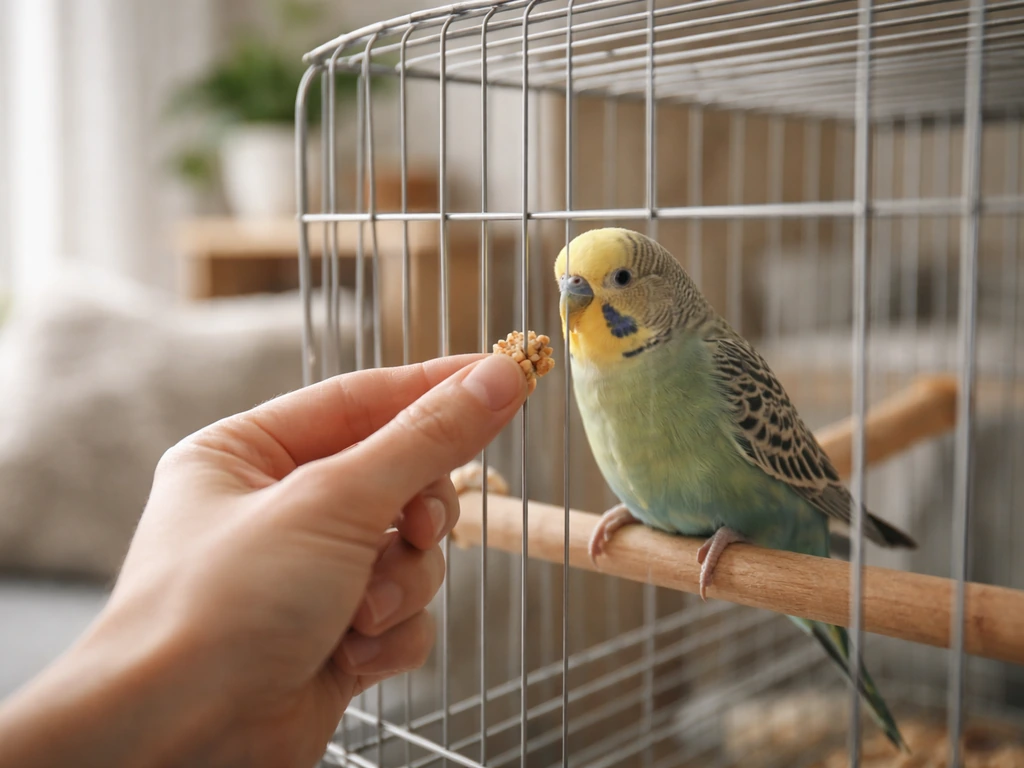
Week one is entirely about low-pressure presence. Place the cage in a room where you spend real time, not a spare bedroom. Talk quietly near the cage, move slowly, and don't try to put your hand inside yet. On day two or three, begin dropping a small piece of millet or spray millet through the cage bars so the bird associates your hand with something good. This approach, dropping a treat into the bowl without expecting anything in return first, is a well-established starting point recommended by avian care experts for shy or nervous birds. The bird doesn't have to do anything; it just needs to notice that your hand predicts good things.
By day five to seven, most hand-raised budgies will approach your fingers for millet. That's your entry point for step-up. Hold a finger at chest height, place millet just above it so the bird has to step onto your finger to reach the treat, and say 'step up' in a calm, consistent voice. Use the same verbal cue every time, and deliver the reward within one to two seconds of the correct behavior. Consistency in cue and timing is what separates fast learners from birds that never quite get it. Daily sessions of five to ten minutes are more effective than one long weekly session.
Once your budgie steps up reliably indoors, you can begin working on getting your bird up from different surfaces and locations, which builds generalization of the cue. That's the foundation everything else is built on.
Cockatiels: bonding first, then build on it
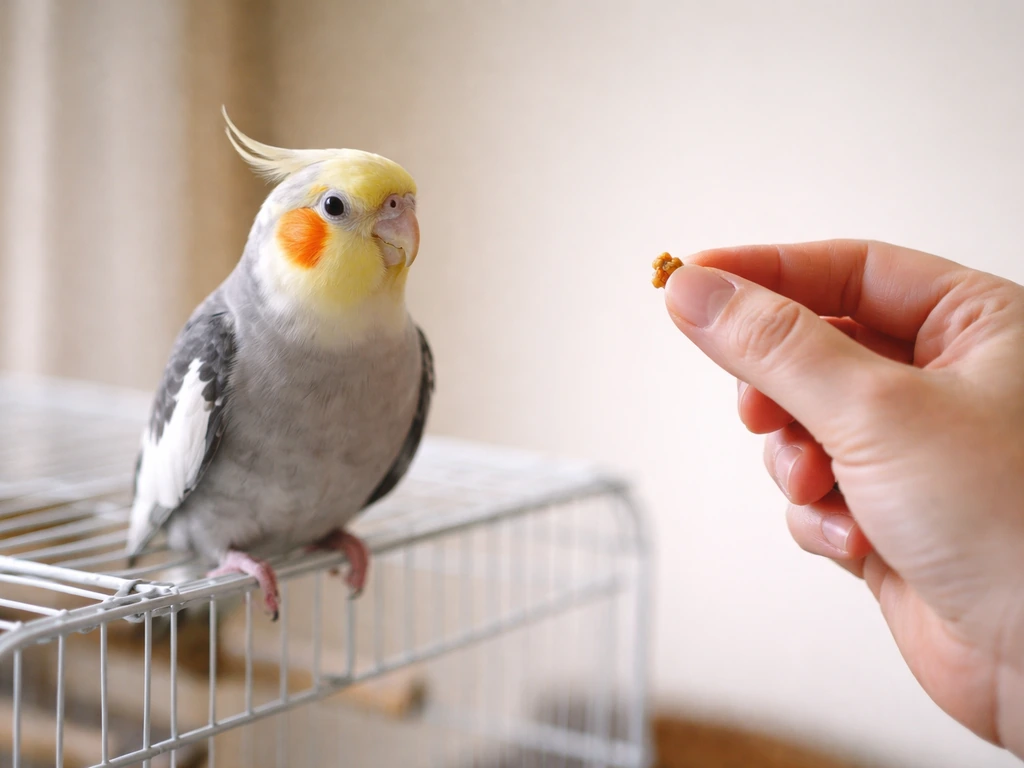
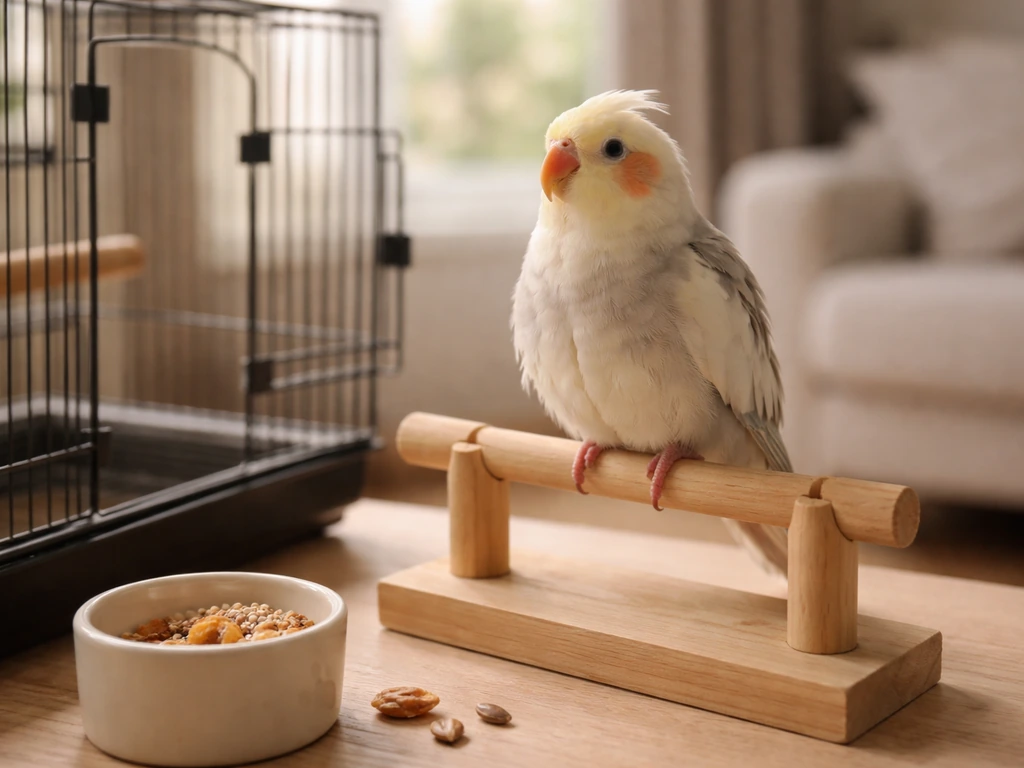
Cockatiels are naturally flock-oriented and communicate clearly with crest position, making them easier to read than most species. A flat or slightly raised crest means calm; a fully pinned-back crest means stressed or frightened. Use that feedback constantly. Start the same way as with budgies: casual presence, no pressure, high-value treats (millet, small pieces of nutrient-dense pellet, or a specific seed the bird clearly prefers). Lafeber's guidance is clear that you'll get the best training results with cockatiels when you find the treat the bird genuinely works for, not just one that's convenient for you.
Cockatiels often become comfortable with hand presence faster than budgies but may resist the actual step-up cue longer. If step-up attempts stall, coax with a treat and use a calm, steady voice rather than pushing the hand forward or trying to scoop the bird. Scooping teaches the bird that your hand is a threat, not a perch. Once step-up is solid inside the cage, practice it in a neutral room with clipped wings or closed windows, then gradually add environmental distractions.
Lovebirds: patience and consistency over speed
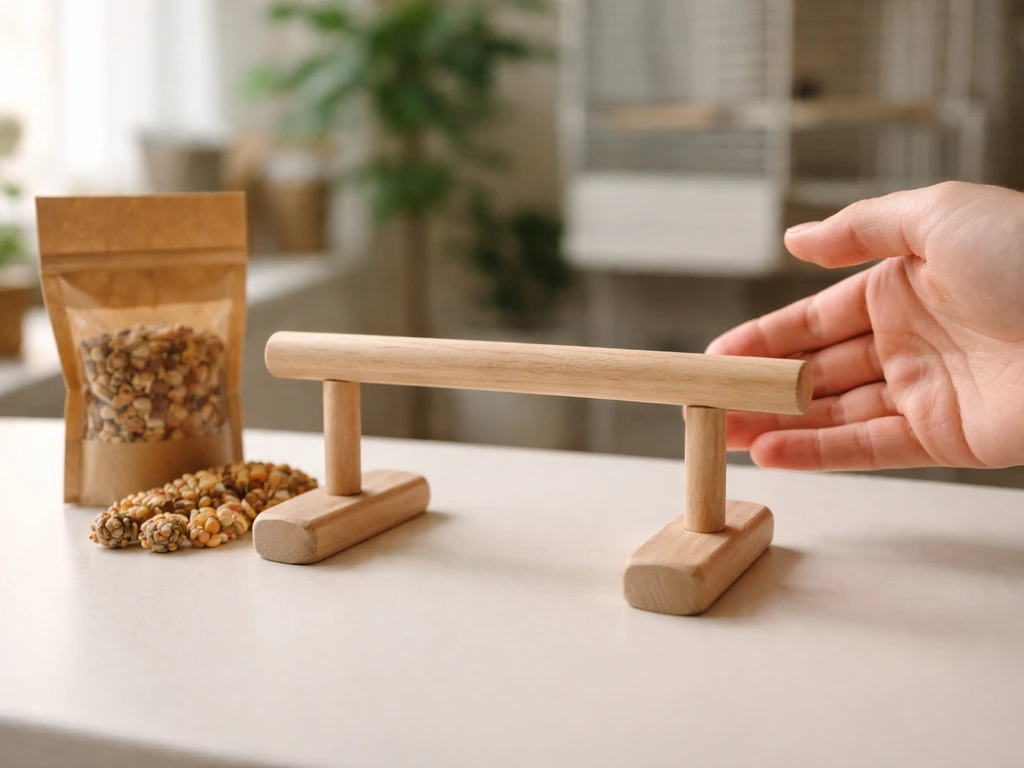
If you've got a single lovebird, you have an advantage: unpaired lovebirds bond intensely to their person. The same millet-and-presence protocol applies, but expect a longer timeline before the bird is comfortable with out-of-cage handling. Lovebirds can be territorial about their cage, so begin step-up practice on a neutral perch or T-stand outside the cage rather than inside it. Keep sessions short (three to five minutes) because lovebirds tend to have lower frustration tolerance than budgies, and a bad session sets you back more with this species than with others.
Cockatoos and African Greys: set yourself up right from the start
Hand-raised cockatoos can seem deceptively easy to bond with because they're already attached to humans. The challenge is building structured training habits early so the bird doesn't develop screaming or feather-destructive behaviors from unmet attention needs. African Greys need environmental enrichment and mental stimulation from day one or they become fearful and avoidant. For both species, starting with a solid taming foundation before attempting any formal trick training is non-negotiable. Tricks can wait; trust cannot.
The core mechanics of positive reinforcement training
Every credible avian training organization, from IAATE to AALAE, points to positive reinforcement as the preferred training strategy. Aversive approaches, meaning anything the bird is trying to escape or avoid, reliably produce escape behavior, increased aggression, and reduced willingness to participate. In practical terms: if the bird is trying to get away from you, your training is moving in the wrong direction. Positive reinforcement training keeps participation voluntary. The bird always has the option to move away, and you always respond by backing off and trying again later.
- Choose a high-value treat the bird will actively work for. Test several options in the first week.
- Pick one verbal or visual cue per behavior and use it identically every single time.
- Deliver the reward within one to two seconds of the correct response. Delayed rewards confuse the bird about what behavior earned the treat.
- Keep sessions short: five to ten minutes maximum, two to three times per day.
- End every session on a success, even if you have to make the last task easier to guarantee it.
- If the bird shows stress signals (pinned feathers, wide eyes, moving away, biting), stop the session immediately. Never push through stress.
Research on macaws trained with positive reinforcement for veterinary procedures found that this approach reduced the stress associated with capture and restraint and improved the birds' willingness to voluntarily participate. That principle holds for pet birds learning basic handling behaviors too. A bird that steps up because it wants to is a completely different bird than one that steps up because it's been cornered.
What to avoid: welfare risks, common mistakes, and unrealistic expectations
The most common mistake beginners make is moving too fast. They get a bird stepping up on day three and immediately try to take it outside, introduce strangers, or start trick training. The bird gets overwhelmed, bites, and the owner labels it 'difficult.' In almost every case, the bird wasn't the problem. Rushing desensitization is the problem. Systematic desensitization means gradual exposure to new things at an intensity the bird can handle without stress, not throwing the bird into the deep end and hoping it adapts.
- Never use force to hold, restrain, or move a bird during training. Toweling, scruffing, or pinning a bird to get it onto your hand teaches the bird that your hand is a predator, not a perch.
- Don't use punishment. Squirting water, tapping the beak, or yelling at a bird for biting increases fear and aggression. Address biting by identifying and removing its cause, not by punishing the response.
- Avoid flooding: don't put the bird in a situation it can't escape from and wait for it to 'calm down.' This causes lasting fear associations and destroys trust.
- Don't skip wing-clipping decisions carelessly. A fully flighted bird in an unprepared home can injure itself. A clipped bird has different safety needs. Know your setup before you decide.
- Mismatched enrichment is a real welfare risk. A bird that's bored, under-stimulated, or isolated will develop screaming, feather destruction, or aggression that's hard to reverse. Match your enrichment to the species' natural behavior profile.
- Don't expect results in one day. Even the most trainable species need a trust-building period. Advertising that promises you can have a trick-performing bird in 24 hours is not based in how birds actually learn.
One underappreciated mistake is not having a plan to prevent your bird from flying away before recall training is solid. Flight is a natural bird behavior, and a bird that isn't reliably recalled can be gone permanently if a door opens at the wrong moment. Establish step-up and indoor recall first, always.
Handling, safety, and legal basics for pet vs. wild birds
For pet birds, the main safety considerations are handling technique, hygiene, and knowing when a bird is stressed enough to bite. Evaluate the bird's body language before every physical interaction. Even birds that seem calm can be experiencing fear or stress that's not obvious to a new owner. The Association of Avian Veterinarians notes this is one of the most common errors in avian handling: assuming stillness equals calm. A frightened bird that has learned it can't escape may freeze rather than fight, and that's still a welfare problem.
For wild or rehabilitated birds, the rules are fundamentally different and legally binding. Under federal regulation (50 CFR §21.12), migratory birds that you encounter must generally be immediately released unless they're injured, ill, exhausted, or orphaned. If you find an injured migratory bird and stabilize it yourself, you're required to transfer it to a federally permitted rehabilitator within 24 hours. You cannot legally keep, condition, or 'train' a migratory wild bird without the appropriate permits. USFWS rehabilitation permit requirements mandate that all releasable birds must be returned to the wild as soon as seasonal conditions allow. 'Training' a wild rehabilitated bird means conditioning it for release, not for human interaction.
If you're working as a rehabilitator or volunteering with one, disease transmission is a serious practical concern. State-level wildlife rehabilitation rules, such as those from Washington's Department of Fish and Wildlife, require keeping rehabilitated wildlife separate from domestic and exotic animals to prevent disease spread. This affects how you handle and house birds in a rehabilitation setting, and it means personal protective equipment is not optional when working with wild birds of unknown health status.
For anyone interested in understanding the physical adaptations that allow birds to fly, that knowledge genuinely helps you understand why certain handling positions are stressful or dangerous. Birds' respiratory and musculoskeletal systems are built for flight, not restraint, and that's worth understanding before you start working with any species.
Troubleshooting by temperament and goals
Bird refuses to step up
First, check whether the bird is actually comfortable enough to participate. If it's fluffed, retreating, or showing any stress signal, step-up readiness isn't there yet and pushing will backfire. Go back to treat-dropping through bars and rebuild approach behavior. If the bird approaches but won't step up, the issue is usually that your hand feels unstable or the treat placement isn't making stepping up the obvious choice. Hold your hand very still, position the treat just above finger height, and wait. If the bird takes ten seconds to decide, that's fine. Don't move the hand toward the bird; let the bird come to the hand.
Biting during handling
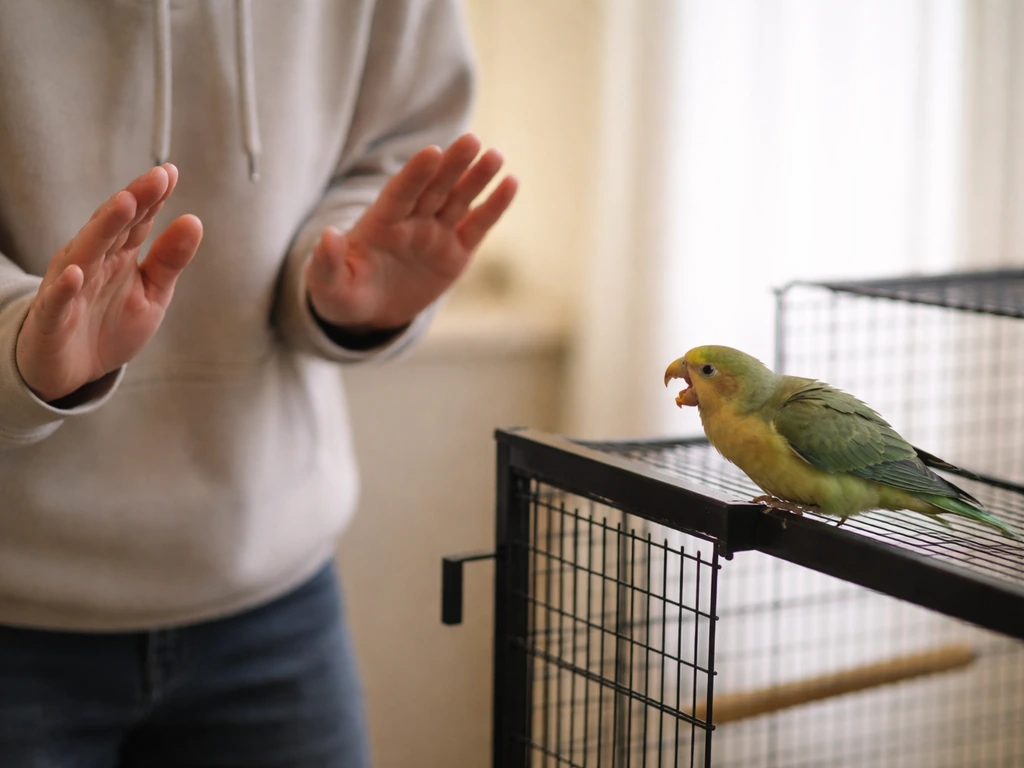
Biting almost always means you've moved too fast or missed a stress signal. Identify the exact point where biting starts: is it when you move the hand toward the cage, when you attempt step-up, or after the bird is on your hand? Work backward from that point and slow down. If the bird bites when you try to return it to the cage, it may be telling you it wants more out-of-cage time, not that it's aggressive. Context matters enormously. Never respond to a bite with punishment; just end the session calmly and assess what triggered it.
Screaming and attention-seeking behavior
Screaming is natural bird communication. Problematic screaming is usually a bird that's learned screaming gets attention, or a bird that's genuinely under-stimulated. The fix for the first type is to not respond to screaming (no eye contact, no verbal response, no entering the room) and instead reward quiet moments with attention and interaction. For the second type, address the enrichment deficit directly. Foraging toys, rotation of novel objects, and more structured training sessions are usually more effective than any behavior modification approach.
Bird is fearful and won't approach
Systematic desensitization is your tool here. Start at a distance or interaction intensity that the bird tolerates without retreating, pair that level of exposure with treats or other positives, and only increase intensity once the bird is clearly comfortable at the current level. This process can take weeks with a fearful bird, and that's completely normal. Never interpret a fearful bird's stillness as acceptance; watch for relaxed body posture, normal breathing, and voluntary approach as real signs of progress. Making training feel easy and low-stakes for the bird is the entire job in the early stages.
Choosing your plan by goals and temperament
Match the training plan to the individual bird, not just the species. The International Association of Avian Trainers and Educators (IAATE) publishes position statements with guidance that owners and trainers should choose avian training practices suited to each individual bird’s behavioral and physiological needs blank" rel="noopener noreferrer">choose the training plan to the individual bird. A bold, curious budgie can move through the taming progression in a week. A shy cockatiel from an aviary background might need six weeks before it's ready for step-up. Use the bird's behavior, not the calendar, as your guide. If you have a particularly challenging individual that isn't progressing with standard approaches, document what you've tried, what responses you're getting, and at what point in the session behavior breaks down. That information tells you exactly where to adjust.
For trick training goals specifically, the standard progression is: reliable step-up first, then target training (touching a target stick with the beak on cue), then shaping more complex behaviors from target training. Target training is the most efficient intermediate step because it gives you a way to position the bird and guide behavior without physical contact, which keeps participation voluntary and keeps the bird's confidence high.
Your next steps, simplified
If you're starting from scratch today, here's the short version. Get a hand-raised budgie or cockatiel from a reputable breeder. Spend the first week on low-pressure presence and treat delivery through the cage bars. Start step-up in week two using consistent cues and immediate rewards. Keep sessions under ten minutes. Watch body language at every stage and back off at the first sign of stress. Once step-up is reliable, you have a foundation to build anything else you want, from trick training to more complex behavioral goals, on top of a bird that actually trusts you. That trust is what makes everything else possible. For expert help and proper welfare guidance, CDC recommends finding a veterinarian who specializes in bird medicine blank" rel="noopener noreferrer">find a veterinarian who specializes in bird medicine.
FAQ
What bird is easiest to train if I only want step-up and not tricks?
It depends on what you mean by “train.” For easiest first wins like step-up and calm handling, budgerigars (budgies) are usually the fastest for most beginners. If you specifically mean bonding and reading body language cues, cockatiels are often the simplest alternative. If you mean recall or complex trick chains, none are guaranteed, and many beginners struggle more with flight management than with learning behaviors.
How do I know when my bird is ready to start step-up training?
Use the bird’s body language, not the calendar. A good readiness sign is voluntary approach to the hand or fingers, relaxed posture, and steady breathing, even if it takes a long time to decide. If the bird fluffs, leans back, retreats, or repeatedly turns away, treat-dropping through the bars and slower presence are usually the correct reset step.
My bird can step up inside the cage but panics when I try to move them outside. What should I do?
Avoid the common “new skill on day three” trap. If your bird steps up but then panics outside the cage or bites when you try to extend time, you likely advanced too quickly. Keep the first step-up sessions indoors only, then increase duration by seconds at a time, and return immediately to treat-dropping if stress spikes.
What should I troubleshoot first if my bird won’t step up on cue?
If your bird refuses step-up, check treat placement and hand stability first. Hold your hand very still at chest height, place the treat just above finger height (so stepping is the obvious path), and wait the full decision window without moving the hand toward the bird. If it still will not step up, go back to hands predicting treats with no expectation of stepping.
How long should beginner training sessions be, and how do I know when to stop?
Start very small, five to ten minutes is typically plenty for early taming, and stop while the bird still seems willing. A “session win” is often the bird approaching the hand or taking a treat with calm body language, even if it does not step up yet. End on a positive note, then repeat later rather than pushing through frustration.
Does perch choice or training setup change how easy the bird is to train?
Choose perches and setup that reduce fear and accident risk. For lovebirds, begin step-up on a neutral outside perch or T-stand rather than inside the cage, since cage-guarding can derail training. For all species, keep doors closed, use a consistent location for the early steps, and reduce novelty until step-up is reliable.
Why do some budgies or cockatiels seem harder to train than others?
Yes, and it’s more about the bird’s learning history than just the species. If the bird was handled gently and regularly, progress usually feels faster. If it came from neglect, inconsistent handling, or an aviary situation with limited human contact, you may need slower desensitization and more treat conditioning before step-up looks possible.
When is it safe to begin recall training, and what is the biggest safety mistake to avoid?
Don’t start recall training until indoor step-up is solid and you have a clear safety plan for flight risk. Even with clipped wings, a door open at the wrong moment can lead to loss or injury. The practical next step is to build an indoor recall routine in a controlled room with windows/doors secured, then only gradually expand once your bird voluntarily returns for rewards.
How important is cue and reward timing, and what errors slow learning down?
Timing matters, but so does consistency. Reward within one to two seconds of the correct response, and use the exact same verbal cue each time. If you change the cue, delay rewards, or reward incorrect attempts, the bird can learn “confusing patterns” and appear stubborn even when it is actually following your signals.
What should I do immediately after my bird bites during training?
If your bird bites, stop the session calmly and analyze the trigger point (approach toward the cage, during step-up attempt, or when returning to the cage). Do not punish the bird. Then reduce intensity for the next session by going back a step, such as treating through bars, and try again later when both of you are calmer.
My bird screams a lot. How do I tell whether it is attention-seeking or boredom, and what do I do?
For screaming used to get attention, the fix is to withhold the expected payoff during the scream (no eye contact, no talking, no entering), then reward quiet behavior with attention or training treats. For screaming from understimulation, increase foraging options and rotate new objects or short structured training sessions. If it becomes persistent, also consider stressors like crowding, noise, or sleep disruption.
How can I choose the easiest bird to train when I’m shopping or adopting?
A “manageable” bird for a beginner is one that is food-motivated and tolerates mild handling mistakes without escalating. Before committing, ask the breeder or previous owner about temperament, handling history, and whether the bird takes treats readily. Also confirm the bird’s current diet and preferences, because a bird that ignores your treats will be harder to train regardless of species.
Next Article
How to Make a Bird Easy: Step-by-Step Humane Taming
Step-by-step humane taming to calm a bird, build trust, teach stepping up, and reduce biting with positive reinforcement