Yes, you can train a bird to fly and reliably come back to you, but the order of operations matters enormously. Trust comes first, flight comes second, and recall only works when both of those are solid. Whether you're working with a pet parrot, a bird of prey, or a rehabilitated wild bird, the core framework is the same: build a calm, motivated bird, introduce a reliable recall cue, and progress from short indoor hops to longer flights only when the bird is genuinely ready. This guide walks you through every stage, including what to do when it's not working.
How to Train a Bird to Fly and Come Back Reliably
Maya Harris
10 Apr 2026
Before you start: choosing the right bird and confirming readiness
Not every bird is a good candidate for free-flight or recall training right now. Before you begin, you need to assess three things: the bird's physical condition, its emotional state, and your own setup. A bird that is stressed, feather-compromised, or unwell will not recall reliably, and pushing training anyway can set you back weeks.
On the physical side, check the feathers carefully. For birds of prey specifically, if more than three flight feathers from either wing, or more than five tail feathers, are broken or less than half grown, you should wait for those feathers to fully develop (or consider imping) before starting any flight conditioning. The same principle applies broadly: a bird that can't fly well physically cannot be trained to fly back to you reliably.
On the behavioral side, look for calm body language before you even approach the bird. The Association of Avian Veterinarians recommends observing a bird's demeanor before handling, relaxed feathers, alert but not panicked eyes, and a willingness to engage are the green lights you're looking for. If the bird is puffed up, hiding, or screaming defensively, that session should not happen. Stress during early training creates fear associations that are genuinely hard to undo.
For pet birds, your readiness checklist looks like this:
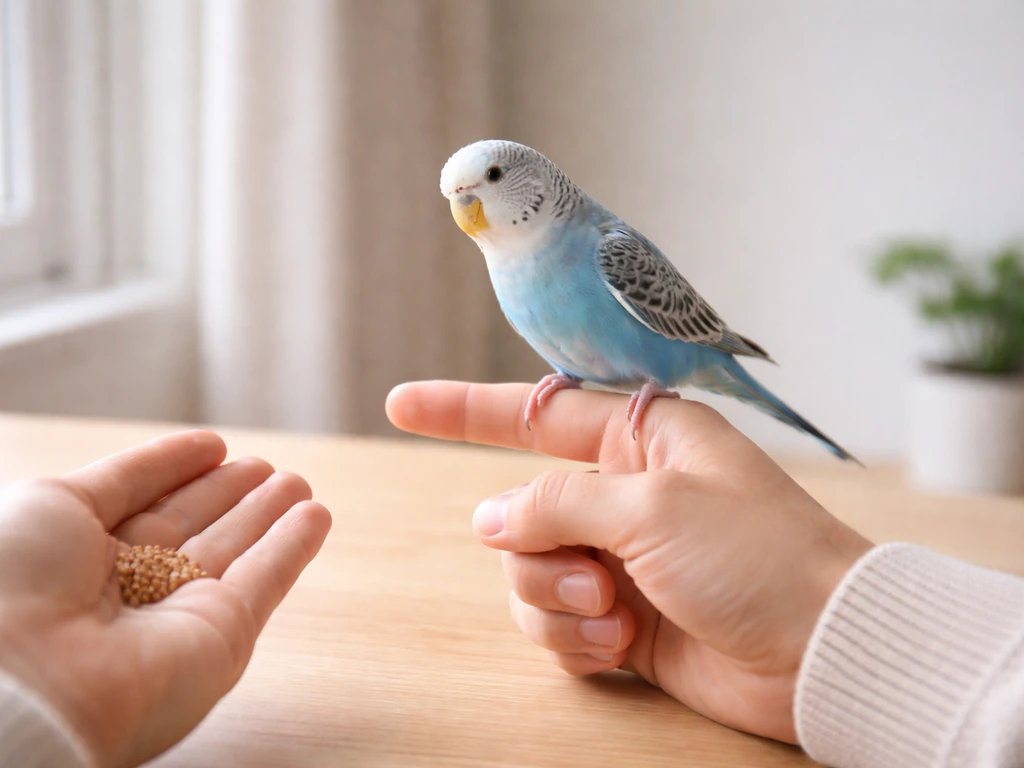
- The bird steps up calmly onto your hand or a perch on cue
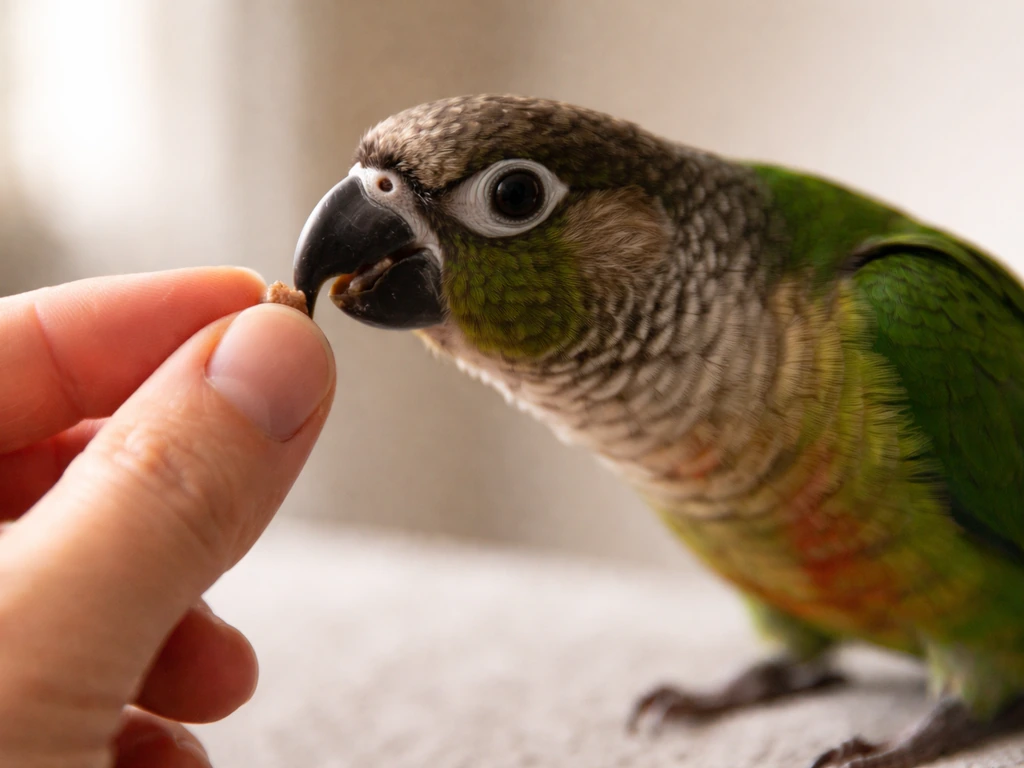
- The bird eats treats from your hand without hesitation
- The bird is physically healthy and feathers are in good condition
- You have a safe, enclosed space for early training
- You have a high-value food reward the bird genuinely works for
If your bird is still skittish around your hand or won't take treats, go back to basic taming before attempting any flight work. Understanding what helps birds fly, including the physical and motivational factors, is a great place to ground your expectations before the first session.
Safety and legal considerations, especially for wild and rehabilitated birds
If you are working with a wild or rehabilitated bird, the legal and ethical landscape changes significantly. In the United States, migratory birds are protected under federal law, and you cannot simply hold, train, or release them without the proper permits. The U.S. Fish and Wildlife Service (USFWS) migratory bird rehabilitation permit requires that all recuperated birds be released to suitable habitat as soon as seasonal conditions allow. Birds may not be held for more than 180 days unless approved by the Regional Migratory Bird Permit Office, and non-releasable outcomes require prior authorization. If you are in a state like Washington, you also need to notify the wildlife rehabilitation manager before releasing any endangered, threatened, or oiled species, and you may need department approval depending on the condition of the release site.
What this means practically: if you are a licensed rehabilitator, your training plan for a wild bird should be shaped entirely around the goal of release, not the goal of recall to a person. Any conditioning you do is meant to restore natural flight ability, not to create a dependence on human handlers. Minimizing imprinting risk is critical, especially with raptors and corvids. If you're banding or marking a bird as part of a release monitoring program, note that a federal bird banding permit from the USGS Bird Banding Laboratory is required for any banding of migratory species.
Also worth noting: it is unlawful in most jurisdictions to publicly display wildlife held for rehabilitation, and using rehab birds in ways that go beyond necessary care and conditioning is prohibited. Training a wild bird to come back to you as a pet is not a legal gray area, it is simply not permitted without specific licensing.
For pet bird owners, indoor safety is the immediate concern. Never allow a bird to fly when a ceiling fan or floor fan is running, this is one of the most common causes of serious injury and death in pet birds. Cover windows and mirrors before any free-flight session, since birds cannot distinguish glass from open air and can fly into reflective surfaces at full speed. Close all doors and windows, and move any toxic plants, open water containers, or small spaces a bird could get stuck in.
Building trust and recall foundations at home
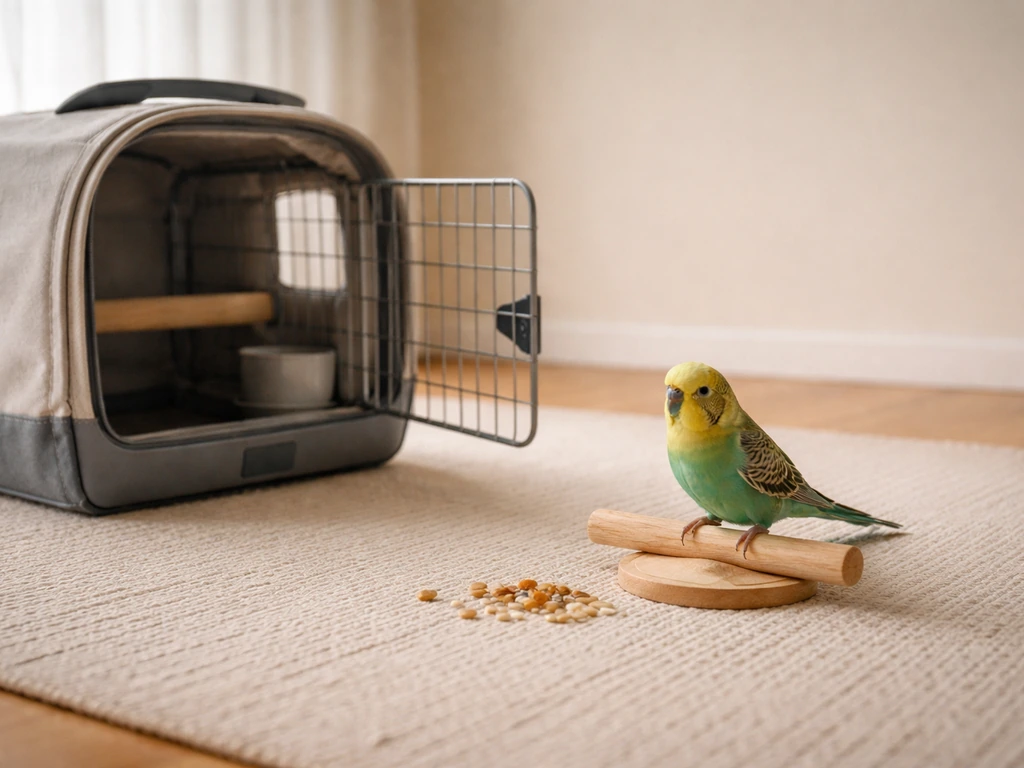
Every reliable recall starts at zero distance. Before a bird will fly across a room to you, it needs to understand what the recall cue means, that coming to you always pays off, and that you are a safe, predictable presence. You build all of that in short, low-pressure sessions inside your home.
Prepare everything before the bird comes out of its cage. Having treats measured, your perch or hand ready, and distractions minimized means your session actually starts the moment the bird is out, not five minutes later while you're fumbling around. LafeberVet training guidance specifically highlights pre-session preparation as part of the setup, and it makes a real difference to session quality.
The foundational behavior you need first is the step-up: the bird calmly moves from one surface onto your hand on a verbal or physical cue. Once that's solid, you're essentially already doing recall in miniature. From there, you introduce a distinct recall cue, a specific word like "come" or a whistle, and you begin pairing it with the behavior every single time. At this stage, use continuous reinforcement: every correct recall gets a reward, no exceptions. This is not the time to be stingy with treats.
Harrison's Bird Foods behavioral education materials outline the difference between reinforcement schedules clearly: continuous reinforcement (rewarding every correct response) builds the behavior fastest. Once the behavior is reliable, you can shift to a variable ratio schedule, rewarding unpredictably, which actually makes the behavior more resistant to extinction. For recall specifically, though, many experienced trainers keep the reinforcement rate very high permanently, because a bird that occasionally doesn't get rewarded for coming back to you is a bird that will eventually stop bothering.
Keep early sessions to 15–20 minutes maximum. Fear Free avian training guidance recommends ending sessions as the bird's interest starts to wane, not after it has already disengaged. Short, positive sessions build a bird that looks forward to training rather than one that tolerates it.
Progressive flight training: from short hops to longer releases
Once your bird recalls reliably from hand to hand at arm's length, you start adding distance, but incrementally. The progression looks like this:
- Hand to hand at arm's length (zero flight required, just a step-up)
- Hand to hand across a short gap of 1–2 feet, requiring a small hop
- Hand to perch across the same distance, then back to hand
- Perch to hand across a full room length (first real flight)
- Multiple room-length recalls in a single session
- Aviary or enclosed outdoor space recalls at greater distance
- Controlled outdoor recalls with a harness and flight line
- Fully supervised open-air recalls (advanced, species-dependent)
Do not skip steps. The temptation to move outside before indoor recall is solid is one of the most common mistakes people make. Outdoors, there are wind currents, unfamiliar sounds, other birds, and a sky with no walls, all of which compete with your recall cue in ways that an indoor room does not. If recall is only 80% reliable inside, it will be maybe 20% reliable outside. You want indoor recall to feel automatic before you move to any open environment.
For a deeper look at the mechanics of the flight itself, how birds generate lift, use thermals, and develop wing strength, how to make a bird fly covers the physical side of the equation in useful detail.
When you're ready to move to an aviary or enclosed outdoor space, the same rules apply: start at short distances, reward every return, and keep sessions short. An aviary that is too small for the bird to reach meaningful speed is actually counterproductive for flight conditioning, birds need room to fully extend their wingbeats and build endurance. For most medium-sized parrots, an aviary of at least 10–12 feet in length gives enough runway for useful flight sessions.
Training the 'come back': cues, reinforcement, and timing
The recall cue itself needs to be introduced carefully. The rule of thumb from structured shaping protocols is to attach the cue word or signal only after the bird is already performing the behavior consistently, not before. If you start saying "come" while the bird is still figuring out what you want, the word just becomes noise. Wait until the bird is flying to you reliably in response to your body language or hand position, then layer in the verbal cue just before the bird commits to the flight. After enough repetitions, the word alone will trigger the behavior.
Timing of the reward is critical. The reinforcement needs to arrive within a second or two of the bird landing on your hand, not after you've praised it, repositioned yourself, and reached for a treat. Have the treat in your hand before you give the cue. The bird should be rewarded the moment its feet make contact with your hand or perch.
What you reward matters too. Use the highest-value treat your bird will work for, a small piece of nutrient-dense food it doesn't get at other times. If your bird works equally hard for a sunflower seed and a chunk of pine nut, use the sunflower seed for everyday interactions and save the pine nut for recalls. That differential value keeps the recall behavior feeling special and worth the effort.
Once recall is solid indoors, the transition to outdoor harness-based training is the next logical step for many pet bird owners. The Aviator Harness combined with an outdoor flight line is one practical system for controlled outdoor recall practice, the bird can fly, gain speed and confidence, and return to you, while still being physically tethered as a backup safety measure. Aviator Harness describes its Flight Line as a way to practice outdoor recall and landing skills while connecting to the harness for controlled training. If you're considering this approach, make sure the harness is properly sized for your bird's weight. Harness sizes like the TC Feathers X-Small, for example, are designed for birds in the 110–190 gram range, so matching the gear to the species matters. Always inspect the harness and line before each session and retire any equipment that shows wear or damage.
The broader concept of structured free-flight training for birds builds directly on everything covered here, it's worth reading once indoor recall is consistent and you're planning that next step outdoors.
When recall fails: troubleshooting fear, distraction, and low motivation
Recall failures almost always come down to one of three causes: the bird is afraid, the bird is distracted, or the reward isn't motivating enough to compete with whatever else is going on. Here's how to diagnose and fix each one.
The bird is afraid
Fear recall failures look like the bird flying away from you, hiding, or landing somewhere far off and refusing to move. This usually means you progressed too fast, something in the environment scared the bird, or the bird has a negative association with being approached. Go back to the last distance where recall was easy and successful, and rebuild from there. Do not chase the bird, chasing reinforces the idea that you are a threat, not a safe landing spot. Stand still, crouch down if possible to appear less threatening, and wait. Offer the recall cue calmly and wait. If the bird is truly shut down, end the session quietly and try again another day.
The bird is distracted
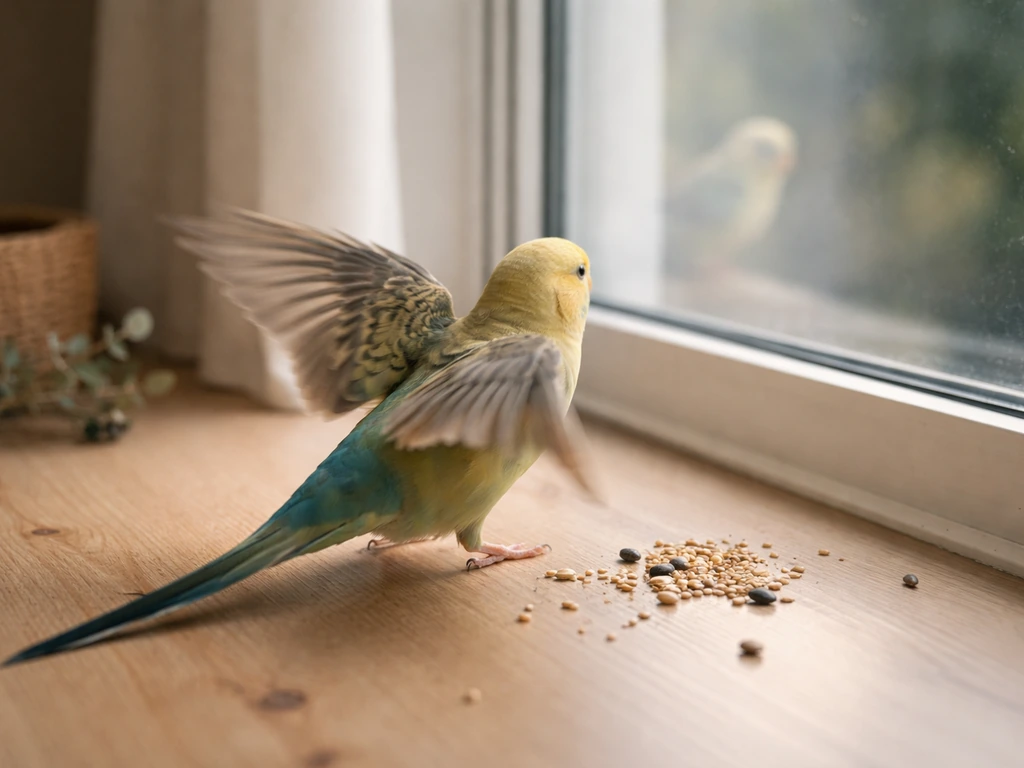
Distraction failures look like a bird that takes off toward you but then veers off toward a window, another bird, or something interesting on the floor. This is an environmental management problem as much as a training problem. Reduce competing stimuli during sessions, especially in early training. Outdoors, distraction is much harder to control, which is why outdoor recall is an advanced skill that requires a very strong indoor foundation first.
The reward isn't motivating enough
If your bird flies to you but seems unenthusiastic, takes the treat without much interest, or stops responding after a few recalls, the reward value may be too low. Try switching to a different food, training when the bird is slightly hungrier (before a meal rather than after), or making the training session itself more exciting with verbal praise and enthusiasm. Some birds also plateau on food rewards and respond better to a combination of food plus brief freeplay time on your shoulder. Experiment and observe what your specific bird actually works hard for.
If your bird has flown away during a session and you're dealing with an escaped bird rather than a training setback, the situation requires a different approach entirely. What to do if your bird flies away covers the immediate steps to take, including how to use familiar sounds and food to encourage a return.
Species-specific and setup-specific tips
Not all birds train the same way, and not all setups are equal. Here's a quick breakdown of the most important species and environment considerations.
| Bird type | Training style | Key considerations | Outdoor recall readiness |
|---|---|---|---|
| Parrots (small to medium) | Positive reinforcement, food rewards, verbal cues | High food motivation; can be distracted by novelty; harness training viable | After solid indoor recall; harness and flight line recommended first |
| Parrots (large: macaws, cockatoos) | Same reinforcement principles; longer session warm-up | Strong fliers; need large indoor space; can overfly recall point outdoors | Advanced; experienced trainers only; full free-flight requires significant conditioning |
| Birds of prey (falconry context) | Weight management and food motivation are central tools | Strictly regulated; falconry license required in most jurisdictions; feather condition critical | Gradual distance increase on creance (training line) before any free flight |
| Rehabilitated wild birds | Minimal human interaction; focus on flight conditioning, not recall to humans | Legal release obligation; imprinting risk; pre-release checklist essential | Release to suitable habitat ASAP; recall training not appropriate |
For falconry birds and birds of prey in a rehabilitation context, the approach to flight conditioning is highly structured and weight-dependent. These birds are trained to return for food, not out of social bonding in the same way parrots are. If you are rehabilitating a raptor, your goal is a bird that is physically capable of hunting and surviving independently, not one that associates you with food rewards.
For pet parrots, the indoor flight path matters more than most people realize. A long hallway is actually an ideal first free-flight corridor, it's enclosed, directional, and limits the bird's ability to veer off course. Living rooms with lots of furniture and windows are harder. If you're training in a room with windows, cover them with curtains or apply temporary window clings before sessions so the bird can't confuse glass for open space.
If you're just beginning the process and want to understand the foundational mechanics before jumping into recall work, how to teach a bird to fly is a solid starting point that covers wing development, perch placement, and building initial flight confidence in birds that haven't flown much.
Harness training deserves its own note here. The stepwise approach, indoor harness acclimation first, then supervised outdoor sessions on a flight line, then gradually longer flights, mirrors the same progressive logic that applies to all recall training. Indoor sessions before outdoor flight-line use are not optional; they're what determine whether the outdoor sessions go smoothly or turn into a frustrating wrestling match. Take your time with harness introduction, using treats and patience to desensitize the bird to wearing the equipment before you ever step outside.
What your next training sessions should look like
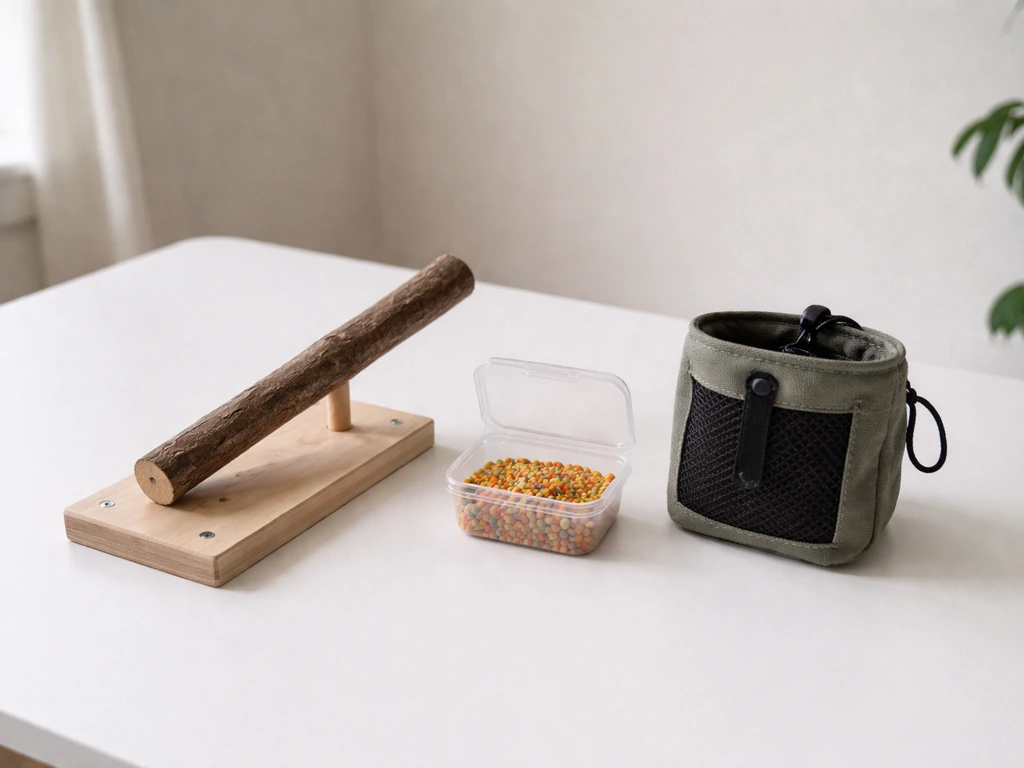
Here's a practical week-by-week starting framework for a pet bird owner beginning from scratch:
- Week 1: Two to three 15-minute sessions per day focused entirely on hand taming, step-up, and taking treats from your hand. No flight yet.
- Week 2: Introduce the recall cue at arm's length. Reward every single response. Practice 10–15 recalls per session, keep sessions under 20 minutes.
- Week 3: Gradually increase recall distance inside one room. Stay below the bird's current reliable threshold — never push to failure.
- Week 4: Expand to full room-length recalls. If success rate drops below 80%, go back to shorter distance for that session.
- Week 5 and beyond: Move to a second room, then eventually to a controlled outdoor or aviary space. Introduce harness before any outdoor work.
The signs that a bird is ready to move to the next stage are straightforward: it recalls immediately on the first cue at least 9 times out of 10 in the current environment, it arrives at your hand calmly (not frantically), and it shows no signs of stress or avoidance before or during sessions. If all three of those are true, you can progress. If any of them are inconsistent, stay where you are and keep reinforcing.
Patience is the skill that separates trainers who get reliable recall from those who don't. The birds that come back every time are the ones whose trainers never skipped steps, never chased, and never stopped rewarding. Start there, and everything else follows.
FAQ
My bird responds to my hand but ignores the recall cue, how do I fix that?
Start with the smallest version of recall you can reliably win, hand to hand (or perch to hand) inside a window-safe room. If your bird cannot succeed there with the cue you will use outdoors, do not add distance yet. Also verify the cue has not been introduced too early, since calling “come” before the bird understands the behavior makes it less likely to respond later.
What if I’m giving the cue but the bird only comes some of the time?
Use the same cue only when the bird is already likely to succeed, then reward for the outcome you want. If you miss the timing and reward comes late, the bird learns a different pattern. If you think your cue is being ignored, reduce distractions, shorten the session, and go back to the last distance where you were getting consistent first-cue returns.
What should I do if my bird starts to fly toward me and then changes direction?
Avoid “false finishes” like chasing, repeating the cue loudly, or escalating your voice, because those can teach the bird to avoid you until you stop. Instead, stand still, wait through the uncertainty, and keep the environment calm. Offer the cue once, then wait. If the bird does not return from that last manageable distance, end the session and restart next time from an easier step.
Can I practice recall during normal play, or will it ruin the training?
Yes, but only after you have consistent returns: allow brief sessions with the bird landing on you to get reward, then allow a short pause, then resume. The key is that the recall behavior must be the easiest path to good things. If freeplay turns into the bird’s preferred option away from you, recall will degrade.
How do I know whether my bird’s poor recall is a training issue or a health issue?
If you suspect health or pain, do not push training. Sudden refusal to fly, reluctance to step up, changes in posture, or abnormal feather condition are red flags to pause and consult an avian veterinarian. For raptors and rehabilitated birds, also make sure the bird is cleared for flight conditioning and is not underweight or healing from an injury that affects safe wing use.
Should I punish my bird if it doesn’t come back?
Do not use punishment for non-return. If your bird is late, the best fix is to make the next attempt easier, increase reward value, and strengthen timing. For birds that are learning, punishment increases fear and can cause the bird to avoid you even more, especially outdoors where you cannot control distractions.
Will my bird generalize recall to other rooms or does it need separate training everywhere?
Yes, but be careful with location. Birds can learn that “recall works in the hallway” and “doesn’t work in the living room.” Transfer recall by practicing the same behavior in gradually different rooms, using the same cue and reward, and only after you hit a high success rate in each new setting.
My bird used to come back for treats, now it’s less interested. What should I change?
Use a high-value food for recalls, but also rotate within your bird’s preferences so the bird does not lose interest. If the bird stops caring, you can switch to a more preferred treat, train when it is slightly hungry (before a meal rather than after), and keep sessions short and upbeat. Also check that the reward is actually arriving within a second or two of landing.
What kind of recall cue should I use, and what mistakes make cues fail?
Choose a cue that is distinctive and consistent, then protect it from accidental repetition. For example, do not say the cue randomly during quiet moments or while approaching the bird for unrelated reasons. Introduce the cue only right before the bird commits to the behavior you have already built, then reward every time at the start.
Can I skip straight to outdoor recall if my bird is good indoors?
In most cases, start with indoors and do not begin open-area training until your bird can hit first-cue returns at a very high rate without hesitation. If you must practice sooner, use an enclosed space or a harness and flight line so you can safely abort and reset. Wind, sounds, and visual targets change the difficulty quickly, so treat outdoor practice as an advanced skill.
My bird approaches but won’t land on my hand, how do I get the final landing part reliable?
Most “it won’t land” problems are caused by expectation and safety. If the bird hesitates at the last moment, the next step is to reward earlier landing attempts, shorten the distance, and verify your body language stays calm. Also ensure the hand or perch position is consistent, comfortable, and stable, since birds can hesitate if they feel unstable or pressured.
What’s the fastest way to get an escaped bird back safely while training is paused?
If your bird escapes, prioritize immediate recovery over training. Use familiar cues and known treats, go to a quiet area where the bird can see you, and avoid chasing. If the bird is out for a long time or is a species with specific legal constraints, follow local guidance and consider contacting wildlife professionals.
When should I pause recall training because of wing or feather problems?
If you are seeing feather damage or the bird cannot generate normal wingbeats, pause and reassess before continuing. Broken or underdeveloped flight feathers can make recall attempts unsafe or ineffective. For birds of prey in rehab, follow species-specific and weight-dependent conditioning plans, since returning for food is tied to hunting survival and safe flight mechanics.
What are the most common mistakes when starting harness-based recall training?
For harness and flight-line work, the most common mistake is skipping indoor desensitization and rushing the outdoor step. Fit and acclimate indoors first so the bird does not panic when you step outside. Also inspect the gear every session for wear, and make sure your outdoor space is controlled enough that you can practice short recalls without letting the line become a source of entanglement risk.