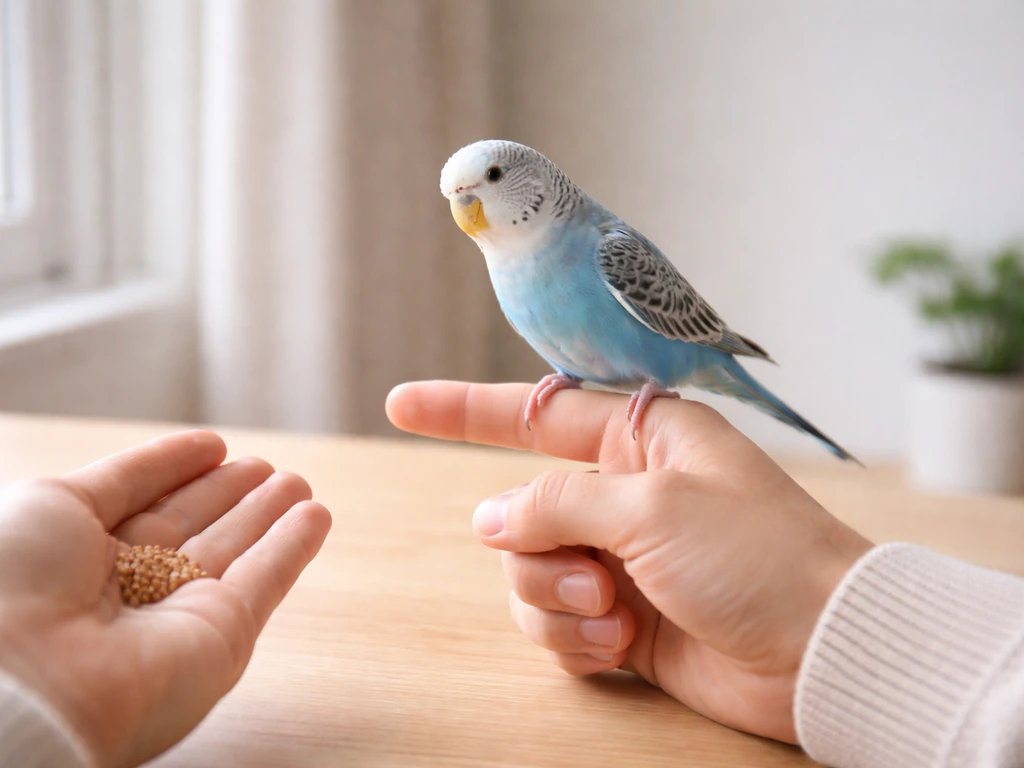
Free flying a bird and having it reliably return to you is absolutely achievable, but it takes a structured progression, honest assessment of your bird's readiness, and a commitment to going at the bird's pace, not yours. The short answer: you build trust and foundation behaviors first (targeting, calm handling, step-up), then proof recall indoors, then move to controlled outdoor sessions, and only graduate to full free flight when every prior stage is rock-solid. Skipping steps is the most common reason birds fly away and don't come back.
How to Train a Bird to Free Fly: Step-by-Step Guide
Maya Harris
13 Apr 2026
Is your bird actually ready to free fly? Welfare checks first
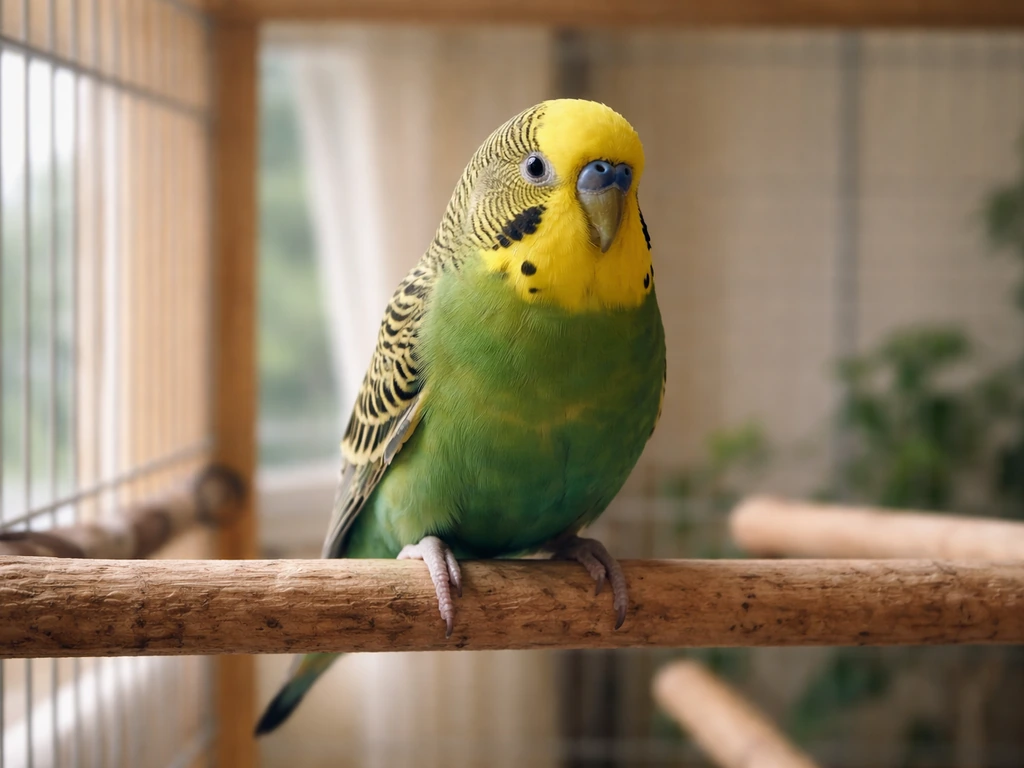
Before you open any door or window, you need an honest welfare check. The Association of Avian Veterinarians recommends observing movement, feather condition, and respiratory effort as baseline indicators of a bird's wellbeing, and those same signals tell you whether your bird is in the right mental and physical state for flight training. A bird showing fluffed feathers, labored breathing, or reluctance to move is stressed, and a stressed bird cannot learn reliably or fly safely.
Physical flight capability is non-negotiable. A bird missing multiple flight feathers, or one with moderate to severe feather damage, is not a candidate for free flight training right now. U.S. Fish and Wildlife Service guidance uses exactly these physical criteria to determine whether a bird can be safely returned to free-flight conditions, and the same logic applies to pet birds. If your bird is mid-molt, wait. If it has a clipped wing, wait until full feather regrowth and then spend time on basic indoor flight skill-building before going outdoors.
A quick pre-training eligibility checklist:
- All primary and secondary flight feathers are intact and undamaged
- Bird is eating, drinking, and eliminating normally
- Bird is not currently undergoing a stressful life event (molt, illness, new household member, recent move)
- Bird willingly approaches you and steps up without signs of fear or anxiety
- You have had a wellness check with an avian vet in the past 12 months
- You have at least 30 consistent daily training sessions logged indoors before considering outdoor work
Choosing the right bird (and being honest about yours)
Not every bird is a good free-flight candidate, and species matters enormously. Harris's hawks, falcons, and certain parrot species like African greys, macaws, and cockatoos have been successfully free-flown by experienced trainers. Cockatiels, budgies, and lovebirds can be free-flown too, but their small size, high flight speed, and strong flock instincts make outdoor free flight genuinely high-risk for most pet owners. Whatever the species, individual temperament matters more than the label on the cage tag.
The birds that succeed in free-flight programs share a few traits: they have a strong, consistent bond with their handler, they are food-motivated enough to work for rewards, they show curiosity rather than panic when encountering new stimuli, and they have demonstrated reliable recall indoors over many weeks. If your bird still startles at sudden movements, lunges when you approach, or refuses to step up consistently, free-flight training is not the next step. More bonding and foundational training is.
You also need to define your end goal clearly. Are you aiming for supervised backyard sessions where the bird glides between perches and returns to your arm? Or are you working toward open-field flight with distance launches and aerial maneuvers? The first is achievable for many dedicated intermediate-level owners. The second requires professional mentorship and is realistically an advanced, multi-year commitment. Decide which camp you're in before you start, because the preparation looks different.
Building the foundation: targeting, recall, and calm handling
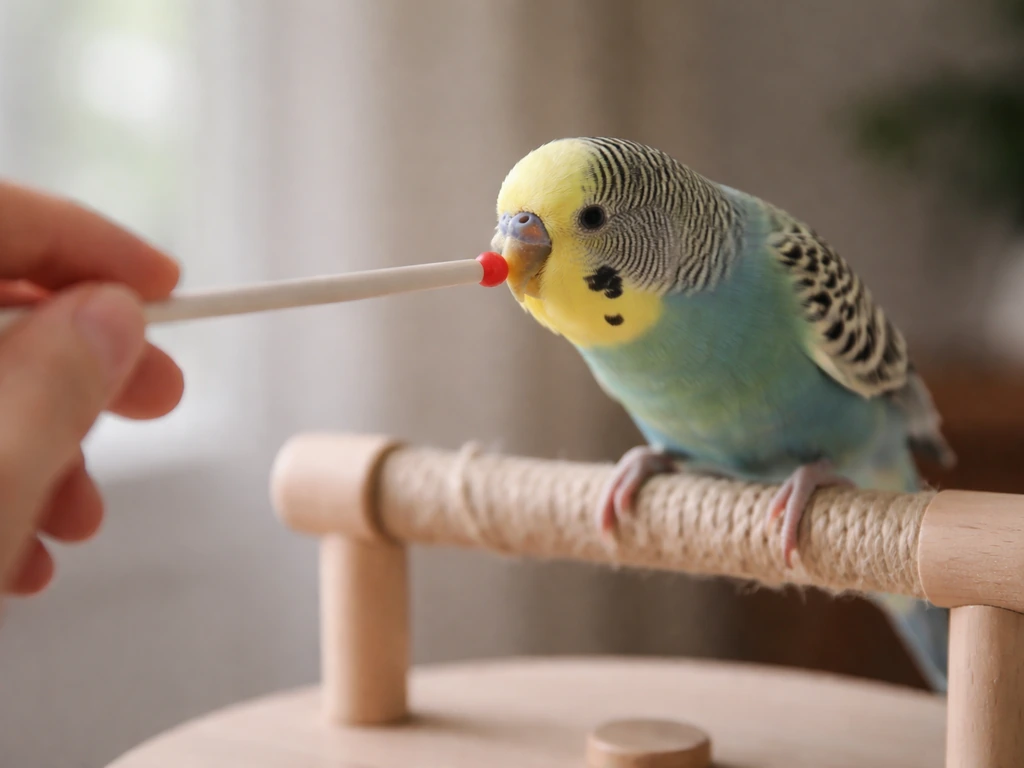
blank" rel="noopener noreferrer">Targeting is the bedrock of free-flight training. It means teaching your bird to touch a specific object (usually a stick or your finger) with its beak on cue. This gives you a way to direct the bird's movement and position without physically grabbing it, which is critical once it's in the air. Parrots.org describes targeting as placing behaviors under stimulus control, meaning the cue reliably triggers the behavior every time, which is exactly what you need for recall at distance. Understanding what supports a bird's ability to fly well starts here, because a bird that trusts your cues moves with confidence instead of panic.
The IAABC bird training curriculum lists Step Up, Target, and Station as the three foundational behaviors before anything more complex is attempted, and that's a framework worth following precisely. Station training means the bird learns to fly to a specific perch and stay there until cued to leave. This is not optional. It directly mirrors what you need the bird to do in the field: find a landing point, stay calm, and wait for your signal.
For recall specifically, start with the bird just a foot or two away. Use a consistent cue, whether a verbal word, a whistle, or a hand signal, and reward with a high-value treat every single time the bird flies to you. Keep early sessions under five minutes. Once the bird is flying to you reliably from across a room, begin adding small amounts of distance. The key principle here is that increasing difficulty should only happen after the current level is essentially automatic. If recall fails more than once in three attempts, you've moved too fast.
Variable reinforcement (rewarding sometimes but not every single time) helps maintain strong behavior over time, but don't introduce it too early. In the beginning, reward every correct recall. Once the behavior is fluent and confident, you can begin varying the reward timing. Unusual Pet Vets also recommends building a clear, consistent cue that the bird can interpret without ambiguity, then using positive reinforcement principles to strengthen it before adding variability.
Proofing recall indoors before going outside
Proofing means testing recall under increasingly challenging conditions while still indoors. Start with a quiet room, no distractions, low lighting. Then gradually introduce small distractions: another person in the room, background noise, different perch heights, and different recall positions. Parrot Care Central describes this progression as moving from short controlled flights to perch-to-hand practice and then gradually increasing distance, which is exactly the right mental model. A recall that only works in silence in one specific room is not ready for the outdoors.
An important reality check: MDPI research on free-flight training protocols found that during panic flights, birds sometimes did not respond to recall cues at all. This is normal and expected, but it means that a recall that works in calm conditions is not yet a recall you can trust under stress. Your goal is to proof the behavior so thoroughly that even mild outdoor surprises don't break it.
Moving outdoors: a controlled progression step by step
The myBird framework for transitioning to outdoor training makes a clear point: indoor recall must be fully reliable before outdoor work begins, and even then, you start in a controlled outdoor setting, not open sky. That means a secure, enclosed outdoor space first, like a screened porch, aviary, or a large netted area. For bird enclosure and acclimation considerations, APHIS guidance notes that safe, staged transitions to outdoor environments matter for welfare and handling secure, enclosed outdoor space first. This is not a shortcut or a workaround. It is a required stage.
- Stage 1 (Indoor): Reliable targeting, step-up, station, and recall across multiple rooms at variable distances. Minimum 30 sessions, success rate above 90%.
- Stage 2 (Enclosed outdoor): Practice recall in a screened or netted outdoor enclosure. Introduce wind, ambient noise, and natural light changes. Do not proceed until recall is as reliable here as indoors.
- Stage 3 (Supervised open air, short distance): Bird flies from your arm or a perch to your arm over very short distances (3 to 6 feet) in a calm, open outdoor space. Choose early morning, low-wind conditions. Have a second person present.
- Stage 4 (Distance building): Gradually increase the distance of recall flights, adding no more than 5 to 10 feet per session once the current distance is fluent. Always end sessions on a success.
- Stage 5 (Assisted launches): Begin practicing short directional flights where you launch the bird gently toward a target perch and recall it back. This is where encouraging a bird to take flight on cue becomes a distinct trained behavior rather than just freeform movement.
- Stage 6 (Full free flight): Only after all prior stages are solid over many weeks and in varied conditions. The bird should be flying confidently, returning on cue without hesitation, and showing zero signs of stress during sessions.
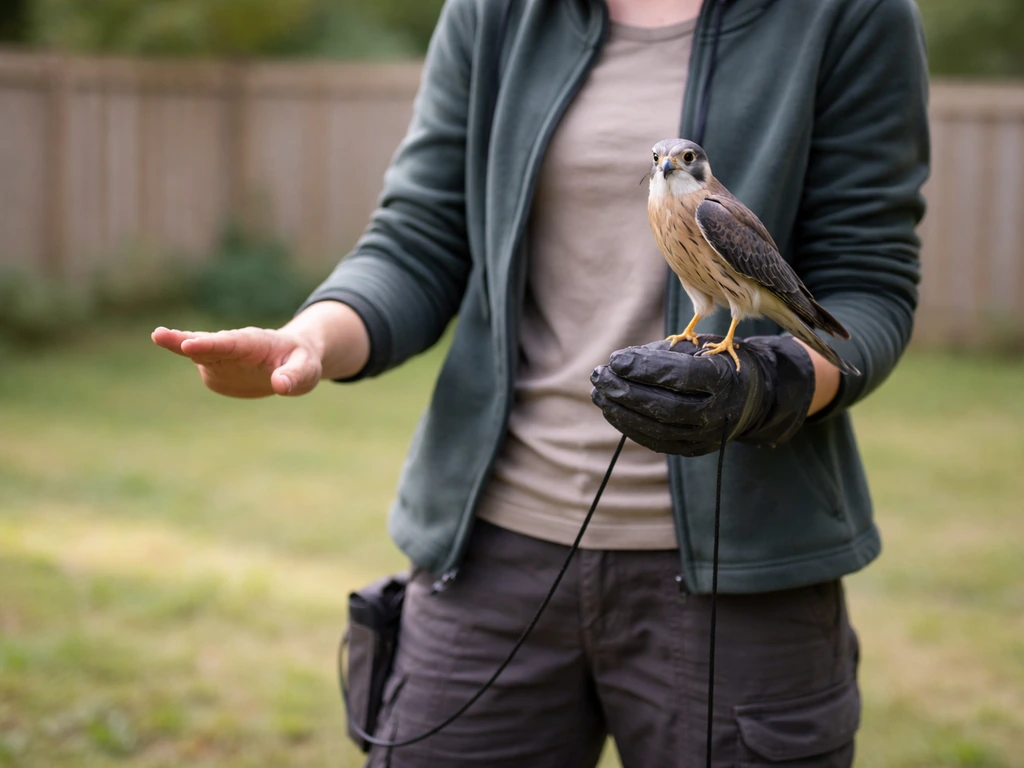
Falconry protocols offer a useful parallel here. Raptors are conditioned to jump to the fist for food rewards at short distances, then progress to creance (a long training line) flights before any free flights occur. The creance concept, even if you're not using one for a parrot, reflects the right mindset: every stage earns the next one through demonstrated reliability, not through the handler's impatience.
Safety gear, weather, and risk management
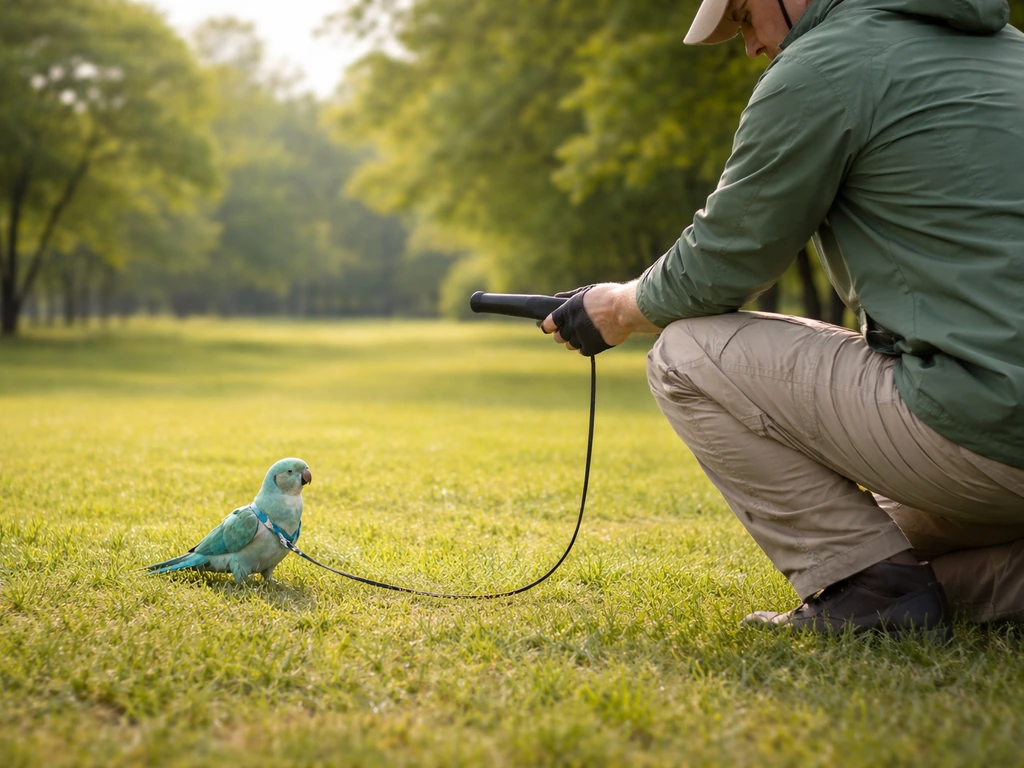
Let's talk about harnesses honestly. A properly fitted harness can allow you to take a bird outdoors safely during the bonding and early training phases, before free flight is attempted. However, harnesses are not a substitute for free-flight training, and they carry real risks if misused. PangoVet notes that cockatiels are at higher risk of harness-lead tangling, and harnesses can interfere with normal flight mechanics. The Aviator Harness documentation also flags that homemade or poorly designed harnesses can cause entanglement or restrict movement dangerously.
If you use a harness, follow these non-negotiables: the harness should not rub skin, twist, press on the throat, or restrict normal chest movement. Stop any harness session immediately if the bird shows frantic struggling, labored breathing, or signs of acute stress, and allow full recovery before trying again. Birds have been injured, suffered feather damage, and in serious cases died during harnessed outings gone wrong. Use harnesses only for supervised outdoor exposure and early desensitization, not as a long-term free-flight solution.
Weather is a real variable you need to plan around. Ideal free-flight training conditions are calm mornings with wind under 10 mph, no precipitation, moderate temperatures (avoid extremes of heat or cold), and clear visibility. Avoid days with sudden gusts, heavy bird activity from raptors in the area, or any distractions you can't control. Early morning also tends to mean fewer people, dogs, and cars in the area.
Always have a second person present during outdoor sessions, especially in early stages. Their job is to watch the bird's trajectory and position if it flies further than expected, and to assist with recapture if needed. Know in advance what you will do if the bird lands in a tree and won't come down: bring a familiar perch, its favorite food, and be prepared to wait calmly rather than chase. Chasing almost always makes things worse.
Gear options at a glance
| Option | Best Use Case | Key Risk | Recommended For |
|---|---|---|---|
| Commercial harness (e.g., Aviator) | Supervised outdoor exposure during bonding/early training | Entanglement, flight restriction, stress if poorly fitted | Intermediate owners, early outdoor sessions only |
| Creance (long training line) | Raptor/falconry-style recall conditioning at distance | Tangling mid-flight, not suitable for most parrots | Raptors under falconry supervision |
| Netted/screened enclosure | Safe outdoor environment for Stage 2 training | False sense of security if netting is damaged | All species, all skill levels |
| No equipment (pure free flight) | Stage 5 and 6 only, after full recall proofing | Bird flies away if recall is not fully reliable | Advanced handlers with professionally proofed birds |
The recommendation: use an enclosed outdoor space for as long as possible before transitioning to open-air work. Reserve harnesses for early outdoor exposure only, not ongoing management. Never attempt open free flight without a fully proofed recall.
When things go wrong: fixing common training failures
Bird refuses to fly toward you
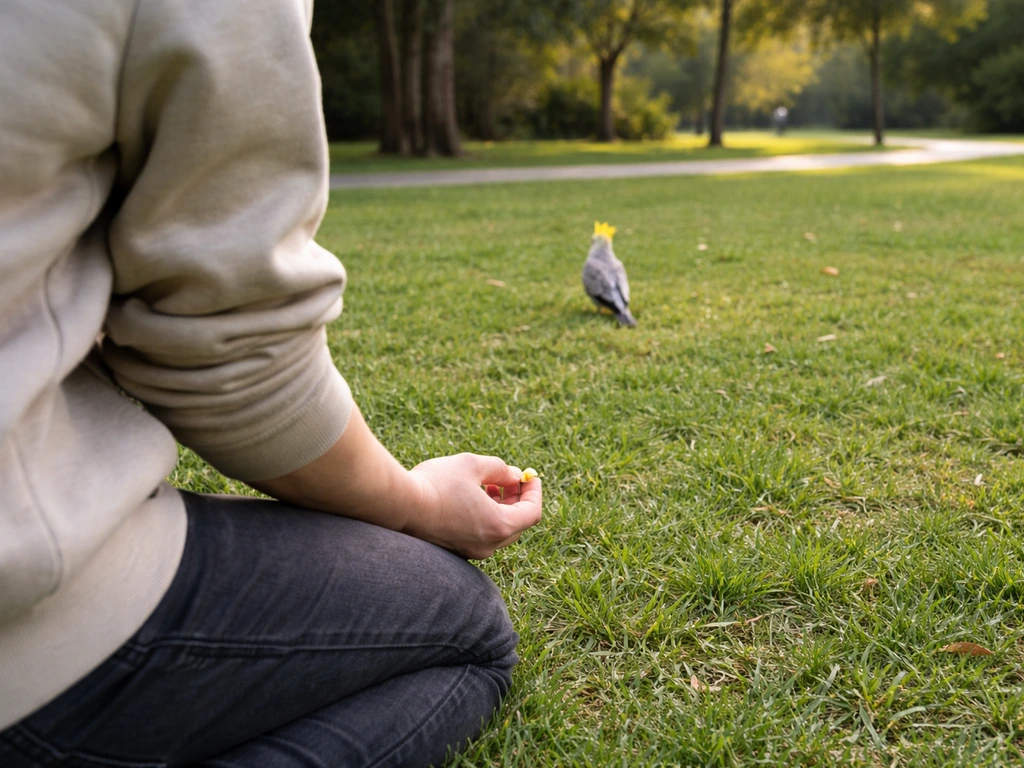
This usually means the distance is too great, the reward isn't motivating enough, or the bird doesn't yet have full confidence in its own flight. Go back to the last successful distance and rebuild from there. Try higher-value treats (a piece of favorite fruit, a specific seed your bird goes crazy for) and shorten the session length. Sometimes the issue is simply that the bird is not hungry enough at training time. Many trainers work birds before their first meal of the day for this reason, keeping the bird at a healthy weight but sufficiently motivated by food.
Poor recall outdoors after solid indoor performance
This is the most common frustration and it means the behavior wasn't proofed sufficiently for outdoor distractions. Do not keep trying and hoping. Go back to the enclosed outdoor enclosure stage and repeat the proofing process with gradually increasing distractions. The gap between indoor and outdoor recall reliability is a training gap, not a character flaw in your bird. Understanding how to train a bird to fly to you and return consistently is really about this proofing process more than anything else.
Bird panics mid-flight and lands somewhere unexpected
Stay calm. Panicked birds that see their owner chasing them will keep flying. Sit down, face away from the bird, and use your recall cue quietly from a distance. If the bird is high in a tree, wait. Bring its cage or a familiar perch within sight. MDPI research on free-flight parrot programs confirmed that panic flights with no response to recall cues are a known occurrence even in structured training, so having a calm, pre-planned response protocol matters more than hoping it won't happen.
Bird flies in the wrong direction repeatedly
Directionality is a separate skill from recall. Use targeting to build directional cues before adding distance. Place the target stick in the direction you want the bird to fly and reward movement toward it. Over time, the target stick becomes a directional prompt you can phase out as the bird learns to read your body position and hand signal.
Chasing behavior (bird pursues non-target stimuli)
If your bird is chasing other birds, insects, or flying objects, it is telling you that its environment has too many competing stimuli for its current training level. Move back to a quieter, more controlled outdoor setting and rebuild focus on you before increasing environmental complexity. This is also a sign that station training may need reinforcement: the bird needs a stronger habit of returning to a home base rather than following arousal-driven impulses.
When free flying isn't the right call
Some birds should not be free flown, full stop. A bird with chronic health issues, permanently damaged flight feathers, or significant fear and anxiety responses is not a safe candidate. Birds that have been housed in severely restricted conditions for years may also lack the physical conditioning and spatial awareness for safe flight outdoors. If you're not sure what supports healthy flight ability in your specific bird, an avian vet consultation before beginning any free-flight program is essential.
Expert supervision is not optional for anyone working toward true open free flight. Understanding Parrots is direct about this: solid indoor recall alone is not sufficient for outdoor free-flight success, and working without guidance from an experienced professional significantly increases the chance of losing your bird or putting it in danger. If you're serious about advanced free flight, invest in a course or mentorship from a certified trainer before attempting Stage 5 or 6 on your own.
There are also legal considerations that most pet owners overlook. If you are working with any species protected under the Migratory Bird Treaty Act, including many raptors and native songbirds, possession and training activities may require federal permits. U.S. Fish and Wildlife Service guidance is clear that possession of live migratory birds requires permits even for authorized activities. Violating this without proper licensing is a federal offense, not a technicality. If you are a wildlife rehabilitator or work with native species, check your federal and state permit requirements before any outdoor flight work begins.
The Animal Welfare Act's 2023 final rule also established formal welfare standards for birds under regulated settings, reinforcing that humane handling, appropriate restraint, and welfare-first practices are legal expectations, not just good intentions. Even outside regulated contexts, these standards reflect the ethical baseline for anyone working with birds.
If your bird escapes during training, don't panic and don't delay. Having a plan in place before you start is part of responsible free-flight preparation. Knowing what to do if your bird flies away and doesn't immediately return could be the difference between a temporary scare and a permanent loss. Post in local bird groups immediately, contact nearby avian vets, and have a photo and description ready to share.
Who to contact for help
If you're working with a bird that was wild-caught or is a wildlife rehabilitation case, contact your nearest licensed wildlife rehabilitator before any flight training. The National Wildlife Rehabilitators Association (NWRA) and the International Wildlife Rehabilitation Council (IWRC) both maintain directories of licensed rehabilitators. For pet parrots, the International Association of Animal Behavior Consultants (IAABC) certifies bird behavior consultants who specialize in exactly this kind of training work. A single session with a qualified consultant can save months of frustrating trial and error.
Free flying is one of the most rewarding things you can do with a bird, but only when the bird is ready, the training is thorough, and the environment is controlled enough to be safe. The birds that succeed are the ones whose owners were patient enough to build every stage properly before asking for the next one. Start with the welfare check, build the foundation behaviors, proof everything indoors, and earn your way to the sky one reliable recall at a time.
FAQ
My bird comes to me indoors, but only in one room. Is it ready for outdoor training?
The fastest safe route is to keep the bird on a “recall ladder” indoors until it succeeds across different rooms, people, and perch heights, then begin outdoors only in an enclosed area. If you cannot consistently bring the bird in from farther than a few steps in a quiet room, skip outdoor attempts and increase proofing sessions instead of increasing distance.
What should I do if my bird doesn’t recall after I cue it during training?
If recall fails, the correct response is to drop back to the last fully successful distance and environment, shorten the session, and check motivation (treat size, timing, and whether the bird is at an appropriate training weight). Avoid repeated cueing while the bird is already in motion, because it can accidentally turn the cue into “chase time.”
How do I choose a recall cue, and can I use multiple signals?
Start cue development with one clear, repeatable signal (a specific word, whistle, or hand position) and use it every time for the same behavior during early recall. Do not add extra instructions like “come here” plus hand gestures, because competing cues increase confusion when the bird is distracted.
Can I use a harness to practice recall in outdoor areas before going fully free flight?
In most training plans, a harness is for supervised bonding and desensitization only, not for practicing “free flight.” If your bird can fly strongly in the harness but still ignores recall cues outdoors, that is a sign you need more indoor proofing and enclosed-space recall work, not more harness time.
How do I tell the difference between a physically healthy bird and one that is not ready to free fly?
Yes, a bird can be physically capable yet still be unready due to fear responses, inconsistent step-up, or startle-driven flight patterns. Use both the welfare check (breathing effort, feather condition, reluctance to move) and the behavioral readiness checklist (calm targeting, station staying, recall under distraction) before treating “healthy” as “ready.”
When is it appropriate to introduce variable rewards, and can it be harmful early on?
The key is speed control: reward quickly when the bird arrives, but do not rush by repeatedly cueing from close range. If you want to use variable reinforcement later, start by varying treat timing only after the bird reliably completes recall from the current distance at a very high success rate.
My bird lands in a tree and won’t come down. What’s the best response?
A bird landing high in a tree is a common failure mode, and chasing often increases panic and movement farther away. Have a plan that uses a familiar perch or cage in view, favorite food, and calm waiting. If possible, do not change cues or raise your voice repeatedly, keep using the same recall signal quietly.
My bird keeps chasing distractions outdoors. Does that mean recall is failing permanently?
If the bird targets other birds, insects, or fast-moving objects, it usually means the environment’s arousal level exceeds the current training stage. Step back to an enclosed outdoor setting with fewer stimuli, reinforce station and “home base” behavior, and rebuild focus before trying open-air work again.
What if my bird won’t recall because it seems uninterested in treats during outdoor sessions?
Yes. If your bird lacks motivation for the reward or food timing is off, recall can look like disobedience. Train after the bird is naturally engaged with food but not overly hungry, and use treats that the bird consistently values higher than competing stimuli.
Is it okay to chase briefly to get my bird back after it flies away?
Do not try to “correct” the bird by pulling, grabbing mid-flight, or running after it. Instead, stay calm, minimize pursuit, and shift focus to safety procedures (waiting for landing, using a known perch and cue). If your bird is escaping repeatedly, treat it as a proofing failure and return to the enclosed stage.
How do I know when recall is “reliably proofed” enough to progress to the next stage?
For many owners, the practical marker is success across multiple days, not just multiple sessions. When recall is near-automatic indoors across different mild distractions, and outdoors in an enclosed space at increasing distances, you have earned the next progression step.
What stress signs mean I should stop immediately and not continue training for the day?
Look for clear fear and stress signs, including frantic struggling, labored breathing, and prolonged refusal to approach or step up. If you see those, stop the session and prioritize welfare and behavior work before attempting any outward progression.
Can a bird with damaged or clipped flight feathers still be trained for free flight soon?
If your bird is missing multiple flight feathers, is mid-molt, or has significant feather damage, free-flight readiness is not appropriate yet. In these cases, the correct next step is veterinary guidance, recovery time, and indoor skill building once flight mechanics are restored.
Do I need permits for training a pet bird to free fly?
Local laws can be species-specific, even for common pet birds or birds used in training near protected areas. Before outdoor free-flight work, confirm whether permits or restrictions apply for your bird species and location, since requirements can fall under federal and state rules.
What should I do right away if my bird escapes during free-flight training?
If your bird escapes, act quickly and proactively, because delays reduce the chance of a safe return. Post immediately in local bird groups, contact avian vets, and have a photo and identifying details ready, then avoid chasing, which can increase panic and range.
Next Article
How to Train a Bird to Fly and Come Back Reliably
Humane step-by-step bird recall and return training: cues, rewards, indoor to outdoor flights, fixes for common failures