If you've found a wild bird and you're wondering how to raise it, the most important thing you can do right now is stop and figure out whether it actually needs your help. Most wild birds found on the ground do not need rescuing. The ones that do need you to act fast, keep them warm and quiet, and get them to a licensed wildlife rehabilitator as quickly as possible.
How to Raise a Wild Bird: Rescue, Feeding, and Release
Maya Harris
16 May 2026
Raising a wild bird yourself is almost always illegal without a permit, and doing it wrong can kill the bird or permanently unfit it for life in the wild. Here's exactly what to do, step by step. If you do need to raise a wild bird, the safest path is to contact a licensed wildlife rehabilitator right away and follow their instructions raise a wild bird yourself.
Step 1: Is the bird actually in trouble? Fledgling vs. orphaned vs. injured
Before you touch anything, take 30 seconds to observe the bird from a distance. The single most important question is whether you're looking at a nestling, a fledgling, or a genuinely injured or orphaned bird, because each situation calls for a completely different response.
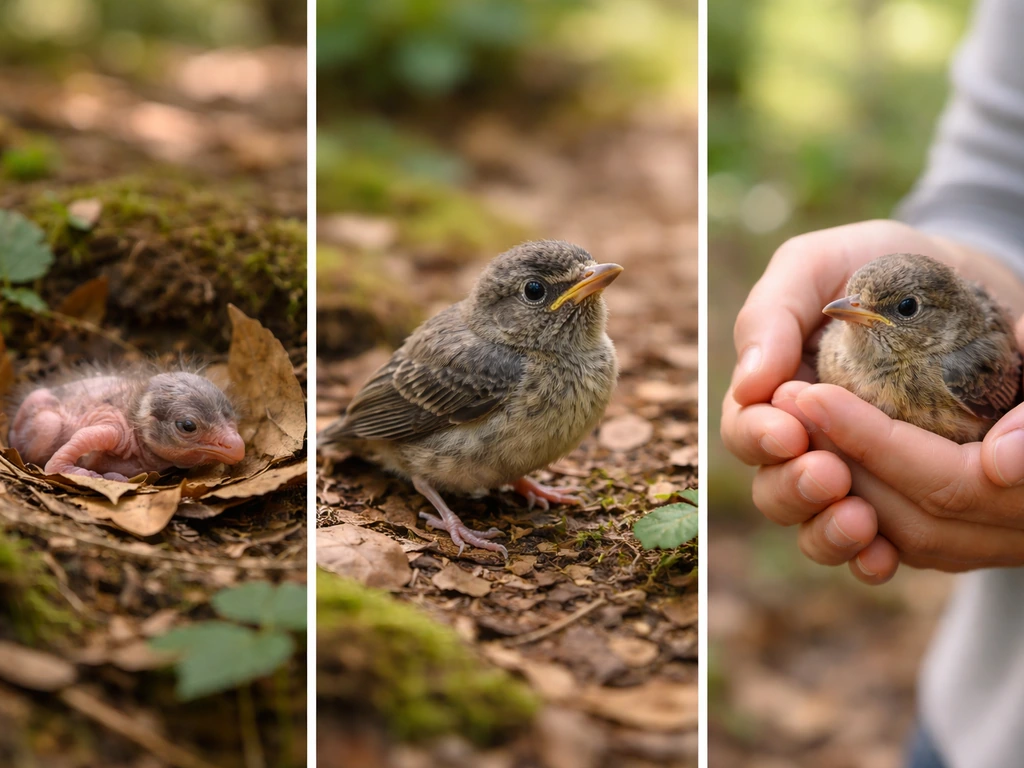
Nestlings: featherless and eyes closed
A nestling is a very young bird that has no feathers (or only sparse pin feathers), and its eyes may still be closed. If you see a nestling on the ground, it has almost certainly fallen from or been pushed out of a nearby nest. The U. S.
Fish and Wildlife Service notes that a baby bird likely needs help if it is featherless or has closed eyes. Look for the nest within a few feet, ideally overhead. If you can reach it safely, you can gently place the bird back. The parents will not reject it because of your scent.
The Wildlife Center of Virginia is clear on this: parent birds are not frightened off by human scent and will return to feed a baby that is calling for food.
Fledglings: feathered and hopping around
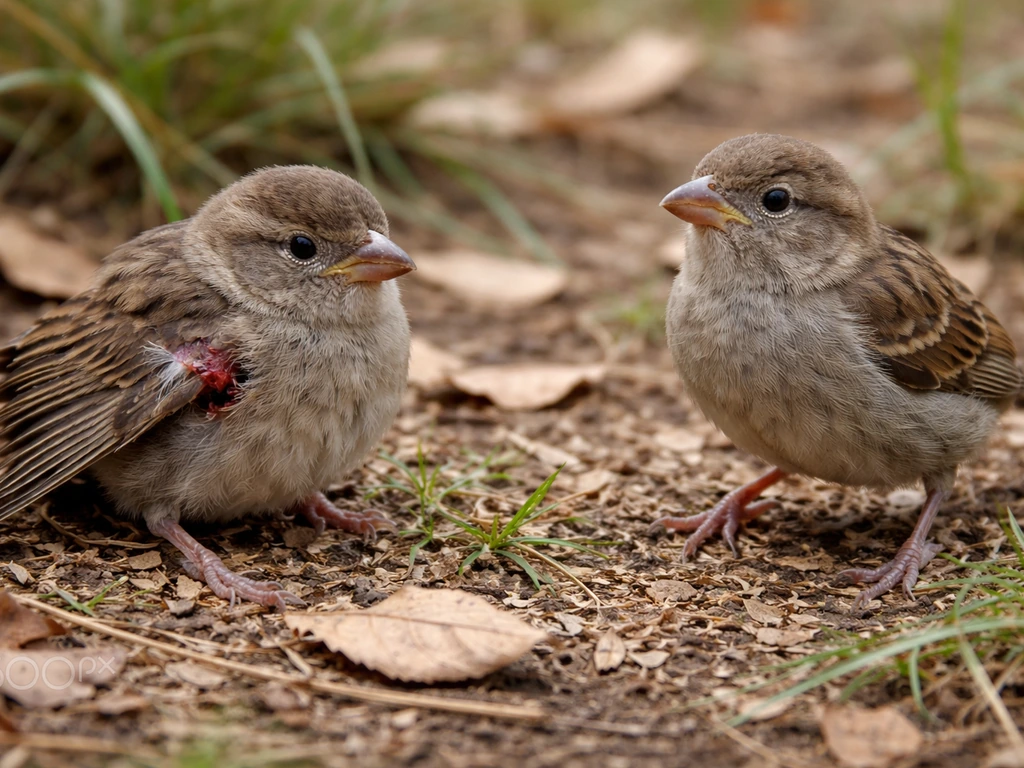
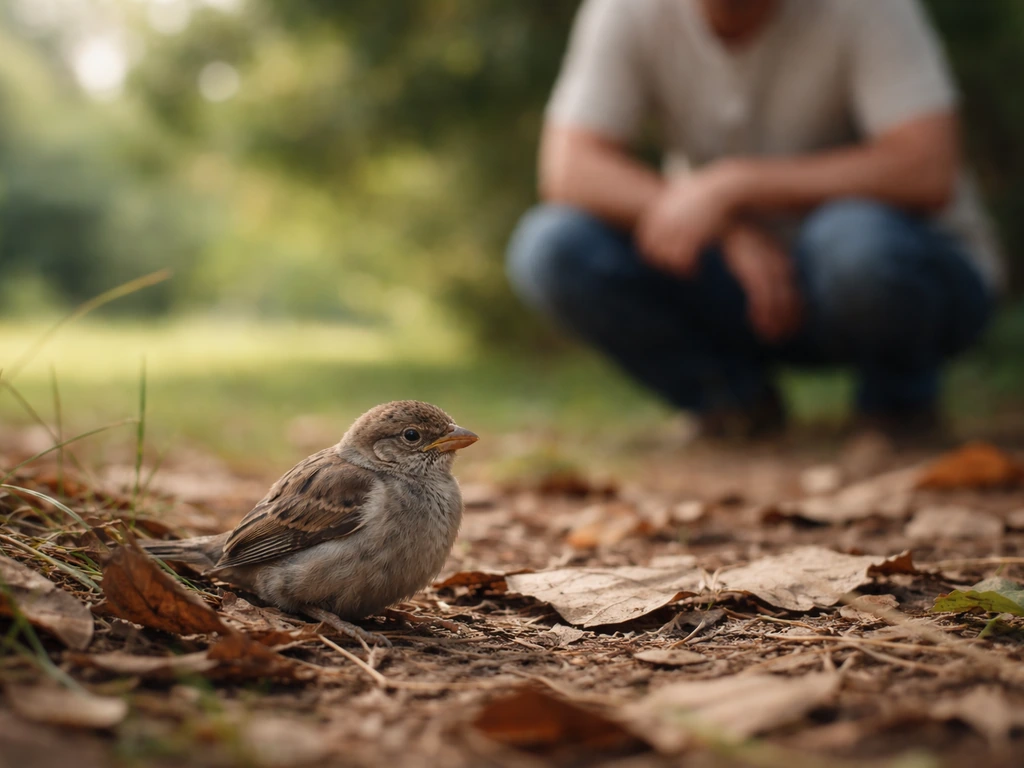
A fledgling is a fully or mostly feathered bird that can hop, flutter, and perch. Finding one on the ground is completely normal. This is a stage of development, not an emergency. The parents are almost certainly nearby and feeding it on a schedule that may look infrequent to you. Cornell Lab describes fledglings as feathered and able to hop or perch, and emphasizes that 'alone' does not mean abandoned. If the bird looks alert, has bright eyes, and is moving around, leave it where it is and move people and pets away. Watch from a distance for an hour or two. If a parent does not visit within half a day, then contact a wildlife rehabilitator for advice.
Signs the bird genuinely needs help
- Visible injury: bleeding, a drooping or twisted wing, an obviously broken leg, or a wound
- The bird is featherless (nestling) and the nest cannot be found or reached
- Both parents are confirmed dead (you saw them hit by a car, for example)
- The bird is cold, limp, or unresponsive
- It is a fledgling but a cat or dog has had it in its mouth, even briefly
- It has been sitting in the same spot, not moving, for more than a few hours
If none of those apply and the bird looks healthy and alert, the best thing you can do is walk away and keep pets and kids at a distance. Leave it alone. That is genuinely the right answer for the majority of 'found' wild birds.
Step 2: Immediate rescue steps and when to call a rehabilitator
If the bird genuinely needs help, your job right now is containment and warmth, not treatment. You are a bridge between the bird and someone qualified to care for it. The goal is to keep the bird alive and calm until it reaches a licensed wildlife rehabilitator.
- Put on gloves if you have them, or use a light cloth or towel to pick the bird up gently. Minimize handling. Wild birds experience real physiological stress when touched by humans, and stress alone can kill a compromised bird.
- Place the bird in a cardboard box or paper bag lined with a soft cloth or paper towels. The container should have small ventilation holes and a secure lid.
- Put the box somewhere warm, dark, and quiet. A bathroom counter away from air vents works well.
- Do not give food or water. This is critical and covered in detail below.
- Call a licensed wildlife rehabilitator immediately. Do not wait until morning if the bird looks injured or cold.
To find a rehabilitator near you, call your state's wildlife agency, search the National Wildlife Rehabilitators Association (NWRA) directory online, or call a local veterinary clinic and ask for a referral. When you call, be ready to describe: the species if you know it, where you found the bird (habitat type, urban or rural), what you observed (injury, behavior, approximate age), and how long you've had it. A photo taken at a safe distance before you picked it up is extremely helpful.
Call now, even if it's after hours. Many wildlife rehabilitators have emergency lines, and some humane societies and animal control agencies can take birds overnight. The Golden Gate Bird Alliance and similar organizations are explicit: the Migratory Bird Treaty Act makes it illegal to keep or handle wild birds without a federal permit. Almost every songbird, raptor, and waterfowl species in North America is protected. This is not a technicality. It is the law, and it exists because well-meaning people can cause serious harm.
Step 3: Safe temporary housing while you wait
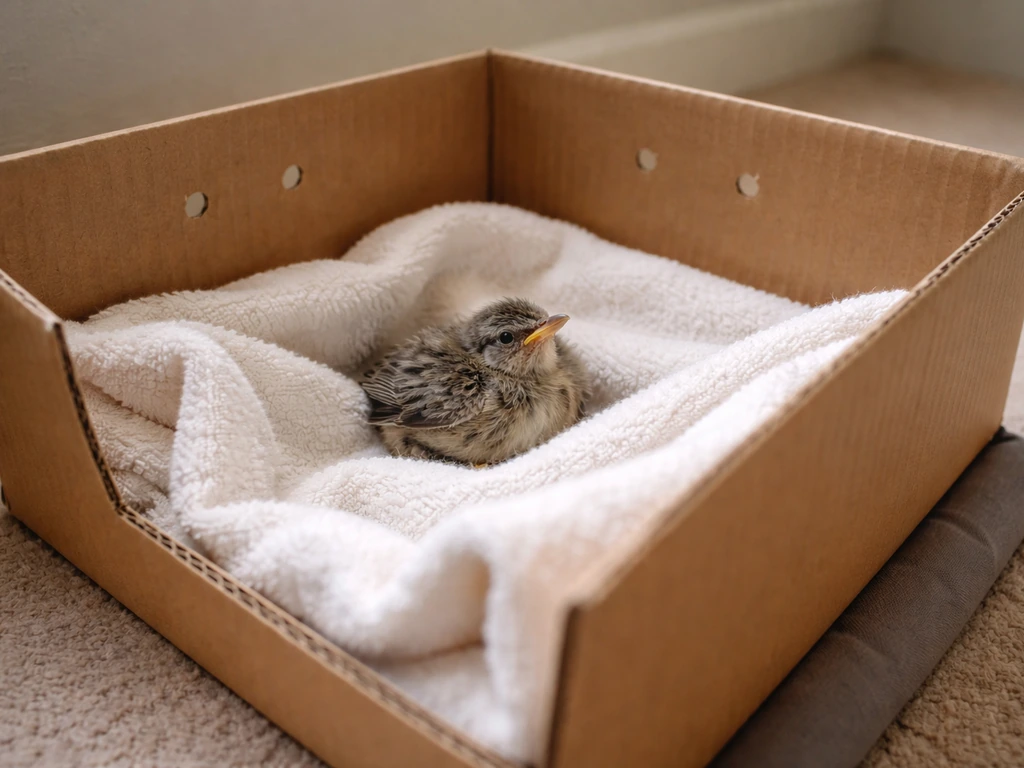
You may have the bird for a few hours before you can transfer it. Here is how to set up a temporary space that keeps it alive without making things worse.
Warmth
Baby birds and injured birds lose body heat fast. The enclosure needs to be warm, ideally around 85 to 90 degrees Fahrenheit for very young nestlings, slightly cooler for older fledglings. A simple way to do this: fill a zip-lock bag or a rubber hot water bottle with warm (not hot) water, wrap it in a cloth, and place it under half of the box so the bird can move away from the heat if it gets too warm.
Do not use electric heating pads set on high or place the bird under a heat lamp without careful monitoring. The HSVMA Wildlife Care Handbook warns that heat pads and lamps can cause thermal burns, and this happens more often than people expect. Keep direct sunlight off the box entirely.
Housing and ventilation
A plain cardboard box with a few pencil-sized holes punched in the sides is genuinely ideal. Line the bottom with a non-fraying cloth like a fleece square or folded paper towels. Avoid terrycloth towels because the loops can catch tiny toenails. The box should be just large enough for the bird to sit comfortably, not so large that it exhausts itself trying to move around. Keep the lid on. Darkness reduces stress significantly.
Handling
Once the bird is in the box, stop touching it. Do not take it out to look at it, show it to your kids, or check on it every ten minutes. Every time a human hand reaches in, the bird's stress response activates. Mass Audubon recommends handling as little as possible and keeping the bird in a dark, quiet location away from noise and drafts. Resist the urge. The bird will be better for it.
Step 4: Feeding a wild bird (and why the answer is almost always: don't)
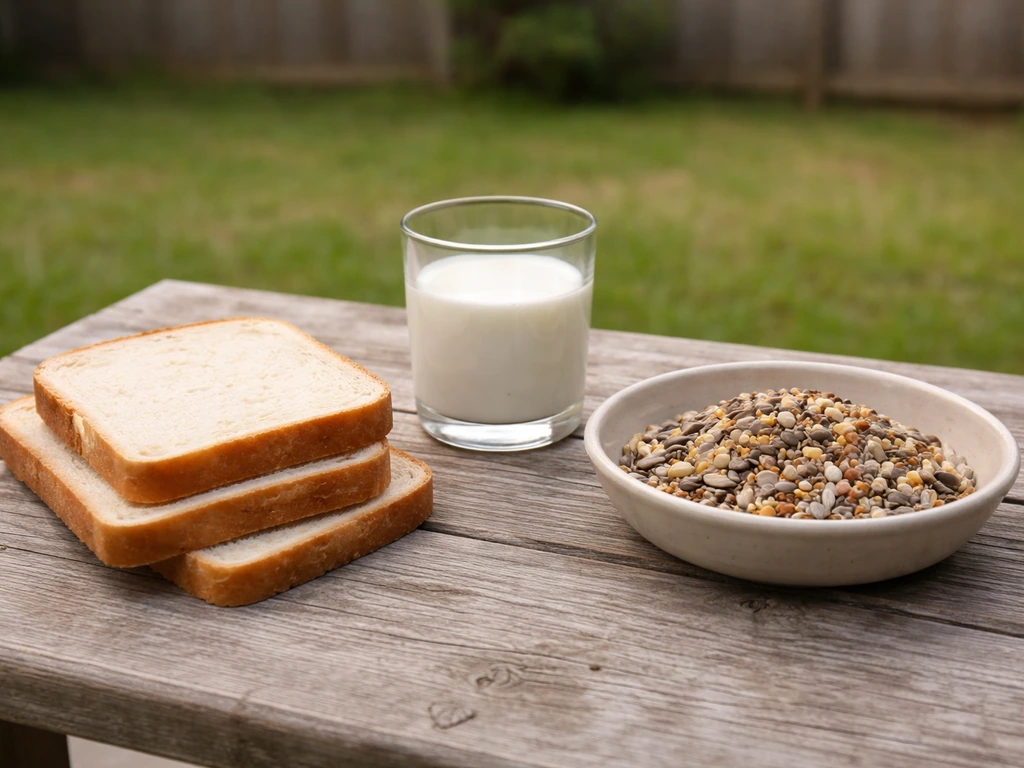
Every major wildlife authority, from the U.S. Fish and Wildlife Service to the Wildlife Center of Virginia to Tufts Wildlife Clinic, says the same thing: do not feed the bird and do not give it water unless a licensed rehabilitator has given you specific instructions. This is not overly cautious advice. It reflects real risk.
Baby birds can aspirate liquid into their lungs and die within minutes. The wrong food can cause nutritional imbalances that cause lasting organ damage. A bird that appears to be swallowing well may actually be in respiratory distress. Food in the crop can also interfere with medical treatment when the bird reaches a rehabilitator. The Wildlife Center of Virginia states directly that food can impede treatment.
If you have been waiting more than 24 hours and genuinely cannot reach a rehabilitator, call one for phone guidance before attempting anything. If you think a baby bird needs food or water, Bi-State Wildlife Hotline says to call first and not feed or water it unless a rehabilitator gives instructions. Some species-specific protocols exist for extreme situations, but even then, feeding requires the right tools, the right food, and technique knowledge that prevents aspiration. This is why organizations like Wildlife Welfare note that species-specific tools are needed for feeding to avoid aspiration and that wrong feeding can be dangerous.
Foods that are always dangerous for wild birds
- Bread, crackers, or any human baked goods
- Cow's milk or any dairy product
- Worms given to raptors, or meat given to insectivores
- Liquids of any kind given by dropper directly into the mouth without guidance
- Cat or dog food not specifically approved for the species
- Fruit or vegetables given to carnivorous species like hawks or owls
- Alcohol, caffeine, avocado, onion, or salt, all of which are toxic to birds
Hydration is equally important and equally risky to DIY. A dehydrated bird needs fluids given subcutaneously or orally in precise amounts by a trained person. Attempting to drip water into a bird's beak is one of the most common causes of aspiration death in rescued birds.
Step 5: Species differences matter a lot
Different types of birds have radically different needs, and what is appropriate emergency care for one can be harmful for another. Here is a practical breakdown of the major groups you are likely to encounter.
| Bird Type | Common Examples | Key Differences in Care | Feeding Complexity |
|---|---|---|---|
| Songbirds (passerines) | Robins, sparrows, starlings, wrens | Most commonly found as fledglings; often parent-fed on insects; do not feed without guidance | High: insect-based diet, aspiration risk |
| Raptors (hawks, owls, falcons) | Red-tailed hawk, barn owl, American kestrel | Require meat-based diet; extremely stressed by human contact; imprinting risk is very high especially in kestrels | Very high: requires whole prey items, not raw meat alone |
| Waterfowl (ducks, geese) | Mallard, Canada goose | Often found as ducklings near water; parents may be nearby; do not separate goslings or ducklings from a group | Moderate: plant matter and specific waterfowl starter feed; never bread or dairy |
| Shorebirds and wading birds | Herons, egrets, sandpipers | Long-legged birds are prone to leg injuries in improper housing; require deep water access eventually | Very high: live fish or invertebrates typically needed |
| Pigeons and doves | Rock pigeon, mourning dove | Crop-milk fed as nestlings, which is hard to replicate; slightly more forgiving as fledglings | Moderate: seed-based but crop milk phase requires specialist formula |
Raptors deserve a special note on imprinting. A young hawk or owl that imprints on humans cannot be released to the wild because it will seek out humans for food and territory, which ends badly for the bird every time. The Wildlife Center of Virginia specifically calls out imprinting prevention in young American kestrels as a critical part of rehabilitation. Some rehabilitators who work with raptors wear species-appropriate costumes or use puppets to feed chicks so the birds never associate food with a human shape. This is not a quirk. It is essential wildlife welfare practice.
If you are caring for a bird at home and are interested in the broader topic of hand-rearing birds, the principles for raising domestic or captive-bred birds differ significantly from wild bird rescue. Those situations, like hand feeding a parrot chick or raising a bird at home from a hatchery, involve different legality, different feeding protocols, and a very different end goal.
Step 6: Handling and bonding without imprinting
This section applies mainly to situations where you are providing emergency holding care for a day or two while waiting for transfer to a rehabilitator. It is not a guide to raising a wild bird as a companion animal. That goal is not achievable legally or ethically for protected species.
Your handling strategy should be built around one principle: every interaction should be as brief, calm, and purposeful as possible. Pick the bird up only when necessary (to check for new injuries, to move it to a clean box, or to transfer it). When you do handle it, support the body fully with both hands cupped gently around the wings, and avoid gripping the keel (the breastbone ridge). Never restrain a bird by its wings or legs.
Do not try to bond with the bird. Do not talk to it soothingly, let it perch on your hand for comfort, or introduce it to family members. This is genuinely kind advice, not cold advice. A wild bird that begins to associate humans with safety is a bird that is losing the fear response it needs to survive outdoors. Wands For Wildlife notes that rehabilitators sometimes wear species-resembling masks when feeding baby birds specifically to prevent this kind of imprinting. You can apply the same principle by covering the box with a light cloth when you carry it and keeping your face out of the bird's sightline when you check on it.
Stress reduction is also practical welfare. Keep the bird away from loud music, TV, other pets, and children who want to peek. A quiet, dim room at a stable temperature is genuinely the most therapeutic environment you can provide.
Step 7: Daily monitoring and red flags
If transfer to a rehabilitator is delayed for any reason, you need to do a brief daily welfare check. Keep it short, under two minutes if possible. Here is what to look for.
Signs the bird is stable
- Eyes are open and bright, not sunken or cloudy
- The bird holds its head upright
- Droppings are present (some white urate and some darker fecal matter)
- The bird responds to your presence by trying to move away (a good sign for wildlife)
- Breathing is quiet and even, not labored or with an open beak at rest
Red flags that mean call immediately
- The bird is gasping, wheezing, or has a clicking sound when breathing
- It is lying on its side or cannot hold itself upright
- Eyes are closed or sunken
- No droppings have appeared after several hours
- The bird is cold to the touch despite a warm box
- There is fresh blood, a swollen joint, or a wound that was not present before
- The bird is having seizures or tremors
- It is extremely lethargic and does not react when you open the box
Any of those red flags mean you need to escalate your efforts to reach a rehabilitator or emergency vet immediately. Do not wait until morning. Some veterinary clinics, even those that do not specialize in wildlife, can provide stabilizing care (fluids, warmth, pain management) until transfer to a licensed facility is possible. Carolina Waterfowl Rescue notes that veterinarians can stabilize a bird briefly while a rehabilitator placement is arranged.
Common problems and what they usually mean
| Problem | Likely Cause | What To Do |
|---|---|---|
| Bird refuses to move or react | Shock, severe stress, or serious illness | Do not disturb further; call a rehabilitator urgently |
| No droppings after many hours | Dehydration, obstruction, or organ failure | Do not attempt to feed or water; contact a rehabilitator |
| Watery or all-white droppings | Stress diarrhea or infection | Note and report to rehabilitator; do not try to treat |
| Bird is panting with mouth open at rest | Overheating or respiratory distress | Move heat source further away; reassess temperature; call for guidance |
| Injury appears after rescue (swollen limb) | Improper handling or pre-existing injury missed initially | Immobilize the box; handle as little as possible; escalate to vet or rehabilitator |
| Bird keeps trying to escape the box frantically | This is actually a good sign of a healthy stress response | Secure the lid and minimize disturbance; prioritize transfer soon |
Step 8: Release readiness and what happens in real rehabilitation
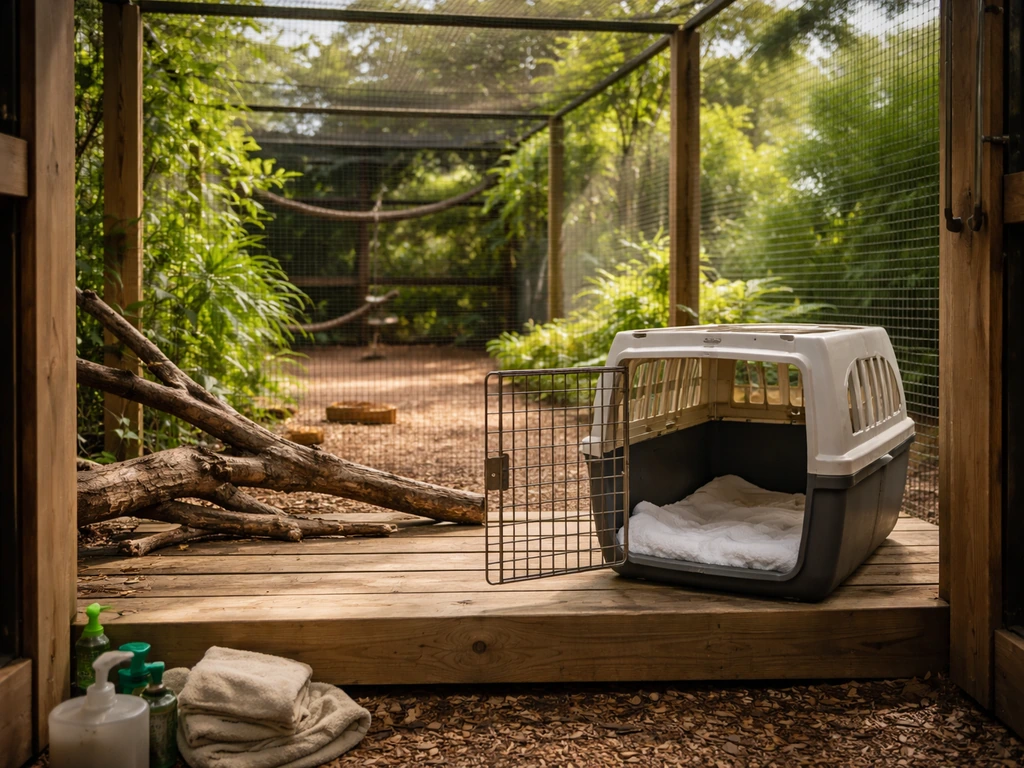
This section is for your understanding of what a good outcome looks like, and what a licensed wildlife rehabilitator will actually do for a bird in their care. It is also a realistic picture of why DIY rehabilitation almost never achieves a safe release.
Licensed rehabilitation is not just feeding and housing. The NWRA Minimum Standards for Wildlife Rehabilitation include specific criteria for release readiness that go far beyond body weight or wound healing. Before a bird is released, it must demonstrate appropriate behavioral responses including what the standards describe as 'fight or flight,' meaning the bird actively fears humans and predators. A bird that is comfortable around people is not ready for release. It is at higher risk of predation, starvation, or human conflict.
Three Rivers Avian Center describes their rehabilitation process as including enclosure conditioning, physical recovery, species-specific diet work, perching practice, and water access appropriate to the species, all before any bird is considered for release. For raptors and waterfowl especially, this can take weeks or months and requires large outdoor flight enclosures that you cannot replicate in a home setting.
What release readiness looks like by stage
- Medical clearance: wounds healed, no active infection, appropriate body weight for species and age
- Flight conditioning: the bird can fly sustained distances, maneuver, and land cleanly (for flying species)
- Foraging behavior: the bird actively hunts, pecks, or forages for food without human prompting
- Fear response: the bird actively avoids humans and shows a strong flight response to perceived threats
- Species-appropriate social behavior: the bird is comfortable with its own kind where relevant
- Appropriate enclosure time: the bird has spent time in an outdoor space that mimics its natural habitat before release
The actual release site matters too. Birds should be released in appropriate habitat, at the right time of year, and ideally near where they were found. A songbird released in the wrong habitat in the wrong season faces very poor survival odds. Rehabilitators manage all of this, which is why getting the bird to one as fast as possible gives it the best chance at a full, wild life.
The legal reality of raising a wild bird
Almost every native and migratory bird species in North America is protected under the Migratory Bird Treaty Act and, in most states, under additional state wildlife laws. This means that keeping, transporting, feeding, or 'raising' a wild bird without a federal and often also a state permit is a federal offense. Virginia DWR, for example, states explicitly that it is illegal to keep or care for orphaned or injured wildlife unless you are a permitted wildlife rehabilitator. The California Wildlife Center reinforces this: almost all native or migratory birds are legally protected and may not be kept as pets or raised by members of the public.
This law exists for good reason. It is not designed to punish compassionate people. It exists because decades of wildlife science have shown that birds raised by well-meaning amateurs almost always fail to thrive in the wild, become dependent on humans, lose survival behaviors, or die from preventable mistakes in diet and housing. The law and the wildlife both benefit from the same outcome: fast transfer to qualified care.
How to find a licensed wildlife rehabilitator right now
Finding help quickly is the most important practical skill in this whole situation. Here are the fastest routes.
- Search 'wildlife rehabilitator near me' or your state name plus 'licensed wildlife rehabilitator' for your state wildlife agency's directory
- Visit the National Wildlife Rehabilitators Association (NWRA) website and use their rehabilitator locator
- Call your state's department of fish and wildlife or natural resources, most have a wildlife hotline
- Contact a local veterinary clinic, many have rehabilitator contacts even if they do not treat wildlife themselves
- Call your local humane society or animal control agency, especially after hours
- Search for a regional bird-specific organization (Audubon chapters, raptor centers, waterfowl rescues) in your area
When you call, be ready to provide: the species or a description of the bird (size, color, beak shape), where exactly you found it, what signs of injury or distress you observed, how long you have had it, and what (if anything) you have done so far. A photo or short video taken before you picked it up is very useful. Bring the bird in the closed, ventilated box. Do not carry it loose in a car or hold it in your lap during transport.
If you are interested in birds more broadly, especially in hand rearing domestic species, learning about hand feeding, or understanding how to properly raise birds that are legal to keep, those are genuinely different topics with their own approaches, legality, and techniques. If what you mean is hand rearing a wild bird, the safest next step is to contact a licensed rehabilitator rather than trying to raise it at home hand rearing a bird. The skills and goals involved in raising a pet bird or a captive-bred bird at home are separate from wild bird rescue, and worth exploring on their own terms once you have resolved the immediate situation in front of you.
FAQ
I found a “baby bird” on the ground. How do I know if it is a nestling that needs help versus a fledgling that should be left alone?
If the bird is truly a fledgling (feathered, hops or perches, alert), the best help is to keep it where it is and move people and pets away. If it is near traffic, a yard dog, or a storm threat, you can relocate it by gently placing it on the nearest safe perch or sheltered spot close to where you found it, then watch from a distance for a parent visit.
What should I do if I can’t tell the bird’s age and I’m worried it might be injured?
Yes. Even though the article stresses not to feed, you can still do safe containment by moving it into a plain cardboard box with air holes and warmth from the side only. Do not clean the bird unless a rehabilitator tells you to, since bathing can cause chilling and stress.
Can I keep the bird at home for a day to see if it recovers on its own?
You should assume you cannot legally “keep it until it gets better” unless you are a permitted rehabilitator. The safer time cutoff is the moment you notice injury signs, inability to stand, bleeding, heavy lethargy, or visible entrapment, since escalation is about preventing shock and aspiration rather than about waiting for symptoms to improve.
Is a heating pad or heat lamp okay for a rescued wild bird?
For warmth, use gentle heat without direct contact. Do not put the bird on an electric heating pad, under a high setting, or directly on a hot surface. If you are using a hot water bottle or bag method, keep it under half the container so the bird can move away if it gets too warm, and stop if you cannot comfortably keep your hand near the wrap.
The bird seems thirsty or dehydrated. What is the safest way to give water?
If it looks dehydrated (sunken eyes, very tacky mouth, weak or unable to stand), do not attempt to drip water into the beak. A common DIY mistake is causing aspiration, especially if the bird cannot swallow normally. Instead, call a rehabilitator or an emergency vet for immediate phone guidance while you keep the bird warm and quiet.
How often should I check on the bird if I’m waiting for a rehabilitator to call me back?
Do a brief, practical welfare check at most once per day if transfer is delayed, and stop touching the bird for any prolonged checking. During a check, look for major changes (bleeding, inability to sit upright, heavy open-mouth breathing), and keep the lighting dim and the handling time very short.
What details should I provide when I call a wildlife rehabilitator so they can advise me correctly?
Do not attempt to determine the species by guessing from color patterns alone. If you can identify it, give the rehabilitator your best description (size relative to your hand, beak shape, tail length, where it was found, and whether it was hopping, crawling, or flying badly). Bring a photo or short video, since behavior often matters more than appearance for triage.
The bird is inside my home. How do I catch it safely without making things worse?
If the bird is in a house or garage, the priority is to prevent further injury and stress while you wait. Turn off interior lights except one near an exit if it can fly, keep other animals away, and once it is contained in a box, keep it in a quiet, dim room. Avoid trying to “catch for a photo,” since repeated capture increases stress and can worsen injuries.
What is the safest way to transport a wild bird if I’m driving to get help?
If you must move it before you can call, use a closed container with ventilation and keep it dark, then place the container in a stable-temperature spot out of sun and drafts. Avoid holding it loose in your hands during transport, and do not delay calling because you are driving or waiting in the car.
Do I handle raptors differently than songbirds, even if they look like “babies”?
Raptors and other protected species often raise separate concerns beyond feeding. If the bird is a hawk or owl and appears small enough to be a young raptor, treat it as high risk for imprinting and mishandling, and transfer fast. Also assume adults may not “come for it” like songbird parents do, so do not wait for parental visits as you might with fledglings.
What if the bird is covered in oil, appears contaminated, or has stuck-on debris?
If the bird is oiled or has visible contamination (for example from engine residue, pesticide exposure, or tar), do not wash it yourself. Contaminated birds can suffer hypothermia, and cleaning without correct materials and technique can increase exposure or aspiration risk. Call immediately for instructions, while keeping it warm and contained.
What should I do if the rehabilitator tells me to leave it alone, but it is in my yard or on my porch?
If a rehabilitator says to bring it in, you should bring it in a ventilated box with the lid closed. If the rehabilitator says to leave it where it is, do not “help” by moving it again later, since repeated moves can remove it from feeding or shelter sites and can increase stress for fledglings.
Next Article
How to Raise a Bird at Home: Welfare-First Guide
Step-by-step welfare-first guide on how to raise a bird at home: setup, diet, bonding, training, health red flags.