
Singing like a bird means training your voice to produce the pitch, rhythm, and ornamental details of a chosen bird's call or song using breath support, deliberate mouth shaping, and slow-to-fast repetition drills. You pick one species, break their song into its core components (pitch, rhythm, note type, and repetition pattern), then rebuild it phrase by phrase at a pace your voice can handle without strain. Done right, you can produce convincing trills, warbles, and whistles that actually get a reaction from pet birds and that help rehabilitators communicate calmly with the wildlife in their care.
How to Sing Like a Bird: Techniques, Drills, and Safety

Maya Harris
15 May 2026

What 'Sing Like a Bird' Actually Means
There are two completely different goals people have in mind when they search for this, and confusing them leads to wasted practice. The first is vocal imitation: using your own voice, mouth, and breath to replicate a specific bird's song or call closely enough that the bird (or a listener) recognizes it. The second is tonal quality: producing a light, pure, melodic sound in a musical or theatrical context, inspired by birdsong in a general sense. This guide focuses on the first goal, because that is what matters most to bird owners, rehabilitators, and wildlife enthusiasts who want practical results with real birds.
Even within imitation, there is a range. Some people want to whistle a simple contact call that their parrot will answer. Others want to reproduce a complex robin song with its full suite of warbles, chips, and slurs. Both are achievable, and the technique pathway is the same. You start with listening and identification, move into breath and body mechanics, refine your mouth shape and articulation, and then drill repeatedly with a recording as your reference. The more precisely you can hear the target, the more precisely you can reproduce it.
Hear It Before You Try to Make It: Mapping Bird Songs

Before your mouth does anything, your ears need to do a lot of work. Pick one species and one specific vocalization, not a whole repertoire. A song sparrow has dozens of song variants. Start with a single recorded song from the Macaulay Library or a similar curated source, and listen to it at least twenty times before you attempt a single imitation. What you are listening for is the architecture of the sound: its pitch (high or low relative to your comfortable range), its rhythm (how fast, how many repeats, where the pauses land), its tone quality (clear whistle, buzzy chip, liquid flutelike quality, or a rapid trill), and its ornamentation (the little flicks and drops at the end of a phrase).
A song can include whistles, chips, slurs, and trills in quick succession, sometimes shifting between them in under a second. A warble is a fast, variable sequence of notes that moves too quickly to count individual pitches. A trill is individual notes repeated so rapidly they blur together. Knowing the vocabulary helps you label what you are hearing so you can practice each piece separately. Spectrograms, which are visual displays of a song's pitch and timing over time, are remarkably useful here. Free tools like Audacity or the Cornell Lab's own viewer let you see exactly when pitch rises, how long a trill lasts, and whether the ending phrase drops or climbs. If you are a visual learner, pull up a spectrogram alongside your recording and watch it while you listen.
- Choose one species and one specific call or song to target. Do not move on until you can hum it back from memory.
- Find a high-quality recording from a curated source such as the Macaulay Library. A good recording has low background noise.
- Listen at least 20 times. Describe what you hear out loud: 'three short chips, then a rising whistle, then a fast trill at the end.'
- Draw or sketch the rough contour of the song on paper (up, flat, down, rapid flutter). This mental map is your practice blueprint.
- Pull up a spectrogram if you can. Confirm your sketch matches what the spectrogram shows.
Choosing a Good Starter Species
For beginners, choose a bird with a simple, clearly pitched song. The black-capped chickadee's fee-bee call is two notes with a clean interval drop, very achievable in one session. Eastern wood-pewee and white-throated sparrow are also forgiving starting points. Avoid warblers with buzzy, high-frequency songs at first, since those overtones are hard to reproduce with the human voice and require intermediate breath control. If you own a pet bird, start with that bird's own contact call. It is the most motivating target, it gives you immediate behavioral feedback, and it is already a sound your bird is primed to respond to.
Breath Support and Body Setup

The biggest mistake people make when trying to produce bird-like sounds is pushing from the throat. Throat-driven sound production puts enormous strain on your vocal folds, and it actually makes you less accurate, not more. The voice is produced by vibration of the vocal folds, but the power and control come from below, from breath pressure managed by the diaphragm and abdominal muscles. Talking or singing from the throat alone, without supporting breath, strains the voice and creates laryngeal tension that makes fine pitch control nearly impossible.
For bird-song imitation, you need a light, agile sound, which means you need breath that is steady and controlled without being pushed hard. Think of it as a slow, smooth exhale that your voice rides on, rather than a burst of air that your throat tries to shape after the fact. Stand or sit with your spine upright and your shoulders relaxed. Place one hand on your belly. When you inhale, your belly should expand outward. When you produce sound, your belly slowly draws inward as breath releases. Your shoulders should not rise. Your throat should feel open and un-gripped.
- Stand tall or sit with a long spine. Avoid hunching, which compresses lung capacity.
- Breathe into your belly, not your chest. Your shoulders should stay relaxed.
- Practice a slow hiss ('ssssss') for 10 seconds using only belly control. This trains the breath-support muscle memory you need.
- Keep your throat open. Imagine the back of your mouth is a wide, domed space.
- Use shorter breath spans when practicing fast trills. Do not try to sustain a long trill on one breath until your control is solid.
Mouth Shape, Vowel Placement, and Articulation for Trills and Clicks
The shape of your mouth, lips, and tongue changes the resonance of your voice dramatically. Bird sounds tend to be bright (resonant toward the front of the mouth) and narrow in the vowel space. A clear, whistled bird call is closest to a tight 'ee' or 'oo' shape with relaxed lips, not a wide open 'ah.' For a high, pure whistle, bring your lips closer together and let the tongue arch slightly upward toward the front of the palate. For a lower, rounder call, relax the lips into a loose 'oh' position and let the tongue drop.
Trills and rapid repeated notes are an articulation challenge, not just a pitch challenge. In birds, a trill is individual notes repeated extremely fast. In human imitation, you produce this by rapidly fluttering the tongue tip against the ridge just behind the upper front teeth (a rolled or flapped 'r' motion), or by using a throat flutter similar to the French 'r', or sometimes by alternating between two close vowel or consonant positions very quickly. Which technique works depends on the bird. A rapid 't-t-t-t' tongue tap can approximate a hard trill. A rolled 'rrrr' or a 'wlwlwlwl' flutter approximates a softer warble. Experiment with both, compare to your recording, and pick the one that lands closest.
For clicks and chips, the consonant 't,' 'k,' and 'ch' sounds placed at the front of a short vowel work well. A chickadee's 'chick-a-dee' call is literally named for its phonetic structure. For slurred notes, glide smoothly between two vowel positions rather than landing hard on either one. The speed and smoothness of that vowel glide is what gives the slur its character.
| Sound Type | Human Approximation | Mouth/Tongue Position | Example Bird |
|---|---|---|---|
| Clear whistle | Pursed 'ee' or 'oo' | Lips slightly pursed, tongue slightly raised | White-throated sparrow |
| Chip/click | 'Chik' or 'tik' attack | Tongue tip to palate, quick release | Chickadee, most warblers |
| Trill (hard) | Rapid 't-t-t-t' or rolled 'r' | Tongue tip flutters at upper ridge | Chipping sparrow |
| Warble (soft) | 'Wlwlwl' flutter or throat flutter | Loose lips, throat-flutter or tongue oscillation | House wren |
| Slur | Vowel glide 'ee-ay' or 'oh-oo' | Glide between two vowel positions smoothly | Wood thrush |
Your Practice Routine: Drills, Scales, and Step-by-Step Imitation
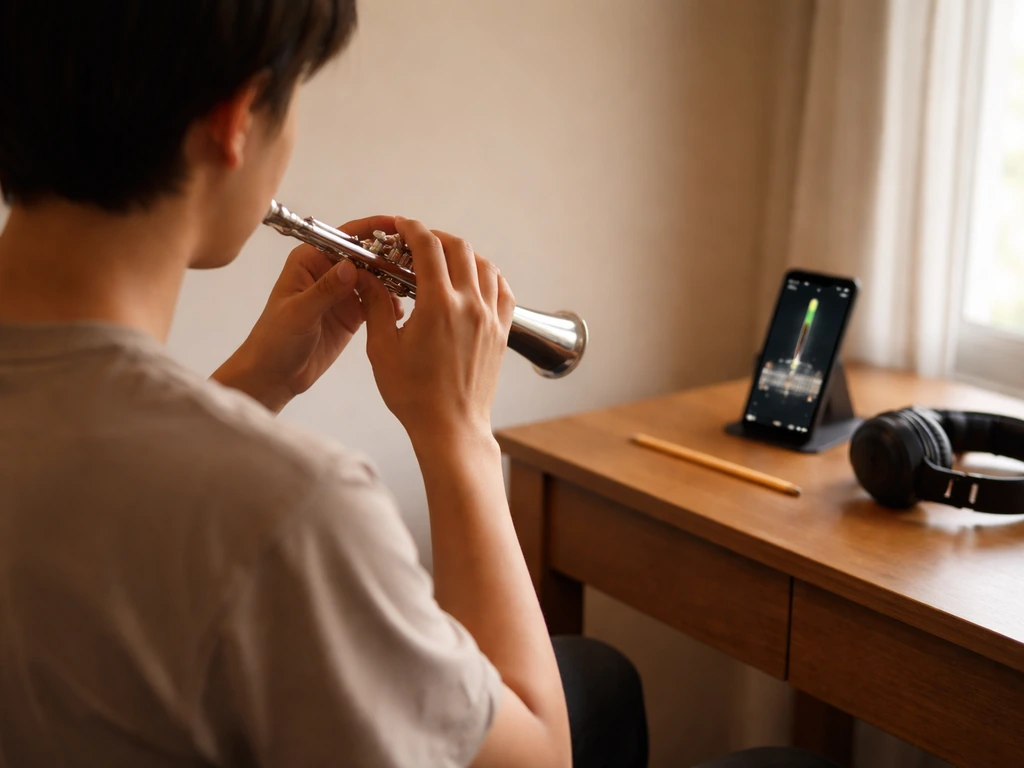
Effective practice is short and frequent, not long and exhausting. Fifteen minutes twice a day beats an hour once a week. Your voice needs repetition spaced across days to build muscle memory, and it needs rest to avoid strain. Each session should follow the same basic structure: warm up, drill the target sound broken into pieces, then attempt the full phrase, record yourself, and compare.
- Warm up for two minutes: hum gently on a comfortable pitch, glide slowly up and down your range, do a few lip trills (blowing air through loosely closed lips while vocalizing).
- Play your target recording once. Let it sit in your mind.
- Isolate the first phrase or note only. Reproduce just that piece 5 to 10 times. Do not move on until it feels consistent.
- Add the next phrase. Link it to the first. Repeat the two-phrase sequence 5 to 10 times.
- Continue adding phrases one at a time until you have the full song structure.
- Attempt the complete song at half speed first. Accuracy matters more than tempo at this stage.
- Gradually increase to natural speed over multiple sessions (days, not minutes).
- Record yourself on your phone or a voice recorder. Play it back against the original recording and note specific differences in pitch, timing, or tone quality.
- Rest your voice for at least as long as you practiced before your next session.
For trills specifically, drill them as isolated exercises before placing them in context. Do 30 seconds of tongue-flutter drills on their own, then 30 seconds of throat-flutter drills, then compare both to the trill in your target recording. Record these drills too. Progress happens fastest when you can hear the gap between your attempt and the target rather than guessing at it.
Intermediate and advanced practitioners can use a free spectrogram tool to view their own voice recordings alongside the target bird's spectrogram. This gives you visual confirmation of whether your pitch contour, trill speed, and phrase timing actually match. It is a game-changer for precision.
Troubleshooting: When Things Go Wrong
Flat or Cracking Pitch
If your pitch keeps landing flat or your voice cracks on high notes, the issue is almost always inadequate breath support combined with throat tension. Return to the belly-breathing drill and slow down. Cracking on a high note means your vocal folds are not receiving consistent breath pressure. Do not push harder from the throat. Instead, practice the high note on its own with a steady, gentle breath flow until it sits cleanly before placing it back in the phrase.
Muddy Trills and Unclear Articulation
Muddy trills usually mean your articulation is running ahead of your breath control. Slow the trill down to half speed and focus on making each repeated unit crisp and even. If a tongue-flutter trill is getting muddy, try switching to a throat flutter and see if that gives you cleaner separation. Check your recording: does each note in the trill have a clear start and stop, or does it blur into a wash of sound? The blur is fixable with slower drills and better tongue placement.
Throat Fatigue and Strain
Throat fatigue during bird-song practice is a clear signal that you are working from the wrong place. Inadequate breath support forces the voicebox to compensate with tension, and that tension leads to laryngeal tightness and fatigue quickly. Stop the session, hydrate with room-temperature water, and rest. When you return, cut your session length in half and spend more time on the belly-breathing foundation before attempting any imitation. Avoid whispering as a rest strategy as it can actually strain the voice more than soft, supported speaking.
Timing Problems
If your phrases are falling out of rhythm with the original, use a slow-motion audio tool (free in apps like Amazing Slow Downer or Audacity) to hear the target at 60 or 70 percent speed. Practice your imitation at that same reduced speed. Rhythm accuracy comes before speed. Do not increase tempo until the slower version feels natural and relaxed.
When to Stop and Seek Help
Rest your voice completely for at least a full day if you notice persistent hoarseness, a lump-in-throat sensation, or pain when speaking or swallowing. Hoarseness or voice changes that last more than two weeks, or any pain with speech, should be evaluated by a doctor or speech-language pathologist. A voice specialist can diagnose what is happening and offer therapy that corrects the specific technique issue causing the strain. Do not wait it out and keep practicing through pain. Early evaluation almost always means faster recovery.
Using Your Bird-Song Voice Humanely: Pets, Rehab Birds, and Wild Wildlife
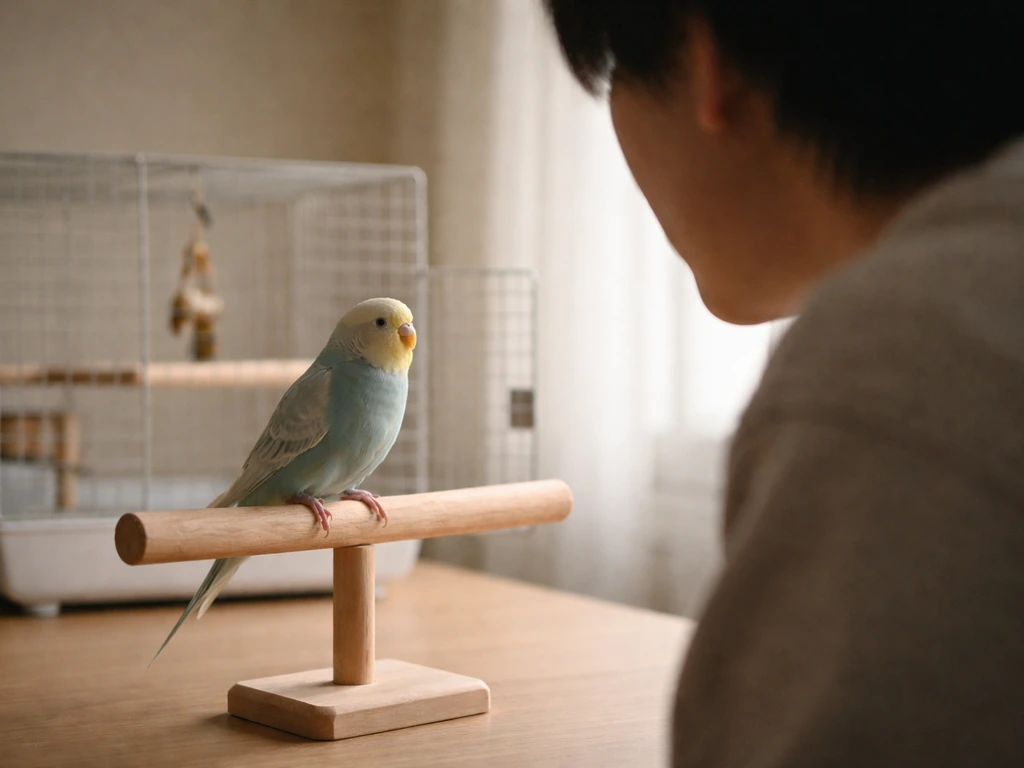
This is where the practice connects directly to the purpose of this site. If you have a pet bird, your improving vocal imitation is a genuine bonding tool. Using a calm, soft voice as part of daily interaction signals safety and predictability to your bird, which builds trust over time. Once you can produce your bird's own contact call accurately, try using it softly during regular interactions. Many parrots and softbills will answer a recognizable contact call with their own vocalization, which strengthens the social bond. Keep your volume soft, especially with new or nervous birds. A calm, inviting voice is far more effective than a loud or dramatic one. If you are also dealing with a large parrot in your home, learning how to control big bird safely can help you manage interactions while keeping training humane.
For birds in your care during rehabilitation, vocal imitation has more specific and limited applications. Using gentle, species-appropriate sounds during feeding or handling can reduce stress responses in some birds. However, the most important welfare principle here is to avoid fostering comfort with human contact in birds that will be released. Wildlife rehabilitation programs specifically work to prevent young birds from imprinting on humans, using strategies like minimal-contact handling, specialized uniforms, and surrogate animals. If you are working with a young bird in a rehabilitation context, your voice should be used to minimize stress during necessary handling, not to encourage approach or tameness. The goal is release into a wild-appropriate life, not a bond with you.
For wild birds in natural settings, ethical practice means listening and appreciating rather than aggressively calling. Playback of recordings or vocal imitation used repeatedly near nesting sites can disrupt breeding behavior and cause significant stress to wild birds. Brief, occasional use of a contact call in a non-breeding context is generally low-impact, but know your species, know the season, and err on the side of doing less. Your skill is for connection and understanding, not for luring or disturbing wildlife.
There is genuine crossover between becoming a skilled vocal imitator and becoming a more fluent communicator with the birds in your life. If you have explored related ideas like how to act like a bird or how to bond with a specific species through behavior mirroring, the vocal work described here fits naturally alongside those approaches. If you have explored related ideas like how to act like a bird or how to bond with a specific species through behavior mirroring, how to be a fit bird can also give you an adjacent training mindset for your practice. As you work on how to act like a bird, remember that the same imitation skills can support calmer, more responsive interactions. If you are also aiming to understand size and species targets, check out how to become the biggest bird. If you are also wondering how to turn into a bird in a bigger sense, start by applying these same vocal imitation skills alongside calm, bird-appropriate body language. Once you understand the specific call you want to imitate, you can follow a step-by-step path for how to become a bird vocal imitator. The voice is one part of a broader suite of body language, movement, and sound that birds use to assess whether you are safe. Getting the vocal piece right is worth the practice, especially when you see your pet bird visibly relax and call back.
A Quick-Start Summary
- Pick one species and one specific call. Listen to it 20 times before you attempt anything.
- Build breath support from the belly. Do not push from the throat.
- Map the song into components: pitch, rhythm, note type (whistle, chip, trill, warble, slur).
- Practice each component separately, then link them in order.
- Record every practice session and compare to the original recording.
- Keep sessions short (15 minutes) and frequent (daily). Rest between sessions.
- Slow everything down before speeding it up. Accuracy first, tempo second.
- Use your voice softly and warmly with pet birds. Avoid habituating rehab birds to human sounds.
- Stop and rest if your throat feels sore or your voice changes. See a doctor if symptoms persist beyond two weeks.
FAQ
How long does it typically take to sing like a bird well enough for my pet to respond?
For most people, you can get consistent approximations of a simple contact call within 2 to 4 weeks using short sessions (for example, 15 minutes twice daily). Faster results usually happen when you practice the exact call your bird already uses, and when you record each attempt and compare timing, not just pitch.
Should I start by copying a whole song, or should I practice one element at a time?
Practice one element at a time. Break the call into pitch contour, rhythm pattern, note type (whistle, chip, slur, trill), and repetition cycle, then drill each piece until it matches your reference recording. Only after that should you reconnect elements into the full phrase at slow speed.
What if my bird responds to the wrong call, even when I practice a specific species?
That often means you are targeting the wrong vocalization, or your timing is off enough that your bird is matching its own call cues rather than your imitation. Re-check that you are using the exact call type (for example, contact vs alarm) and compare spectrograms or slowed audio to verify the pause lengths and end-of-phrase drops.
Can I practice silently by reading spectrograms or watching a visualizer without making sound?
You can benefit from visual study, but you cannot build the tongue, breath, and articulation patterns without sound. Use spectrograms to set targets, then immediately translate those targets into short voiced drills. A good workflow is watch first for 1 to 2 minutes, then practice for 5 to 10 minutes.
What should I do if my whistle sounds airy or too breathy, not pure and birdlike?
Aim for a narrow vowel shape and stable breath flow. If it is airy, your lips may be too loose or your tongue may not be positioned toward the front palate. Reduce volume slightly and focus on a steady exhale that you ride on with relaxed throat, then rebuild speed after clarity improves.
Why does my trill start fine but turns into a blur or collapses halfway through?
Usually it is a breath-articulation mismatch. Your tongue flutter or trill motion may be continuing while breath pressure drops, so the repeated units stop landing cleanly. Slow the trill to half speed, drill it in isolated 1-second chunks, and only extend duration after each chunk has a clear start and stop.
Is throat-fluttering safe for trills, or will it damage my voice?
It can be safe if you keep it gentle and supported, but it is easy to overdo when you push from the throat. If you feel throat tightness or fatigue, switch to a tongue-based trill approximation, shorten the drill, and return to belly-breath foundation. Any pain or persistent hoarseness means stop and get evaluated.
What is the best way to fix pitch that is consistently flat?
Reset breath and slow down, then practice the note at a slightly higher target starting point without increasing force. Flat pitch commonly comes from inconsistent breath pressure or releasing the note too early. Use a high-quality reference recording, and rehearse the entry point of the pitch contour, not only the middle of the note.
How can I practice rhythm accurately without obsessing over speed?
Use slowed playback at about 60 to 70 percent speed and match the pause locations first. Record yourself and compare where your sounds start and stop relative to the reference, then increase speed only when the slower version feels relaxed and consistent. Rhythm is often more about timing precision than faster execution.
Should I use a metronome or count beats while learning bird calls?
Sometimes, but only after you identify the bird’s own internal rhythm. A metronome can help you stabilize your timing for simple repeated elements, but bird calls often have irregular micro-pauses and accelerations. If you use counting, align your counts to the start, repeat, and pause structure you see in the reference, then phase out counting as your timing becomes automatic.
What if I cannot get the note types right, like slurs versus separate notes?
Slurs usually require a continuous vowel glide rather than a hard landing. Drill the two vowel positions you need, then practice a smooth transition that takes up the same duration as the slur in the reference recording. If your slur sounds like separate notes, slow it down and make the transition overlap more.
How do I know whether I should use my tongue tip, tongue flutter, or a throat flutter for a specific trill?
Pick based on which motion preserves clean, even repeats at low speed. Try both tongue-based flutters (like rolled or flapped r-style motions, or rapid tongue taps approximating trill units) and a gentle throat flutter. Record both, compare clarity of each repeated unit, and keep the method that produces distinct starts and stops without fatigue.
What signs mean I should stop immediately rather than pushing through?
Stop if you feel throat pain, a persistent lump sensation, significant hoarseness, or pain when speaking or swallowing. Also stop if your technique quality drops suddenly due to fatigue, since that often means you are compensating with tension. If symptoms persist, rest fully and consider a clinician or speech-language pathologist.
Can I practice while keeping my pet bird calm and comfortable?
Yes, practice softly and use the imitation during normal interactions once your bird recognizes the contact call. Keep volume low, avoid sudden bursts, and use a predictable routine. If your bird shows stress, step back to the simplest call segment and reduce repetitions, because too much stimulation can override the calming benefit.
Is it okay to practice bird calls near wild birds or around nesting sites?
Be cautious, because repeated playback or aggressive calling can disrupt breeding and increase stress. Use less, avoid nesting season if you can identify it, and do not use the same call repeatedly near territories. Think of practice as connection and listening, not luring or disturbance.
If my goals are different, like musical singing inspired by birdsong, should I use these same drills?
Not fully. Birdsong imitation drills are built for copying pitch contour, rhythm, ornamentation, and tongue articulation, which can differ from classical or theatrical breath and resonance goals. You can still use the breath support and posture principles, but tune the practice toward musical tone once the specific bird call elements are stable.
Next Article
How to Become the Biggest Bird: Humane, Healthy Growth Tips
Humane, species-based guidance to support optimal growth, tracking, and red flags for healthy biggest-bird results
