
The best way to entertain a bird is to combine foraging opportunities, short training sessions, and direct social time into a consistent daily routine. If you want your bird to truly thrive, aim to exercise your bird through short, engaging daily training and active foraging. Even 15 to 20 minutes of structured interaction spread across the day is enough to keep most pet birds mentally sharp, physically active, and emotionally satisfied. What that looks like in practice depends on your bird's species, age, and personality, but the core formula stays the same: give them something to figure out, something to chew or shred, something to learn, and meaningful time with you.
How to Entertain a Bird: Safe Enrichment and Routines

Maya Harris
29 Apr 2026
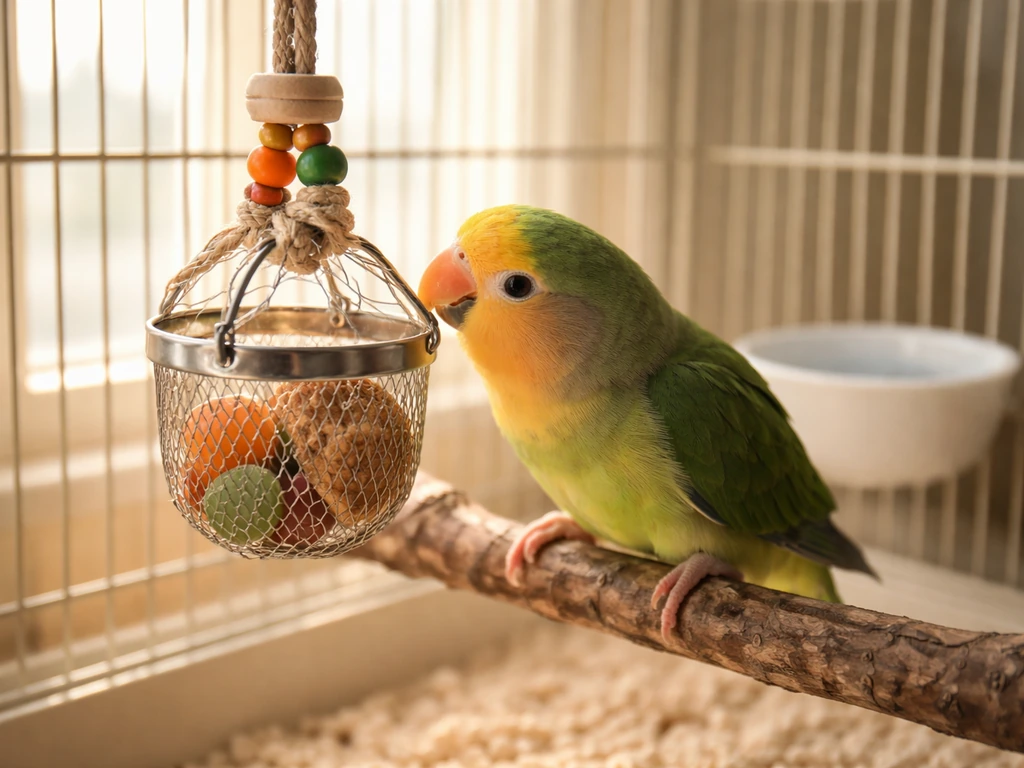
Signs your bird is bored or understimulated
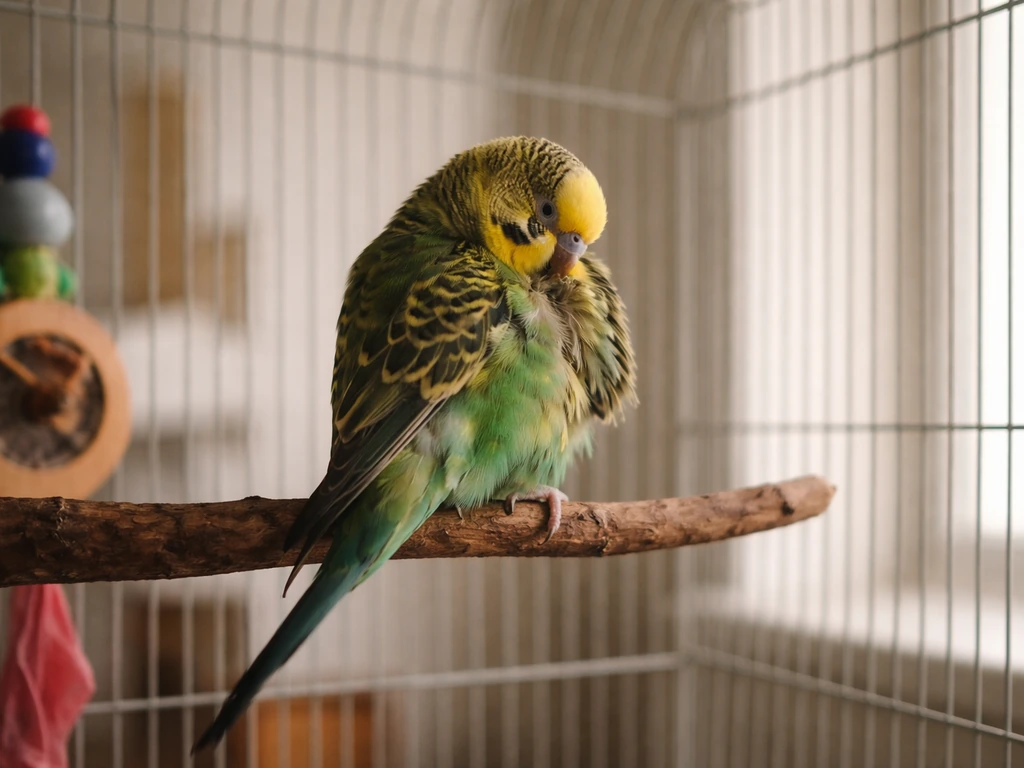
Before you can fix the problem, you need to recognize it. Birds are good at masking stress, so the signals can sneak up on you. The most obvious red flag is feather picking or plucking, which is especially common in larger parrots like cockatoos and African greys. If your bird is pulling out its own feathers and a vet has ruled out skin conditions, parasites, or other medical causes, boredom and social deprivation are the next things to address. That said, always get a vet check first because feather destruction can also be a symptom of illness, and you want to be treating the right problem.
Other signs of low stimulation are easier to spot day to day. Watch for these behaviors and take them seriously:
- Repetitive movements like pacing, head bobbing in loops, or toe-tapping with no obvious trigger
- Excessive screaming or contact-calling that escalates when you leave the room
- Destructive behavior beyond normal chewing, such as attacking cage bars
- Lethargy or loss of interest in food, toys, and interaction
- Over-preening a partner bird or cage mate to the point of causing bare patches
- Sudden aggression that wasn't there before
- Changes in droppings (color, frequency, or consistency) that accompany behavioral changes
A quick note on droppings: any change in droppings should prompt a vet call before you assume boredom is the culprit. Weight loss, unusual posture, or a fluffed-up appearance alongside behavioral changes points to illness, not just boredom. Get those ruled out first, then focus on enrichment.
Match enrichment to your bird's species and personality
Not every bird wants the same kind of entertainment, and pushing the wrong type can backfire. A timid cockatiel and a bold green-cheeked conure both need enrichment, but what excites one may terrify the other. Species instincts are your starting point, then you fine-tune based on the individual bird in front of you.
| Species Group | Natural Instincts to Tap | Best Enrichment Approaches | Skill Level Note |
|---|---|---|---|
| Budgies and parrotlets | Flock foragers, high activity | Mirror play, foraging toys, flight opportunities, puzzle feeders | Beginner-friendly; respond quickly to enrichment changes |
| Cockatiels | Ground foragers, social | Foot toys, shredding materials, gentle music, training tricks | Beginner; benefit enormously from short daily training |
| Conures (small to medium) | Loud, energetic, curious | Shreddable toys, agility perches, trick training, foraging boxes | Beginner to intermediate; need high-energy outlets |
| African greys | Problem-solvers, cautious | Complex foraging puzzles, novel objects introduced slowly, speech and trick training | Intermediate to advanced; thrive on cognitive challenge |
| Cockatoos | Highly social, tactile | Hands-on interaction, dance and movement, shreddable toys, structured training | Intermediate to advanced; require significant daily social time |
| Amazons | Bold, vocal, food-motivated | Food puzzles, singing/vocalization games, trick training | Intermediate; respond well to positive reinforcement routines |
| Softbills (canaries, finches) | Visual, flight-oriented | Flight space, varied perches, visual stimulation, foraging scatter feeding | Beginner; less hands-on, more environmental enrichment |
Temperament matters just as much as species. A fearful bird needs slow, low-pressure enrichment: place a new toy near the cage for a few days before introducing it inside. A confident, bold bird can handle novelty faster. Read your individual bird's body language at every step, tail fanning, pinning eyes, raised feathers, leaning away all signal stress, and back off if you see them.
Safe toys, foraging setups, and activities at home
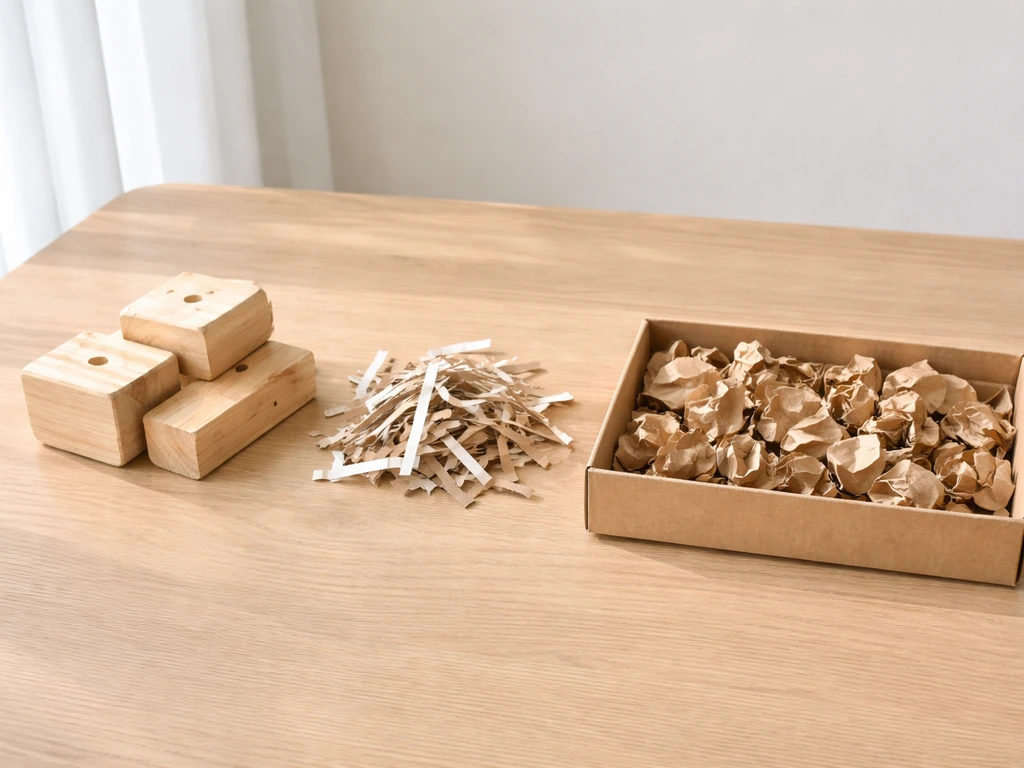
The toy aisle at a pet store can feel overwhelming, but the goal is simple: give your bird things to manipulate, destroy, figure out, and taste. Variety is more important than quantity. Rotating a few toys in and out every week or two keeps things fresh without cluttering the cage.
Safe toy materials and what to avoid
Stick to toys made from untreated wood, natural fiber rope (cotton or sisal in appropriate thickness for the bird's size), food-safe dyes, and stainless steel hardware. Avoid toys with small, easily swallowed metal parts, lead or zinc components, and cheap plastic that splinters into sharp shards. Check that any rope toy has strands thick enough that your bird's foot, leg, or neck cannot get tangled in a loose loop.
One safety point that often gets overlooked: keep the kitchen environment safe. Non-stick cookware coated with PTFE (the material in most Teflon-coated pans) releases toxic fumes when overheated that can kill a bird rapidly. Remove PTFE-coated items from your home entirely, or at minimum never let your bird near the kitchen when cooking. This is a non-negotiable welfare step before any enrichment setup matters.
Foraging: the single highest-impact enrichment
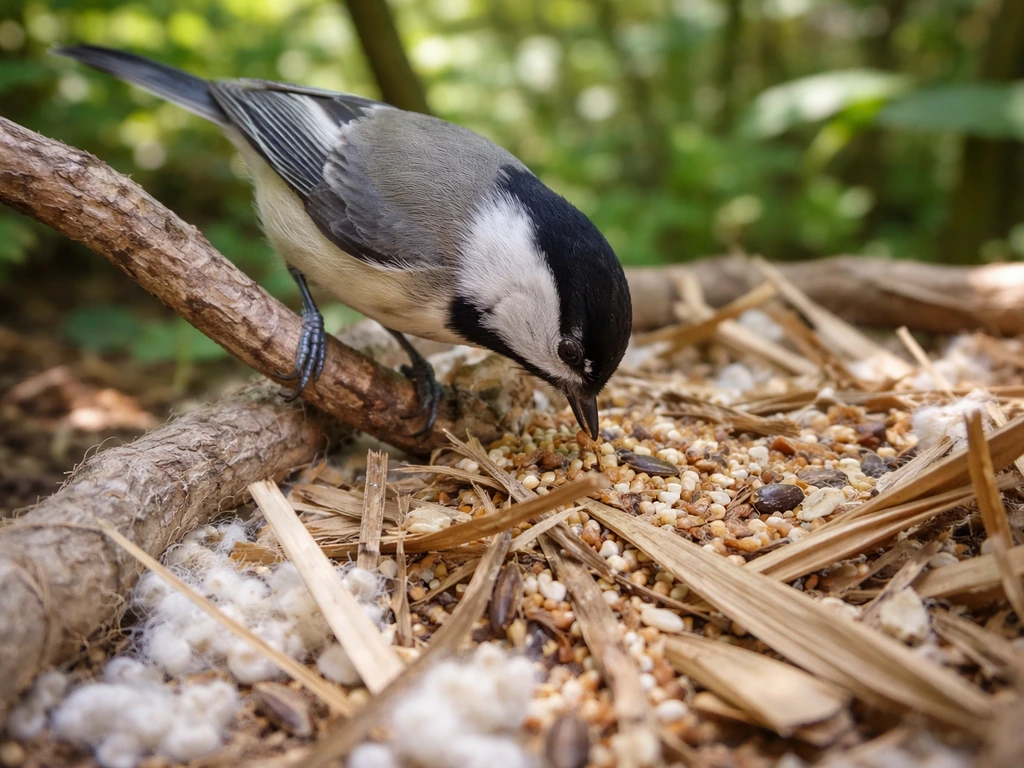
In the wild, birds spend the majority of their waking hours searching for food. Putting all their food in a bowl removes that mental work entirely. Foraging enrichment gives it back. Start simple: wrap a few pellets or seeds in a small piece of paper and let your bird tear it open. Graduate to commercial foraging toys with sliding doors or rotating compartments, then to homemade setups like a muffin tin covered with paper cups or a paper bag stuffed with shredded paper and treats. The goal is to make your bird work a little to find food, not to frustrate them, so calibrate the difficulty to their current skill level.
Low-cost activity ideas that work
- Shreddable items: palm fronds, cork bark, phone book pages (ink-free if possible), cardboard tubes from paper towels
- Foot toys: small wooden blocks, cork pieces, or hard plastic balls your bird can hold and manipulate
- Bathing opportunities: a shallow dish of room-temperature water, a gentle misting, or a damp leafy branch for species that enjoy leaf-bathing
- Visual enrichment: place the cage near a window with a bird feeder outside (ensure no window collision risk and no outdoor cats visible at close range that could cause chronic stress)
- Sound enrichment: species-appropriate bird calls played at low volume, or calm music during quiet periods
- Novelty objects: a pinecone, a wooden spoon, a knotted piece of rope, introduced outside the cage first
Build a daily engagement routine
A routine does more for a bird's mental health than any single toy. Birds are highly attuned to predictability. When they can anticipate interaction, their anxiety decreases and their willingness to engage goes up. You don't need hours. You need consistency.
A practical framework for a daily enrichment schedule looks like this:
- Morning (5 to 10 minutes): Uncover the cage, offer a fresh foraging opportunity or rotate one toy, and do a brief check-in with your bird. Even just talking to them while you prepare their food counts.
- Midday (10 to 15 minutes): Out-of-cage time if safe and possible, or a short training session through the cage bars. This is a great window for trick work.
- Afternoon (5 minutes): Refresh water, offer a bathing opportunity or light misting 2 to 3 times per week, scatter some foraging material.
- Evening (15 to 20 minutes): Prime bonding and interaction time. Most parrots are naturally active at dawn and dusk, so this session often gets the best engagement. Focus on hands-on play, talking, training, or just calm co-presence.
- Before cover-up: Wind down with quiet time. Avoid stimulating play right before lights-out, especially for birds prone to night frights.
Training is one of the most underrated forms of entertainment for birds. Teaching a cockatiel to wave, a budgie to step up reliably, or an African grey to identify colors by name gives them a cognitive challenge, a reason to interact with you, and a sense of accomplishment. Keep sessions to 3 to 5 minutes maximum, always end on a success, and use positive reinforcement only. A small piece of their favorite treat is usually all the motivation you need. For birds who are less food-motivated, a head scratch, a verbal cue they enjoy, or brief step-up practice can work just as well.
If you work full-time and your bird spends long hours alone, the morning and evening sessions become even more critical. Rotating foraging setups before you leave in the morning, leaving a bird-safe radio or TV on low, and setting up multiple foraging stations around the cage can help bridge those hours. There's a lot more to cover on that specific situation, and it's worth thinking through a dedicated strategy for keeping your bird engaged during the workday. If you have to be away at work, a dedicated plan that includes foraging, short training, and safe background stimulation can keep your bird entertained the whole day keep your bird entertained while at work.
Bonding and handling tips that make playtime better
A bird that trusts you will engage more freely with enrichment you introduce, accept handling during play, and recover faster from startles or novel situations. Bonding isn't separate from entertainment; it's the foundation that makes all of it work better.
If your bird is new, skittish, or has a history of poor handling, start at a distance. Sit near the cage and read aloud, work on your laptop, or just exist calmly in the same room. Let the bird make the first move toward you. When they approach the cage bars near you without alarm, that's a green light to offer a treat through the bars. Progress to a hand-held perch, then to a bare hand. Never force step-up on a bird that is showing stress signals, and never grab, restrain, or hover in ways that feel threatening.
Once a bird is comfortable with you, here are bonding-centered play approaches that work well in daily routines:
- Cooperative foraging: let your bird 'help' you open a foraging toy or unwrap a treat-filled package together
- Mirroring play: copy your bird's sounds or movements during calm moments; many parrots find this highly engaging
- Shoulder time during low-activity tasks like reading or watching TV (only for birds you fully trust and that have reliable recall)
- Target training: teaching your bird to touch a stick with their beak is one of the fastest trust-building tools available and opens the door to teaching almost any behavior
- Positive-only handling practice: brief, voluntary step-up sessions where the bird chooses to engage, followed immediately by something they enjoy
For birds that are still warming up to you, playing with toys yourself in front of them can spark curiosity. Pick up a foot toy, examine it, make sounds with it. Parrots especially are highly observational and will often investigate something they've watched a trusted person handle.
When enrichment isn't working: troubleshooting behavior problems
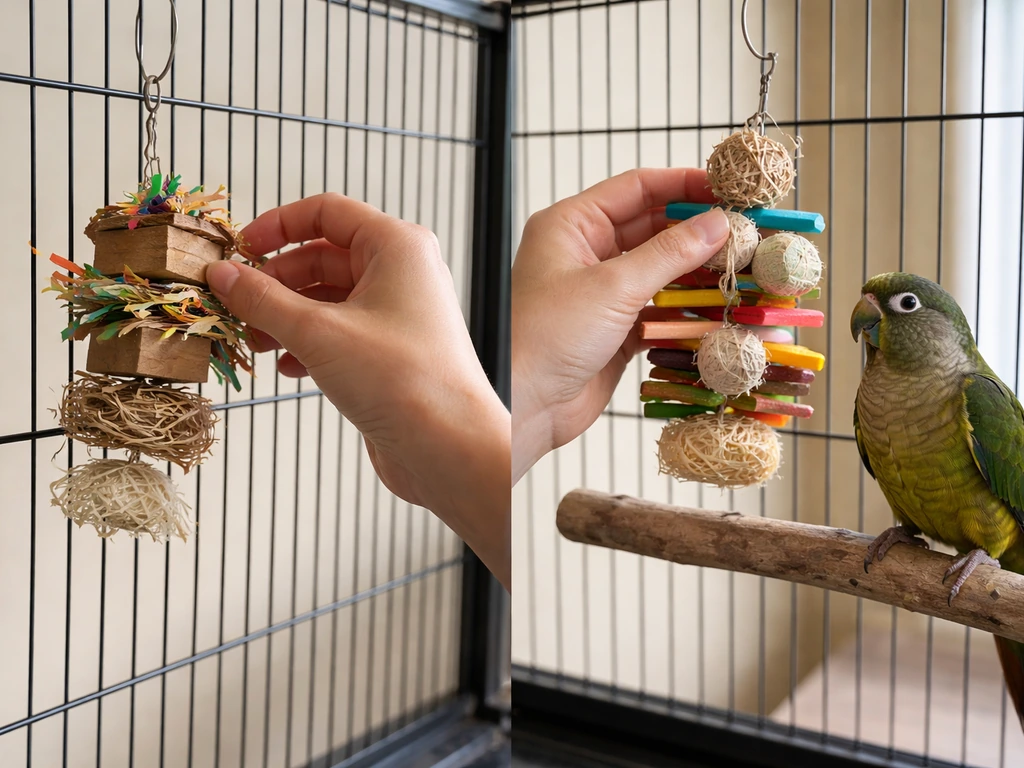
Sometimes you do everything right and a bird still screams, plucks, or refuses to engage. That's frustrating, but it usually means you need to adjust the type, difficulty, or delivery of enrichment rather than do more of the same thing.
Try these adjustments based on specific problems:
| Behavior Problem | Likely Cause | Enrichment Adjustment |
|---|---|---|
| Ignores all toys | Novelty fear or wrong toy type for species | Introduce toys outside cage first; try a different material or format (shredding vs. puzzle vs. foot toy) |
| Screaming escalates after enrichment changes | Overstimulation or schedule disruption | Slow down changes; keep one anchor activity constant while rotating others |
| Feather plucking continues after enrichment increase | Medical cause not yet ruled out, or chronic habit | Return to vet; consider a behavioral consult; increase foraging specifically (most evidence-backed intervention) |
| Refuses foraging toys | Difficulty level too high | Start with completely open foraging (food visible) and add difficulty incrementally over days or weeks |
| Aggression during playtime | Hormonal trigger or over-stimulation | Shorten sessions; avoid petting beyond the head and neck; watch for eye-pinning as a warning sign |
| Boredom behaviors persist despite routine | Social needs not being met by enrichment alone | Consider whether a compatible companion bird is appropriate; increase direct interaction time |
One thing worth keeping in mind: some feather plucking can persist even after you've addressed every environmental, nutritional, and social factor. Once the behavior becomes habit, it can be hard to fully eliminate. The goal becomes reducing frequency and severity while maintaining the best possible quality of life. Don't interpret ongoing mild plucking as a personal failure if you've genuinely addressed all the underlying causes.
Also watch for enrichment that backfires because of unintended reinforcement. If your bird screams and you immediately come running to offer attention or a new toy, you've taught them that screaming works. Instead, wait for a brief pause in the screaming before going to them, and make sure some of your most engaging interaction happens when they're being quiet.
When to call a vet or avian specialist
Enrichment is powerful, but it's not a substitute for medical care. Several situations call for a professional before or alongside any enrichment changes.
Call an avian vet promptly if you observe any of the following:
- Feather plucking that has progressed to skin damage or open wounds
- Changes in droppings (unusual color, watery consistency, absence of droppings) lasting more than a day
- Sudden weight loss, fluffed feathers, or loss of balance, all of which indicate illness rather than boredom
- A female bird straining, sitting on the cage floor, or appearing lethargic and swollen in the abdomen, which can indicate egg binding and is a medical emergency (most common in budgies, finches, canaries, cockatiels, and lovebirds, but possible in any species)
- Sudden neurological symptoms, seizures, or rapid breathing after any potential household exposure, including fumes from overheated non-stick cookware
If you've improved enrichment consistently for 4 to 6 weeks and severe behavioral issues like aggressive self-injury or extreme repetitive behaviors haven't improved, ask your avian vet for a referral to a certified parrot behavior consultant or avian behaviorist. These specialists can observe your bird's specific patterns and design an individualized enrichment and training plan that goes well beyond general advice.
For anyone caring for a wild bird that is injured or being rehabilitated rather than a pet, enrichment needs look different and are governed by different welfare and legal standards. In those cases, contact a licensed wildlife rehabilitator in your area rather than applying pet bird enrichment methods directly. The goal with wild birds is always a successful return to the wild, and too much human interaction can interfere with that.
At the end of the day, entertaining your bird well comes down to consistency, observation, and a willingness to adjust. You don't need expensive equipment or hours of free time. You need a few foraging setups, a rotation of safe toys, a short daily training session, and genuine time spent paying attention to what your specific bird responds to. Once you’ve dialed in safe, species-appropriate toys and foraging, you can learn practical ways to play with a bird in a cage that match your bird’s comfort level how to play with a bird in a cage. If you want a simple starting point for how to play with a bird, focus on foraging, a rotating set of safe toys, and short daily training sessions. That's the whole job, and most birds will show you clearly when you've got it right.
FAQ
Can I entertain my bird while I am cooking or using nonstick cookware?
Yes, but keep the timing and exposure controlled. Use only short, supervised sessions first, and remove the bird from the room if cooking odors, smoke, or overheated surfaces are possible. Even if you do not use PTFE pans, other sources like overheating nonstick accessories or aerosol products can create airborne irritants, so prioritize ventilation and keep the bird out of the kitchen entirely during any cooking.
What if my bird gets frustrated and won’t work on foraging toys?
Avoid making toys harder in a way that causes constant frustration. Foraging should start at a level where your bird can succeed quickly, then increase complexity slowly (smaller openings, tighter wraps, fewer treats). If your bird stops trying, turns away, or becomes agitated, reduce difficulty that day and try a simpler version next session.
How do I entertain a bird if I have multiple birds in the same space?
If you have more than one bird, enrichment should be offered so access is predictable. Try multiple foraging stations at different heights and locations, rotate items between them, and ensure at least one option is available per bird before you introduce a new toy. Otherwise, dominant birds can hoard resources and the “enrichment” becomes stress.
How can I tell whether low engagement is boredom or an illness?
A bird that is sick can look like it is “bored,” especially if you notice posture changes, fluffed appearance, reduced appetite, or sudden inactivity. For enrichment decisions, treat any droppings change, weight loss, or unusual stance as a medical check first. Only after a vet clears health issues should you increase toys or training intensity.
My bird screams when I try to play, what should I do?
Reduce disruption rather than removing enrichment. If your bird screams or plucks when you approach, change the pattern: wait for brief quiet moments before you interact, offer attention only during calmer behavior, and keep the enrichment type consistent for a few days. If the behavior escalates, switch to lower-stimulation options (slower introduction, toys placed near the cage instead of inside) and consider professional guidance.
Can I combine training, toys, and foraging in the same day without overwhelming my bird?
Yes, but it should be deliberate. Use a few minutes of training that ends on a win, then swap to a safe chew or foraging task the same day. Avoid stacking too many novel activities back-to-back, because for some birds novelty plus overstimulation increases stress rather than engagement.
What if my bird is not very interested in treats during training?
For birds that are less food-motivated, use non-food reinforcers your bird already seeks, like gentle head scratches, a favored cue plus praise, or brief step-up practice on a consistent routine schedule. The key is that the reinforcement must happen immediately after the desired behavior and stay predictable.
How often should I rotate or replace toys, and what damage signals mean “remove it now”?
Replace them on a set schedule and after any damage. Rope should be checked for fraying, loose strands, and tangling risk, especially after the bird grows or changes chewing style. Plastic that cracks or splinters should be removed right away, and any toy with small detachable pieces should be retired permanently.
Is it okay to leave a radio or TV on to entertain my bird while I’m at work?
Some birds benefit from background sound, but it must be safe and not startling. Keep audio low, avoid sudden loud changes, and choose consistent programming or a calm radio so it is predictable. If the bird shows startle responses, increased vocalizing at certain times, or worse nighttime behavior, switch to quiet or reduce the volume.
How do I entertain a new or fearful bird without pushing step-up or handling too fast?
Start at a distance and let the bird approach on its own, using neutral calm body language. If you ever see leaning away, pinned eyes, raised feathers, or retreating, pause and return to the previous step for several sessions. You can still offer tiny successes (like a treat through the bars) without forcing handling, because trust is built through repeated low-pressure wins.
If feather plucking persists even after enrichment, what’s the right next step?
Yes. If feather destruction continues despite consistent enrichment and after medical causes are ruled out, reduce intensity rather than adding more. Focus on calming, routine, and safer outlets to chew or shred, then consult an avian vet and ask about a certified behavior professional when the behavior remains severe. Mild persistent plucking can become a habit, so the goal may shift to reducing frequency and impact rather than immediate elimination.
Next Articles
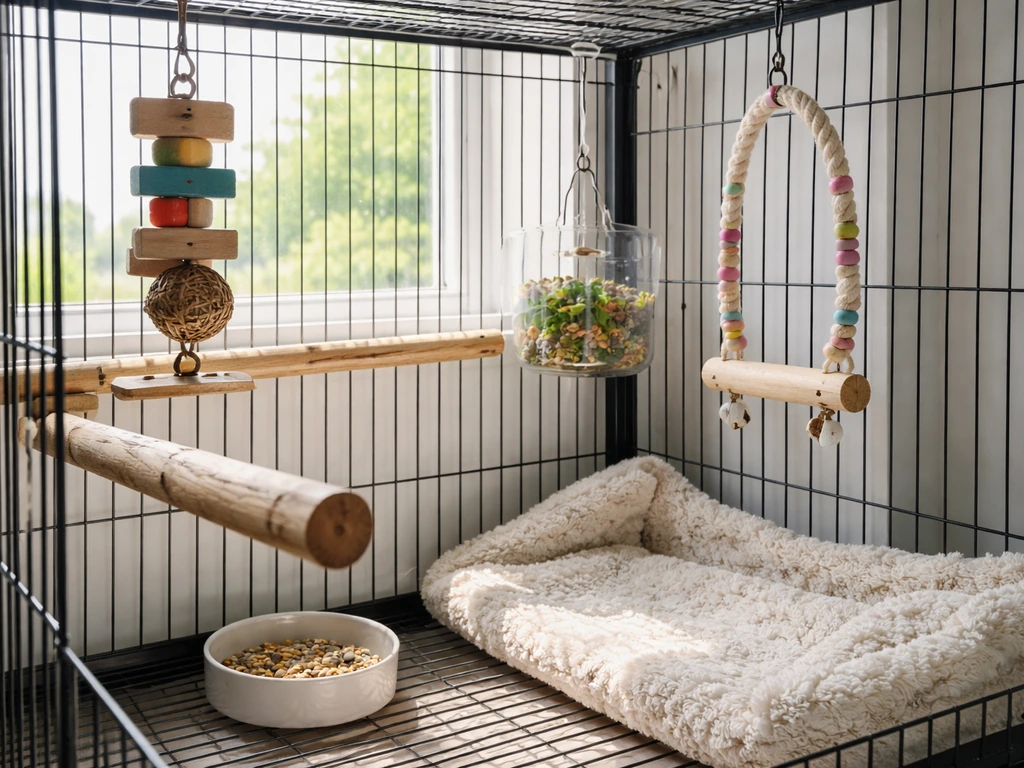
How to Keep Your Bird Entertained While at Work
Welfare-first ideas for keeping your bird entertained while at work with foraging, toy rotation, safe setups, and troubl
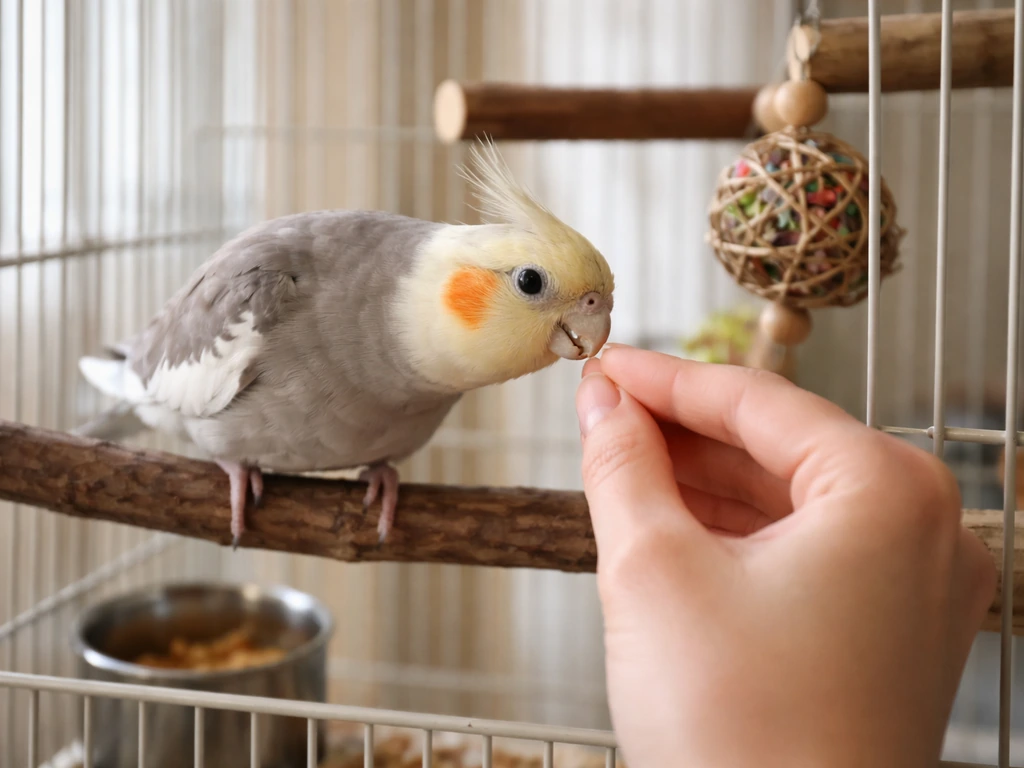
How to Play With a Bird in a Cage: Safe Daily Games
Safe daily games for caged birds: set up enrichment, read body language, build trust, and train with targets and foragin
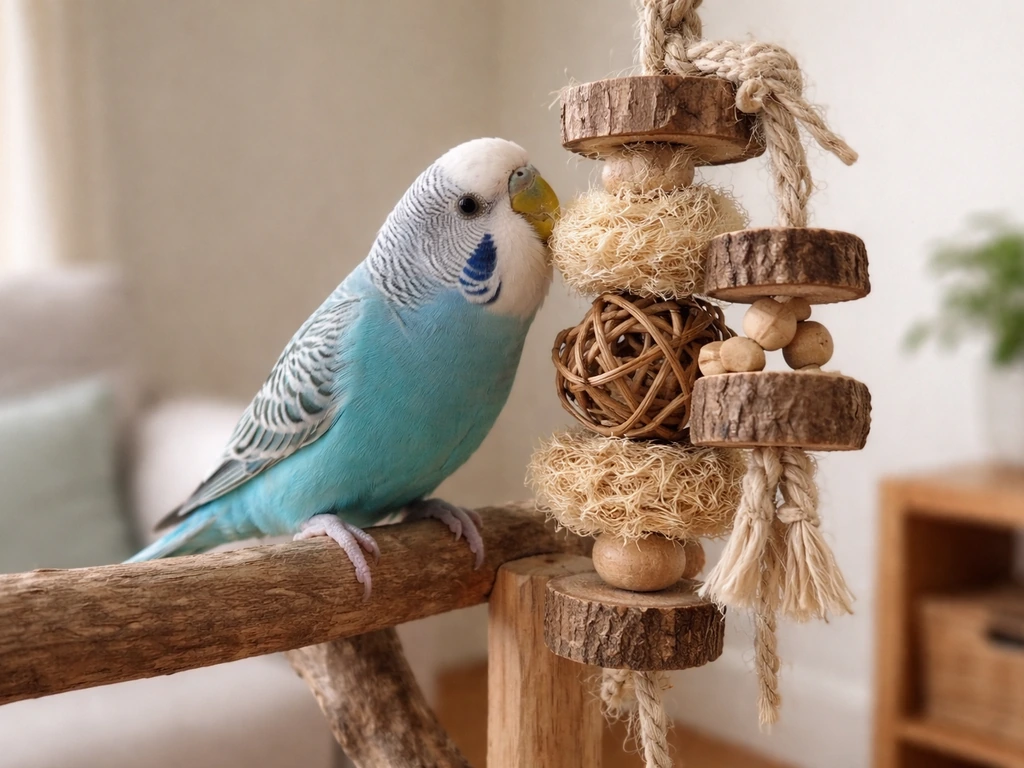
How to Exercise Your Bird Safely With Training and Enrichment
Humane, welfare-first guide on training and enrichment so your bird safely moves more through flight, climbing, and fora