
Birds don't do "mean" the way people mean it. What looks like aggression, almost every time, is a bird communicating fear, pain, stress, or a learned pattern that biting gets results. The good news is that all of those are solvable. Start by figuring out which one you're dealing with, stabilize the environment, then work through a positive reinforcement plan at a pace the bird can handle. Most birds show real improvement within two to four weeks of consistent, low-pressure work, though deeply fearful or traumatized birds may take longer.
How to Make a Mean Bird Nice: Humane Steps to Bond
Maya Harris
29 Apr 2026
First, figure out why your bird is acting this way
Before you try to change anything, you need a working theory about the cause. A bird that bites because it's in pain needs a vet, not training. A bird that bites because it learned that biting makes hands go away needs a different approach than a bird that's hormonal or chronically sleep-deprived. Lumping all of these together as "meanness" is where most owners get stuck.
The most common root causes, in rough order of how often they come up, are fear and distrust, learned biting (the bird figured out it works), territorial or hormonal behavior, pain or illness, poor sleep, and past handling trauma. Sudden changes in biting behavior, especially in a bird that was previously calm, are a red flag for pain or illness. Sudden increases in biting can be a sign of pain or discomfort, and PetMD recommends getting veterinary evaluation for new or escalating biting behavior blank" rel="noopener noreferrer">Sudden changes in biting behavior. Birds hide illness well, and a painful bird will bite defensively even when approached gently. If biting ramped up quickly or came out of nowhere, get a veterinary exam before doing anything else. If your bird can safely engage in short, supervised training sessions, you can also use gentle, consistent “exercise” to burn off energy and reduce stress-driven biting exercise your bird.
Watch for these specific stress and fear signals before and during any interaction:
- Feathers slicked down tight against the body or, conversely, head feathers raised and hackles up
- Rapid pupil dilation ("pinning") combined with a leaning-forward, ready-to-charge posture
- Open-mouth breathing or panting when not overheated
- Frantic flapping, thrashing against cage bars, or scrambling to get away
- Repeated screaming, especially if it ramps up when you approach
- Lunging at the cage bars before you even reach for the door
- Changes in eating, droppings, or activity level alongside the aggression
If you see open-mouth breathing, abnormal respiratory effort, visible trauma, or a sudden dramatic change in behavior and activity, contact an avian vet that day. Those are not training problems, they are medical emergencies.
Hormones and routine disruptions
Reproductive hormones are a common and underappreciated trigger, especially in spring. A bird that is normally reasonable can turn aggressive, territorial, and unpredictable during hormonal cycles. Changes in routine, poor sleep, and frustration (like being blocked from a desired location) also drive biting spikes. If the timing lines up with season or a household change, those are worth addressing alongside any training plan.
Safety and humane handling basics before any training starts
Your safety matters, and so does not making the bird worse. Forced restraint, aggressive catching, and repeated forced handling can destroy trust and increase fear, setting you back significantly. The goal before any formal training is to stop interactions that reinforce biting and stop interactions that traumatize the bird further.
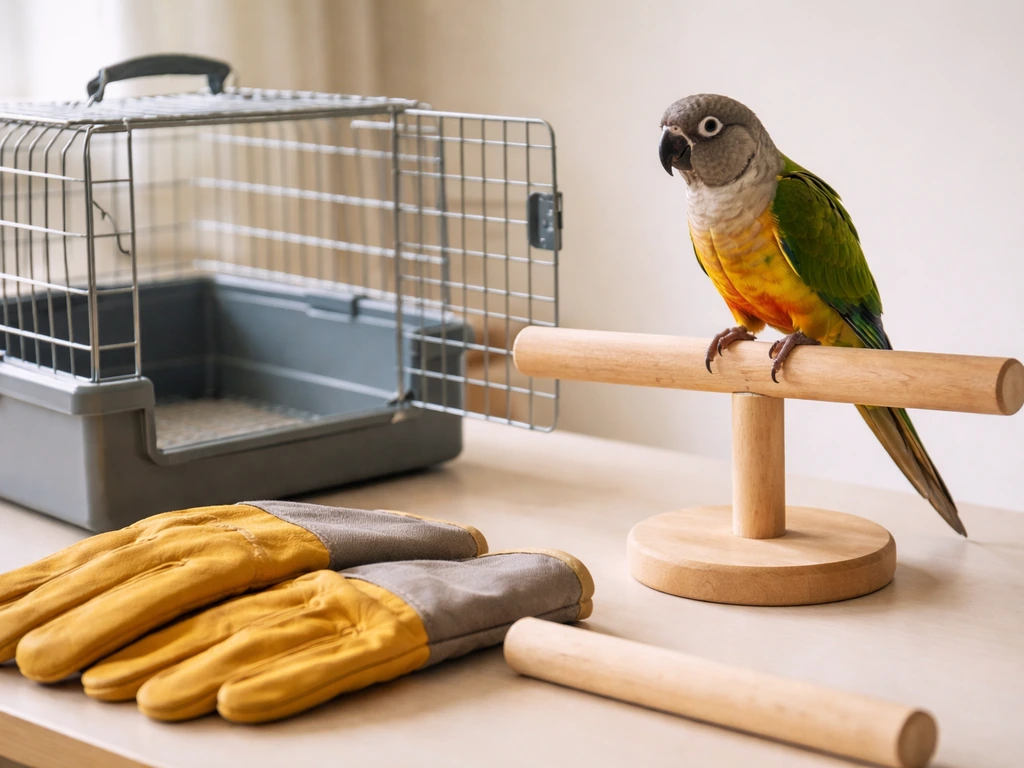
For birds that bite hard (larger parrots, raptors, corvids), protect your hands with a thick leather glove or fold a heavy towel over your forearm during early sessions. This is not about intimidating the bird; it's about letting you stay calm and not flinch, which matters a lot. A flinch or yelp rewards the bird for biting by giving it a strong reaction.
For wild birds being held for transport or rehabilitation, cover the bird loosely with a soft towel, tuck the wings gently against the body, and place it in a ventilated container (a cardboard box with holes or a ventilated ice cream pail for small birds works well). Cover the container to reduce visual stimulation. Do not attempt to feed or water a wild bird during capture or transport, and never transport it in-hand, as that is stressful, a safety risk, and in most regions requires a wildlife rehabilitation permit to be handling protected species at all.
Key safety rules for any bird, pet or wild:
- Never punish a bite with shaking, tossing, squirting, yelling, or any aversive response. It escalates aggression and damages trust
- Do not force handling when the bird is over threshold (actively trying to flee or attack). End the session and try again later
- Keep sessions short, especially early on. Two minutes of calm interaction beats twenty minutes of struggle
- Always let the bird have an escape route. A bird that feels cornered bites harder
- Read body language before reaching in. If the bird is postured to bite, wait for a calmer moment
Setting up the environment so the bird can actually calm down
You cannot train a bird that is chronically stressed. The environment has to support calm before training can work. This is the step most people skip because it feels passive, but it often produces the biggest early behavior changes on its own.
Start with cage placement. For more ideas on hands-off play and low-pressure enrichment, see how to play with a bird in a cage. High-traffic areas increase territorial behavior and cage aggression. Move the cage to a quieter spot where the bird can observe household activity without being in the middle of it. The bird should have a wall or corner at its back, which reads as safer to a prey-brained animal. Avoid placement near loud appliances, vents, or drafts.
Sleep is huge. Birds need 10 to 12 hours of undisturbed sleep per night. A sleep-deprived bird is an irritable, reactive bird, full stop. If your bird is in a room with evening TV, lights, or noise, set up a separate, smaller sleep cage in a dark, quiet room and move the bird there every night. Use a consistent light and dark schedule that mimics natural day length. This alone can reduce biting in some birds within a week.
Routine matters too. Unpredictable feeding times, chaotic handling schedules, and irregular sleep cycles all increase anxiety. Build a consistent daily routine: same wake time, same feeding time, same out-of-cage time. Predictability lowers baseline stress, and a less-stressed bird is a less-reactive bird. Once your bird feels safe and less stressed, you can also plan fun things to do with your bird that build trust. If you work outside the house, you can keep your bird entertained while you're away by using predictable routines plus safe, enriching activities like foraging and rotated toys how to keep your bird entertained while at work.
Trust-building steps in order
- Spend time near the cage doing calm, non-threatening activities (reading, working quietly) without trying to interact. Let the bird get used to your presence as a non-threat
- Talk softly to the bird during these sessions. Use a calm, low voice and avoid sudden movements
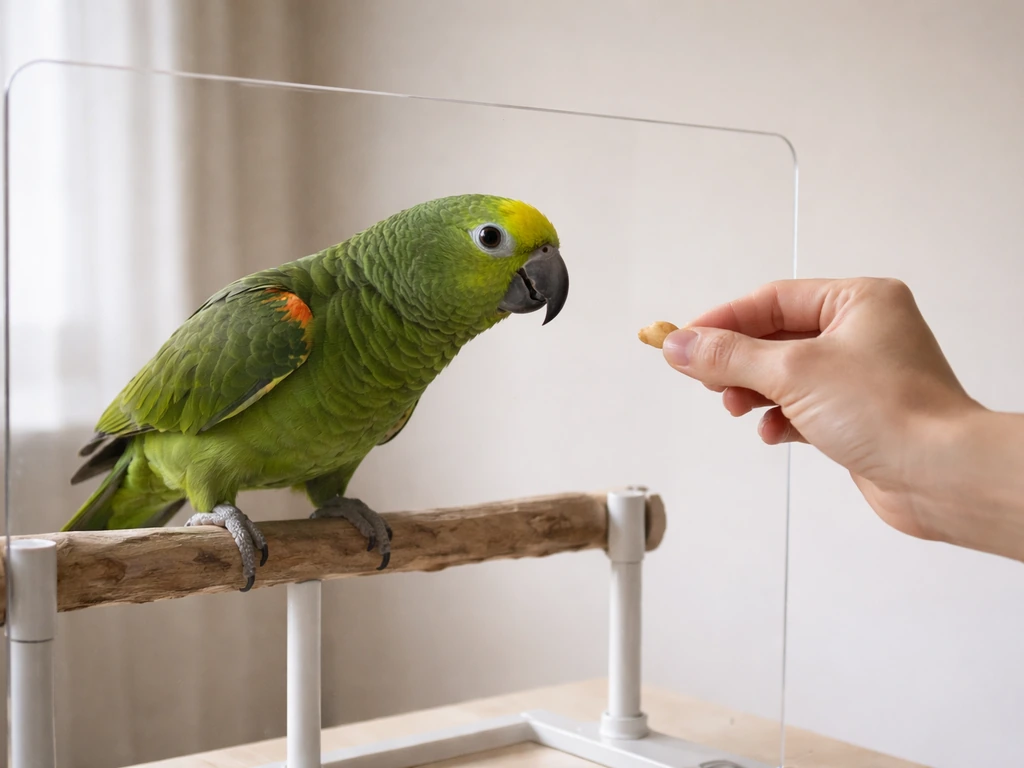
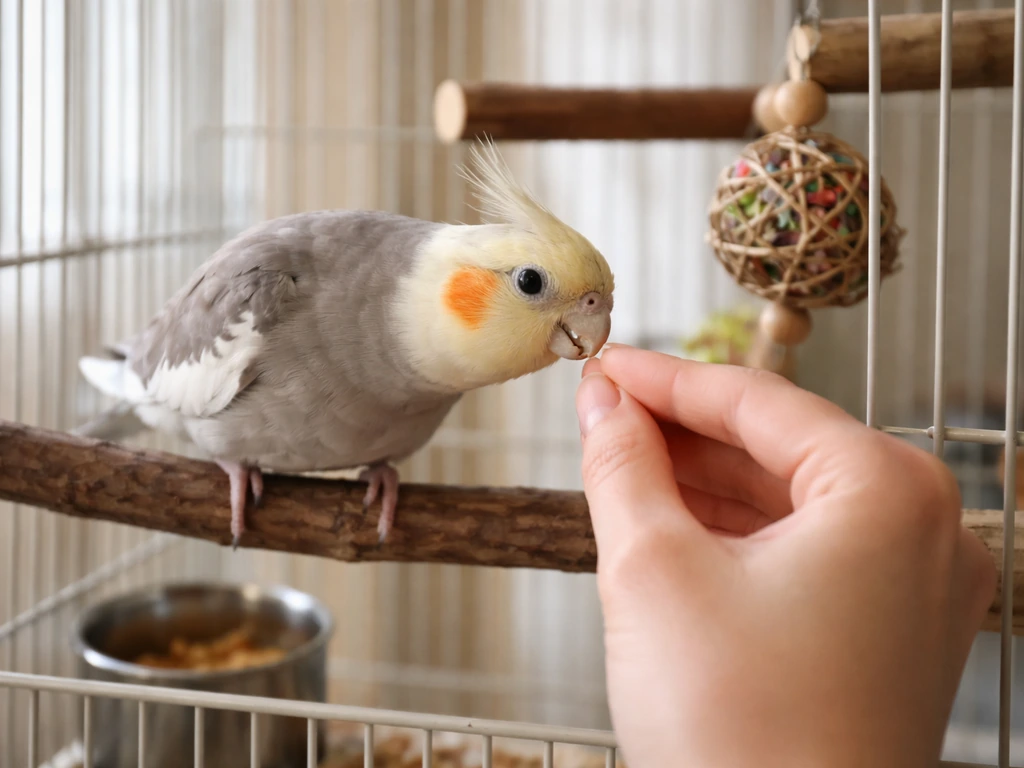
- Offer high-value foods (whatever this specific bird loves most) through the cage bars without expecting anything in return. Just place the food and step back
- Gradually move the food offering closer to your hand so the bird associates your presence with good things
- Once the bird takes food calmly near your hand, open the cage door and offer food inside without reaching in
- Only after the bird is consistently calm at this stage do you start formal step-up or targeting training
This process can take days or weeks depending on the bird's history. A bird with no prior trauma may move through these steps in three or four days. A bird with severe handling trauma may need weeks just to accept your presence near the cage without stress signals. Go at the bird's pace, not yours.
A taming and training plan that actually works for aggressive birds
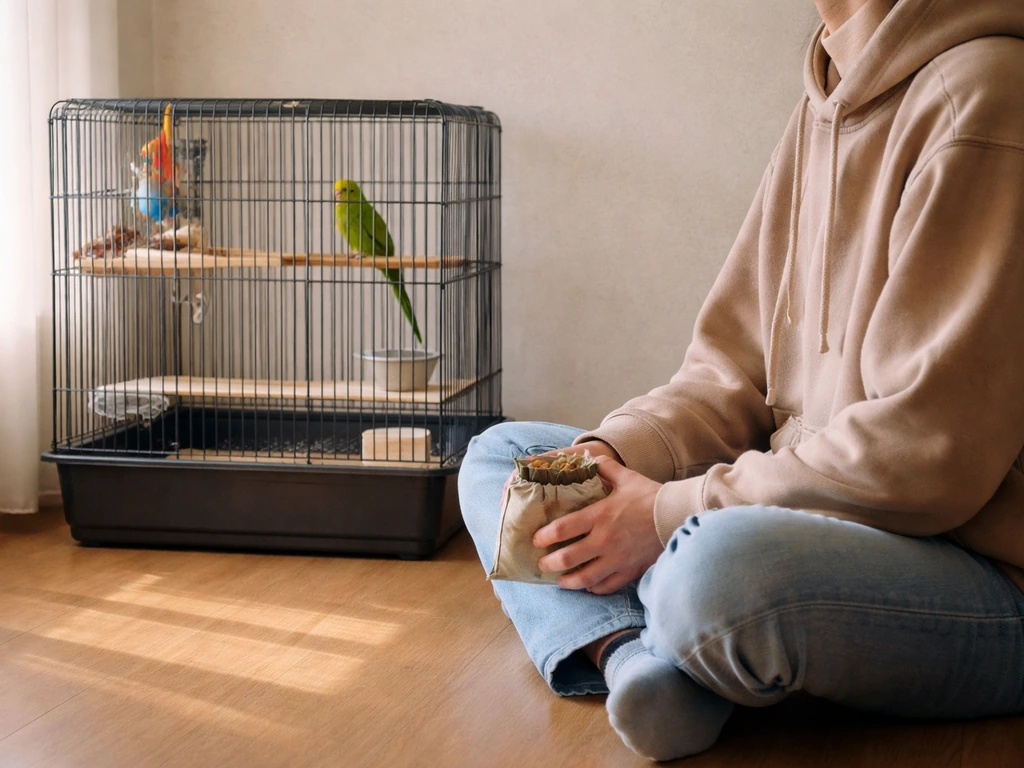
Positive reinforcement is the only approach that reliably reduces fear-based aggression without making things worse. World Parrot Trust advises using positive reinforcement as the most effective parrot training method and recommends avoiding physical punishment such as shouting, hitting, or aggressive water spraying blank" rel="noopener noreferrer">Positive reinforcement is the only approach that reliably reduces fear-based aggression without making things worse.. Once biting has improved, you can use similar positive reinforcement games and enrichment to entertain your bird in a safe, low-stress way. The core idea is simple: you reward the bird for the behavior you want, and you don't reward (or react to) the behavior you don't want. Over time, the bird learns that calm, cooperative behavior gets good things, and biting or lunging doesn't get any particular response worth repeating.
Target training first
Target training is the foundation. Teach the bird to touch the tip of a stick (a chopstick or dowel works fine) with its beak on cue. This is low-pressure for the bird because it's a natural exploratory behavior, and it gives you a way to move the bird, direct its attention, and build confidence without any physical contact at first. If you want the basics of how to play with a bird safely, focus on low-pressure games like targeting and short session play that keep stress low. When the bird touches the target, immediately offer a small, high-value food reward. Keep sessions to two to three minutes. Once the bird understands the game, you can use the target to guide it toward your hand, onto a perch, or away from a spot it's guarding.
Teaching the step-up without forcing it
For an aggressive or fearful bird, the standard "just put your finger in front of its feet" approach often triggers biting. Instead, use the target stick to first guide the bird to approach your hand voluntarily. Hold a treat in your fist near your finger so the bird is motivated to come close. When it steps up even slightly, reward immediately. If the bird is frightened during step-up training, approach it differently than you would a relaxed bird: keep your movement slower, your hand lower, and your sessions even shorter. The goal is choice-based: the bird steps up because it wants to, not because it has to.
Species-specific notes
Parrots (cockatiels, conures, Amazons, macaws, African greys): Food motivation is usually high and target training works very well. Hormonal birds may need seasonal management in addition to training. African greys and cockatoos tend to be more sensitive to handling pressure and need especially gradual desensitization. Budgies and smaller parrots respond well to patient, daily short sessions but can be harder to read because their stress signals are subtler.
Raptors and wild birds: These birds are not pets and should be handled only by licensed rehabilitators. If you've found an injured raptor or other wild bird, the right move is to contain it safely (towel, ventilated box, cover the box) and contact a licensed wildlife rehabilitator or avian vet immediately. Attempting to tame a wild raptor without the proper permits and training is illegal in most regions and harmful to the bird.
Rescue and shelter birds: These birds often have unknown histories and may have significant handling trauma. Start from the beginning of the trust-building sequence regardless of what their intake paperwork says. Assume nothing about what they're comfortable with until you've tested it carefully.
Troubleshooting the most common "mean" behaviors
| Behavior | Likely cause | What to do |
|---|---|---|
| Biting when hand approaches cage | Territorial/cage aggression, fear | Stop reaching in directly. Use target training to invite the bird out. Rethink cage placement if it's in a high-traffic spot |
| Lunging at the cage bars unprompted | Stress, over-arousal, hormones, pain | Reduce environmental stressors first. Rule out pain with a vet exam if sudden onset. Give the bird more predictability and rest |
| Screaming repeatedly | Attention-seeking, boredom, separation anxiety, stress | Do not respond to screaming with attention. Reward quiet. Increase enrichment and out-of-cage time when calm. Rule out medical issues if screaming is new |
| Nipping/biting during petting | Overstimulation, reaching bite threshold | Learn where and how long this bird tolerates touch. Stop before it bites, not after. Reward calm touch tolerance in short increments |
| Chasing or charging | Territorial behavior, hormonal, redirected aggression | Do not retreat dramatically (it rewards the charge). Stand still, stay calm, redirect with target stick. Address hormonal triggers if seasonal |
| Refusing to step up | Fear, past negative experience with step-up, pain | Go back to target training. Never force it. Check for foot or joint pain if refusal is new |
One universal principle across all of these: if you react strongly to a biting or lunging behavior, you may be reinforcing it. A yelp, a quick hand withdrawal, or a big reaction can teach the bird that this behavior works to control the situation. Stay as neutral as possible. End the session calmly, give the bird a moment, and try again with a lower-intensity approach.
When biting happens during feeding
Some birds bite the hand delivering food, especially if they've been grabbed at during feeding in the past or if they're food-protective. Use a long spoon or skewer to deliver treats initially so your hand isn't in bite range while the bird is food-focused. Gradually shorten the distance over multiple sessions as the bird stays calm.
Tracking progress and knowing when to get help
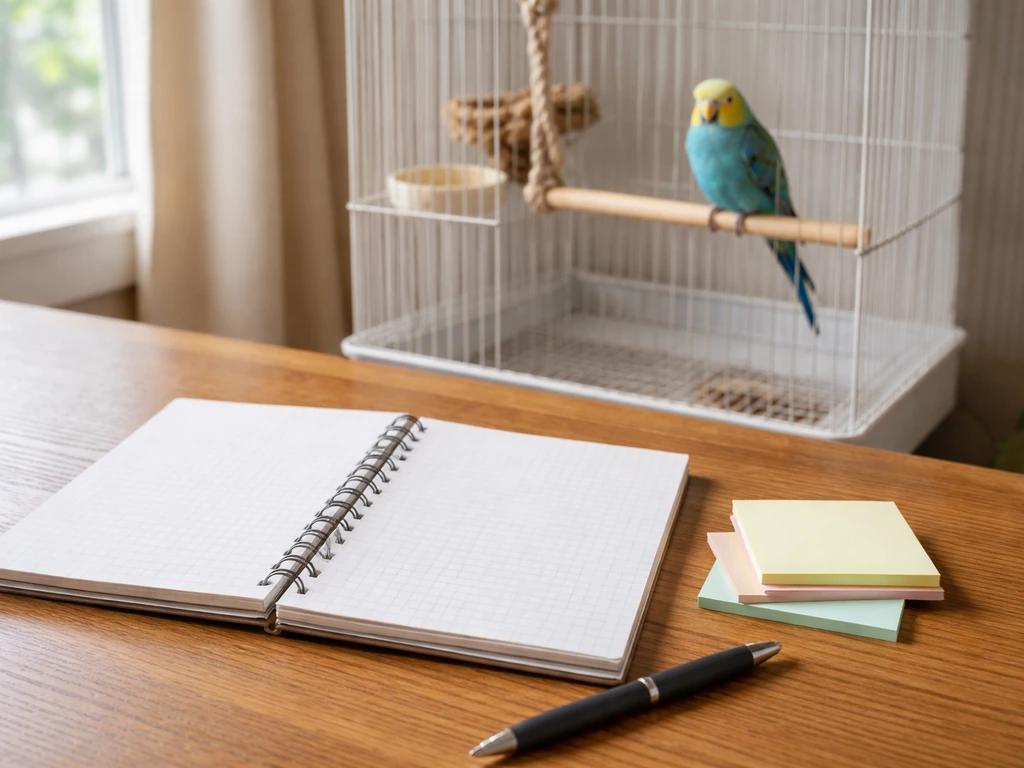
Keep a simple log. For each session, note what you tried, how the bird responded (calm, neutral, over threshold), whether it ate, and any bites or stress signals. You don't need anything fancy, a notes app on your phone works fine. What you're looking for over two to four weeks is a general trend: shorter time before the bird relaxes, more reliable step-up or targeting, fewer bites per session, and willingness to take food closer to your hand.
Realistic timelines by starting point:
- Bird was previously friendly, started biting recently: Rule out medical causes first. If medical causes are cleared, expect two to four weeks to retrain with consistent daily sessions
- Bird has always been fearful or reactive: Four to eight weeks minimum for meaningful progress, with some birds taking longer
- Bird has significant handling trauma or unknown rescue history: Progress may be measured in months. Celebrate small wins
- Wild bird: Do not attempt taming. Contact a licensed rehabilitator
Stop and call an avian vet if you see any of these:
- Sudden, unexplained onset of aggression in a previously calm bird
- Open-mouth breathing, labored breathing, or panting not related to heat
- Visible injury, bleeding, swelling, or lameness
- Significant changes in droppings, appetite, or activity level alongside aggression
- Feather destruction or self-mutilation
- No improvement after four weeks of consistent, welfare-first training
If you've ruled out medical issues but training isn't progressing, look for a certified avian behavior consultant or a trainer who uses positive reinforcement exclusively with birds. A professional with hands-on experience can often identify what's going wrong in a single session and give you a clearer plan. For wild birds at any stage, a licensed wildlife rehabilitator is the right contact, not a pet bird trainer.
What to do and what to stop doing right now
This is the most practical section of the whole guide, because some common "fixes" actively make aggressive birds worse. If you've been doing any of the things in the avoid column, stopping them is your first training step.
| Do this | Avoid this |
|---|---|
| Use positive reinforcement: reward calm, cooperative behavior immediately | Punish biting by shaking, tossing, squirting, or yelling at the bird |
| End sessions before the bird reaches its bite threshold | Push through the bird's stress signals hoping it will "get used to it" |
| Let the bird make choices: step up when it wants to, approach when it's ready | Use dominance tactics or forced restraint to "show the bird who's boss" |
| Protect your hands with a towel or glove in early sessions | Repeatedly let yourself get bitten while trying to tame without a plan |
| Keep a consistent sleep and feeding routine | Keep the bird in a noisy, stimulating area around the clock |
| Use high-value treats to change the bird's emotional association with your presence | Use only the bird's regular diet as a reward, which has low motivational value |
| Consult an avian vet when aggression is sudden or accompanied by physical symptoms | Assume all aggression is behavioral and skip the medical check |
| Use target training to build confidence and cooperation before handling | Skip foundational trust-building and go straight to forced step-up training |
The mindset shift that helps most is this: your bird isn't trying to dominate you or be difficult. It's communicating the only way it knows how. When you respond to that communication by slowing down, reducing pressure, and making yourself consistently safe and rewarding to be around, most birds change faster than their owners expect. Working on keeping your bird happy, entertained, and mentally stimulated alongside this training plan will reinforce everything you're building here, because a bird with good enrichment and positive daily interactions has far less reason to be reactive in the first place.
FAQ
Can I still work on training if my bird bites during nearly every interaction?
Yes, but only when you can keep the interaction low-pressure. Plan brief, predictable “practice” during times when the bird is usually calmer (for example, before peak afternoon hunger or right after sleep). If the bird shows over-threshold signals (loud panic breathing, frantic retreat, hard lunging), stop immediately and return to stabilization, because pushing through often escalates fear.
How do I practice patience without accidentally increasing the biting cycle?
If biting is happening, you can. The key is to use a neutral, non-engaging cue system, like targeting to a stick placed near the bird, not “dancing” your hand around. Avoid talking or sudden reach motions after a bite, because those reactions can become part of the biting cycle. End the session calmly, wait for a clear calm window, then try a lower difficulty version.
My bird needs to be moved to a new cage, can I use this method for that?
It’s a useful skill, but never as a first response. If you must move the bird, use choice-based approaches like guiding with a target and offering a step-up opportunity rather than physically forcing. If the bird has pain or acute illness, handling can worsen it, so a medical check should come before any “move it” training.
If my hand pulls away after a bite, won’t that discourage biting?
Do not. The bird may learn that lunging or biting reliably causes your hand to retreat, change position, or end the activity in a way that makes it worth repeating. Instead, reduce intensity first (more distance, shorter sessions, slower approach), and use rewards for the smallest safe behaviors like calm posture, looking toward you, or accepting targeting.
What if I follow the plan but I’m not seeing improvement after a few weeks?
Stop and reassess if progress stalls after about two to four weeks of consistent, low-pressure sessions, or sooner if you notice sudden behavior changes. In that case, check medical causes again (especially respiratory symptoms, weight loss, new discharge, limping, or sudden escalations) and consider working with an avian behavior professional who uses positive reinforcement only.
Is spring-time aggression always hormonal, or could it be illness?
Molting and hormonal season can increase irritability, but timing alone should not replace medical screening. If biting spikes are sudden, dramatic, or accompanied by other symptoms, treat it as a possible health issue first. If it lines up clearly with season and the bird is otherwise well, you can adjust routine, sleep, and training difficulty while monitoring day-to-day changes.
What’s the best way to handle the fact that my bird bites most when I walk into the room?
Yes, and it can be a hidden trigger if the bird associates your arrival with chaos or demands. Pick one calm “entry routine,” like pausing outside the cage, speaking softly (if that’s your usual cue), then offering a predictable opportunity (target or treat delivery). Keep interactions the same order every time so the bird can anticipate that nothing unpredictable will happen.
My bird grabs the food and bites my hand during feeding, how should I fix that?
Reward placement matters. If the bird rushes and bites during treat-taking, shift to delivery methods that keep your hand out of bite range initially (for example, a long spoon or placing food on a perch target). Then gradually reduce the distance only when the bird stays calm, so the reward remains for cooperation, not for grabbing.
How should I interpret subtle stress signals like stepping away or freezing, before the first bite?
Use them as signals to lower pressure, not as “bad behavior” indicators. Add a difficulty step-down in the same session, shorter sessions, and more distance, then watch for a return to neutral calm. If you repeatedly see the same over-threshold signals despite adjustments, treat it as a mismatch in environment, sleep, training timing, or underlying health issue.
What if the aggression is only when I approach a certain area, like the cage door?
Yes, especially for birds that bite during specific contexts like guarding a doorway, favorite perch, or mate. Start by identifying what’s being protected and prevent the bird from feeling trapped, such as repositioning the cage and changing access routes. Then teach alternative behaviors with targeting to redirect attention away from the trigger area.
What should I do in the moment if my bird lunges and I’m worried about getting hurt?
Use a consistent, non-reactive approach: stop moving, keep your face and hands still, and let the bird disengage. Do not “correct” with force. Then try a much easier interaction later, like targeting from farther away. Over time, the bird learns that biting is not required to end the interaction.
Can extra play or exercise make a mean bird nicer, or will it overstimulate them?
Yes, for many birds. You can improve responsiveness and reduce reactive energy, but it must be choice-based and short. Use targeting and tiny voluntary steps toward the hand or a perch, stop at the first sign of escalation, and keep the sessions brief (two to three minutes) so exercise does not become overstimulation.
What should I track in my session log to actually find patterns?
A log is most useful if you include the “context,” like time of day, sleep quality (lights or noise), who was home, feeding timing, and what you attempted right before the bite. Patterns often show up as “same trigger, same outcome,” which helps you adjust the environment or training difficulty faster than relying on general impressions.
Is there a point where biting is too serious to keep trying basic training at home?
If a bird bites hard enough to break skin, you should treat it as a safety emergency and seek professional guidance. For injuries, wash thoroughly and monitor for infection, and for the bird, pause training and get a medical and behavioral plan. Serious bites may also indicate pain or extreme fear that needs targeted adjustments beyond basic steps.
Next Articles
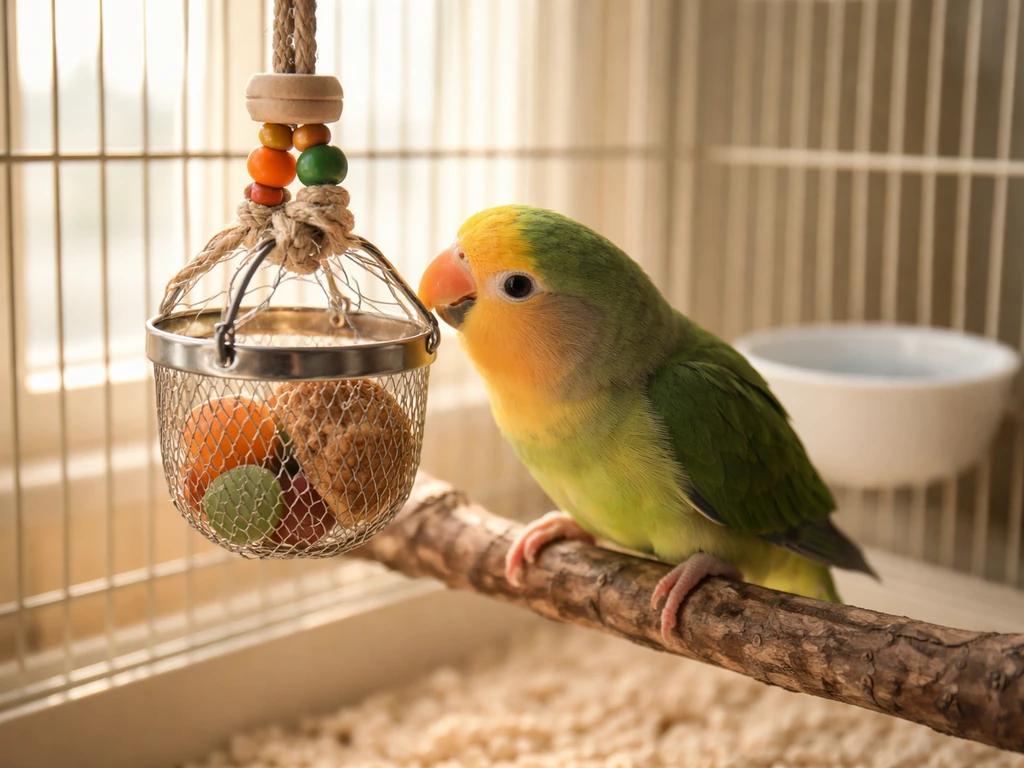
How to Entertain a Bird: Safe Enrichment and Routines
Step-by-step ideas and routines to entertain your bird with safe enrichment, bonding, training, and boredom troubleshoot
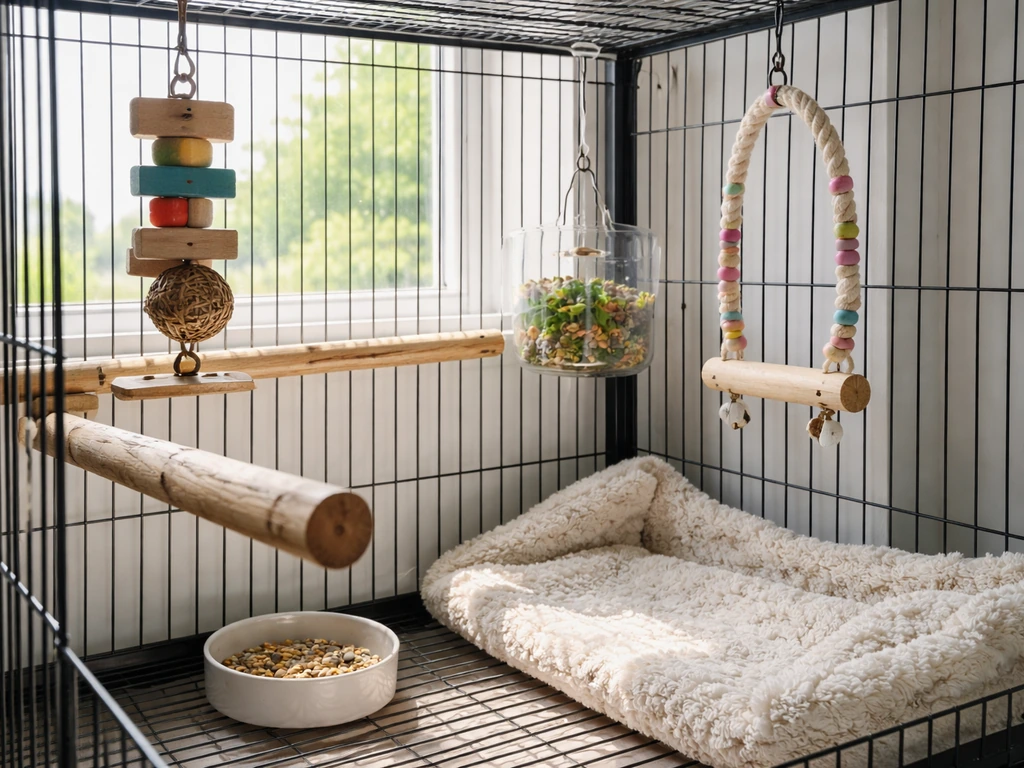
How to Keep Your Bird Entertained While at Work
Welfare-first ideas for keeping your bird entertained while at work with foraging, toy rotation, safe setups, and troubl
How to Play With a Bird in a Cage: Safe Daily Games
Safe daily games for caged birds: set up enrichment, read body language, build trust, and train with targets and foragin