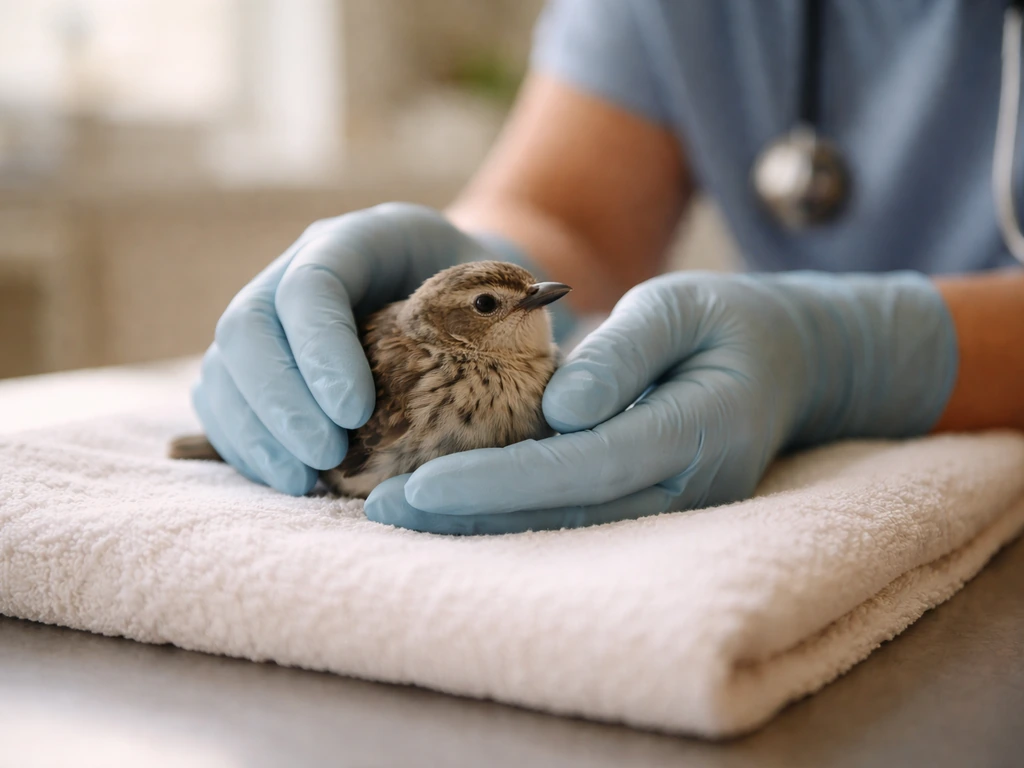
Whether you've found an egg on the ground, spotted a nest you're curious about, or need to obtain eggs for a legitimate rehab or breeding purpose, the answer depends heavily on two things: what kind of bird it is, and what you're actually trying to do. For most wild birds in the US, UK, Australia, and the EU, touching, moving, or possessing eggs without a permit is illegal.
How to Get Bird Eggs Humanely and Legally: Full Guide

Maya Harris
7 May 2026
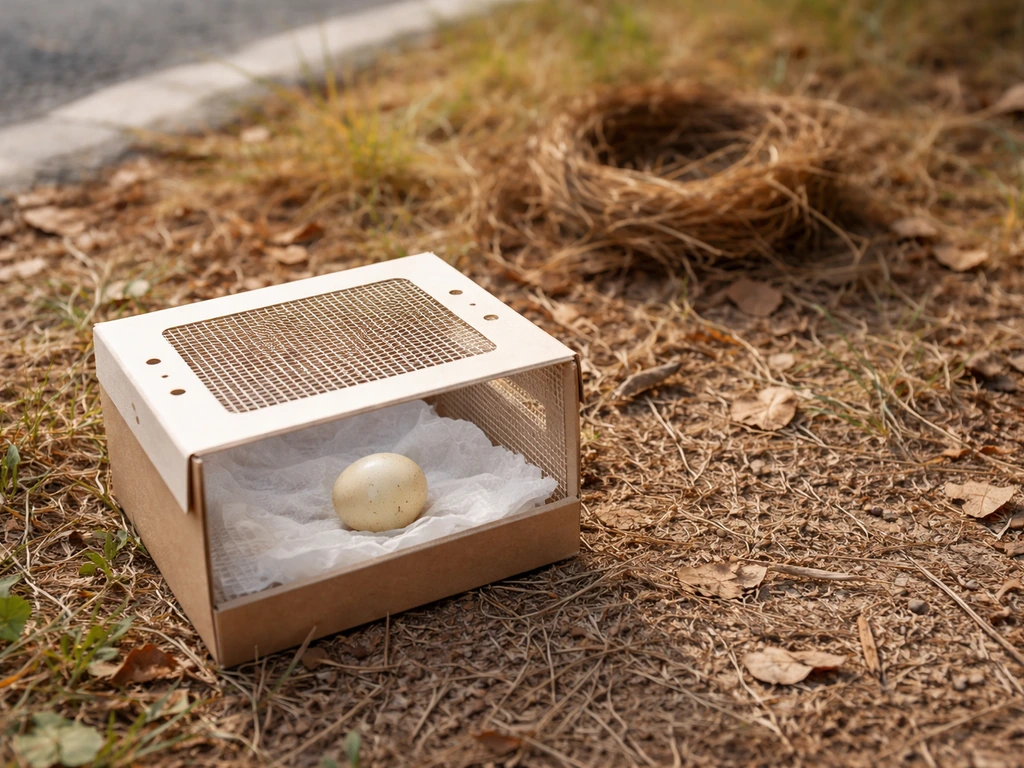
If you're dealing with a dropped or abandoned egg right now, keep it warm, don't wash it, and call a licensed wildlife rehabilitator before doing anything else. If you need eggs for a captive or pet bird breeding situation, you go through the owner or a permitted breeder. This guide walks you through the full decision tree so you know exactly what applies to your situation.
First, know what the law actually says
This part matters more than most people expect. In the United States, the Migratory Bird Treaty Act (MBTA) makes it unlawful to take, possess, transport, or collect migratory birds or any part, nest, or egg of such birds without a valid federal permit. That covers the vast majority of wild bird species you're likely to encounter. The statute (16 U.S.C. § 703) is explicit: even picking up a feather from a protected species can technically be a violation. Rehabilitation of wild migratory birds requires a federal rehabilitation permit under 50 CFR § 21.76, which means even moving an injured bird or its egg with good intentions needs authorization.
In the UK, the Wildlife and Countryside Act 1981 makes it illegal to take or destroy the egg of any wild bird, full stop. The RSPB is clear that disturbing birds at active nests during nesting season (roughly March to September) is also prohibited. Australia's EPBC Act applies similar protections to listed migratory and protected species. Across the EU, the Birds Directive requires member states to enforce dissuasive criminal penalties for illegal capture or trade. The pattern is consistent worldwide: wild bird eggs are protected, and the bar for legal handling is high.
The only situations where egg handling is clearly legal without a permit are: eggs from your own legally kept captive birds (pet birds, licensed poultry, or licensed exotic species), eggs you're handling under the direct instruction of a licensed wildlife rehabilitator or permitted wildlife officer, or species that are explicitly exempt in your jurisdiction (some non-native invasive species may have different rules locally). If you're unsure which category your situation falls into, call your local wildlife authority before touching anything.
Figure out what you're actually dealing with
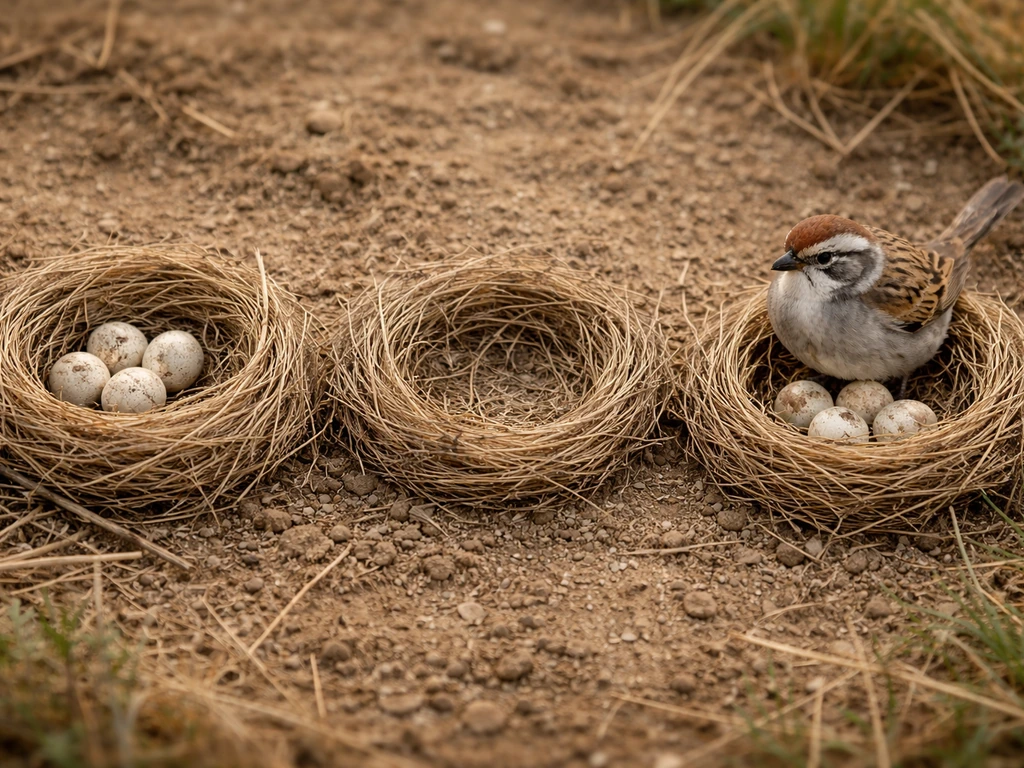
Before you take any action, spend two minutes identifying the situation. This shapes every decision that follows. There are three main scenarios, and they each have a different path.
| Scenario | What it means | Your first move |
|---|---|---|
| Active nest with eggs inside | Parent birds are present and incubating; nest is intact | Step back and observe from a distance; do not touch |
| Egg found on the ground (dropped/fallen) | Egg may be viable or not; parent may still be nearby | Keep warm, don't move yet, call a rehabilitator |
| Captive or pet bird egg | Laid by your own bird or a bird you care for legally | Assess viability, decide on incubation or fostering |
If you've spotted a nest in a tree, bush, or on a building ledge, look but don't touch. The presence of eggs or chicks means the nest has full legal protection. Nest destruction is prohibited under the MBTA when eggs or chicks are present, or when young birds still depend on it. If you found an egg lying on the ground, it's most likely a dropped or ejected egg. It could be viable, or it could have been rejected by the parent. Either way, your next step is the same: contain it carefully and get expert input before doing anything else.
How to observe a nest without disturbing it
If you need to assess an active nest (because you're a rehabilitator, a permitted researcher, or you have a legitimate reason to monitor it), the principles are straightforward. Stay at least 10 to 20 feet back initially and use binoculars. Watch for 10 to 15 minutes before drawing any conclusions about whether a nest is active or abandoned. Parents often leave the nest to forage and will return. Your presence near the nest can delay their return or attract predators to the location.
- Approach slowly and quietly; sudden movements flush parent birds
- Avoid visiting nests repeatedly or for extended periods
- Never cut or move vegetation around a nest to get a better view
- If you're checking on a nest box you own, do brief checks (under 30 seconds) and only when parents aren't actively incubating
- Keep pets and children at a safe distance
- Early morning or late afternoon tends to be when parents are briefly away foraging
For most people, the observation step is where things should stop. Unless you have a specific permitted reason to handle eggs, watching and documenting is both safer for the birds and legally safer for you.
Humane ways to access eggs legitimately

If you genuinely need bird eggs for a legitimate purpose (rehabilitation, education with permits, or captive breeding), there are proper channels to go through. If you are looking for java bird breeding tips, focus on legal sourcing, nest setup, and careful incubation routines. None of them involve raiding a wild nest.
For wild bird eggs: contact a licensed rehabilitator
If you want to care for or incubate wild bird eggs, you need to work under a licensed wildlife rehabilitator. In the US, that means someone holding blank" rel="noopener noreferrer">a federal rehabilitation permit under 50 CFR § 21.76. You can find local permitted rehabilitators through the blank" rel="noopener noreferrer">National Wildlife Rehabilitators Association (NWRA) or the International Wildlife Rehabilitation Council (IWRC). Many accept volunteers and can train you to assist with egg care under their permit. This is the pathway if you're serious about this work.
For captive or pet bird eggs: go through the owner or a breeder
If you want eggs from a captive species (parrots, finches, canaries, quail, doves, or similar), the right path is to work with a licensed or reputable breeder, or to breed your own birds if you own them legally. Egg replacement and fostering are also useful tools in captive settings: if a hen lays infertile eggs or is sitting on too many, a dummy egg (available from most bird supply stores) can be substituted to manage clutch size and reduce laying stress. Fostering viable eggs to another brooding hen is an established technique in captive bird breeding.
Egg replacement and dummy eggs
Dummy or fake eggs are a practical, humane tool for pet bird owners. If your bird is a chronic egg layer (common in cockatiels, lovebirds, and some conures), replacing real eggs with same-sized dummy eggs after the clutch is complete can discourage re-laying without causing the hormonal disruption of egg removal. The hen continues to sit, the instinct is satisfied, and she's less likely to lay another clutch immediately. This directly reduces health risks like egg binding and calcium depletion.
What to do if you found a dropped or broken egg right now
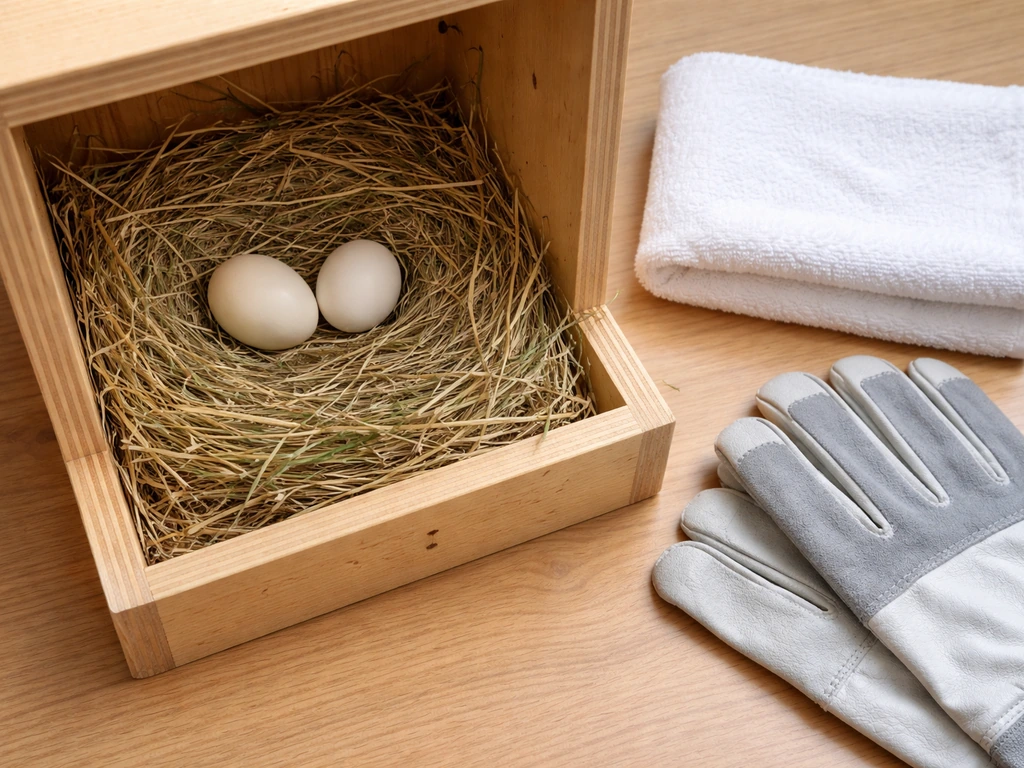
This is a time-sensitive situation, so here's the immediate triage in order.
- Don't move the egg yet. Check whether the nest is nearby and reachable. If the egg fell from a nest you can safely reach (without a ladder and without disturbing other eggs or parents), you can gently place it back. The myth that touching an egg causes parents to abandon it is largely false for most bird species.
- If the nest is unreachable, keep the egg warm. Place it in a small container lined with a soft cloth or paper towel. Your body heat from cupped hands can work briefly. Aim for around 99 to 100°F (37 to 38°C) if you have a thermometer. Do not use a heat lamp unless instructed by a rehabilitator.
- Do not wash the egg. The natural coating (bloom) on a bird egg protects the embryo from bacteria and regulates gas exchange. Washing it off significantly reduces viability.
- Do not try to incubate a wild bird egg yourself without guidance. Incubation requirements vary dramatically by species in terms of temperature, humidity, and turning frequency.
- Call a licensed wildlife rehabilitator immediately. Have the following ready: where you found the egg, what species you think it is (color, size, markings), and whether the egg is intact or cracked.
- If the egg is cracked or broken but you can see movement or the yolk is intact, still call. A rehabilitator may be able to stabilize it.
For a broken egg with no signs of life, the most humane and practical outcome is usually to let it go. Attempting to incubate a severely compromised egg without proper equipment and training rarely results in a viable hatchling, and it can cause suffering to a partially developed embryo. In an AnimalRescue thread about a fallen egg with a large crack, commenters emphasized that cracked eggs are often not viable and that unlicensed people should not try to incubate or hatch them themselves Attempting to incubate a severely compromised egg without proper equipment and training rarely results in a viable hatchling, and it can cause suffering.
Species-by-species considerations
Different species have very different egg-handling needs, legal statuses, and incubation pathways. Here's a practical breakdown of the most common situations.
Songbirds (robins, sparrows, finches, wrens)
Almost all North American and European songbirds are protected under federal or national law. Their eggs are tiny, have short incubation periods (roughly 10 to 14 days for many species), and require precise humidity control. If you find one on the ground, the rehabilitator pathway is essential. Do not attempt solo incubation. Many songbirds imprint rapidly, making improper hand-rearing a serious long-term welfare problem.
Parrots, cockatiels, and parakeets (captive species)
These are the most common scenario for pet bird owners. If your bird has laid eggs, assess whether a male is present and mating has occurred before assuming viability. Incubation temperature for most psittacines sits around 98 to 99.5°F (37 to 38°C) with 50 to 60% relative humidity. Eggs need to be turned several times daily if you're artificially incubating. Many owners choose to let the hen incubate naturally if she's willing. Lovebird and conure breeding specifically has its own set of nest-box and egg management nuances.
Quail (captive and farmed)
Coturnix quail are among the easiest birds to breed for eggs, and they're a common entry point for small-scale bird farmers. Incubation takes about 17 to 18 days at around 99.5°F (37.5°C) with 45 to 50% humidity for the first 14 days, increasing to 65% for the final lockdown period. Quail don't go broody reliably, so artificial incubation is standard practice.
Ducks, geese, and waterfowl
Wild waterfowl are protected under the MBTA in the US. Domestic ducks and geese are not. If you own domestic ducks or geese and want to incubate their eggs, the process is straightforward with a reliable incubator. If you've found a wild duck nest in an inconvenient location (common in suburban areas), contact your local wildlife authority or rehabilitator before doing anything, especially during the nesting season.
Emu and ratites
Emu farming involves its own specific egg handling and incubation setup. Emu eggs incubate for around 50 to 55 days and require relatively low humidity (around 25 to 35%) compared to most other birds. Emu egg collection for farming purposes falls under agricultural regulations rather than wildlife law when the birds are legally farmed.
What not to do: common mistakes that harm birds
These are the errors I see most often, and they range from ineffective to genuinely dangerous for the bird.
- Do not collect wild bird eggs without a permit, even if you think the nest is abandoned. A nest that appears inactive for a few hours is usually not abandoned.
- Do not wash or wet a found egg. This destroys the protective bloom and introduces bacteria directly through the porous shell.
- Do not put a found egg under a heat lamp without guidance. Overheating kills embryos quickly, and the temperature drop from removing the lamp creates its own risks.
- Do not keep a wild bird egg at home 'to see if it hatches' without contacting a rehabilitator. This is illegal for protected species and rarely results in a healthy bird.
- Do not attempt to incubate without monitoring humidity. Low humidity causes the air cell to expand too fast; high humidity can drown a developing chick before it hatches.
- Do not disturb an active nest repeatedly. Even well-intentioned check-ins stress parent birds and can lead to nest abandonment.
- Do not assume an egg on the ground is abandoned just because you don't see the parent. Many ground-nesting birds (killdeer, for example) rely on camouflage and will flush when you approach.
- Do not confuse egg replacement with egg removal. Removing eggs entirely often triggers a hen to lay again immediately, compounding health risks.
Who to call and where to go next
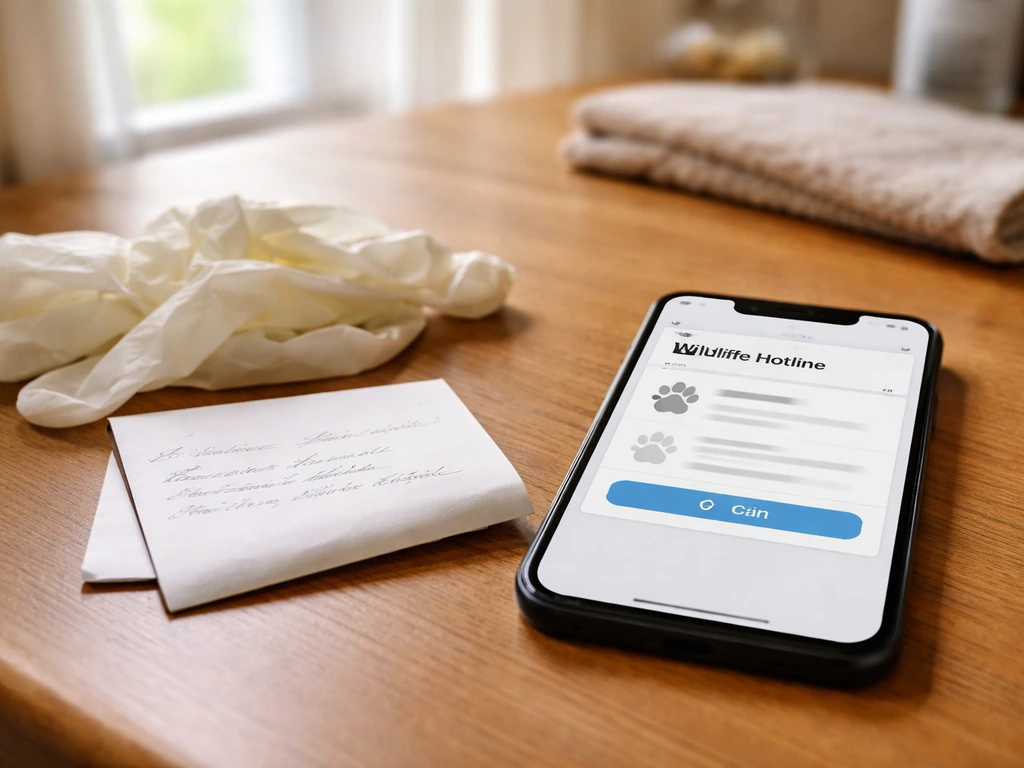
If you've read this far and you're dealing with a wild bird egg right now, your immediate contacts are your local licensed wildlife rehabilitator, your state or national wildlife agency (US Fish & Wildlife Service, Natural England, or the equivalent in your country), or a local bird rescue organization. For pet bird egg situations, an avian vet is your best resource for anything involving egg binding, failed hatching, or health concerns for the laying hen. If you are trying to pinion a bird, make sure you follow your veterinarian’s guidance and any local legal requirements for handling or restraining birds avian vet.
If your interest goes beyond this single egg situation and you want to get into captive bird breeding properly, the pathway starts with understanding the basics of breeding for your specific species, whether that's lovebirds, conures, Java finches, quail, or something else. If you’re looking for guidance on how to breed bird eggs successfully in a legal, captive setting, start by learning the basics for your specific species captive bird breeding.
Each species has its own nesting requirements, clutch management strategies, and egg incubation needs. Getting those fundamentals right is what separates successful breeders from frustrated ones. If your bigger goal is how to increase bird population, focus on legal habitat improvements and responsible nesting support rather than handling eggs. Once you are working legally with captive birds, these love bird breeding tips can help you plan clutch management and incubation more confidently.
FAQ
If I found a wild egg, how can I tell whether it’s still viable without handling it?
You usually cannot reliably tell viability from appearance alone. The safest approach is visual-only observation from a distance, note the location and whether there are adult birds returning, and then contact a licensed rehabilitator. If the egg is cool, wet, cracked, or inside a nest that looks abandoned, don’t try to test it at home, those attempts can further harm an embryo.
Is it legal to take a wild egg just to prevent it from getting destroyed by construction or mowing?
In most places, relocating or “saving” a wild bird egg still counts as taking or disturbing and can trigger wildlife protection laws. If there’s immediate danger, call your local wildlife authority or rehabilitator first, describe the situation, and ask whether they will issue guidance or move/secure it under authorization.
Can I move an egg a few inches so it’s out of the rain or away from pets?
Even small movement of a wild bird egg can be considered possession or disturbance, and timing matters. For a dropped egg, the guide recommends keeping it warm and contacting a licensed rehabilitator before doing more, rather than relocating it yourself. Use containment to prevent further damage until help arrives.
What should I do if an egg is in my yard and I can’t wait for someone to arrive immediately?
Prioritize containment and warmth: reduce handling, keep it stable, and keep people and pets away. Do not wash it, and avoid trying to incubate. If there are signs of life or active parental care, the quickest path is to call a rehabilitator or wildlife agency and ask what they want you to do in the next hour.
Why is washing a found egg a bad idea?
Egg washing can damage the protective coating on the shell, increasing the risk of bacterial or fungal growth and dehydration during the most critical period. The article advises not washing; follow that, and instead focus on gentle containment and getting expert input.
If my pet bird laid eggs, do I need a breeder or permit to incubate them?
Not usually, if the birds are legally kept and the eggs come from your own captive birds, but incubation practices still need to match the species and welfare needs. If you obtained birds from an unverified source or you’re not sure about species restrictions, confirm with your avian vet or local wildlife authority before selling, exchanging, or exporting anything.
Do I need to know if my pet bird’s eggs are fertile before trying to incubate?
Yes. Fertility depends on mating and timing, and incubating infertile eggs wastes resources and can increase stress for hens. The article suggests assessing whether mating occurred, and if you’re unsure, your avian vet can guide safer options like allowing natural sitting or using dummy eggs after the clutch is complete.
How do dummy eggs affect egg laying and bird health?
Dummy eggs can reduce re-laying when a hen is a chronic egg layer, because the hen continues incubation behavior without developing an embryo. However, they are not a substitute for addressing underlying causes of frequent laying, and you should monitor for conditions like egg binding or calcium depletion, with an avian vet if symptoms appear.
What’s the biggest mistake people make when trying to incubate wild songbird eggs?
The most common error is attempting solo incubation. Songbird eggs are small, incubation schedules are short, and humidity and turning requirements are very specific, plus imprinting risk is high. The practical guidance here is to route wild songbirds to a rehabilitator rather than trying to hatch them yourself.
Can I incubate a wild egg I found if I keep the temperature perfect?
Even with the right temperature, wild eggs also require correct humidity and turning, and some eggs are already rejected, broken, or developmentally compromised. The article emphasizes that embryos can die silently and that improper care can cause suffering, so the safer decision is expert assessment and permitted handling.
If I suspect the nest is active but I’m not sure, should I wait or act right away?
Wait and observe first, because parents often leave to forage and return after a disturbance. The article recommends backing away, using binoculars, and watching for a period before concluding whether it’s active or abandoned. If you’re not permitted, the observation step is typically where your actions should stop.
What should I do about an egg that is cracked or partially broken?
If there are no signs of life or the shell is severely damaged, the article notes the most humane option is usually to let it go rather than attempt incubation without training and equipment. For an egg in a nest, contact a rehabilitator quickly, because they can advise whether it can be stabilized or whether the best welfare choice is different.
For quail and other captive birds, can I just follow generic incubation settings?
No, incubation parameters vary by species and even by clutch conditions. The article provides quail-specific targets as an example, so you should use a species-appropriate incubator protocol, including humidity changes during lockdown. If you use generic settings, hatch rates and chick viability can drop significantly.
If I found a wild waterfowl egg, are domestic goose or duck rules the same?
They are not. Domestic eggs are handled under husbandry contexts, while wild waterfowl eggs are typically protected and require contacting a wildlife authority or rehabilitator. The article specifically notes the need for help when the nest is wild, especially during nesting season.
Who exactly should I call first when dealing with a wild egg, a rehabilitator or a government agency?
Either can be appropriate, but the fastest route is usually the nearest licensed wildlife rehabilitator, because they know the immediate triage steps and permit boundaries. The article also lists wildlife agencies and rescues as key contacts, so if you cannot reach a rehabilitator quickly, call the relevant wildlife authority for your area and follow their instructions.
Next Article
How to Pinion a Bird Safely and Legally: Welfare-First Guide
Welfare-first guide to pinioning a bird: legal limits, safe handling steps, aftercare, and humane alternatives.