Acting like a bird around your pet or rehabilitated bird means mirroring calm, non-threatening body language, moving at a bird's pace, and reading their signals accurately so they feel safe rather than pressured. It is not about flapping your arms or making bird sounds for laughs. Done right, imitating bird-appropriate behavior is one of the fastest ways to build trust, reduce fear biting, and create a genuinely comfortable relationship with any bird in your care.
How to Act Like a Bird: Safe Bonding and Training Tips
Maya Harris
19 May 2026
Why 'acting like a bird' actually matters
There is a real difference between imitating bird behavior and performing a bird costume act. True imitation means adopting the posture, pace, and communication style that birds use with each other. When you do that, you stop being a giant, unpredictable predator in the bird's eyes and start becoming something closer to a flock member. That shift changes everything about how a bird responds to you.
Birds are wired to read body language constantly. Every movement you make sends a signal, whether you intend it or not. Looming over a bird, reaching quickly, making direct prolonged eye contact, or speaking in a sharp high voice all trigger the same alarm responses a hawk circling overhead would trigger. When you consciously match your behavior to what a bird reads as safe, you are not pretending to be a bird for fun. You are communicating in a language they actually understand.
This also matters for anyone interested in understanding bird behavior more deeply, whether for bonding with a pet parrot, working with a rehabilitated raptor, or simply observing wild birds without disturbing them. The skills overlap with topics like learning to sing like a bird or understanding what makes a bird feel territorially secure, but the core goal here is practical: use bird-like behavior to reduce stress and build trust.
How to read bird body language before you mirror it
Before you can act like a bird, you need to know what birds are actually saying with their bodies. If you want to go further, you can also practice steps for how to turn into a bird in a safe, consent-based way act like a bird. If you are specifically wondering how to become a bird, keep practicing these bird-friendly interaction basics and move at your bird’s pace. Spend at least a few sessions just watching your bird from a comfortable distance without trying to interact. You will start to notice a clear vocabulary of postures and movements.
Relaxed and comfortable signals
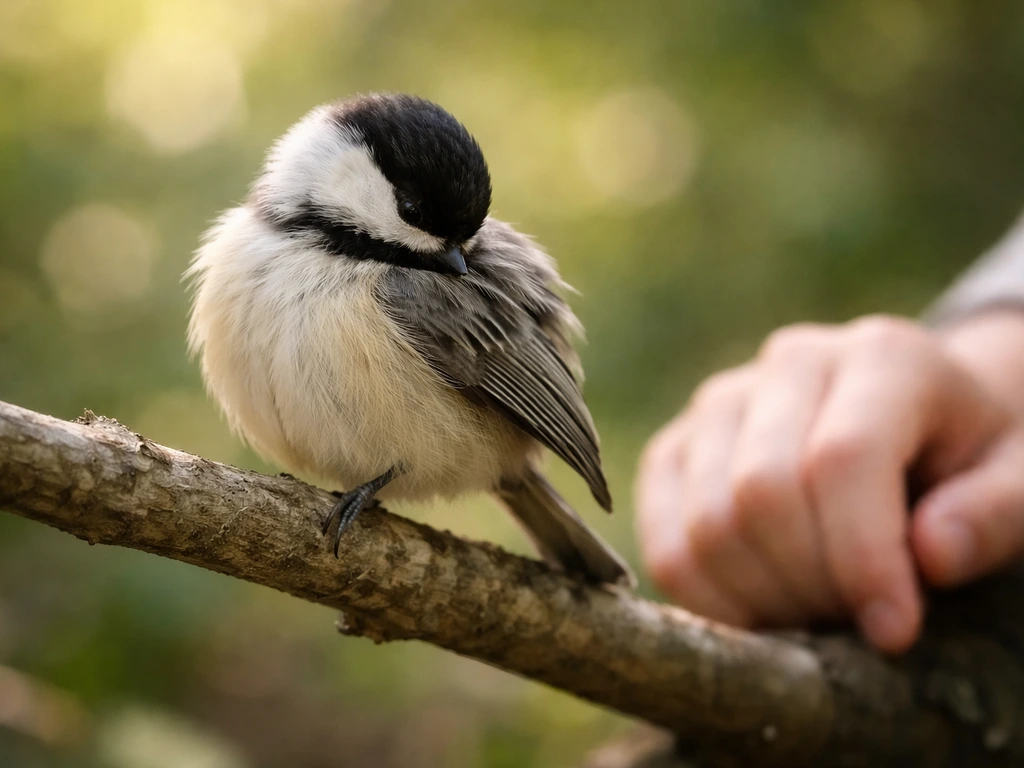
- Feathers slightly puffed in a relaxed way (not tight against the body, not dramatically fluffed)
- One foot tucked up while perching
- Slow, deliberate preening
- Soft chattering or quiet vocalizations
- Head bobbing in a rhythmic, calm way
- Slow blinking or half-closed eyes in your presence
Fear, stress, and warning signals
According to avian body language research, a bird in fear or stress will typically blank" rel="noopener noreferrer">crouch low and flatten the body horizontally against a perch, pressing feathers tightly to the body rather than holding them normally. blank" rel="noopener noreferrer">Tail fanning or flaring, raised neck feathers, open beak posturing, and leaning forward with a crouched stance are all precursors to defensive or aggressive behavior. Eye pinning (rapid pupil dilation and contraction) combined with any of these postures is a clear warning to back off. A completely frozen, wide-eyed bird is also in high stress, even if it looks calm on the surface.
The most useful thing you can do with this information is stop your movement the moment you see any of these signals. Do not advance. Do not reach. Just pause, look slightly away, and give the bird a moment to settle. That one habit, stopping and waiting, is the single most bird-like response you can learn.
Bird-friendly interaction: tone, pacing, and consent
Birds do not give consent the way humans do, but they communicate it constantly through body language. A bird that is leaning toward you, relaxed, and vocalizing softly is saying yes to interaction. A bird that is leaning away, flattening its feathers, or going silent and stiff is saying no. Respecting those signals consistently is the foundation of acting like a safe flock member.
Here are the interaction basics that work across almost every species:
- Approach slowly and from the side, never straight-on and never from above
- Keep your voice low, calm, and consistent. Vary your pitch gently rather than going sharp or loud
- Make yourself smaller: crouch, sit, or lower your eye level to the bird's height when possible
- Avoid prolonged direct eye contact. Birds read that as a predatory stare. Blink slowly and look slightly to the side
- Move in slow, fluid arcs rather than straight lines toward the bird
- Always narrate or signal before you move: a soft word or small hand gesture gives the bird a moment to prepare
- End interactions before the bird wants you to. Leave while they are still relaxed and curious
Pacing matters enormously. A five-second approach that the bird tolerates is worth ten times more than a thirty-second session that ends in a bite or a panicked flight. Short, positive, predictable interactions build trust faster than long ones that push boundaries.
Hands-on bonding and training for pet birds
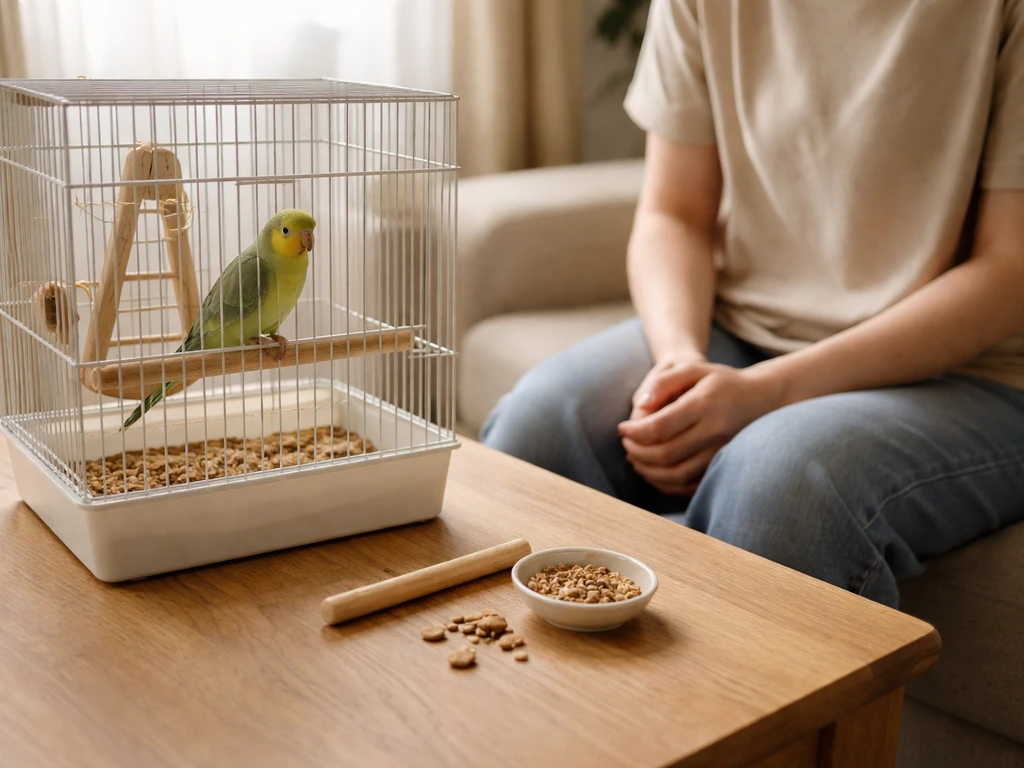
Once you understand what the bird is telling you, you can start shaping comfortable behavior through positive reinforcement. This is the practical backbone of acting bird-like: you are not forcing anything. If you want the end goal, focus on how to be a fit bird by practicing calm, slow, trust-building interactions that match your bird’s comfort level acting bird-like. You are creating conditions where the bird chooses to engage with you.
- Start with stationary presence. Sit near the cage or perch without interacting. Read a book, talk quietly to yourself, or simply exist near the bird for 10 to 15 minutes daily. Let the bird get used to your presence as a non-threatening constant.
- Introduce your hand slowly. Place your closed hand near (not inside) the cage or a few inches from the perch. Keep it still. Do not reach. Do not wiggle fingers. Just let the hand be there. Repeat until the bird moves toward it or at least stops moving away.
- Offer a high-value treat from your hand. Find what your bird goes wild for (a specific seed, a small piece of fruit, a bit of nut) and offer it on your open palm or fingertip from the farthest comfortable distance. Move closer in tiny increments over multiple sessions, only when the bird is relaxed.
- Practice the 'step up' cue. Once the bird is comfortable taking treats, present your finger or wrist at lower-chest height with gentle upward pressure and say a calm, consistent word like 'up.' The moment the bird steps on voluntarily, reward immediately with praise and a treat. Never force this step.
- Reinforce calm behavior near you. When the bird is sitting quietly near you, preening, or exploring, quietly mark that with a soft sound or word and offer a small reward. You are teaching the bird that being relaxed around you pays off.
- Build duration gradually. Once step-up is reliable, extend the time the bird spends on your hand or shoulder before returning to its perch. Always let the bird return voluntarily when it wants to.
If the bird bites during training, do not pull away sharply or yell. A sudden reaction reinforces biting as an effective behavior. Instead, use a calm 'ouch' or simply pause and set the bird down gently, then end the session. Biting is often a stress or fear response rather than pure aggression, and working with an avian-savvy vet or certified bird trainer can help you identify the underlying cause if biting is persistent.
Species-specific differences you need to know
Bird-like behavior does not look the same across all species. What works brilliantly with a cockatiel can completely backfire with a finch or a red-tailed hawk. Here is a practical breakdown by broad species group:
| Species Group | Social Style | Preferred Distance | Key Body Language to Mirror | What to Avoid |
|---|---|---|---|---|
| Parrots (cockatiels, conures, African greys, amazons) | Highly social, flock-oriented, responsive to voice and touch | Can be very close once trust is built | Slow blinking, gentle head tilts, reciprocal vocalizations, mirroring head position | Sudden movements, loud voices, forcing contact, ignoring warning displays |
| Finches and canaries | Often less hand-tame, prefer bird company over human interaction | Mid-room to cage distance is typical comfort zone | Calm stillness, quiet voice, no attempts to handle unless medically necessary | Attempting frequent handling, loud music, chaotic environments |
| Raptors (hawks, owls, falcons) | Solitary predators, highly sensitive to movement and eye contact | Significant distance required especially initially | Indirect gaze, slow lateral movement, no sudden gestures, keeping below the bird's eye level | Direct eye contact, fast approaches, looming posture, unfamiliar people rotating in |
| Doves and pigeons | Calm, flock-oriented, fairly quick to habituate to humans | Moderate; comfortable at arm's length with time | Gentle cooing tones, slow movement, consistent routine | Chasing, cornering, or reaching over the bird from above |
| Corvids (crows, jays) in rehabilitation | Highly intelligent, suspicious of novelty | Variable; some habituate quickly, others do not | Consistent schedule, neutral posture, avoid direct eye contact initially | Inconsistent caregivers, sudden changes in routine, eye contact games |
The rule across all species is the same: match your behavior to what that species finds reassuring, not to what you find natural. To work toward becoming the biggest bird in the room in a safe, bird-readable way, match your pacing and posture to what your species finds reassuring. Parrots benefit from vocal engagement. Finches benefit from quiet, undisturbed presence. Raptors benefit from slow, predictable movement and a caregiver who does not stare. Learn what your species considers safe first, then adjust everything else.
Common mistakes and how to fix them
Moving too fast
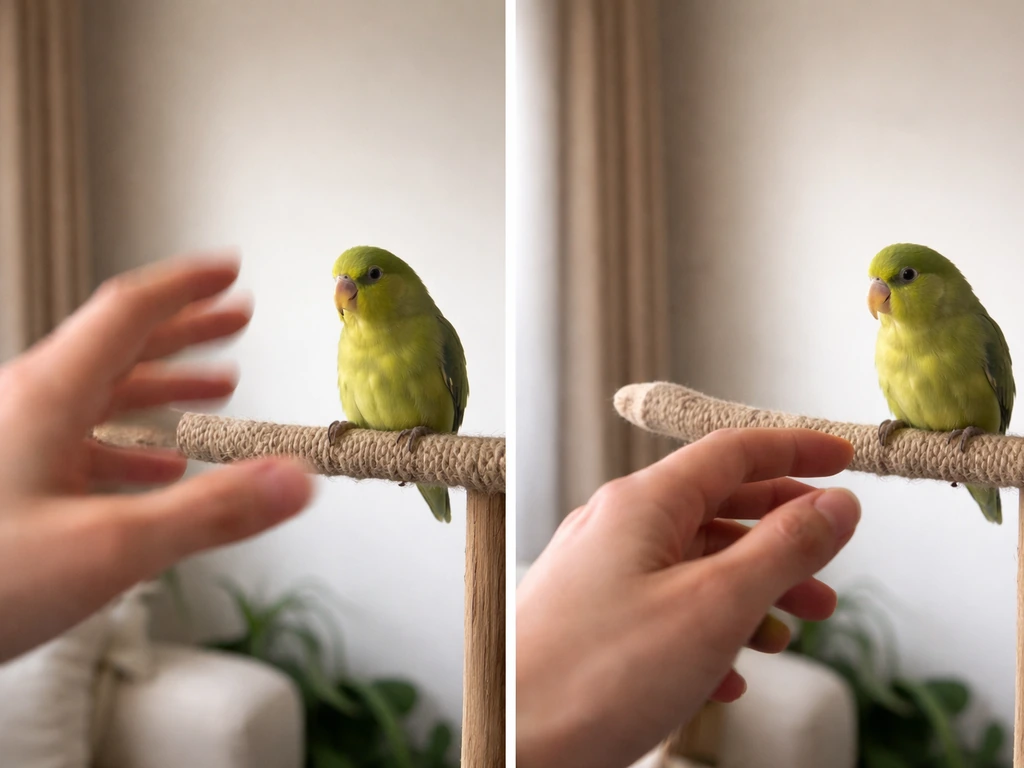
The most common mistake is rushing the timeline. A bird that bit you yesterday is not ready for step-up practice today. Go back a step, spend more sessions on stationary presence, and let the bird set the pace. Progress measured in weeks or months is still real progress.
Misreading excitement for aggression
Head bobbing, wing flicking, and even some eye pinning can appear in excited and playful contexts, not only in threatening ones. Learn your individual bird's baseline. A cockatiel that pins its eyes and bobs its head at your morning greeting is probably saying hello. The same display paired with crouching and tail flaring is a warning. Context and combination of signals matter.
Punishing stress behaviors
Biting, screaming, and feather barbering are symptoms of stress, not deliberate misbehavior. Scolding a bird for these behaviors increases stress and makes them worse. Instead, identify what triggers the behavior, reduce that trigger, and reinforce any calm alternative. If you cannot find the cause, consult an avian veterinarian. Stress in birds can also have medical causes that are easy to miss.
Over-handling to 'get the bird used to it'
Flooding a bird with forced handling does not build trust. It teaches the bird that it has no control over what happens to it, which dramatically increases long-term fear and aggression. Always give the bird a way to move away, and always respect it when they use that option.
Safety, handling rules, and the law around wild birds
Wild birds in the United States, Canada, and most of Europe are protected by federal and national laws. In the US, the Migratory Bird Treaty Act makes it illegal to possess, handle, or transport most wild bird species without a federal permit. This includes injured birds you find. The correct action is to contact a licensed wildlife rehabilitator immediately, not to attempt care or bonding yourself.
If you are a licensed rehabilitator or working with one, the handling guidelines are strict for good reason:
- Minimize handling time to only what is medically or care-necessary
- Use towels or gloves appropriate for the species to protect both the bird and yourself
- Keep the bird in a quiet, dark, warm space to reduce stress during recovery
- Avoid talking to or interacting with wild birds beyond what care requires. Habituation to humans is a welfare problem for animals that need to be released
- Never attempt to tame or bond with a wild bird in rehabilitation. It compromises their survival after release
- For raptors and large wading birds, always use appropriate restraint techniques taught by a certified rehabilitator. Talons and beaks from these species cause serious injury
For wild bird observation without handling, the rule is simple: stay far enough away that the bird does not change its behavior because of you. If a bird stops feeding, turns toward you, or begins alarm calling, you are too close. Back up slowly and give them more space. That is the most bird-like thing you can do: respect their territory and let them decide the distance.
Your next steps starting today
If you have a pet bird, start with a single 10-minute session today where you sit near the cage without interacting. Just be present, speak softly, and watch. Write down two or three specific body language signals you notice. That observation habit, done consistently, will tell you more about your bird than any training guide can.
If you are working with a rehabilitated bird, review the handling protocols with your supervising rehabilitator and commit to the minimum-contact rule for the next week. Notice whether the bird's stress signals decrease with less handling.
If you want to go deeper into bird behavior and communication, exploring how birds use vocalization in bonding (similar to the skills involved in learning to sing like a bird) can add another layer to your understanding of how they communicate. But the foundation is always the same: slow down, read the signals, and let the bird lead. If you are trying to control big bird behavior, use the same bird-safe approach: move slowly, read warning signs, and let the bird choose how close it gets how to control big bird.
FAQ
Should I try to lower my voice and avoid talking at all when I’m trying to act like a bird?
Soft, steady speech usually helps, but complete silence is not always best. Pay attention to whether your bird becomes more relaxed with gentle vocalization or goes stiff and quiet. If eye pinning and leaning back increase when you talk, switch to quiet presence and use only occasional calm sounds.
Is it okay to make eye contact if I’m acting bird-like and calm?
Short, infrequent glances are safer than prolonged direct staring. When you notice the bird’s pupils reacting quickly, a crouch, feather pressing, or alarm calling, break the stare by looking slightly away and pausing your movement until those signals fade.
What should I do if my bird looks “excited” but also shows warning signs like tail fanning?
Treat combinations as a clue, not a single behavior. Tail fanning can be playful, but if it comes with crouching, raised neck feathers, leaning forward aggressively, or beak posturing, pause and give space. Use the “stop and wait” habit and try again later with a shorter, stationary session.
How close should I get during bonding, and how do I know when I’m too close?
Use behavioral thresholds, not a fixed distance. If the bird stops eating, turns toward you in a focused way, begins alarm calling, or changes posture to flattening and feather pressing, you are too close. Back up slowly, keep your body lower and still, and let them re-settle before approaching again.
My bird step-ups sometimes and sometimes bites. How can I decide whether it’s the right time to attempt step-up practice?
Base the attempt on readiness cues, not on your schedule. Only try when the bird is relaxed, leaning toward you with loose posture, and not showing flattening, stiff freezing, or defensive eye pinning. If they repeatedly step back or freeze, go back to stationary presence and shorten the interaction.
If my bird bites, should I end the session immediately or try again right away?
End the session after a bite and prevent further escalation. Set the bird down gently, remove hands from the area, and resume later with lower-pressure goals (for example, letting the bird approach you voluntarily). If biting is frequent or intensifying, involve an avian veterinarian or a certified trainer to rule out pain or medical triggers.
Can I act like a bird with multiple pet birds in the same room, or does that change the rules?
It can change things because birds also react to each other’s body language and territory. If one bird escalates when you approach another, slow down further, separate space if needed, and treat the most reactive bird as the “target cue” for distance and pacing. Avoid putting yourself between birds.
What does “consent” look like for birds if they do not communicate it the way people do?
Look for voluntary engagement cues such as approaching your hand or body, relaxed posture, and willingness to step closer during pauses. Avoid interpreting “tolerating” as yes. If the bird turns away, stiffens, goes silent with a wide-eyed freeze, or flattens feathers, that is a clear no and you should stop advancing.
How long should I practice acting bird-like before I change anything in my approach?
Use short sessions with a “data check” rather than one long block. Try a consistent routine for several sessions (for example, multiple days of 10-minute stationary presence) and track specific signals you see. If stress signals do not decrease or biting increases, reduce handling pressure and adjust distance and pacing immediately.
Is it ever a problem if my bird follows me, watches me, or comes closer on its own?
It can be good, but still watch the full body picture. A curious approach should look relaxed, with loose posture and softer focus. If the bird follows and then freezes, crouches, pins rapidly, or begins alarm calling, the approach may be closer to vigilance or threat appraisal, so back off to re-establish comfort.
For wild birds, what should I do if they start alarm calling when I’m observing?
Back up slowly right away and give more space until their behavior returns to normal. Do not try to “wait them out” while staying close, because alarm calling is often a sign their feeding or safety has been disrupted. Keep your movements minimal and give them control over the distance.
How can I tell whether stress is medical rather than just training-related?
If the bird’s stress cues appear regardless of your approach, worsen quickly, or include changes like reduced appetite, abnormal droppings, labored breathing, or sudden aggression, treat it as potentially medical. Schedule an avian vet visit because pain and illness can strongly change behavior and make “bird-like” handling efforts ineffective.