Recall training teaches your bird to come to you on a specific cue, whether that means flying across the room, stepping onto your hand from a nearby perch, or landing on your shoulder from a distance. You build it in layers: first the bird learns to take treats calmly, then to step onto your hand or follow a target stick a short distance, then you gradually add distance, distraction, and finally the cue word or signal. Done right, recall becomes one of the most useful and relationship-building skills you can teach any bird.
How to Recall Train a Bird Step by Step Guide
Maya Harris
6 May 2026
What recall actually looks like in a bird
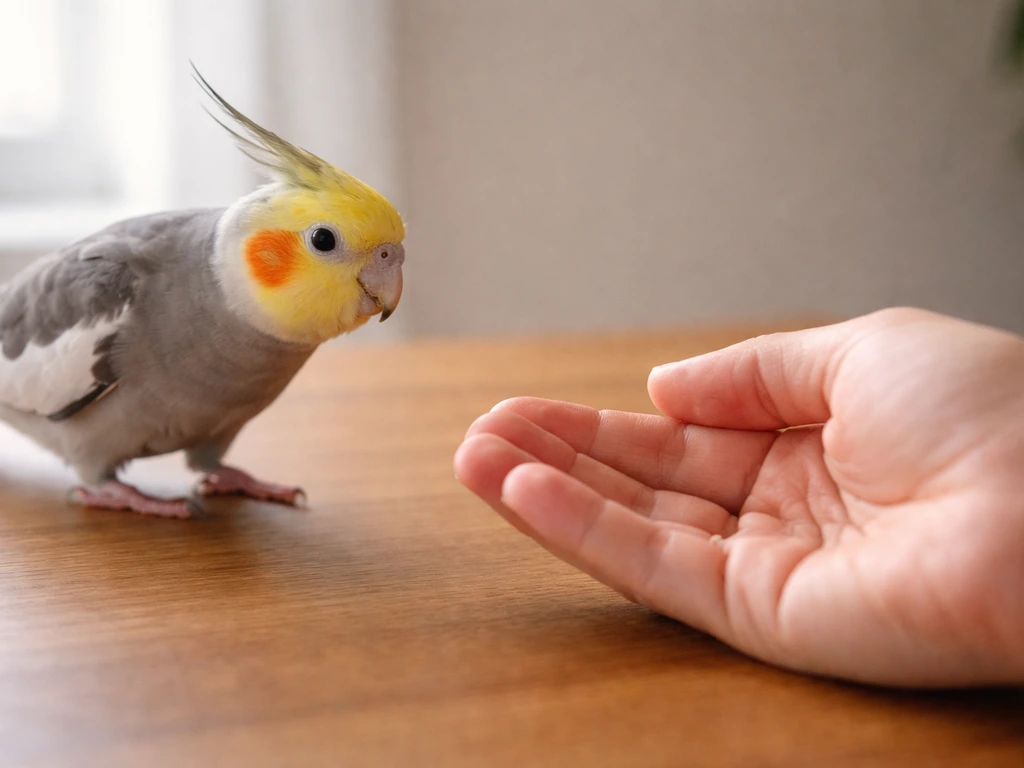
Recall is not just calling your bird's name and hoping it comes. It is a trained behavior: a reliable, repeatable response to a specific cue where the bird moves toward you and lands on your hand, arm, or a designated perch. What that looks like in practice depends on the bird. A flighted parrot might fly across the room and land on your outstretched arm.
A clipped cockatiel might walk or glide toward you and step up. A budgie might hop from perch to perch and land on your finger. For smaller birds like finches or canaries, the realistic goal is usually a conditioned approach to a feeding station or perch rather than hand landing. The form of recall changes by species and circumstance, but the structure is always the same: cue, movement toward you, reward.
It is worth noting the relationship between recall and other foundational skills like targeting, step-up, and flight training. Once you know the basics of recall, you can follow a clear plan for how to train a bird to come when called across different distances and distractions. Recall is essentially these skills chained together over increasing distances. If your bird is not yet reliable with a step-up or has never followed a target stick, recall is not the starting point. Targeting and step-up are the prerequisites, and building those first makes recall training dramatically faster and less frustrating.
Before you start: bird readiness, environment, and safety
The single most common reason recall training fails early is starting before the bird is ready. A newly adopted bird, a recently rescued bird, or one recovering from illness needs time to settle before you add training expectations. Watch for these readiness signs: the bird eats calmly near you, tolerates your hand nearby without retreating, steps up without biting or lunging, and shows relaxed body language (smooth feathers, normal breathing, alert but not rigid posture). If you are seeing hissing, panting, wings held stiffly away from the body, raised head feathers, or repeated flinching, slow down and build more trust first. Those are stress signals, not training problems.
If your bird is clipped, weak from illness, or has not mastered step-up, start with perch-based stationing and targeting at very close range rather than full-distance recall. Wing-clipped birds can still startle and injure themselves, so do not treat a clip as a safety guarantee. Always train in a bird-safe room: fans off, windows and mirrors covered or marked, other pets out, and doors closed.
Close windows and doors and keep rotating ceiling fans off when letting your bird out, since birds can fly into them and get injured fans off, windows and mirrors covered or marked, other pets out, and doors closed. .
PetMD, quoting avian practice DVM Laurie Hess, recommends closing windows and doors and covering mirrors to reduce ceiling fan, window, and mirror risks when birds can move freely fans off, windows and mirrors covered or marked. For any outdoor recall work, a harness is a minimum safety requirement, and even then, outdoor recall training should be reserved for birds with very solid indoor recall already established.
Crowds, dogs, traffic, and unfamiliar birds are not appropriate early-training environments.
- Train indoors first, always, until recall is rock-solid at room length
- Close all windows, doors, and ceiling fans before every session
- Remove or secure mirrors (birds can fly into them at speed)
- Keep other pets completely out of the training space
- Have your treats portioned and ready before you bring the bird out
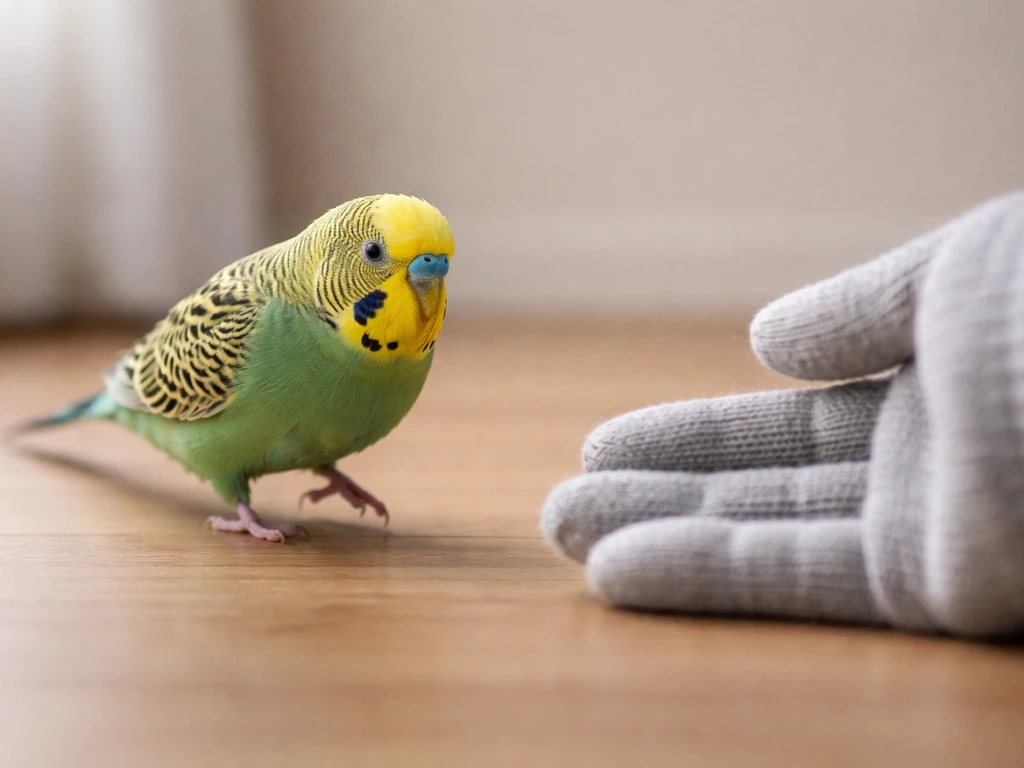
- Never use gloves or a hat during early training: birds are often frightened by them
- Avoid staring directly into the bird's eyes, especially at close range: it can feel threatening
The step-by-step recall training process
Think of recall training as a ladder. You cannot skip rungs. Each phase below should be solid before you move to the next. Rushing creates cue confusion, fear, and inconsistent responses that take much longer to fix than they would have taken to build correctly.
Phase 1: Marker conditioning (Days 1 to 3)
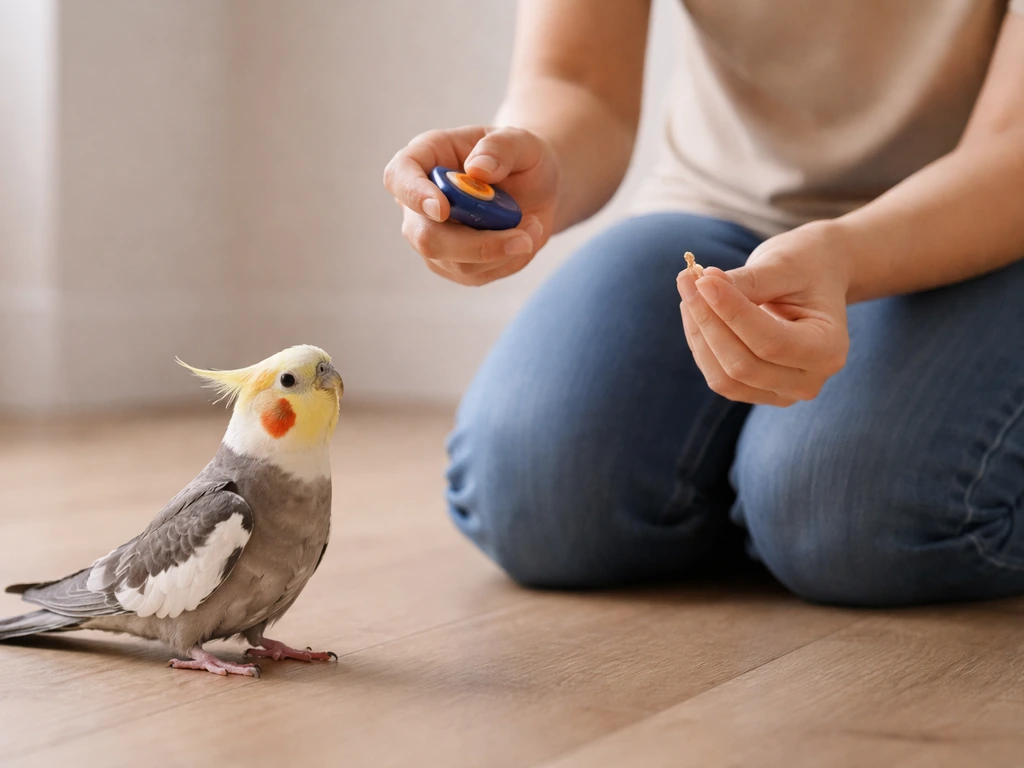
Before you can communicate clearly with your bird, you need a marker: a sound that precisely tells the bird 'that moment right there earned a treat.' blank" rel="noopener noreferrer">[A clicker works well](/recall-and-clicker-training/how-to-clicker-train-a-bird) because it is consistent and distinct. A short verbal marker like 'yes' works too, especially for birds that find the clicker startling at first. To condition the marker, simply click or say 'yes' and immediately deliver a small, high-value treat. Repeat 10 to 15 times per session. You will know the bird understands when it visibly reacts to the marker (looks at you, moves toward your hand) before the treat arrives. This phase usually takes just a few short sessions.
Phase 2: Target training at arm's length (Days 3 to 7)
Once your marker means something, introduce a target. A chopstick, a pencil eraser, or a commercial target stick all work. Target training with a stick is a big part of learning to come on cue, so once your bird follows the stick consistently you can build toward full recall target stick. Hold the target a few centimeters from the bird's beak.
The moment it touches or moves toward the target, mark and reward. Gradually extend the target further away so the bird has to lean, then step, then move a foot or two to touch it. This is the physical foundation of recall: moving toward something on cue to earn a reward. Targeting combined with marker training is one of the most powerful early tools you have, and birds often pick it up quickly once the marker is understood.
Target training at arm's length is a key stepping stone toward teaching a bird how to come on cue target train a bird.
Phase 3: Step-up and hand landing at close range (Days 5 to 10)

Now shift the target so the bird is following it onto your hand or arm. Mark and reward the moment any weight lands on you. If the bird is already solid on step-up, use that as your starting point and simply begin rewarding the act of landing on you from a short distance rather than from a direct hand placement. The criteria here is the bird choosing to come to your hand and put weight on it, not just standing nearby.
Phase 4: Adding distance gradually (Week 2 onward)
Once the bird is reliably coming to your hand or perch from one or two feet away, add distance in small increments. Move back one step. Mark and reward. Move back another step.
Always set the bird up to succeed: if it hesitates or seems unsure, you have moved too far too fast. Go back to the previous distance and build more repetitions there before trying again. For flighted birds, this phase eventually involves short flights to your hand across increasing room distances. If you want to extend this into how to flight train a bird, keep building short, controlled flights only after close-range recall is rock solid indoors.
For non-flighted birds, it means longer walks across a perch or table.
Phase 5: Adding the recall cue (Week 2 to 3)
Only add a verbal cue or hand signal once the bird is already reliably coming to you at distance. Say your cue word (something short and distinct, like 'come' or the bird's name) right before you present the target or extend your hand. The cue predicts the behavior, so it needs to be introduced while the behavior is already happening reliably. Avoid repeating the cue multiple times if the bird does not move. One clear cue, then wait. If there is no response, lower the difficulty, not the standards.
Phase 6: Fading the target and generalizing
Once the bird responds to the cue consistently, begin fading the target stick so the bird comes on the verbal cue or hand signal alone. Do this gradually: use the target every other trial, then every third, then not at all. At this stage, also begin practicing in different locations, at different times of day, and with mild distractions present. A recall that only works in one spot at one time of day is fragile. Generalization is what makes it reliable.
Reinforcement, cues, timing, and how to run a session
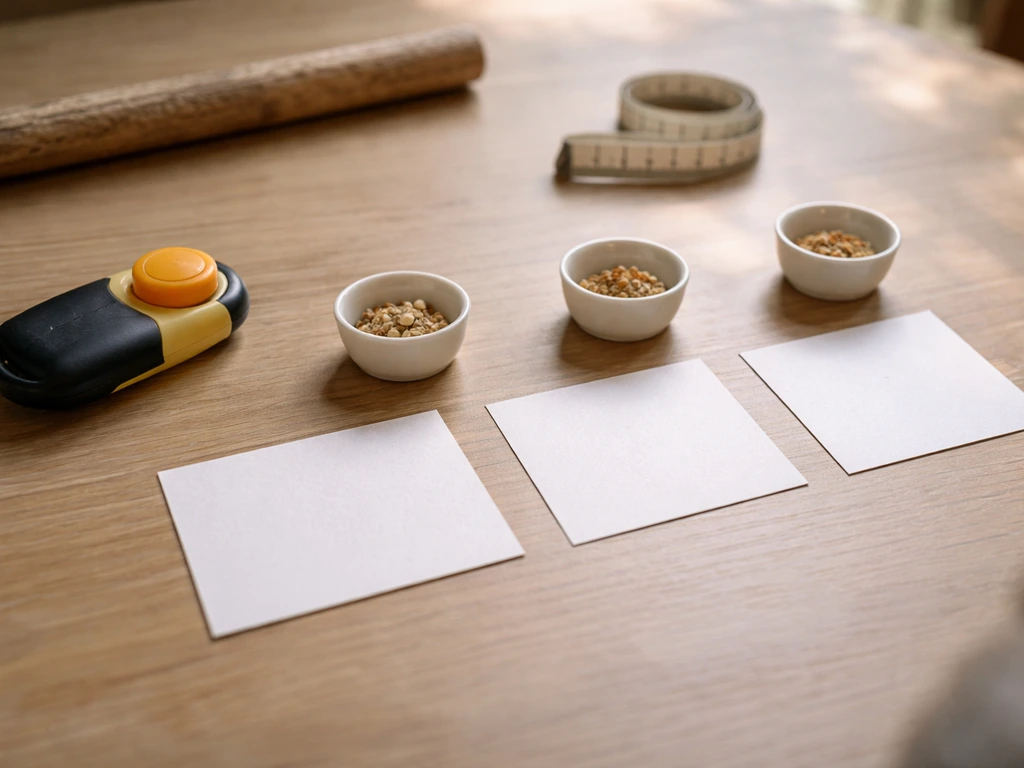
Short sessions work dramatically better than long ones. Aim for 3 to 5 minutes per session, two to three times a day. Birds fatigue cognitively faster than most people expect, and a bored or tired bird stops learning. End every session while the bird is still engaged and willing, not after it has already tuned out. The last rep of every session should be a success.
Timing is everything with a marker. The click or 'yes' needs to land within about one second of the behavior you want to reinforce. If you mark too late, you reward whatever the bird was doing at the moment of the click, which can be anything from adjusting its grip to looking away. Practice marking without the bird first if your timing feels off.
For treat selection, use the smallest piece that will motivate your bird. Tiny matters: you want the bird hungry for more, not full after three reps. High-value treats are species-specific. For parrots, a small sliver of nutrient-dense food like a pine nut, piece of almond, or a bit of cooked egg often works better than standard pellets. For budgies, a millet seed or tiny piece of spray millet is usually highly motivating. For softbills or finches, try a small piece of fruit or a live food like a mealworm. Use the most valuable treat you have for the hardest distance or distraction level.
A calm, consistent voice matters more than volume. Do not call louder if the bird does not respond. Keep your cue word the same every time, said in the same tone. Inconsistency in how you present the cue is one of the most common reasons a recall becomes unreliable. Hand signals can be added alongside the verbal cue and are especially useful outdoors where ambient noise competes with your voice.
What to do when things go wrong
The bird won't respond at all
If your bird ignores the cue entirely, you have asked for too much too soon. Go back to the last distance where recall was reliable and build more repetitions there. Do not repeat the cue over and over: each time you call and the bird does not come, that cue loses a little meaning. If the behavior breaks down repeatedly, check whether the treat is motivating enough, whether the bird is tired, whether there is something in the environment making it anxious, and whether the step-up or targeting prerequisite is actually solid. Often the fix is simply going back one phase.
The bird flies away or takes off
A bird that takes off when you cue recall has been pushed too far too fast, is spooked by something in the environment, or has learned that flying away is a more rewarding option than coming to you. Do not chase the bird. Stay calm, let it settle, then retrieve it gently and return to a much shorter distance. For birds that consistently fly away at a certain distance, that distance is your current ceiling. Work just below it until confidence builds. Make sure every approach to you results in a genuinely good reward, not just a mediocre one.
Fear and stress responses
If you see panting, hissing, fanned tail feathers, wings held away from the body, repeated lunging, or a bird that fluffs up and looks weak during training, stop immediately. These are not training problems: they are welfare signals. A fearful bird cannot learn effectively and should not be pushed further in that session. Give the bird time to settle, reduce the complexity of your training plan, and if stress signs persist or include physical symptoms like labored breathing, contact an avian vet. Some birds, especially recently rescued or rehomed ones, need weeks of quiet presence before any formal training should begin.
Inconsistent recall: sometimes comes, sometimes doesn't
Inconsistency usually comes from one of three places: variable reinforcement quality (sometimes the treat is great, sometimes it is not), cue inconsistency (you are saying or showing the cue slightly differently each time), or the bird has learned that the recall sometimes leads to something it does not like, such as being put back in the cage, having medication administered, or being restrained. Never use recall to end a fun activity without also giving a treat immediately on arrival. If your bird suspects that coming to you means fun ends, it will delay or refuse. End cage-return sessions with a reward delivered before and during return, not after.
Distractions
Distractions should be introduced deliberately and gradually, not encountered by accident. If your bird is distracted by a window, other birds, or noise, that is a signal to train with that distraction at a level low enough that the bird can still succeed. For example, train further from the window, or with the sound quieter. Generalization to real-world distractions is a phase of training, not a test of whether the bird is 'trained enough yet.'
Species-specific and context-specific tips
Parrots (cockatiels, budgies, conures, African greys, amazons, macaws)
Most parrots take to recall training well because they are highly food-motivated and bond strongly with people. Cockatiels and budgies are often the easiest to start with because of their smaller size and generally gentle temperament, but even these birds need the full prerequisite foundation before distance work begins. Larger parrots like African greys or amazons may take longer to trust, and their recall needs to be maintained regularly or it degrades. For all parrots, recall that ends in cage-return needs careful management to avoid becoming a negative predictor.
Finches, canaries, and smaller softbills
These species are faster, more flighty, and generally less hand-tame than parrots. Full hand-landing recall is a high bar and may not be a realistic goal for all individuals. A more practical target is a conditioned approach to a specific perch or feeding station on a sound cue. Use a consistent sound (a soft whistle, a specific word) paired with the appearance of food at a fixed spot. Over time, the sound alone will prompt the approach. This still counts as recall: the bird moves to a location on a cue, which is genuinely useful for safety and welfare management.
Recently rescued or semi-wild birds
For birds in rehabilitation or recently captured for relocation, recall training has a different starting point. Trust is the first phase, and it may take weeks before any formal training can begin. Focus on the bird tolerating your presence without stress signs, eating calmly near you, and eventually approaching voluntarily. From there, the same shaping progression applies, but pacing is much slower and sessions may be as short as 30 to 60 seconds. Work with a licensed wildlife rehabilitator for any wild-caught bird, and be aware of legal considerations around handling and training protected species.
Indoor vs outdoor recall
Indoor recall should always be established first and should be reliable across multiple rooms and moderate distractions before any outdoor work is considered. Outdoors, the environment is unpredictable in ways you cannot control. A harness and leash is the minimum safety tool for any outdoor training with a parrot, and even then, outdoor recall training requires a long-line setup or a fully enclosed aviary rather than open-air free flight. For safe outdoor sessions, you will also want to harness your bird properly before working on recall. Outdoor free-flight recall is an advanced skill that belongs in a separate progression entirely, built over months of consistent indoor and enclosed-space work.
| Context | Realistic Recall Goal | Key Consideration |
|---|---|---|
| Pet parrot (flighted, tame) | Flies to hand on verbal cue across room | Maintain with daily short sessions; watch cage-return association |
| Pet parrot (clipped) | Walks or glides to hand from perch | Clipping is not a safety guarantee; still train carefully |
| Budgie or cockatiel | Flies or hops to finger/hand on cue | Small treats, quiet environment; start very close |
| Finch or canary | Approaches designated perch on sound cue | Hand landing may not be realistic; conditioned station is a solid goal |
| Rescued or semi-wild bird | Voluntary approach; eventual close-range step-up | Trust phase comes first; pacing is slow; consult a rehabilitator |
| Outdoor recall (advanced) | Flies to hand in enclosed/controlled area | Indoor recall must be solid first; harness required for open-air work |
Your next few sessions: a simple starting plan
If you are starting from scratch today, here is exactly what to do in your first week. Keep sessions to 3 to 5 minutes, twice a day. Stop the moment the bird loses focus or turns away.
- Sessions 1 to 3: Condition the marker. Click or say 'yes,' deliver a treat immediately. Repeat 10 to 15 times per session. No other criteria yet.
- Sessions 4 to 6: Introduce the target. Reward any contact with or movement toward the target. Keep the target within a few centimeters of the bird's beak to start.
- Sessions 7 to 10: Extend the target. The bird must lean or step to touch it. Begin rewarding hand landings if the bird is comfortable stepping up.
- Sessions 11 to 15: Add short distance. Place the bird on a perch one to two feet away and extend your hand or target. Mark and reward every successful approach.
- Sessions 16 to 20: Add the cue. Say your recall word once before extending the target or hand. One word, one time, then wait.
- Week 3 and beyond: Gradually increase distance, begin fading the target, and introduce mild distractions. Measure progress by tracking the reliable distance at which the bird responds 8 out of 10 times.
Measure progress simply: at what distance does your bird come reliably (at least 8 out of 10 attempts) with a single cue and no target? That number should grow over weeks. If it stops growing or shrinks, you have hit a training or welfare issue worth investigating before pushing further. Recall is not a skill you finish: it is one you maintain, and a bird that comes reliably today will lose that reliability without regular short practice. Keep it fresh, keep it rewarding, and it will hold.
FAQ
How often should I practice recall, and what does “short sessions” mean for my bird’s schedule?
Use 2 to 3 very short sessions per day (about 3 to 5 minutes each). If your bird is newly adopted, sick, or easily stressed, start with 30 to 60 seconds and fewer reps, but still end on a success. If you cannot maintain daily sessions, aim for more practice on fewer days rather than occasional long drills.
My bird comes when it sees the target or treats, but not when I extend my hand. Is that a cue problem?
Often it is. Before changing anything, verify the bird is reliably putting weight on your hand or arm, not just following the target to a nearby perch. If the hand cues are introduced too early, the bird can learn that “target equals reward.” Go back one rung, reward hand landings at very short range, then fade the target gradually again.
What if my bird ignores the cue after I wait, and I do not want to lower standards too much?
Lower difficulty immediately by returning to the last distance or setup where the bird completes the behavior 8 out of 10 times. Do one clear cue, then help through success by presenting the target or shortening the distance. Avoid repeating the cue, instead treat the missed cue as “too hard,” not “the bird is being stubborn.”
How do I avoid accidentally “poisoning” recall with cage return or stressful handling?
Never let recall start leading to negative outcomes. If you need to put the bird away or administer something, deliver a reward as soon as the bird arrives and again during the transition, then keep handling calm and brief. Ideally, practice recall separately from cage return on most days so the bird does not learn that coming ends fun.
Should I use my bird’s name as the recall cue, and what’s the risk of using a common word?
It works, but only if you use it exclusively as the recall signal. If you say the name frequently in everyday conversation, the cue becomes diluted because the bird hears it at many times without rewards. Choose a short, distinct cue used only right before training requests.
Clicker training sounds good, but my bird gets startled by the click. What can I do?
Switch to a softer marker first, use “yes” or a gentle verbal sound, then introduce the click at a very low intensity and only during success-focused sessions. You can also increase the distance from the bird during the first few marker trials. The key is timing, mark within about one second of the desired movement, then deliver a high-value treat immediately.
How do I know the marker is timed correctly if I do not feel confident yet?
Practice marker-only trials where the bird is already moving in the right direction. Watch for a visible reaction (orienting toward you or approaching) right after the marker but before the treat arrives. If you often click during unrelated behaviors like looking away or shifting grip, you need more marker practice at close range.
My bird runs or flaps away when I cue recall. Should I chase it or try harder?
Do not chase. Stay calm, reduce intensity by moving back to a much shorter range, and reward faster once the bird turns toward you. Ensure the reward is genuinely valuable, and check for environmental scares. The behavior often means the bird learned “coming is unsafe or harder than leaving,” so rebuild from easier rungs.
Is recall possible for birds that cannot or will not land on my hand?
Yes. For small birds and for individuals that struggle with hand landings, aim for a reliable approach to a specific perch or feeding station on cue. Pair the sound with the arrival of food at that fixed location so the cue predicts a safe, useful movement, which still supports safety and welfare management.
When is it safe to start training indoors across multiple rooms, and when should I stop?
Indoor generalization should happen after the bird reliably responds at a short distance without a target in the first room. Add one new room at a time, with mild distractions only, and pause if success drops below your usual standard. If stress signs appear, stop the session and reduce complexity rather than forcing generalization.
Can I train outdoors without a harness if my bird seems steady?
No. Outdoor environments add unpredictable risks, and “seems steady” is not the same as being safe under distractions. Use a harness as the minimum, and only progress further when indoor recall is strong and consistent. Outdoor free-flight recall is an advanced separate progression that should not be rushed.
How should I measure progress realistically at home?
Track the distance where the bird succeeds reliably (for example, at least 8 out of 10 attempts) using a single cue with no target. Also note whether success depends on time of day or distractions, if reliability varies a lot, you are not done generalizing. If progress stalls or worsens, check motivation, timing, cue consistency, and prerequisites first.