You can teach your bird to dance by shaping a natural bobbing, stepping, or wing-movement behavior through short positive reinforcement sessions, attaching it to a consistent cue like a word, hand signal, or a few notes of music. The key is that the bird chooses to move because it's fun and rewarding, not because it's being forced or startled into it. Most parrots, cockatiels, budgies, and conures can learn a reliable dance cue in two to four weeks of daily five-to-ten-minute sessions once you have a solid foundation in place.
How to Make Your Bird Dance: A Positive Training Guide
Maya Harris
16 May 2026
Before you start: safety, consent, and what "dancing" actually means
"Dancing" in the bird training world means a behavior the bird performs willingly on cue, typically some combination of rhythmic bobbing, stepping side to side, lifting a foot, spreading wings slightly, or spinning. It should look like play because, from the bird's perspective, it genuinely is. If your bird is moving because you're shaking it, startling it, or physically manipulating its body, that's not dancing and it can seriously erode trust.
Consent matters a lot here. Before every session, check whether your bird actually wants to engage. A bird that leans toward you, has slightly relaxed feathers, and is alert without being tense is ready to work. A bird that leans away, holds feathers tight to its body, crouches low, opens its beak, or shows wide-open eyes pinned on you is telling you it's not comfortable. Those are fear signals documented by avian veterinary organizations, and if you see them you should stop and give the bird space rather than pushing forward.
Open-mouth breathing during a training session is a red flag. It can indicate stress, overheating, or respiratory distress, none of which are safe training conditions. If your bird is breathing open-mouthed and it is not hot in the room, end the session and watch closely. If it continues or is paired with labored breathing, discharge from the nares or eyes, or a persistently fluffed appearance, contact an avian vet before continuing any training. Continually fluffed feathers can signal illness, not just a relaxed bird, so context always matters.
- Never force, restrain, or physically manipulate your bird into a movement
- Never use punishment, loud noises to startle, or sudden handling to create "movement"
- Keep sessions to 5–10 minutes once or twice daily; shorter is better than longer
- Always let the bird opt out, it should be able to fly or step away without consequence
- If you see fear or stress signals, stop immediately and wait for calm before trying again
Know your bird: species, temperament, and body-language cues
Different species learn at different speeds and are motivated by different things, so knowing your bird's baseline personality is half the job. Conures are often highly food-motivated and pick up new behaviors quickly. Cockatiels respond well to patient, calm sessions and can be strongly motivated by social praise in addition to treats. Budgies learn through repetition and positive reinforcement but may need more time to build confidence, especially with hand shyness. Larger parrots like cockatoos and African greys are very intelligent but can also get frustrated or overstimulated faster, so precision in your training timing matters more with them.
Age and handling history also play a big role. A hand-raised bird that is already comfortable stepping up and taking treats is essentially ready to start shaping dance right now. A recently rehomed bird, a bird that was neglected, or one that is still working through trust issues needs more foundational work first. Skipping that foundation because you're excited to teach tricks is the most common reason training stalls.
Learn to read the specific body language your species shows. Cockatiels and cockatoos raise their crests when alarmed or highly aroused, which looks similar to excitement but can flip to stress quickly. A raised crest mid-session paired with a stiff body posture or side-to-side head rocking is a sign to slow down. Relaxed training engagement looks like: soft feathers, one foot possibly raised, light tail-wagging, leaning toward you, and willingness to eat treats without hesitation.
| Species | Motivation | Session Length | Notes |
|---|---|---|---|
| Budgerigar | Millet, social praise | 3–5 min | Build confidence slowly; great for beginners |
| Cockatiel | Seeds, praise, head scratches | 5–8 min | Crest is a key stress indicator to watch |
| Conure | Pellets, fruit treats, play | 5–10 min | High energy; redirect boredom quickly |
| Cockatoo | Nuts, social reward | 5–8 min | Can overstimulate easily; watch arousal carefully |
| African Grey / Amazon | Varied treats, novelty | 5–10 min | Needs precise marker timing; can get bored fast |
Set up the right environment and your reinforcement toolkit
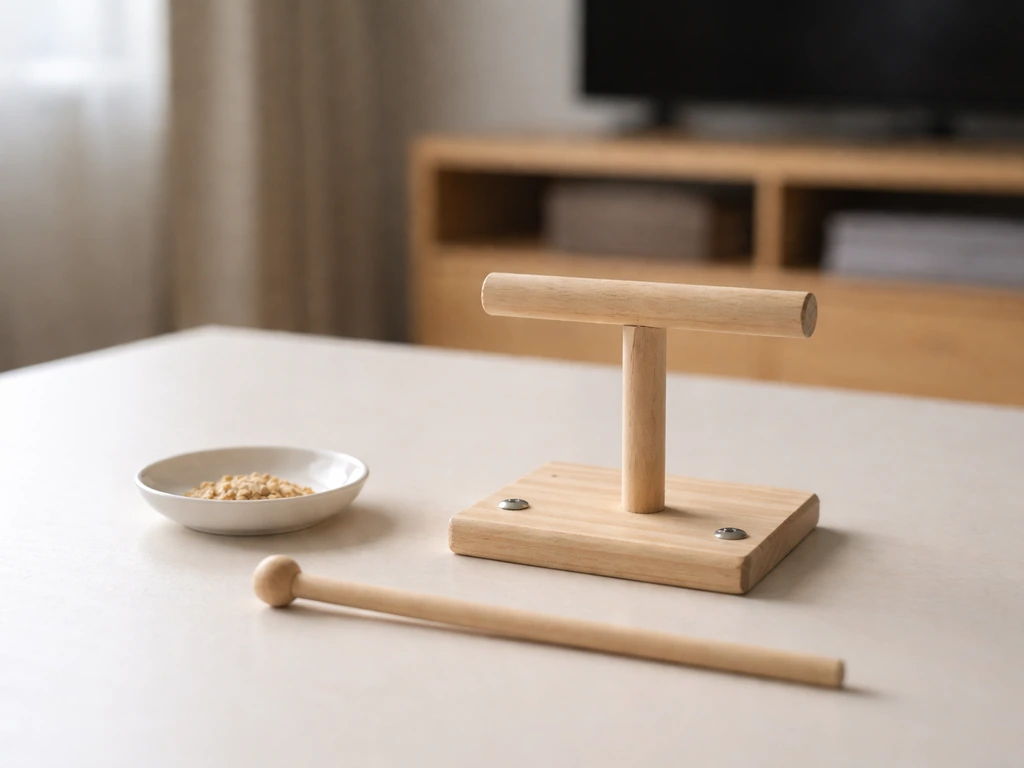
The training space should be calm, familiar, and free from things that compete for your bird's attention. Turn off the TV, keep other pets out of the room, and work at a consistent time of day. A T-stand or tabletop perch at roughly your chest height works well because the bird is at a comfortable level to interact with you without feeling threatened from above. Avoid training near the cage if your bird gets territorial around it.
For reinforcement, use small pieces of a high-value treat, something your bird loves but doesn't get freely in its bowl. A piece of millet the size of a grain, a tiny sliver of nutrient-rich pellet, or a small seed works well. The treat needs to be small enough that your bird eats it in one or two seconds and is immediately ready to engage again. If it takes 20 seconds to chew a treat, your session stalls and your timing breaks down.
A clicker or a consistent verbal marker like a sharp "yes" is your most important tool. The marker works by pinpointing the exact moment the bird does the right thing, so the bird learns "that specific action is what earns the treat." This precision is what makes shaping complex behaviors like dance possible. Charge the clicker first by clicking and immediately delivering a treat ten or fifteen times until your bird visibly brightens or orients to you when it hears the click. That's the conditioned reinforcer working.
- Consistent training location, same perch, same time of day if possible
- High-value treats in a small pouch or dish you can access quickly
- A clicker or a distinct, consistent verbal marker
- A target stick: a chopstick, a pencil, or a commercial parrot target stick
- A calm room with minimal distractions
- A notebook or phone to log what worked and what you'll try next session
Step-by-step: from target touch to a full dance behavior
Step 1: Teach target touching (the foundation)
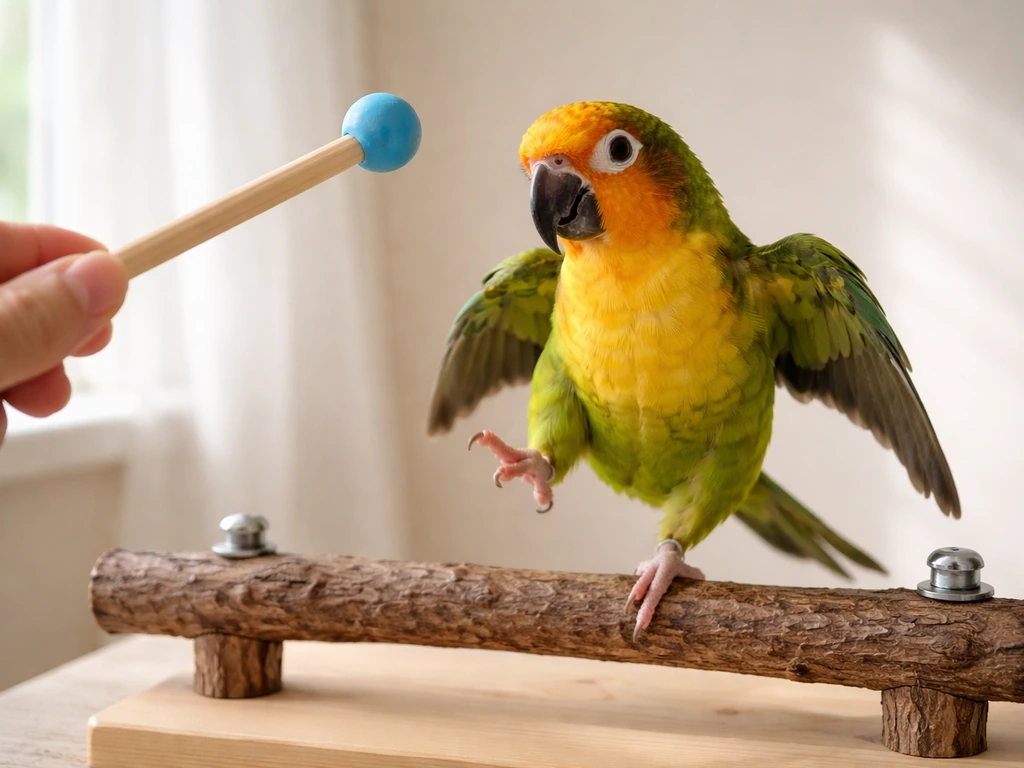
Hold your target stick still, presenting the tip slowly from slightly below and in front of your bird at beak level. Most curious birds will lean toward it or touch it within a few seconds. The instant the beak or foot makes contact, click and deliver a treat. Repeat this 8–10 times per session. You want the bird moving toward the target consistently before you ask it to move for the target. This "if I touch this, I get a treat" understanding is the entire engine behind shaping dance.
Step 2: Move the target to create directional stepping
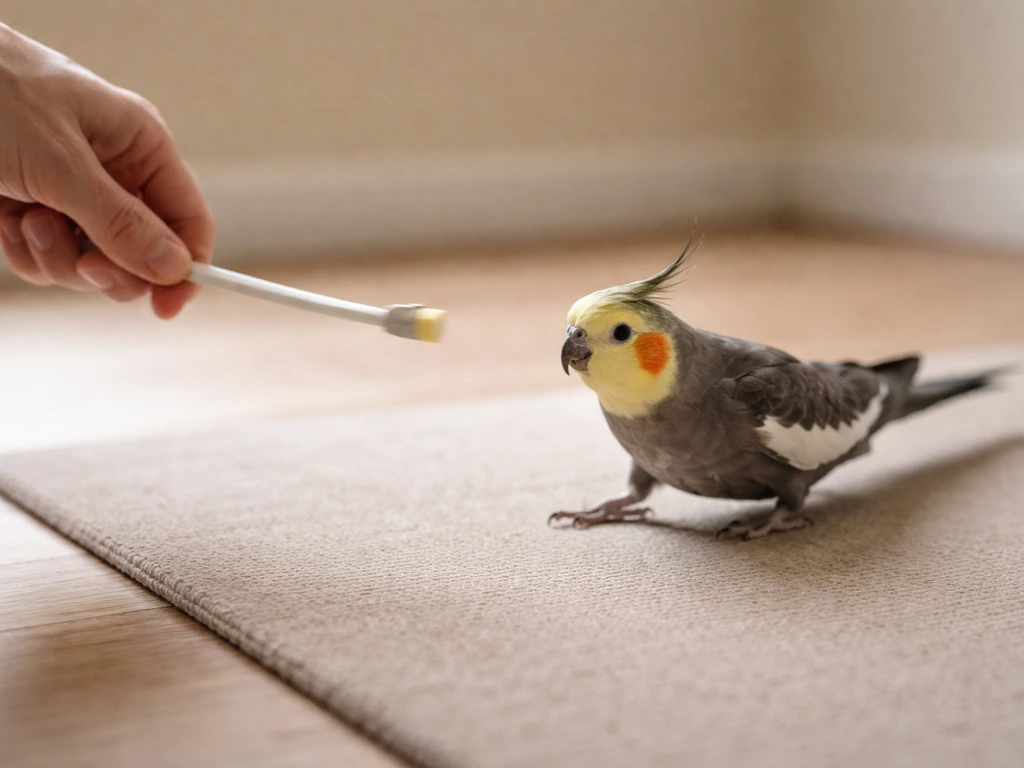
Once your bird is reliably touching the target, start moving it slightly to the left, then the right, requiring your bird to take a step in each direction to follow it. Click and treat for each successful step toward the target. This lateral stepping is the earliest building block of a side-to-side dance movement. Once your bird understands side-to-side stepping and cueing, you can build toward larger, more playful body positions, including how to teach your bird to lay on its back. Keep the movements small at first. You're teaching your bird that following the target in a new direction is worth doing.
Step 3: Shape bobbing or head movement
Many birds naturally bob their head during excitement or play. Wait for that natural bob to happen, then click and treat it immediately. You're marking the behavior at the moment it occurs so the bird starts to understand that bobbing is what's earning the reward. If your bird doesn't bob spontaneously, try moving the target slowly up and down in front of them, just enough that following it requires a head nod. Click the moment the head moves downward. Repeat until the bird is doing it reliably.
Step 4: String movements together into a "dance" sequence
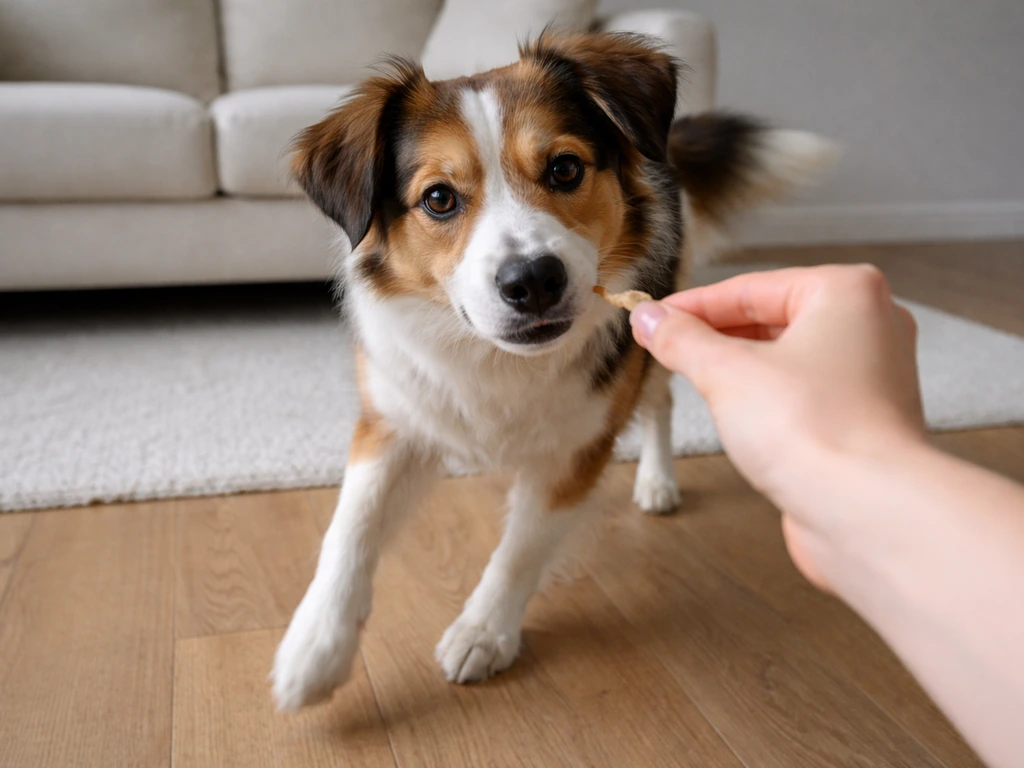
Once stepping and bobbing are individually reliable, start combining them. Ask for a step to the left, click and treat. Then immediately prompt a head bob, click and treat. Over multiple sessions, start withholding the click until you get both behaviors in sequence. This is shaping by raising the criterion gradually. You're building a chain of small behaviors that, together, look like dancing. If the bird gets stuck or frustrated at any point, drop back to the last step where it was succeeding and rebuild from there.
Step 5: Fade the target and add your cue
When the behavior sequence is happening reliably on the target, start adding your chosen cue just before you present the target. This could be a word like "dance", a specific hand signal, or a few bars of a song. Pair the cue with the target prompt 10–15 times consistently. Then test it: give the cue without showing the target right away and see if the bird initiates the movement. When it does, that's the cue working. Now you can gradually phase out the target stick by delaying its appearance, then eventually hiding it behind your back, then not using it at all.
Cue it: timing, distractions, and building duration
Timing is everything. Your click or marker needs to land within a half-second of the behavior you want to reinforce. If you click late, you're marking whatever the bird happened to be doing at that moment, which creates confusion. Practice clicking at home without the bird until your timing feels natural and fast.
Once the behavior is solid in a quiet room, start introducing very mild distractions: a slight change in where you're standing, a different room, or a small noise in the background. Build up distractions slowly. If your bird falls apart when the environment changes, that just means the behavior isn't generalized yet and you need more practice in more varied low-distraction settings before adding harder ones.
To build duration, meaning getting your bird to dance for longer before getting the treat, switch from clicking every single movement to clicking after two bobs, then three, then a few steps plus a bob. Use a variable schedule once the behavior is fluent, meaning you don't always treat after the same number of repetitions. This keeps the behavior strong and persistent. Don't increase the duration requirement too fast or you'll lose the behavior altogether.
Troubleshooting: when things aren't working
Bird won't engage or shows no interest
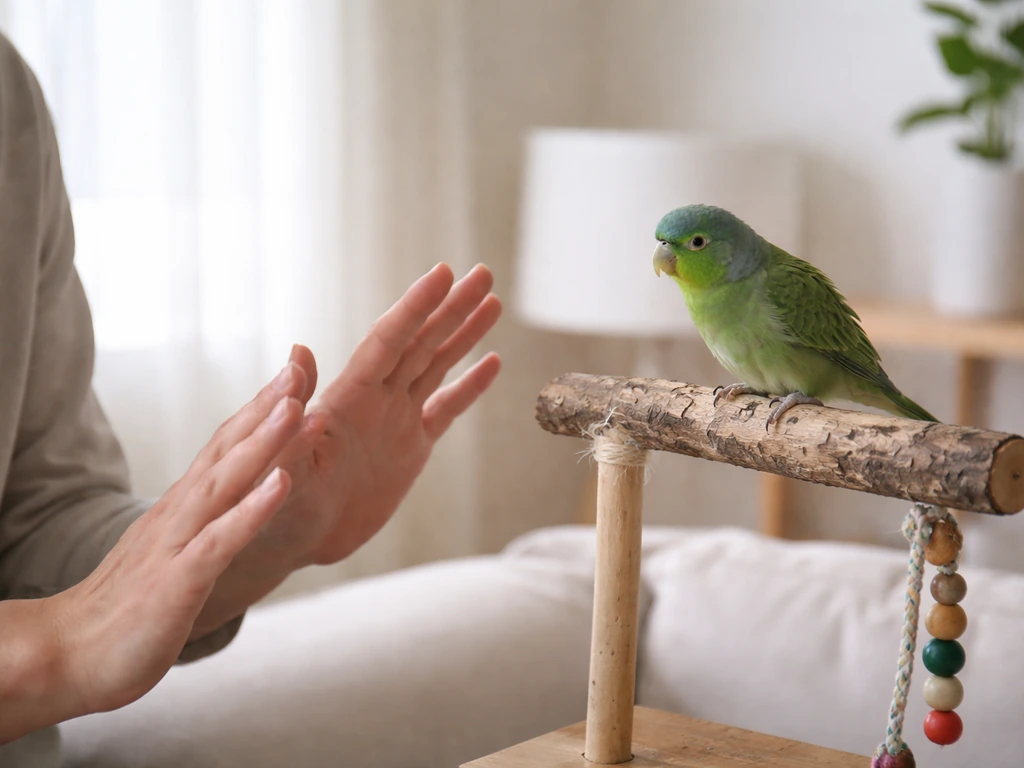
Check whether your bird is actually hungry enough for treats to be motivating. Training right before a meal, not right after, makes a big difference. Also check the treat itself: if the bird ignores it, try something higher value. If the bird still won't engage, it may need more socialization and trust-building before formal training begins. Some birds, especially newly rehomed ones, need two to four weeks of simple positive interactions before they're ready to work.
Bird is fearful or trying to fly away
Back off immediately and reduce the intensity of what you're asking. If the bird is leaning away, crouching, or attempting to flee, you've gone too far too fast. Go back to the step before this one and make it easy and rewarding again. You may need to spend several sessions just getting the bird comfortable with you presenting the target stick from farther away before asking it to approach.
Bird is lunging, biting, or getting aggressive
Aggression during training is almost always a stress or overstimulation response. If the bird is lunging, biting at the target, or making threatening vocalizations, stop the session calmly and let the bird settle. Don't punish or react loudly, that just adds stress. Look at what happened just before the aggression and figure out whether the bird was pushed too fast, whether the session ran too long, or whether something in the environment was triggering. Revisit the prior successful step in the next session.
Bird was doing great, now it's inconsistent
This is normal in animal training and it's called an extinction burst or sometimes just a regression. Go back to heavily reinforcing the behavior again, making it very easy to earn clicks and treats. Sometimes consistency in your own cue delivery is the problem: if your hand signal or verbal cue varies slightly each session, the bird genuinely doesn't recognize it as the same cue. Record yourself and check.
Bird loses interest mid-session
The session is too long or the treat value has dropped because the bird is satiated. End sessions before the bird disengages rather than after. If you consistently stop while the bird is still engaged and wanting more, the next session will start with enthusiasm. Excessively long sessions don't just stall progress, they can actually set training back by teaching the bird that sessions eventually become boring or frustrating.
Keeping it fun, humane, and sustainable long-term
The goal isn't just a bird that dances once. It's a bird that genuinely enjoys dancing on cue because it's become part of how you two interact. The welfare-first approach means the bird always has the option to opt out without negative consequences, sessions are short enough to stay enjoyable, and you're reading body language constantly rather than running through a script regardless of what the bird is telling you.
As training progresses, vary the rewards: sometimes it's a treat, sometimes it's a head scratch, sometimes it's praise and a brief play session. This keeps the behavior motivated and prevents burnout. You can also build on the dance behavior into other related tricks like spinning on cue, stepping in a specific pattern, or performing a wing-spread. Once your bird reliably dances on cue, you can build that same targeting and reinforcement routine into teaching basketball-style play. If you're ready to expand beyond dancing, you can also work on how to teach your bird to play dead using the same target and reinforcement approach. Each of those builds on the same target and shaping foundation you've already established.
Watch for signs that training is affecting your bird's wellbeing over time. Feather condition, activity level, appetite, and social behavior at baseline are your best indicators. A bird that is thriving in training will be bright-eyed, well-feathered, and enthusiastic at the start of sessions. If you notice persistent feather ruffling, reduced appetite, or behavior changes that don't resolve between sessions, take a break from training and consult an avian vet to rule out underlying illness or chronic stress.
Finally, celebrate the small wins. A single confident step toward the target on day three is progress. A reliable bob on cue by week two is a big deal. Birds learn through repetition and positive experience, and the relationship you build through humane training, where your bird sees you as a source of fun and good things rather than pressure, carries over into every part of your time together, not just the dance.
Your next steps right now
- Observe your bird for 10 minutes today and practice identifying relaxed versus tense body language before touching a treat or target
- Charge your clicker or pick a consistent verbal marker and spend one session pairing it with treats until your bird responds to the sound
- Introduce the target stick in the next session and click and treat any approach or touch
- Once touching is reliable, practice moving the target left and right to build lateral stepping
- After a week of solid stepping, begin capturing natural head bobs and shaping them with the clicker
- Add your cue word or signal just before the target prompt, then test it alone after 10–15 paired repetitions
- Keep a simple training log: date, what you worked on, how the bird responded, what you'll adjust next time
FAQ
What should I do if my bird starts doing the movements off-cue, but not when I give the “dance” signal?
Treat the off-cue versions as useful progress, then go back to cue pairing. Give the cue only when you are ready to present the target immediately afterward, so the bird can connect the cue to the start. Also confirm you are using the same cue consistently each time, and that the bird is engaged enough to eat right after the behavior.
My bird takes treats, but keeps ignoring the target stick. Does that mean I should stop training?
Not necessarily. It often means the target position is wrong, the bird is uncertain, or the target tip is too far forward or too high. Try presenting the target lower and slightly closer (still at beak level), move it slower, and click for any tiny interaction like looking or lightly touching with the beak before expecting a step or full touch.
How do I teach a dance cue if my bird is hand-shy or avoids stepping onto a perch with me nearby?
Use a stationary perch or T-stand that is at a comfortable distance and avoid hovering. If stepping is stressful, shape smaller “entry behaviors” first, like approaching to the target or touching the perch edge with a foot, then build upward. You can also place the target near the bird rather than requiring it to move toward you.
Can I teach dancing without a clicker, using only my voice?
Yes. Pick one consistent verbal marker (for example, a single word) and use it the same way every time, with the same timing precision as a click. Practice delivering the marker and treat together so the bird learns that exact sound means “right behavior,” then phase out the target later as you would with a clicker.
How many treats should I use per session, and when will my bird get full?
Keep sessions short enough that your bird remains enthusiastic, usually five to ten minutes. Use tiny treat pieces so the bird finishes quickly, and end while the bird still wants more. If you notice slower eating, food refusal, or disengagement, reduce session length or switch to a higher-value treat rather than pushing longer.
What does it mean if my bird gets “excited” but then suddenly stops cooperating mid-session?
That can be overstimulation or frustration from raising the difficulty too quickly. Stop at the last step the bird could succeed at, then rebuild one level easier next time. Also watch for signs like stiff posture or crest alarm that can resemble excitement but actually indicate stress.
Is it okay if my bird spins or flaps instead of doing the exact dance steps I expected?
Yes, as long as the behavior is safe and voluntary. “Dance” can be a consistent sequence you shape, not a single fixed pattern. If flapping or spinning appears more natural for your bird, you can shape toward a reliable combination that the bird willingly offers, then use the cue to trigger that pattern.
My bird sometimes regresses after it was doing the dance well. How do I tell if it’s an extinction burst or an illness/stress issue?
If regression happens alongside a change in your cue delivery, session length, or reinforcer value, it often tracks with training variables. If regression comes with persistent fluffed feathers, open-mouth breathing, reduced appetite, or abnormal behavior that does not resolve between sessions, prioritize welfare and consult an avian vet before resuming training.
Should I train right after my bird eats to avoid hunger issues?
Usually no. Training right before a meal tends to work better because the bird is motivated without being full. If your bird is picky, use a reward it does not get freely in its bowl, and test timing by observing engagement across the day.
How can I generalize the dance cue to different rooms without the bird falling apart?
Start with very small changes, like a slightly different spot where you stand, then a new room, then a mild background sound. Only increase difficulty after the bird reliably dances in the current setting. If it fails, return to the previous environment where success is easy and rebuild from there.
What if my bird lunges or bites at the target or cue?
Stop calmly and reduce pressure immediately. Lunging often means the bird feels cornered, the target is too close, you asked for too much too fast, or the session is too long. Next session, start from an easier step at a comfortable distance and shorten the session so the bird has more successful repetitions.
Once the bird dances on cue, how do I maintain the behavior without treating every time forever?
Use a variable reward schedule once the cue is fluent, and occasionally switch rewards (treat, head scratch, praise, brief play). Still use treats often enough that the behavior stays strong, then gradually adjust the frequency based on performance, reducing duration demands only as needed to avoid the bird “dropping” the cue.
Next Articles
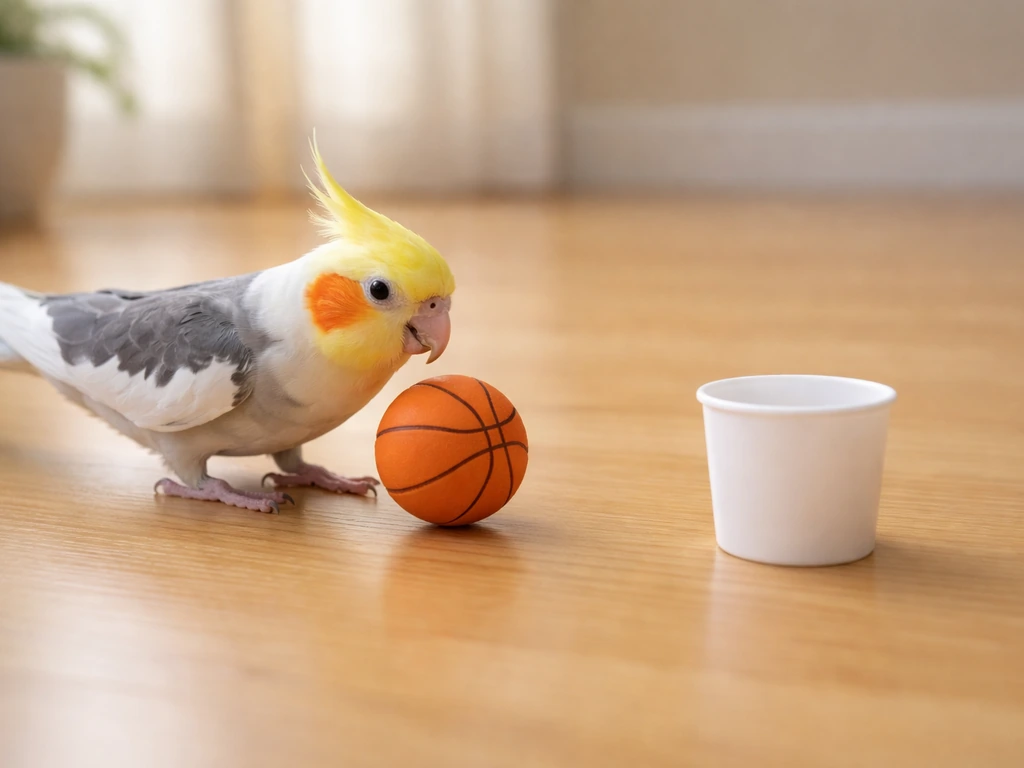
How to Teach Your Bird to Play Basketball: A Humane Guide
Humane, step-by-step positive training to teach your bird to touch and push a ball toward a target safely.
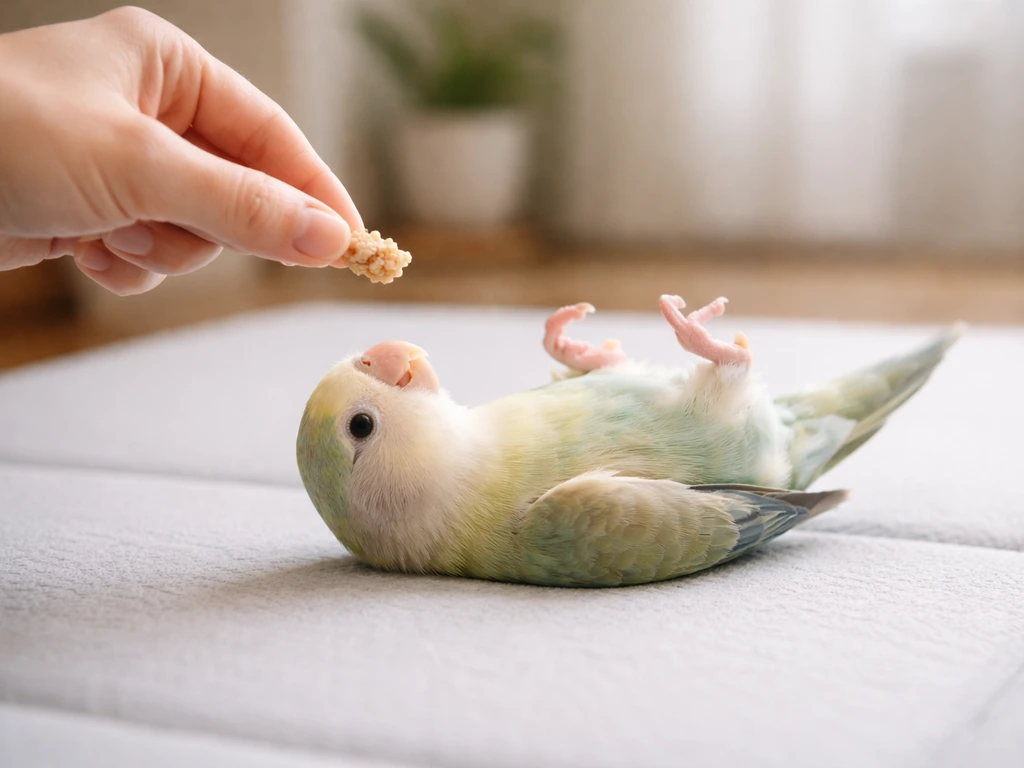
How to Teach Your Bird to Roll Over: Step-by-Step Guide
Step-by-step, welfare-first training to teach your bird roll over using cues, shaping, timing, and troubleshooting.
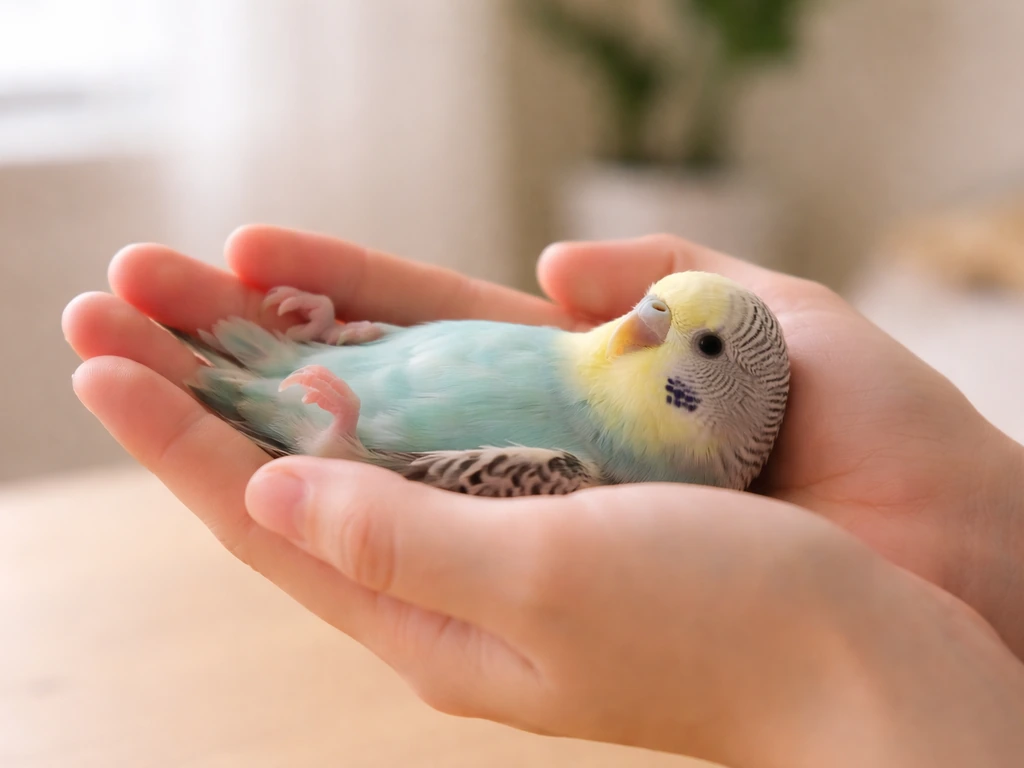
How to Teach Your Bird to Lay on Its Back Safely
Step-by-step, welfare-first training to teach your bird to lay on its back safely, with desensitization, safety handling