Free flying your bird means teaching a reliable, cue-based recall so your bird flies to you on command and returns safely every time, rather than just opening a door and hoping for the best. Done right, it's one of the most rewarding things you can build with a bird. Done too fast or without the right foundations, it's how birds get lost, injured, or killed.
How to Free Fly Your Bird Safely: Training Plan
Maya Harris
20 May 2026
The good news is that whether you have a tame parrot or a semi-wild rescued bird, the process follows the same humane progression: trust first, foundations second, controlled flight third, and outdoor freedom only once all of those are solid. These are the same three key pieces that help answer what three things help a bird to fly: trust, foundations, and controlled practice.
What 'free flight' actually means (and what it doesn't)
Free flight in the context of pet or rescued birds is not about releasing a bird and watching it go. It means giving your bird genuine freedom to fly while maintaining a trained, reliable recall that brings them back to you on cue. The goal is controlled freedom: the bird can fly, explore, and choose to land, but always within a training framework that keeps them safe. For pet birds, this usually starts indoors and eventually progresses to supervised outdoor sessions. For rehabilitators or owners working with semi-wild or rescued birds, the baseline fear level changes the pace of the process significantly, but the welfare goals are identical.
From a welfare standpoint, good free flight training reduces panic, builds confidence, and creates a bird that genuinely wants to return to you rather than one that's physically prevented from going anywhere. It's worth knowing that giving flighted birds unrestricted, unsupervised freedom in the home can actually increase aggressive and dominant behavior over time, so a structured daily free-flight period with clear training expectations is a healthier setup than total open-door access.
Before you start: health, readiness, and environment
Health and physical readiness
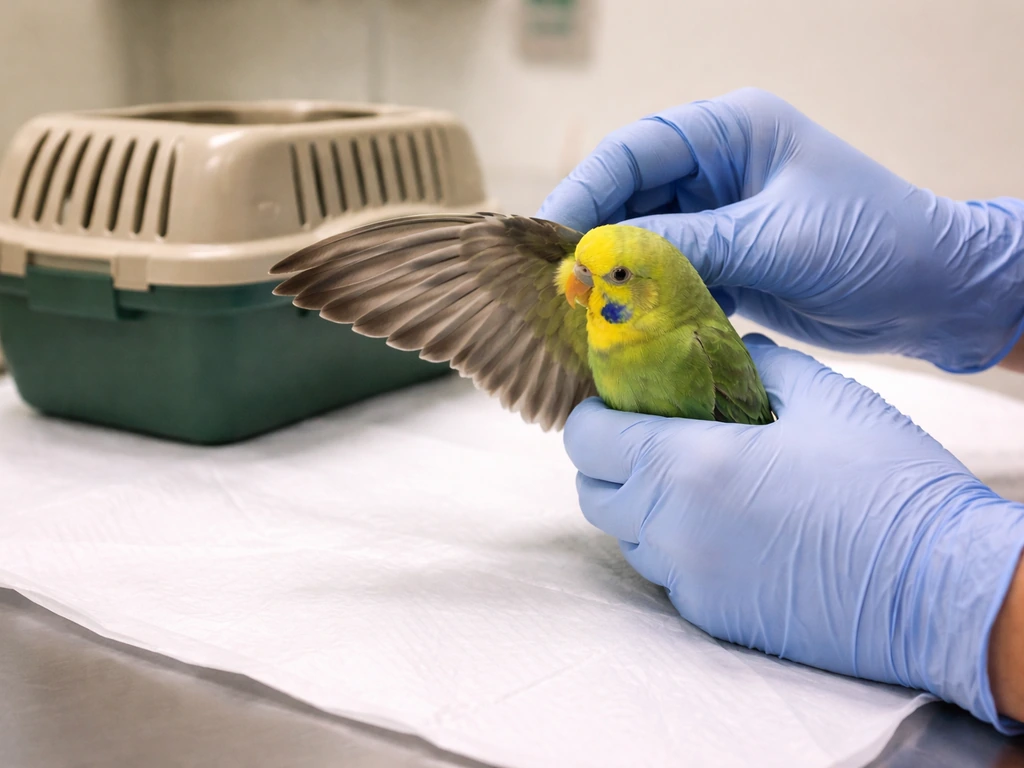
A vet check before starting any flight training is non-negotiable. You need to know your bird's flight feathers are intact and healthy, that there are no underlying respiratory or musculoskeletal issues, and that the bird is at a stable, healthy weight. If your bird has recently been wing-trimmed, keep in mind that just a few millimeters of new feather growth can restore enough lift for short flights, so you should physically test your bird's current flight ability before taking them anywhere near an open space or outdoors. If you're working with a clipped bird who's feathers are growing back, your training window will shift constantly, so check flight ability often.
On the wing-trimming question: if a clip was done to slow things down during early training, it should involve only the primary flight feathers and be done on both wings simultaneously.
VCA Animal Hospitals notes that the goal of a wing clip is to help prevent free-fall or crash landings, and it warns that clipping only one wing can cause a bird to fly in distressing circles, so both wings should be clipped at the same time goal of a wing clip is to prevent free-fall/crash landings. Clipping one wing only causes the bird to fly in distressing circles.
A proper clip reduces lift rather than eliminating flight entirely, so it doesn't make a bird safe outdoors and shouldn't be treated as a substitute for recall training. Many avian training professionals note directly that wing-clipping will not improve flight training outcomes and may actually delay the process by disrupting the bird's ability to practice controlled flight.
Setting up a safe indoor environment
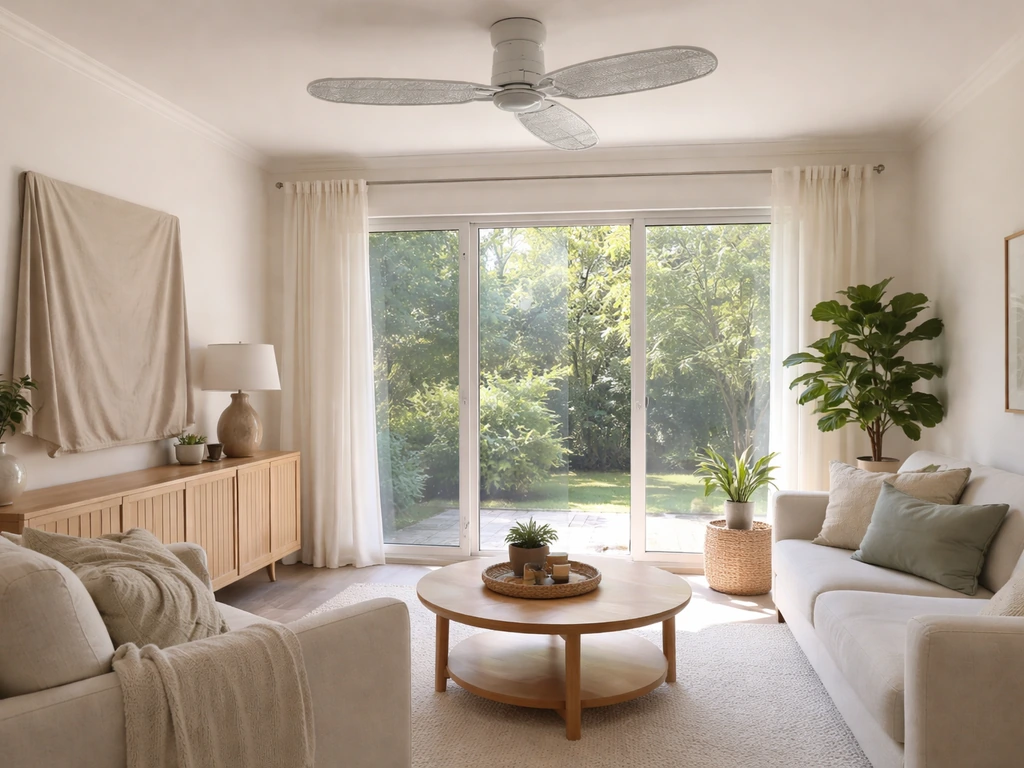
Before your bird takes a single free flight indoors, you need to audit the space thoroughly. Ceiling fans are one of the most common sources of serious injury and death for pet birds, and they must be turned off and ideally blocked from the flight area entirely. Mirrors and large windows are a major hazard because birds don't recognize glass as a barrier and will fly straight into it at full speed. Cover mirrors, apply window decals or tape strips to glass surfaces, and close off any rooms you haven't checked. Other hazards to remove or close off include open water containers, hot surfaces, other pets (cats and dogs especially), and any small gaps near doors.
- Ceiling fans: off and blocked during all free flight sessions
- Windows and mirrors: marked with tape, decals, or covered
- Other pets: removed from the room entirely
- Open doors and windows: closed and checked before releasing the bird
- Drafts and fans (floor or desk): turned off
- Toxic plants, open food, or chemicals: removed from the flight area
Outdoor and aviary setup
If you're using an outdoor aviary for conditioning or transitioning to outdoor free flight, a two-door entry system (also called a porch or airlock entry) is the safest design. The idea is simple: you enter one door, close it behind you, then open the second. This prevents escape if the bird rushes toward the opening. The aviary should be partially sheltered from direct sun, well-ventilated without overheating risk, and positioned away from startling noise sources like railroad tracks, air conditioning units, or heavy road traffic. Motion-sensor lights or erratic outdoor lighting near sleeping areas can disrupt sleep quality and stress the bird, so consider placement carefully.
Trust before training: bonding and handling basics
Recall and free flight only work with a bird that genuinely wants to be near you. If your bird is biting, retreating, screaming, or refusing to engage, that's not a training problem yet. It's a relationship problem, and no amount of recall drills will fix it. This is especially true for rescued birds, recently rehomed birds, or any bird that spent significant time without positive human contact.
Start by simply being present near the bird without pressuring interaction. Sit near the cage or perch, talk quietly, offer high-value treats from your hand without requiring the bird to come closer than it's comfortable with. Let the bird make the choice to approach. This matters because what can look like fear or aggression in a bird is often a learned escape or avoidance behavior that has been reinforced over time, rather than a fixed personality trait. The bird has learned that behaving a certain way gets the scary thing (you) to go away. Your job at this stage is to become the source of good things, not a source of pressure.
For tame birds with a good existing relationship, this phase may be short. For semi-wild or recently rescued birds, weeks of consistent, low-pressure presence may be needed before handling becomes comfortable. Rushing this phase is the single most common reason free flight training fails or produces a bird with unpredictable recall. If you're also thinking about how to avoid your bird flying away during this phase, the focus here is entirely on building value for being near you, which is the same foundation.
Building the foundations: step-up, targeting, cues, and recall
Step-up
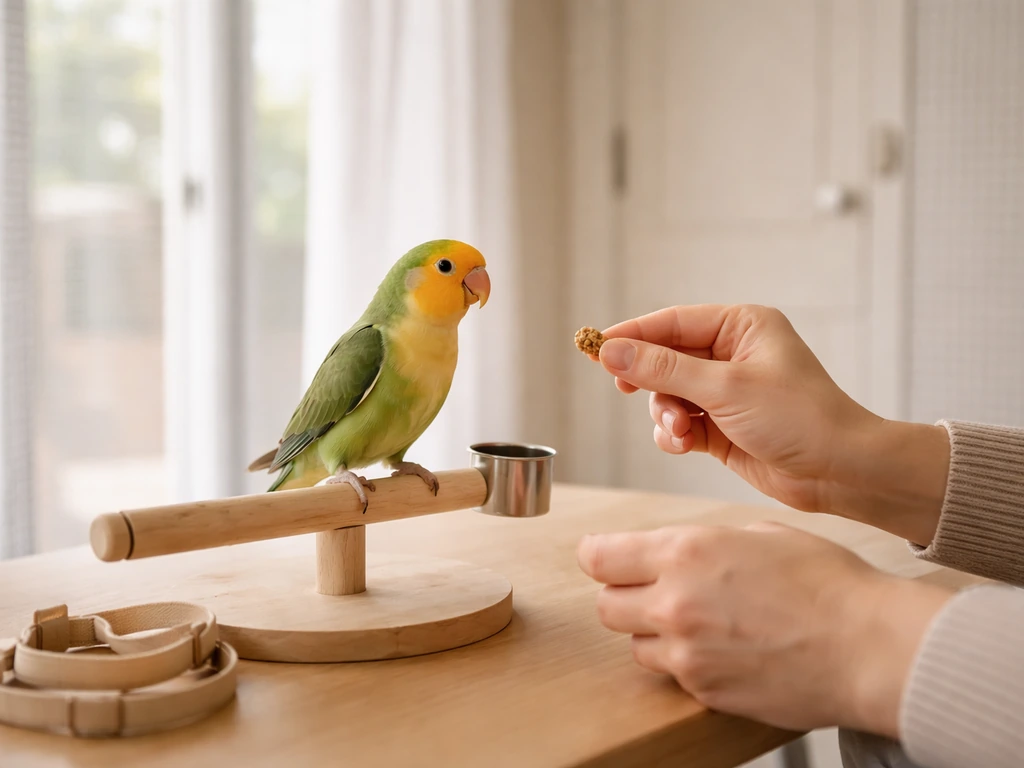
The step-up is the most important baseline behavior for free flight. If your bird won't reliably step onto your hand on cue in a calm, low-distraction environment, you're not ready for recall training at a distance. Teach step-up with positive reinforcement: present your finger or hand, say your cue word ("up" or "step up"), and reward immediately when the bird steps on. Use the bird's absolute favorite treat for this, whether that's a small piece of almond, a sunflower seed, or a bit of fruit. Short sessions of 2 to 5 minutes work better than long ones. If the bird is struggling to step up, back off and build more comfort first rather than repeating the cue or increasing pressure.
Target training
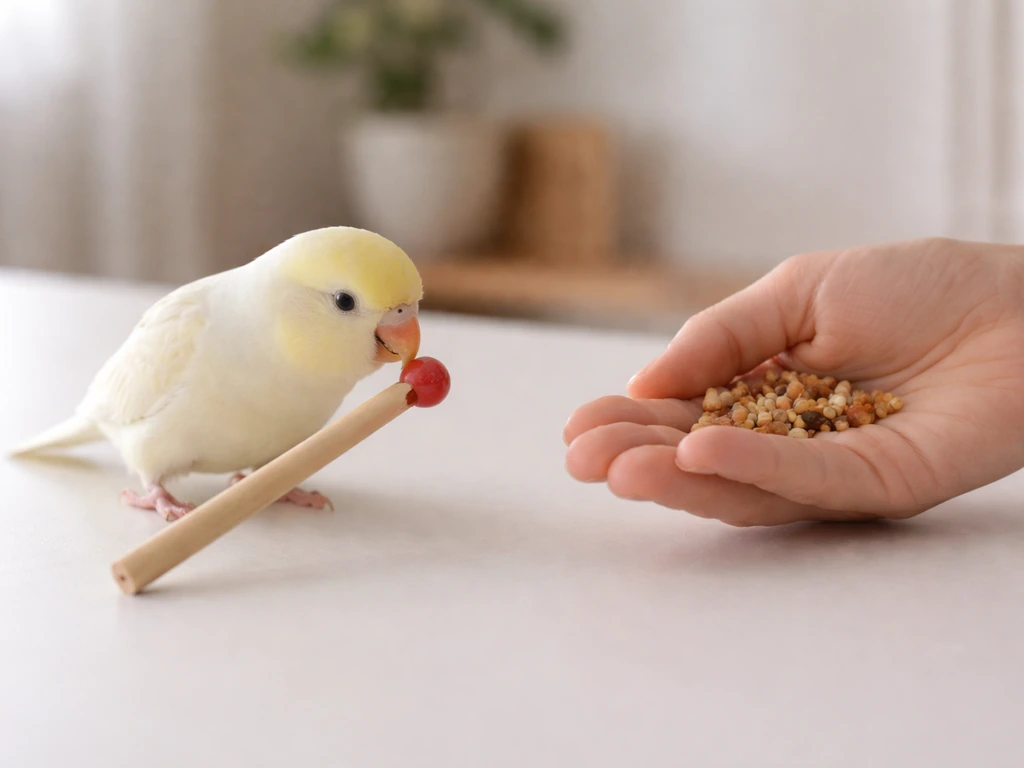
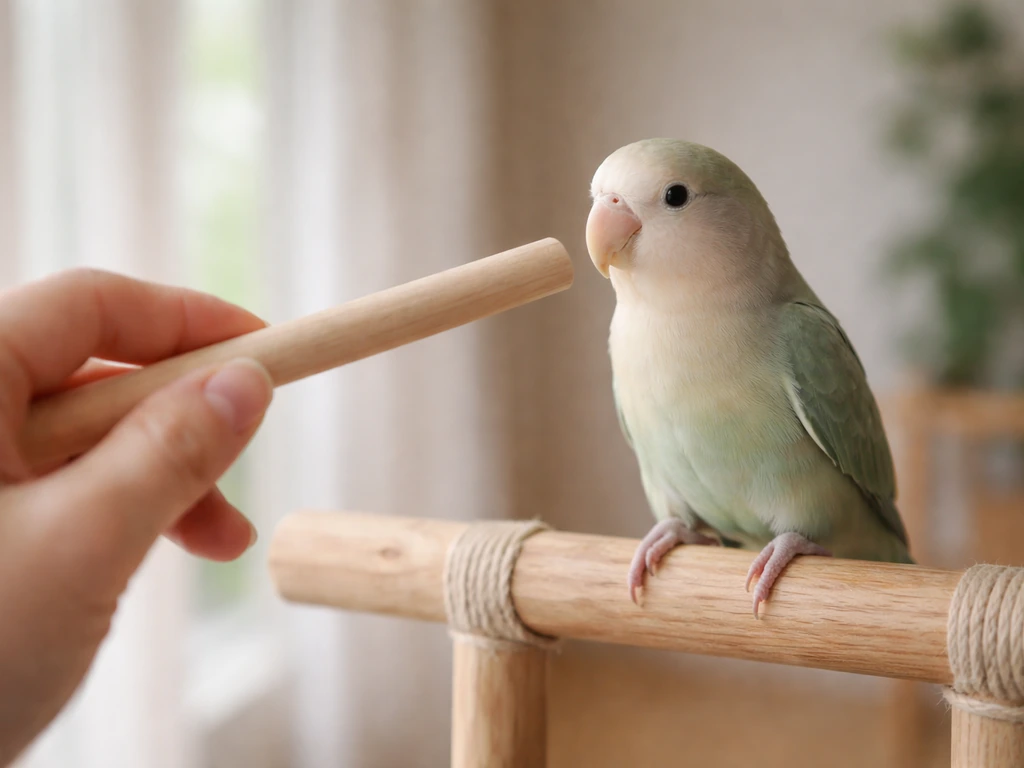
Target training (teaching the bird to touch a target stick with their beak) is one of the most useful tools in your kit and is the direct precursor to recall. It gives the bird a clear, learnable behavior: touch the target, get a reward. Once the bird understands targeting, you can use the target to guide their movement toward your hand, toward a perch, or across longer distances.
Target training also teaches the bird how learning itself works, which speeds up everything that comes after it. Start with the target just in front of the bird's face and reward any orientation toward it. Build from there. If you want the easiest bird to train, start with a species that is food-motivated and quick to learn target and step-up behaviors, since those are the building blocks for recall.
Cue and recall training
Once step-up and targeting are reliable, you can begin recall training. Recall is essentially asking the bird to fly to you on a specific cue, which could be a word, a whistle, or a hand signal. The key principle is distance progression: only increase the distance when the bird succeeds reliably at the current level. A good rule of thumb is to aim for around 8 out of 10 successful recalls at a given distance before moving further. Start with the bird one step away, then build to across a room, then to another room, then eventually outdoors.
- Establish your recall cue (a unique word or whistle the bird only hears in this context)
- Begin with bird on a perch one arm's length away, give cue, reward arrival immediately
- Repeat until 8 out of 10 arrivals are fast and confident before adding distance
- Gradually increase distance across the same room
- Practice in different indoor locations to build generalization
- Add mild distractions (normal household noise, other people present) once indoor recall is solid
- Move to outdoor controlled sessions only after indoor recall is near-perfect
For birds that are clipped, newly adopted, recovering from illness, or not yet comfortable with handling, the early goals should stay focused on stationing (going to and staying on a designated perch), step-up, and short targeting exercises rather than full flight recall. A clipped bird can still learn the cue associations and the value of returning to you, which sets them up for proper recall work once their feathers grow in.
Building up flight: indoor to outdoor progression
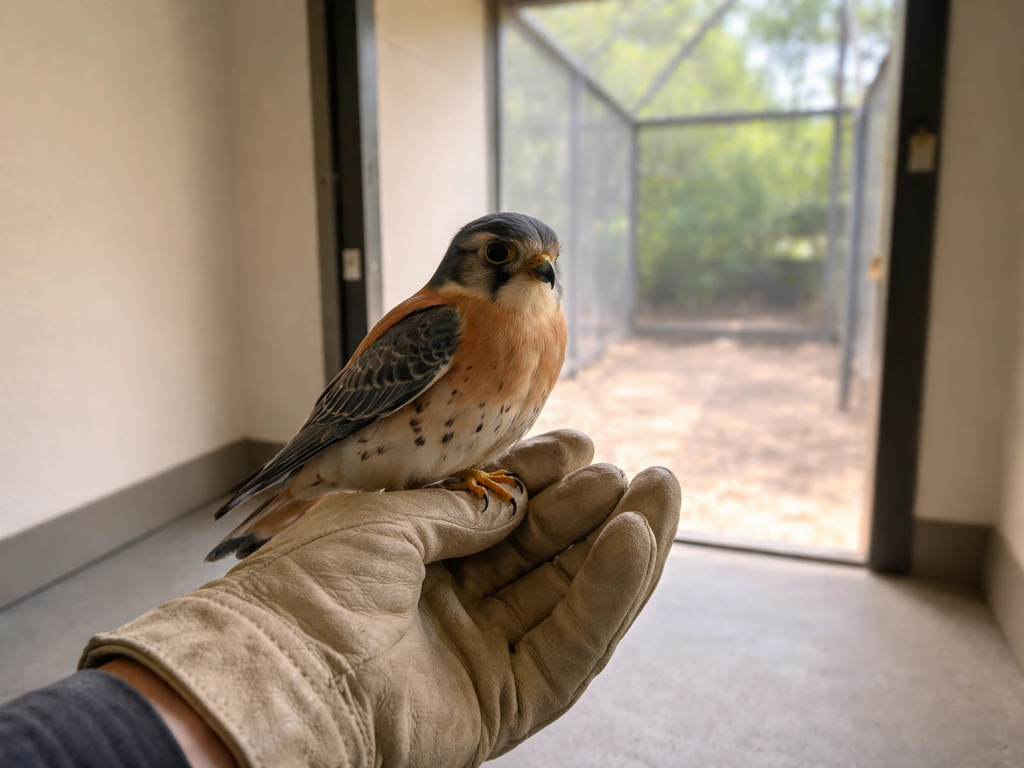
Controlled flight progression means systematically increasing the challenge level of the environment while keeping the bird comfortable and successful. Start all free flight practice indoors in a fully hazard-proofed room. If you want an easy, safe plan, build your free flight training step by step from short indoor sessions before moving outdoors. Let the bird explore and fly freely while you practice recall from short distances. Gradually extend the distance, then practice recall from different rooms, then with mild outdoor sights and sounds through a screen window. Each step should feel easy to the bird. If there's hesitation, panic, or consistent failure, you've moved too fast and need to step back.
Before any outdoor session, run through a short indoor recall session first to get the bird focused and motivated. Outdoor environments introduce unpredictable variables: wind, predator sounds, other birds, and open sky. A bird that isn't solidly recalling indoors at 10 to 15 meters is not ready for outdoor free flight, full stop. When you do move outdoors, start in a securely fenced yard or use an aviary with controlled exit before attempting open-space flying. To avoid safety setbacks, confirm your bird is ready to progress in the same way you would for any free-flight plan, including strong recall practice and a hazard-proof setup outdoor free flight.
A flight harness is worth considering during the outdoor transition phase. It's not a replacement for recall training, but it gives you a safety net while the bird is still building confidence in novel outdoor environments. Harness training takes time and should be introduced gradually with plenty of positive reinforcement, not forced on the bird. If you're working with a flight harness, it still requires the bird to be comfortable being handled, so it doubles as a handling/trust metric.
Running a supervised outdoor free-flight session safely
The first outdoor supervised sessions should happen in calm, low-wind conditions with good natural light. Early morning is often ideal: the air is still, predator activity is lower, and the bird is typically alert and food-motivated before the day's first full meal. Avoid midday heat and strong direct sun, and never fly a bird in high winds or when a storm is approaching.
Choose a location you've scouted in advance: no overhead wires, no nearby traffic, no large bodies of water the bird could land near, and clear sightlines so you can track the bird at all times. Have your high-value recall rewards ready and accessible before the session starts. Tell other people in the area what you're doing so they don't approach suddenly or make startling movements.
Keep the first outdoor sessions very short: 5 to 10 minutes, focused entirely on short-distance recalls, ending on a successful return before the bird gets distracted or overwhelmed. Gradually extend session length and recall distance over multiple sessions. Always end a session on a positive note, with a reward and calm handling, so the bird associates the end of flight time with something good rather than being grabbed or rushed.
| Stage | Environment | Goal | When to progress |
|---|---|---|---|
| 1. Foundation | Indoor, single room | Step-up and targeting reliable | 8/10 success rate, calm behavior |
| 2. Indoor recall | Indoor, same room | Recall cue to hand at 1-5 meters | Fast, confident arrivals at full room distance |
| 3. Multi-room recall | Indoor, multiple rooms | Recall across different spaces | Reliable regardless of which room |
| 4. Distraction recall | Indoor with mild distractions | Recall with noise/people present | No hesitation in high-distraction indoor settings |
| 5. Outdoor transition | Fenced yard or aviary | Short outdoor recalls with safety net | Consistent calm return in outdoor setting |
| 6. Open outdoor free flight | Open supervised space | Full free-flight session with reliable recall | Only after multiple successful outdoor sessions |
When things aren't working: troubleshooting common problems
The bird won't step up or come to the hand
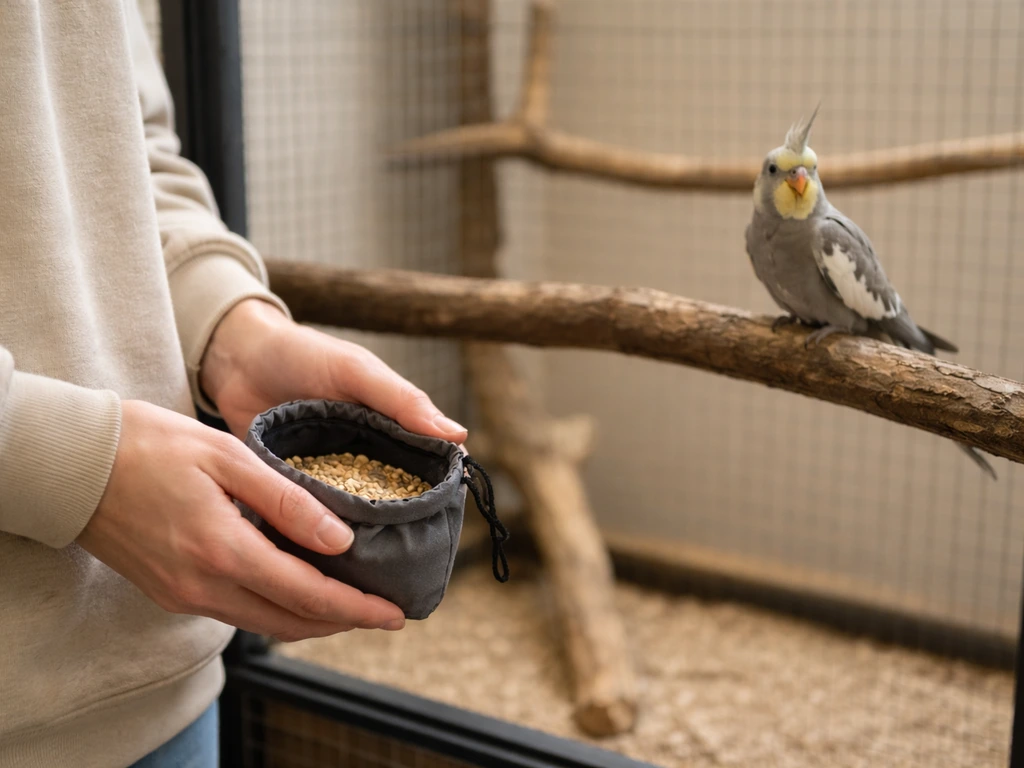
Go back to targeting. If the bird won't step up, it usually means the hand is still associated with something aversive, whether that's past forceful handling, a startle, or simply not enough positive associations yet. Use the target stick to bridge the distance between the bird and your hand, rewarding any movement in the right direction. Don't repeat the step-up cue if the bird isn't responding. Repeating a cue a bird isn't following teaches the bird the cue means nothing. Reset, lower the difficulty, and build back up.
The bird flies but won't return on recall
This nearly always means the recall cue has lost its value, the reward isn't motivating enough, or the environment is too stimulating for the bird's current training level. Check your reward: are you using the absolute best treat this bird will work for? Is the bird full from a recent meal? Practice recall in a lower-distraction environment and rebuild value for the cue before trying again in the harder context. Never chase the bird or try to grab them during a failed recall. Chasing makes returning to you less safe from the bird's perspective, which makes future recalls worse.
The bird returns slowly or lands nearby but won't come all the way
This is a distance or distraction issue. The bird is showing willingness but not full commitment. Shorten the recall distance temporarily, reward generously for fast arrivals, and build back up more slowly. You can also try moving toward the bird slightly after giving the cue to make the behavior easier, then fade that assistance gradually as the bird builds confidence.
The bird is panicking, flying into walls, or landing in unsafe spots
Stop the session calmly. A panicking bird needs the environment reduced immediately: close off the larger space, dim any harsh lighting, and speak quietly. Do not rush to grab the bird. Give them time to settle on a surface, then use your step-up cue or target to retrieve them. After a panic episode, do a few easy, successful step-ups or targeting exercises in a small safe space before ending the session. This helps the bird finish on a calm note. Review your hazard checklist before the next session and consider whether the space was too large or too stimulating for the current stage.
Working with semi-wild or rescued birds
For birds that came to you with little or no positive human contact, the entire process takes longer and requires more patience at every stage. Don't try to compress the bonding and handling phases. A bird that is flight-ready physically but not relationship-ready behaviorally is a flight risk, not a free-flight candidate. With rescued birds, your goal for the first weeks or even months may simply be: bird eats well near human, bird does not panic when human moves nearby, bird shows curious rather than fearful body language. Once those markers are consistent, you can begin the same positive reinforcement foundation work described above, just at a slower pace.
Biting and screaming during training sessions
Biting and screaming in a training context almost always signal that the bird is over-threshold: the task is too hard, the environment is too intense, or the session is too long. End the session before the behavior escalates, give the bird space, and come back later with a lower-difficulty exercise. Do not punish biting or screaming. Punishment during training increases fear and damages the trust you're working to build, which is the opposite of what free flight training requires.
A practical progression checklist
Use this as a go/no-go check at each stage. Don't move forward until you can genuinely check each item off for your specific bird in your specific environment.
- Vet check completed: bird is healthy and flight feathers are assessed
- Current flight ability tested (especially important if recently clipped or feathers are regrowing)
- Indoor flight space fully hazard-proofed: fans off, mirrors covered, windows marked, other pets removed
- Bird eats from your hand calmly without retreating
- Step-up on cue is reliable in a low-distraction setting
- Target training is solid: bird follows target willingly
- Recall cue established and practiced at short distance (1 to 2 meters) with 8/10 success
- Recall practiced at full indoor room distance with 8/10 success
- Recall practiced with mild distractions present
- Multi-room recall is consistent
- Outdoor location scouted and confirmed safe (no wires, traffic, or open water hazards nearby)
- Weather checked: calm, no high wind, good light, no extreme heat
- First outdoor session planned for short duration with high-value rewards ready
- Harness considered and fitted if using one during outdoor transition
- Session always ends on a successful recall with a reward
FAQ
How do I know when my bird is truly ready to start recall at a distance (not just indoors)?
Use a reliability threshold, about 8 out of 10 successes, in the current room and with you staying consistent in your posture and distance. If your bird returns slowly, hovers, then lands away from you, treat it as a distance or distraction problem and reduce the distance until it becomes fast and committed.
What should I do if my bird comes partway during recall but then veers off or lands too far from me?
Do not chase or try to grab. Shorten the next recall attempt to a closer starting point (one step to a few steps away), reward earlier arrival cues, and gradually fade distance assistance. If the bird hesitates only in certain spots, those spots are likely higher-stimulation zones and should be avoided until later.
Can I use a leash or harness during indoor training, and will it help me progress faster?
A harness can be a safety tool during early outdoor transitions, but indoors it often reduces the bird’s natural motivation to fly to you and can interfere with learning if it limits where the bird can land. If you use it, keep sessions very short and focus on target, step-up, and recall rewards without relying on restraint to “solve” the problem.
Do I need to stop free-flight training completely if my bird seems stressed one day?
Not necessarily, but you should immediately lower difficulty. End the session after the bird settles, then schedule a short follow-up with easy step-ups or targeting in a smaller, quieter space. If stress happens repeatedly, reassess hazards, your reward value, and whether you progressed distance faster than the bird’s success rate allowed.
What is the biggest mistake that causes birds to get lost during early free-flight?
Moving to open-space flying when recall is not solid at the target distance and cue value. A bird can be flight-capable yet still not choose to return reliably under wind, other animals, or visual distractions, so outdoor progression should only happen after consistent indoor recall at 10 to 15 meters.
How should I choose a recall cue (word, whistle, hand signal) if my bird already reacts to other noises?
Pick one cue and make it consistent every time, then pair it with the highest-value reward only when the bird is successful. Avoid using cues that sound like everyday household commands or that get used accidentally, because the bird may learn an unreliable association.
My bird is food-motivated sometimes, but not every session. How can I prevent recall failure from low motivation?
Check timing and satiety. Practice recall before the bird’s main meal or when the bird reliably engages with you, and switch to a truly top-tier treat for recall, not the same treat you use for casual training. If your bird is full or bored, rebuild cue value in a lower-distraction area before attempting distance.
What do I do if my bird only steps up when I use a certain body angle or approach method?
That usually means the bird has learned a specific setup, not the step-up cue. Gradually vary your position and still offer the same hand target and cue word, rewarding step-up immediately. Keep sessions short so the bird stays calm while you broaden the conditions.
Is wing clipping ever an appropriate safety measure for outdoor freedom?
A clip is not a substitute for recall and does not make a bird reliably safe outdoors. If a bird is clipped, you should still physically verify current flight ability, and continue focusing on step-up, targeting, and recall. Also confirm the clip is done to appropriate feather areas on both wings, since uneven or inappropriate clipping can create distressing flight patterns.
After a failed recall, should I keep training the same day to “fix” it?
Usually no. Stop calmly, reduce the environment immediately, and end on a positive note with easy targeting or step-ups. Trying again in the same challenging context right away often turns the cue into a negative predictor and makes future recalls harder.
How can I tell the difference between fear, dominance/aggression, and simple refusal during early training?
Fear often shows with retreating, tense posture, or panic responses, while avoidance or refusal may be more about hesitation in approach. Dominance patterns can include persistent pushing or repeated boundary testing. Regardless of cause, if the bird bites or screams in training, assume it is over-threshold for that moment and lower pressure, reduce distance, and rebuild trust before trying recall again.
What should I change in the hazard checklist for outdoor sessions compared to indoors?
Indoors you mostly manage glass, fans, and small gaps, outdoors you must also plan for wind changes, unpredictable landing targets, nearby water sources, and startling noise. Scout for overhead hazards and check that you have clear sightlines and enough space to track the bird without people suddenly stepping into its path.
Next Article
How to Get Bird Up: Step-Up Training for Beginners
Step up training for birds: bonding-first cues, setup, treat targets, progression, and fixes for fear or refusal